Broad Student Loan Forgiveness Is Not Going to Happen: What Are Your Real Options?

- Income-driven repayment plans can lower payments to as little as $0 a month.
- Refinancing may reduce interest if you have good credit and a steady income.
- Debt settlement is a last resort that can settle loans for less than owed, but it damages credit.
If you've been waiting for a sweeping student loan forgiveness plan to wipe away your debt, you're not alone. Millions of borrowers have held out hope since the Supreme Court struck down the Biden administration's broad forgiveness plan in 2023. But the reality is clear: across-the-board cancellation is off the table for now.
That doesn't mean you're stuck. There are proven ways to manage and reduce your student loans — even if you're on a low income.
This article walks you through the most effective student loan forgiveness alternatives available today. You'll learn how to lower your monthly payments, reduce your total debt, and find a path forward that works for your situation. Remember, this is general information, not personalized financial advice.
Always check with your loan servicer or a qualified professional before making decisions.
Let's start with the biggest question on your mind.
Why Isn't Broad Student Loan Forgiveness Happening?
The short answer: legal and political hurdles. In June 2023, the U.S. Supreme Court ruled that the Biden administration's plan to cancel up to $20,000 per borrower exceeded its authority. Since then, the administration has pursued targeted forgiveness through existing programs like Public Service Loan Forgiveness (PSLF) and income-driven repayment (IDR) fixes.
But a broad, one-time cancellation for all federal borrowers is not likely to pass Congress or survive court challenges anytime soon.
That's frustrating, but it's also freeing. Instead of waiting for a political solution that may never come, you can take control with options that exist right now.
What Are the Best Student Loan Forgiveness Alternatives?
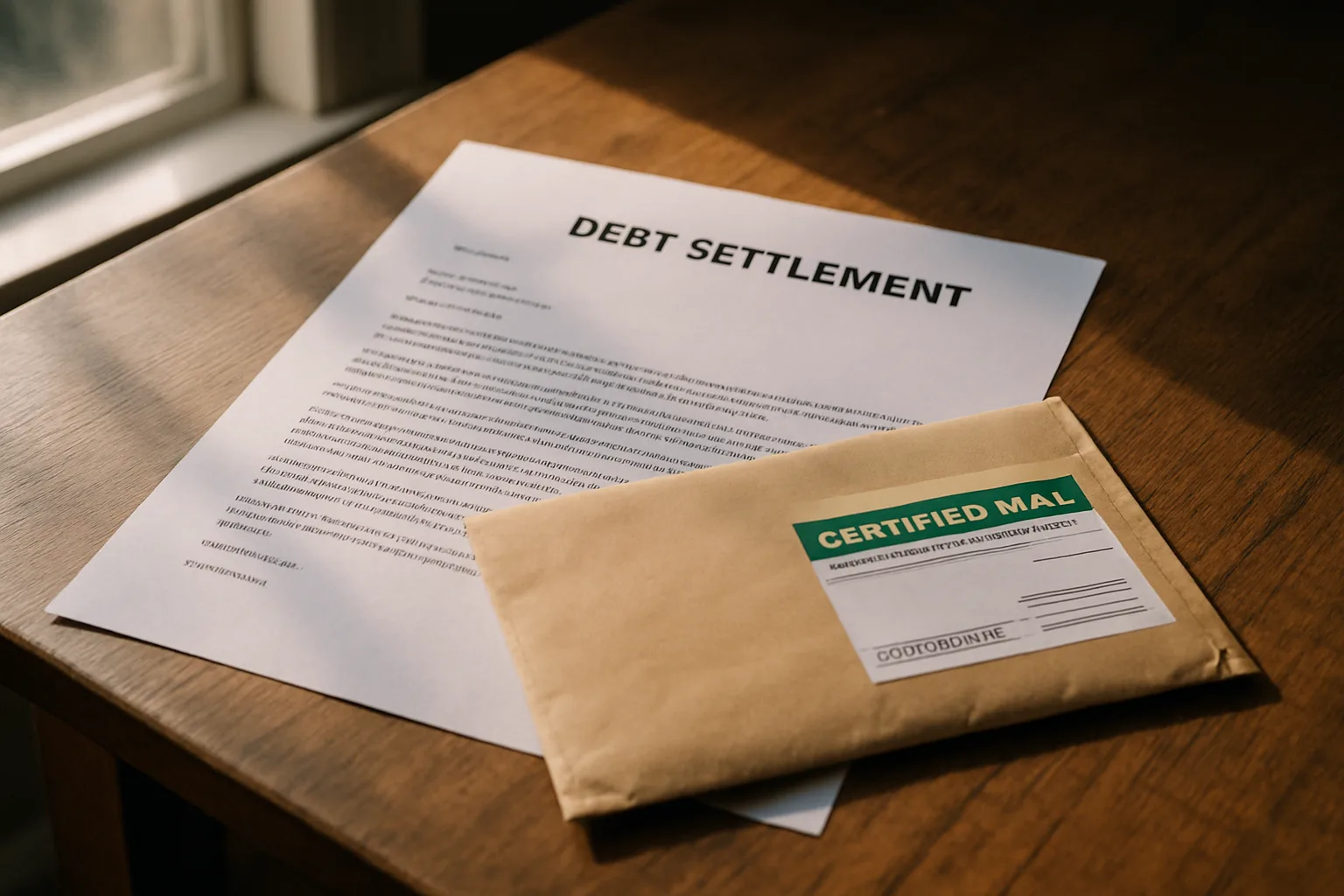
Your alternatives fall into three main categories: lowering payments through income-driven plans, reducing interest through refinancing, and settling debt for less than you owe. Each has pros and cons, and the best choice depends on your income, loan type, and long-term goals.
Income-Driven Repayment (IDR) Plans
IDR plans cap your monthly payment at a percentage of your discretionary income. For many borrowers with low income, payments can be as low as $0. After 20 or 25 years of qualifying payments, any remaining balance is forgiven — but you may owe taxes on that forgiven amount.
The newest IDR plan, Saving on a Valuable Education (SAVE), was blocked by courts in 2024, but other plans like PAYE and IBR are still available. You can apply through your loan servicer or at StudentAid.gov.
For example, a borrower earning $25,000 a year with a family of one might have a payment of $0 under PAYE. After 20 years, the remaining $30,000 balance could be forgiven, though taxes may apply on that amount.
Refinancing Your Student Loans
If you have good credit and a steady income, refinancing with a private lender can lower your interest rate. That means more of your payment goes to principal, helping you pay off student loans fast with low income — but only if you can afford the new monthly payment. Refinancing federal loans means losing access to IDR plans, forgiveness programs, and deferment options.
So only refinance if you're sure you won't need those protections.
Consider a borrower with $35,000 in federal loans at 6.5% interest. By refinancing to a 4% rate with a private lender, they could save over $5,000 in interest over a 10-year term. However, if they lose their job, they cannot use IDR to lower payments.
Debt Settlement for Student Loans
Debt settlement involves negotiating with your lender to accept a lump sum that's less than the full balance. This is risky and usually reserved for defaulted loans. It will damage your credit and may trigger taxable income on the forgiven amount.
But for borrowers with no other way out, it can be a last resort. Learn more about debt settlement and whether it's right for you.
For instance, a borrower with $25,000 in defaulted private loans might settle for $12,500. They save $12,500, but their credit score drops by 100 points or more, and they may owe taxes on the forgiven $12,500.
How to Pay Off Student Loans with Low Income
If your income is low, your top priority should be lowering your monthly payment to something you can afford. Here's a step-by-step plan.
Step 1: Get on an Income-Driven Repayment Plan
Apply for an IDR plan through your federal loan servicer. If your income is low enough, your payment could be $0. This keeps your loans in good standing and prevents default.
Even if you're not working, you can recertify your income annually.
A borrower earning $20,000 a year with $40,000 in loans might pay $50 per month under IBR. That's far more manageable than the standard $400 payment.
Step 2: Consider a Deferment or Forbearance
If you're unemployed or underemployed, you may qualify for a deferment (interest doesn't accrue on subsidized loans) or forbearance (interest accrues on all loans). These pause payments temporarily but don't reduce your debt.
For example, a borrower who loses their job can request a 12-month forbearance. During that time, interest on unsubsidized loans adds up, but they avoid default and can focus on finding work.
Step 3: Make Extra Payments When You Can
Even small extra payments — like $20 a month — can reduce your principal over time. Use any windfalls (tax refunds, bonuses) to make lump-sum payments. This is how you pay off student loans fast with low income without sacrificing necessities.
A borrower who adds $50 per month to a $30,000 loan at 5% interest can save over $2,000 in interest and pay off the loan 2 years early.
How to Pay Off Student Loans Fast with Low Income

Paying off loans quickly on a low income sounds impossible, but it's doable with the right strategy. The key is to reduce your interest rate and make extra payments whenever possible.
Refinance for a Lower Rate
If you have good credit, refinancing can cut your interest rate by several percentage points. That means more of each payment goes to principal. Use a debt consolidation loan or refinance with a private lender.
Just remember: you'll lose federal protections.
A borrower with a 720 credit score might refinance $25,000 from 7% to 4.5%. Their monthly payment drops from $290 to $259, and they save $3,600 in interest over 10 years.
Use the Debt Avalanche Method
List your loans by interest rate from highest to lowest. Pay the minimum on all but the highest-rate loan, and put every extra dollar toward that one. Once it's paid off, move to the next.
This saves the most money on interest over time.
For example, a borrower has loans at 6%, 5%, and 4%. They pay the minimum on the 5% and 4% loans, and put all extra cash toward the 6% loan. After paying that off, they target the 5% loan next.
Increase Your Income
Even a small side hustle — like tutoring, rideshare driving, or freelance writing — can bring in an extra $200–$500 a month. Put every penny toward your loans. Many people have paid off $20,000 or more in a year by combining a side gig with a strict budget.
A borrower who earns $300 extra per month from freelance work can pay an additional $3,600 per year toward their loans. Over 5 years, that's $18,000 in extra payments, significantly reducing principal.
What About Loan Forgiveness Programs That Still Exist?
While broad forgiveness is dead, targeted programs are alive and well. Here are the main ones.
Public Service Loan Forgiveness (PSLF)
If you work for a government or nonprofit, you may qualify for PSLF after 120 qualifying payments (10 years). The payment count can include past payments if you consolidate and certify employment. The PSLF waiver (ended October 2022) helped many, but the program still works under standard rules.
A teacher earning $45,000 a year with $50,000 in loans can have their entire balance forgiven after 10 years of on-time payments. They must work full-time for a qualifying employer and be on an IDR plan.
Teacher Loan Forgiveness
Teachers in low-income schools can get up to $17,500 forgiven after five years of service. This is separate from PSLF, and you can combine both if you meet the requirements.
For example, a math teacher in a Title I school might receive $17,500 forgiven after 5 years. If they continue teaching, they can also pursue PSLF for additional forgiveness.
Income-Driven Repayment Forgiveness
After 20 or 25 years on an IDR plan, any remaining balance is forgiven. The amount may be taxed as income, so plan ahead. The SAVE plan was blocked, but PAYE and IBR are still options.
A borrower with $60,000 in loans on IBR might pay $200 per month for 25 years. After that, the remaining $20,000 is forgiven, though they may owe taxes on that amount.
Should You Consider Debt Settlement for Student Loans?
Debt settlement is a serious step. It involves stopping payments and negotiating with the lender to accept less than you owe. For federal loans, this is rare because the government has strong collection powers.
For private loans, it's more common. If you're considering this, read up on debt relief options to compare.
Pros: You may settle for 40–60% of the balance. Cons: Your credit score will drop by 100+ points, you may owe taxes on forgiven debt, and collection calls will increase. Only pursue this if you're already in default and have no other options.
For instance, a borrower with $30,000 in defaulted private loans might settle for $15,000. They save $15,000, but their credit score falls from 650 to 520, making future borrowing difficult.
What If You Can't Afford Any Payment?
If you're truly unable to pay, don't ignore the problem. Default has severe consequences: wage garnishment, tax refund seizure, and damaged credit for seven years. Instead, contact your loan servicer and ask about deferment, forbearance, or an IDR plan with a $0 payment.
If you have private loans, call the lender and explain your situation. Some may offer temporary hardship options.
A borrower who loses their job can request a 12-month deferment on federal loans. During that time, they focus on finding work without the stress of monthly payments. For private loans, a lender might offer a 6-month forbearance with interest accruing.
How to Choose the Right Alternative for You
Your choice depends on your loan type, income, and goals. Use this table to compare options.
| Option | Best For | Credit Impact | Risk |
|---|---|---|---|
| IDR plan | Low income, federal loans | None (keeps loans current) | Tax on forgiven amount |
| Refinancing | Good credit, stable income | Hard inquiry; improves with on-time payments | Loses federal protections |
| Debt settlement | Defaulted private loans | Severe damage | Tax on forgiven debt; collection calls |
| Deferment/forbearance | Temporary hardship | None (if handled correctly) | Interest accrues on unsubsidized loans |
Common Mistakes to Avoid
Many borrowers make these errors when trying to manage student loans on a low income.
- Ignoring the problem. Default is much worse than a low payment. Always stay in touch with your servicer.
- Refinancing federal loans without understanding the trade-offs. You lose IDR, PSLF, and deferment options.
- Choosing forbearance over IDR. Forbearance lets interest pile up, while IDR can give you a $0 payment that counts toward forgiveness.
- Paying off the smallest loan first (debt snowball). While motivating, the avalanche method saves more money on interest.
Realistic Timeline: How Long Will It Take?
With IDR, you're looking at 20–25 years until forgiveness. With aggressive payments and refinancing, you could be debt-free in 5–10 years. For example, if you owe $30,000 at 6% interest and pay $300 a month (instead of the minimum $200), you'll save over $5,000 in interest and pay off the loan in about 11 years instead of 15.
Every extra dollar helps.
Another example: a borrower with $50,000 at 5% interest who pays $600 per month (instead of $530) can pay off the loan in 8 years instead of 10, saving $4,000 in interest.
Understanding the Role of Credit Repair in Student Loan Management
Your credit score plays a key role in your student loan options. A strong score can unlock lower refinancing rates, while a weak score limits your choices. If your credit is damaged from missed payments or default, consider credit repair strategies.
Start by pulling your free credit report from AnnualCreditReport.com. Look for errors like incorrect loan balances or late payments that aren't yours. Dispute any inaccuracies with the credit bureaus to potentially boost your score.
How Credit Repair Helps with Student Loan Alternatives
Improving your credit can make refinancing more accessible. For example, a borrower with a 700 score might qualify for a 5% rate, while someone with a 600 score faces 10% or higher. Even a 50-point increase can save thousands in interest over the life of a loan.
Credit repair also helps if you need to settle private loans. Lenders may offer better settlement terms to borrowers with improving credit profiles. Focus on paying bills on time and reducing credit card balances to see gradual improvement.
A borrower who disputes an incorrect late payment and sees their score rise from 620 to 670 can refinance $40,000 at 6% instead of 9%. That saves $7,200 in interest over 10 years.
Exploring Loan Rehabilitation for Defaulted Federal Loans
If your federal student loans are in default, loan rehabilitation is a powerful option. This program allows you to make nine on-time payments over ten consecutive months to bring your loans out of default. Once completed, the default is removed from your credit report.
Rehabilitation also restores eligibility for IDR plans and forgiveness programs. For example, after rehabilitating a $15,000 defaulted loan, you can apply for an IDR plan with a $0 monthly payment. This gives you a fresh start without the severe consequences of continued default.
Steps to Rehabilitate Your Federal Student Loans
Contact your loan holder or the Department of Education to request rehabilitation. You'll agree to make nine reasonable payments based on your income. After the ninth payment, your loans are transferred to a new servicer and considered current.
This process takes about 10 months, but it's worth the effort. Rehabilitation stops wage garnishment and tax refund seizure immediately. It's a concrete path forward for borrowers who feel trapped by default.
A borrower earning $30,000 a year might pay $50 per month during rehabilitation. After nine months, their $20,000 loan is out of default, and they can switch to an IDR plan with a $0 payment.
The Impact of Student Loan Debt on Your Overall Financial Health
Student loan debt doesn't just affect your monthly budget; it impacts your ability to buy a home, save for retirement, or start a business. High debt-to-income ratios can prevent you from qualifying for mortgages or car loans. Understanding this broader impact helps you prioritize repayment strategies.
For instance, a borrower with $50,000 in student loans and a $40,000 income may struggle to save for a down payment. By lowering payments through IDR, they free up cash for other goals. Alternatively, aggressive repayment can improve their debt-to-income ratio over time.
Balancing Student Loan Repayment with Other Financial Goals
Don't let student loans derail your entire financial plan. Even with debt, you can build an emergency fund of $1,000 to $3,000. This protects you from needing high-interest credit cards for unexpected expenses.
Consider contributing to a retirement account, especially if your employer offers a match. The long-term growth of retirement savings often outweighs the cost of student loan interest. Use a budget to allocate funds to both debt repayment and savings each month.
A borrower who puts $100 per month into a 401(k) with a 5% match earns an extra $60 per month from their employer. Over 30 years, that grows to $72,000, far exceeding the interest saved by paying an extra $100 on loans.
How to Negotiate with Private Student Loan Lenders
Private student loans lack the protections of federal loans, but you can still negotiate. If you're struggling to make payments, call your lender and explain your hardship. Ask about temporary forbearance, reduced interest rates, or modified payment plans.
Some lenders offer hardship programs that lower your payment for 3 to 12 months. For example, a borrower with $40,000 in private loans at 8% interest might get a 6-month forbearance. During this time, interest continues to accrue, but you avoid default.
When to Consider a Lump-Sum Settlement
If you have a lump sum of cash from a tax refund or inheritance, you can offer it to settle the debt for less. Lenders may accept 50–70% of the balance if they believe you can't pay the full amount. Always get the settlement agreement in writing before sending any money.
This approach damages your credit, but it can resolve debt that feels impossible. For example, settling a $20,000 loan for $10,000 saves you $10,000, minus any taxes on the forgiven amount. Use this only as a last resort after exploring all other options.
A borrower who inherits $8,000 might offer it to settle a $15,000 private loan. The lender accepts $8,000, forgiving $7,000. The borrower's credit drops, but they are free of the debt.
Exploring State-Specific Student Loan Assistance Programs
Some states offer their own student loan forgiveness or repayment assistance programs. These are often targeted at professionals in high-need fields like healthcare, education, or law. Research your state's higher education agency for available options.
For example, California offers the California State Loan Repayment Program for healthcare professionals working in underserved areas. Participants can receive up to $50,000 in loan repayment over two years. Similarly, New York's Get on Your Feet Loan Forgiveness Program helps recent graduates with IDR payments.
How to Find State Programs
Visit your state's department of education or higher education commission website. Look for programs tied to specific professions, such as nurses, teachers, or attorneys. Some programs require a service commitment of 2-5 years.
A teacher in Texas might qualify for the Texas Student Loan Repayment Program, which offers up to $2,500 per year for teaching in a low-income school. Over 5 years, that's $12,500 in forgiveness, separate from federal programs.
Understanding the Tax Implications of Loan Forgiveness
When student loans are forgiven, the IRS may treat the forgiven amount as taxable income. This applies to IDR forgiveness, debt settlement, and some other programs. However, PSLF forgiveness is tax-free under current law.
For example, if $20,000 in loans is forgiven through an IDR plan, you may owe taxes on that $20,000 at your marginal rate. A borrower in the 22% tax bracket would owe $4,400. Plan ahead by setting aside savings or consulting a tax professional.
Strategies to Minimize Tax Impact
If you expect forgiveness, consider increasing retirement contributions to lower your taxable income. You can also save money in a high-yield savings account to cover the tax bill. Some borrowers negotiate a payment plan with the IRS for the tax owed.
A borrower who anticipates $30,000 in forgiveness might contribute an extra $5,000 to a traditional IRA. That reduces their taxable income by $5,000, lowering the tax bill on the forgiven amount.
Final Thoughts: Take Action Now
Waiting for broad forgiveness is a gamble that's unlikely to pay off. Instead, explore the alternatives that fit your situation. Whether it's an IDR plan, refinancing, or debt settlement, there's a path forward.
Start by checking your loan type and contacting your servicer. You don't have to figure this out alone — and you don't have to stay in debt forever.
Remember, every step you take brings you closer to financial freedom. Even a small action today can make a big difference over time.
Key takeaways
- Broad student loan forgiveness is not happening; focus on real alternatives.
- Income-driven repayment plans can lower payments to $0 and lead to forgiveness after 20–25 years.
- Refinancing can lower interest rates but sacrifices federal protections.
- Debt settlement is a last resort for defaulted private loans.
- Take action now — ignoring debt leads to default and worse outcomes.
Frequently asked questions
What is the best student loan forgiveness alternative for low-income borrowers?
Can I refinance student loans with low income?
How does debt settlement work for student loans?
Will I owe taxes on forgiven student loan debt?
What happens if I default on my student loans?
This article is for general informational purposes only and does not constitute financial, legal or credit-repair advice. Always consult a qualified financial advisor or credit counselor about your specific circumstances.

Written & reviewed by
Can OTUEditor
Can OTU is the editor of this site, curating and reviewing every guide for accuracy and clarity.
View all guides →