Debt Settlement: How It Works, Costs and Risks
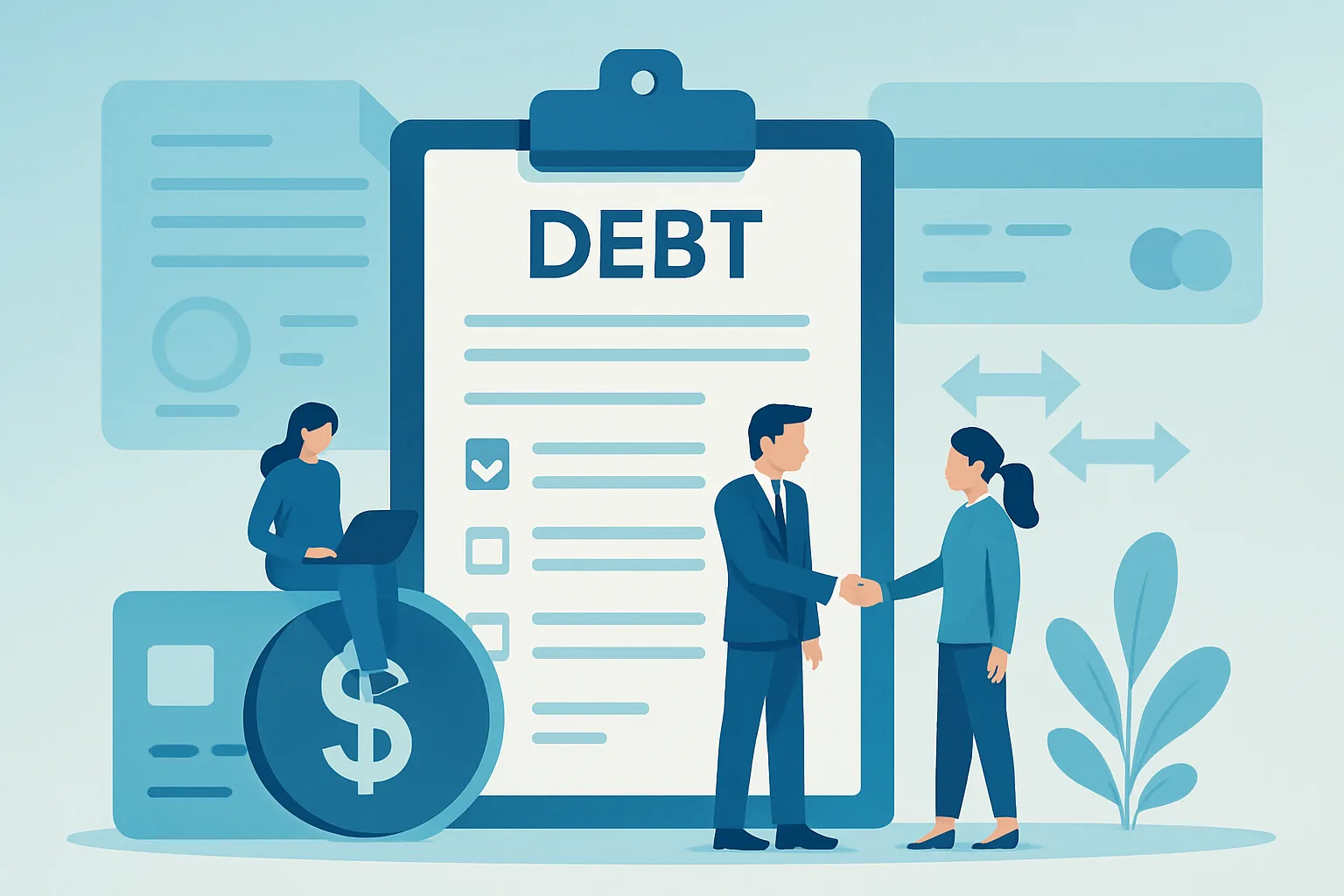
If you're struggling with credit card bills, medical debt, or other unsecured loans, you may have heard about debt settlement as a way to reduce what you owe. It sounds appealing: negotiate with creditors to pay less than the full balance and get out of debt faster. But debt settlement is not a simple fix, and it carries significant risks that can affect your credit, your finances, and even your tax bill.
This article explains how debt settlement works, what it costs, and the potential downsides. We'll also compare it to other debt relief options so you can make an informed decision. Remember, this information is for educational purposes only and does not constitute financial advice. Every financial situation is unique, so consider consulting a qualified professional before choosing a path.
Debt settlement is often marketed as a way to "settle your debts for pennies on the dollar." While it's true that some people do reduce their balances, the process is complex and not always successful. Understanding the mechanics, costs, and consequences is essential before you commit.
What Is Debt Settlement?
Debt settlement, also known as debt negotiation or debt resolution, is a process where you or a company you hire negotiates with your creditors to accept a lump-sum payment that is less than the total amount you owe. In exchange, the creditor forgives the remaining balance. This can provide relief if you are unable to pay your debts in full. For example, if you owe $15,000 on a credit card and the creditor agrees to accept $6,000 as full payment, you save $9,000—but the creditor writes off the rest as a loss.
Debt settlement is typically used for unsecured debts like credit cards, personal loans, and medical bills. Secured debts, such as mortgages or auto loans, are not usually eligible because the lender can repossess the collateral. If you fall behind on a car loan, the lender can take the vehicle, so they have little incentive to settle for less. Similarly, student loans are generally not eligible for settlement unless they are private and in default, and even then, it is rare.
Most people pursue debt settlement through a for-profit company that charges fees for its services. The company will ask you to stop paying your creditors and instead deposit money into a dedicated savings account. Over time, as the account builds up, the company negotiates with each creditor individually. The entire process can take two to four years. During that time, you will not be making any payments to your creditors, which means your debts will become increasingly delinquent.
How Debt Settlement Works: Step by Step
1. Enrollment and Account Setup
You sign a contract with a debt settlement company and agree to a monthly payment amount. The company will ask you to stop paying your creditors directly. Instead, you send your monthly payment to the company, which deposits it into a special account (often called a "trust account" or "settlement account"). This account is typically held at a third-party bank, and you retain ownership of the funds. However, you cannot access the money until a settlement is reached, and the company controls the timing of withdrawals.
For example, suppose you enroll $25,000 in credit card debt. The company might ask you to deposit $500 per month into the trust account. You stop paying your credit card bills entirely, and the company begins building a fund to use for future settlements. During this phase, you may receive frequent calls from creditors and collection agencies, as your accounts become 30, 60, and 90 days past due.
2. Accumulation Period
During this phase, you do not make payments to your creditors. Your debts become delinquent, and late fees, penalty interest, and collection calls begin. The settlement company uses this delinquency to argue that you are a hardship case and that a settlement is the best option for both you and the creditor. The logic is that a creditor would rather recover a portion of the debt than nothing at all, especially if you are showing signs of financial distress such as job loss or medical emergencies.
However, the accumulation period can be stressful. Late fees can add $25 to $40 per month per account, and penalty interest rates may climb to 29% or higher. For example, if you have three credit cards with $5,000 each, you might accrue $100 in late fees and $200 in extra interest each month. Over a year, that adds up to $3,600 in additional charges—money that could have gone toward the principal if you had continued paying.
3. Negotiation
Once enough money has accumulated in your account—usually 25% to 50% of the debt amount—the settlement company contacts the creditor to propose a settlement. Creditors are not obligated to agree; they may refuse or counteroffer. If an agreement is reached, the company pays the lump sum from your account, and the creditor forgives the rest. For instance, if you owe $8,000 on a store card and the company negotiates a settlement of $3,200, the creditor writes off $4,800. You then pay the $3,200 from your trust account, and the debt is considered satisfied.
Negotiations can take weeks or months per creditor. Some creditors, especially large banks, have strict policies and may only settle after the debt has been charged off (typically after 180 days of nonpayment) or sold to a collection agency. Others may be more flexible if you can demonstrate genuine hardship. The settlement company may also negotiate in batches, settling smaller debts first to build momentum.
4. Completion
After all debts are settled, the account is closed. However, the forgiven debt may be reported to the IRS as taxable income, and your credit report will show negative marks for late payments and settled accounts. For example, if you settled $20,000 in debt for $8,000, the $12,000 forgiven amount could be added to your taxable income for the year. Depending on your tax bracket, you might owe $2,000 to $4,000 in additional taxes. Additionally, each settled account will appear on your credit report as "settled for less than full balance," which remains for seven years from the date of first delinquency.
Debt Settlement vs. Debt Consolidation
Debt settlement and debt consolidation are often confused, but they are very different. Debt consolidation involves taking out a new loan to pay off multiple debts, leaving you with one monthly payment. You still owe the full amount, but you may get a lower interest rate or simpler repayment structure. For example, if you have three credit cards with balances totaling $15,000 and interest rates averaging 22%, you might qualify for a personal loan at 10%. You use the loan to pay off the cards, then make a single monthly payment to the loan lender. Over time, you save on interest and pay off the full $15,000.
Debt settlement, on the other hand, aims to reduce the principal balance. However, consolidation does not damage your credit as severely as settlement, and you avoid the risk of lawsuits and tax consequences. For those with good credit and steady income, consolidation is generally a safer option. But if your credit score is already low—say below 600—you may not qualify for a consolidation loan with favorable terms, making settlement seem more attractive. Even then, the risks of settlement often outweigh the benefits.
Costs of Debt Settlement
Debt settlement is not cheap. Most companies charge a fee based on the amount of debt you enroll or the amount saved. Under federal and state regulations, fees are typically capped at 15% to 25% of the enrolled debt. For example, if you enroll $20,000 in debt, you might pay $3,000 to $5,000 in fees. These fees are usually collected only after a settlement is successfully completed, meaning you pay a percentage of each settled debt. So if a $5,000 debt is settled for $2,000, the company might take 20% of the savings ($600) as its fee.
Additionally, you may face:
- Late fees and penalty interest while you stop paying creditors. These can add hundreds or thousands of dollars to your total debt before settlements begin.
- Tax liability on forgiven debt over $600 (the IRS considers it income). For example, if you settle $30,000 in debt for $12,000, you could owe taxes on $18,000.
- Potential legal costs if a creditor sues you to collect the debt. Court fees, attorney fees, and wage garnishment can add significant financial strain.
It's important to read the contract carefully. Some companies charge upfront fees, which are illegal for debt settlement services under FTC rules. Legitimate companies only charge after they successfully settle a debt. Also, be wary of companies that promise to settle all your debts for a fixed low percentage—such as 10% of the balance—without explaining the risks or timeline.
Risks of Debt Settlement
Credit Score Damage
When you stop paying creditors, your credit score will drop significantly. Late payments remain on your credit report for seven years, and a settled account is viewed negatively by lenders. Your score may drop by 100 points or more, and it can take years to recover. For instance, if you had a credit score of 680 before stopping payments, it could fall to 520 within six months. This can affect your ability to rent an apartment, get a cell phone plan, or secure a job that requires a credit check.
No Guarantee of Success
Creditors are not required to settle. Some may refuse, especially if they believe you can pay. Others may sue you before a settlement is reached. If a lawsuit results in a judgment, the creditor can garnish your wages or levy your bank account. For example, if you owe $10,000 on a personal loan and the lender sues you, a court may order your employer to withhold 25% of your paycheck until the debt is paid. This can make it even harder to save for settlements.
Tax Consequences
The IRS generally treats forgiven debt as taxable income. You may receive a Form 1099-C and owe taxes on the amount forgiven. For example, if you settle a $10,000 debt for $4,000, you may owe taxes on the $6,000 difference. There are exceptions, such as insolvency, but they require careful documentation. If you are insolvent—meaning your total liabilities exceed your total assets—you may not owe taxes, but you must file IRS Form 982 to claim this exclusion.
Scams and Unethical Companies
The debt settlement industry has a history of scams. Some companies take fees without settling debts, make false promises, or advise clients to stop paying without explaining the risks. Always check a company's reputation with the Better Business Bureau and your state's attorney general. Look for companies that are accredited by organizations like the American Fair Credit Council (AFCC) or the International Association of Professional Debt Arbitrators (IAPDA). Avoid any company that guarantees results or pressures you to sign up immediately.
Who Should Consider Debt Settlement?
Debt settlement may be an option for people who are already behind on payments and cannot realistically pay off their debts. It is typically not suitable for those with stable income who can manage a repayment plan. Consider debt settlement only if:
- You have a lump sum of cash available (e.g., from a tax refund or inheritance) that is less than your total debt. For example, if you have $8,000 saved and owe $20,000, settlement might allow you to pay off the debt for $8,000.
- You are already delinquent and facing collection actions. If you are 90 days or more past due, creditors may be more willing to negotiate.
- You have explored other options like credit counseling or debt management plans and found them insufficient.
- You understand and accept the credit damage and tax consequences. If you don't need to borrow money for several years, the credit hit may be manageable.
Alternatives to Debt Settlement
Before choosing debt settlement, consider these alternatives:
Credit Counseling and Debt Management Plans
Nonprofit credit counseling agencies offer free or low-cost advice. They can set up a debt management plan (DMP) where you make one monthly payment to the agency, which pays your creditors at reduced interest rates. This does not reduce principal but can lower payments and stop late fees. It has less impact on your credit than settlement. For example, if you owe $15,000 in credit card debt at 22% interest, a DMP might reduce the rate to 8% and allow you to pay off the full balance in four years. Your credit score may dip initially but can recover as you make on-time payments.
Debt Consolidation Loan
If you have good credit, a consolidation loan can combine debts into one lower-interest payment. You pay off the full amount but simplify repayment. This option avoids credit damage and tax issues. For instance, a $10,000 consolidation loan at 9% interest over three years would have monthly payments of about $318, compared to $400 or more in minimum payments on high-interest cards.
Bankruptcy
Chapter 7 bankruptcy can wipe out most unsecured debts, but it severely damages your credit for up to 10 years. It should be a last resort, but it may be better than years of settlement fees and collection harassment. Bankruptcy stops all collection actions immediately, including lawsuits and wage garnishment. However, it requires court fees, attorney costs, and a means test to qualify. For someone with $50,000 in medical debt and no assets, bankruptcy might be a cleaner solution than settlement.
Do-It-Yourself Negotiation
You can try negotiating with creditors yourself. Some creditors have hardship programs that reduce interest or waive fees. This avoids third-party fees and gives you more control. For example, you can call your credit card issuer and explain that you are experiencing financial hardship due to a job loss. They may offer a temporary interest rate reduction or a payment plan. While you may not get a principal reduction, you can avoid the costs and risks of a settlement company.
How Debt Settlement Affects Your Credit
Debt settlement leaves negative marks on your credit report. Late payments (30, 60, 90 days) will appear for each month you miss. Eventually, the account may be charged off or sent to collections. A settled account is often reported as "settled for less than full balance," which is still negative. For example, if you had a credit card with a $5,000 limit and you stopped paying, the account might show 30-day late, then 60-day late, then 90-day late, then "charged off" after 180 days. If a settlement is reached later, the account will show "settled" but the late payments remain.
Your credit score can drop by 100 points or more. Rebuilding takes time, typically two to three years of positive payment history. If you need to borrow money for a car or home soon, settlement may not be the right choice. For instance, if you plan to apply for a mortgage in the next two years, the negative marks from settlement could disqualify you or result in a higher interest rate.
If you're wondering about credit repair after settlement, many people ask do credit repair companies work? Some can help remove errors, but they cannot remove accurate negative information from a settled debt. If a settled account is reported correctly, no credit repair company can legally remove it. Your best bet is to focus on building positive credit history over time.
Steps to Take Before Enrolling in Debt Settlement
- Review your budget: Determine if you can realistically save money each month for settlements. If you can only save $200 per month but have $30,000 in debt, it will take years to accumulate enough for settlements, and creditors may sue in the meantime.
- Check your credit score: Know your starting point. If your score is already low, the impact may be less severe. For example, if your score is 520, a drop to 480 may not matter as much as a drop from 680 to 580.
- Research companies: Look for accredited firms with good reviews. Avoid any that charge upfront fees. Check the Better Business Bureau and consumer complaint databases.
- Understand the timeline: Settlement takes years. Be prepared for collection calls and potential lawsuits. Ask the company how long they expect the process to take and what happens if a creditor refuses to settle.
- Consult a professional: Speak with a nonprofit credit counselor or a bankruptcy attorney to explore all options. A credit counselor can review your finances for free and help you decide if settlement is appropriate.
Tax Implications of Debt Settlement
As mentioned, forgiven debt over $600 is generally taxable. However, you may not owe taxes if you are insolvent (liabilities exceed assets) at the time of settlement. To claim insolvency, you must file IRS Form 982 and provide documentation. For example, if you have $50,000 in debts and only $30,000 in assets (like a car and savings), you are insolvent by $20,000. If you settle $15,000 in debt, the forgiven amount may be excluded from income up to the insolvency amount.
Some debts may be excluded from taxation, such as those discharged in bankruptcy or certain student loans. Consult a tax professional to understand your specific situation. Keep in mind that if you receive a 1099-C from a creditor, you must report it on your tax return even if you believe you are insolvent. Failing to do so can trigger an audit or penalties.
Debt Settlement and Your Credit Score: Recovery Tips
After settlement, focus on rebuilding your credit. Pay all bills on time, keep credit card balances low, and consider a secured credit card. Over time, positive payment history will outweigh the negative marks. For strategies, see how to raise your credit score fast. For example, you might open a secured card with a $200 deposit, use it for small purchases, and pay it off in full each month. Within a year, you could see your score rise from 520 to 620 or higher.
Remember that negative items fall off your report after seven years. With consistent good habits, you can have a decent score well before that. For instance, if you settle debts in year one and make on-time payments for three years, your score could recover to the mid-600s by year four, even though the settled accounts remain on your report.
Common Myths About Debt Settlement
- Myth: Debt settlement works for everyone. Fact: It only works if you have funds to settle and creditors agree. Many people drop out of programs because they cannot save enough or because creditors sue.
- Myth: You can settle all types of debt. Fact: Secured debts (mortgages, car loans) are not eligible. Additionally, some unsecured debts like medical bills may be harder to settle than credit cards.
- Myth: Debt settlement stops collection calls. Fact: Calls often increase until a settlement is reached. Creditors may call multiple times a day, and you may need to change your phone number or use call blocking.
- Myth: Settled debt is erased from your credit report. Fact: It remains for seven years, marked as settled. Lenders will see that you did not pay the full amount, which can affect future credit applications.
The Emotional Toll of Debt Settlement
Beyond the financial risks, debt settlement can take a significant emotional toll. The constant collection calls, letters, and potential lawsuits can cause anxiety, stress, and even depression. Many people report feeling embarrassed or ashamed about their financial situation, which can strain relationships with family and friends. For example, a person enrolled in a settlement program might avoid answering the phone or checking the mail, leading to missed opportunities to negotiate directly with creditors. The accumulation period, which can last months or years, often feels like a waiting game where you have no control over the outcome. It is important to prepare mentally for this stress and seek support from a counselor or trusted advisor if needed.
How to Choose a Debt Settlement Company
If you decide to pursue debt settlement, choosing the right company is critical. Start by verifying that the company is licensed in your state, as some states require debt settlement firms to register. Check for accreditation from organizations like the American Fair Credit Council (AFCC) or the International Association of Professional Debt Arbitrators (IAPDA). Read online reviews on sites like Trustpilot or the Better Business Bureau, but be wary of fake reviews. Ask the company for a written disclosure of all fees, including how they are calculated and when they are charged. Legitimate companies will not charge any fees until a settlement is successfully completed. Also, ask about their success rate—how many debts they typically settle and what percentage of clients complete the program. A reputable company will be transparent about the risks and timeline, not just the potential savings.
Key takeaways
- Debt settlement can reduce your balance but damages your credit, carries fees, and may result in tax liability.
- It is a multi-year process with no guarantee of success; creditors may refuse or sue.
- Alternatives like credit counseling, debt consolidation, or DIY negotiation may be safer and less costly.
- Always research companies thoroughly and avoid upfront fees. Consult a nonprofit credit counselor or attorney.
- Rebuilding credit after settlement takes time but is possible with disciplined financial habits.
Frequently asked questions
How much does debt settlement typically cost?
Will debt settlement stop collection calls and lawsuits?
How long does debt settlement take?
Is forgiven debt taxable?
Can I settle my own debts without a company?
This article is for general informational purposes only and does not constitute financial, legal or credit-repair advice. Always consult a qualified financial advisor or credit counselor about your specific circumstances.

Written & reviewed by
Can OTUEditor
Can OTU is the editor of this site, curating and reviewing every guide for accuracy and clarity.
View all guides →