Debt Relief Options Explained: Consolidation vs Settlement vs Bankruptcy
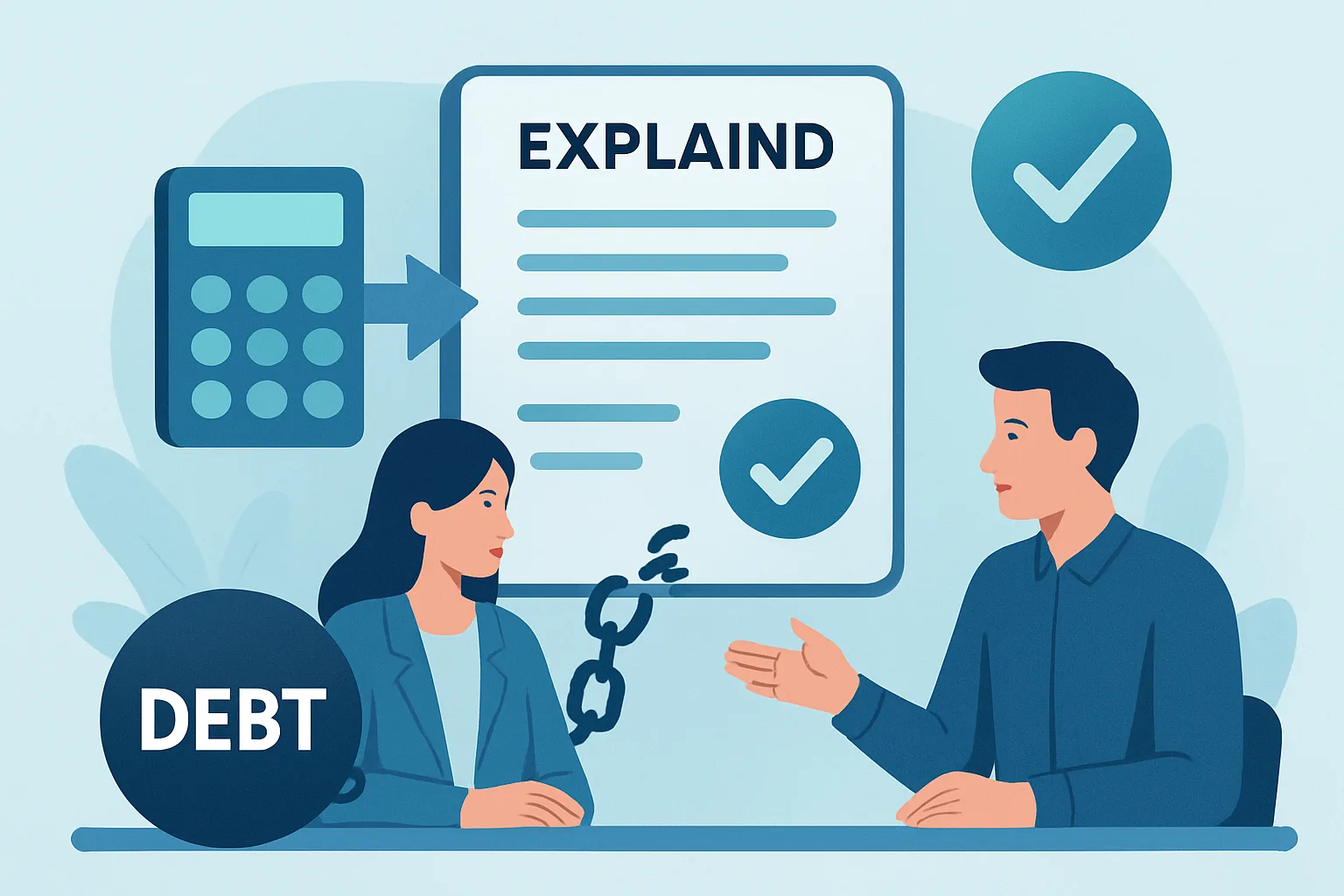
If you're struggling with debt, you've likely come across terms like debt consolidation, debt settlement, and bankruptcy. Each path offers a way out, but they work very differently and affect your finances and credit in distinct ways. Understanding the differences is crucial to making an informed choice that aligns with your goals and circumstances.
This article breaks down each option, compares them side by side, and helps you decide which might be right for you. Remember, this is general information, not financial advice. Always consult a qualified professional before making major financial decisions.
Let's start with the basics: what each option actually does, how it works, and who it's best for.
What Is Debt Consolidation?
Debt consolidation is a strategy where you combine multiple debts into a single loan or payment, ideally with a lower interest rate. The goal is to simplify your payments and reduce the total interest you pay over time. Common methods include balance transfer credit cards, personal loans, or home equity loans. For instance, imagine you have three credit cards with balances of $3,000, $5,000, and $2,000, each carrying an average APR of 22%. By consolidating them into a single personal loan of $10,000 at 10% APR over three years, you not only reduce your monthly payment from roughly $450 across three cards to about $323 per month, but you also save hundreds in interest over the life of the loan—assuming you don't rack up new charges on the old cards.
How Debt Consolidation Works
You take out a new loan large enough to pay off your existing debts. Then you make one monthly payment to the new lender. If the new loan has a lower annual percentage rate (APR) than your current debts, you can save money on interest and pay off the principal faster. For example, if you have $10,000 in credit card debt at 22% APR and consolidate with a personal loan at 10%, you'll pay less interest each month. Let's say you're paying $250 monthly on the credit card at 22%—most of that goes to interest, and it would take over five years to pay off. With a 10% loan, the same $250 monthly payment would clear the debt in about four years, saving you roughly $1,200 in interest. The key is that consolidation does not reduce the principal; it merely restructures the debt into a more manageable form.
Pros and Cons of Debt Consolidation
- Pros: Lower interest rate, single monthly payment, no damage to credit score (in fact, it may improve if you make on-time payments), and you avoid the negative consequences of settlement or bankruptcy.
- Cons: Requires good credit to qualify for the best rates; you still owe the full amount; if you don't address spending habits, you risk racking up new debt.
Debt consolidation is often the best option for people who have manageable debt but are struggling with high interest rates or multiple payments. It's not a magic fix—you still need to pay back what you owe—but it can make the process easier and cheaper. For example, a borrower with a 720 credit score might qualify for a 7% personal loan, while someone with a 620 score might only get 18%, making consolidation less beneficial. Always shop around for the best terms.
What Is Debt Settlement?
Debt settlement (also called debt negotiation or debt resolution) involves negotiating with your creditors to accept a lump sum payment that is less than the full amount you owe. For example, you might pay $6,000 to settle a $10,000 debt. The creditor forgives the remaining $4,000, but that forgiven amount may be taxed as income. Consider a scenario where you owe $15,000 across four credit cards. A settlement company negotiates with each creditor, and after 18 months of saving, you pay $9,000 total to settle all accounts. You save $6,000, but you receive a 1099-C form from the IRS, and that $6,000 is treated as taxable income for the year. If you're in the 22% tax bracket, you owe $1,320 in taxes on the forgiven amount.
How Debt Settlement Works
You typically stop making payments to creditors and instead save money in a dedicated account. Once you have enough, a settlement company negotiates with each creditor. The process can take 2-4 years, and your credit score will drop significantly because you're not making payments. Once a settlement is reached, the account is marked as "settled" or "paid for less than full balance," which stays on your credit report for 7 years. For instance, a client with $20,000 in debt might stop paying all credit cards, deposit $500 monthly into a special account, and after 18 months have $9,000 saved. The settlement company then negotiates with each creditor, often starting with the smallest balance first. The first creditor might accept $1,500 on a $3,000 debt, the second $2,000 on a $5,000 debt, and so on. By the end, the client pays $12,000 total, saving $8,000, but their credit score drops from 680 to 520 due to missed payments and settled accounts.
Pros and Cons of Debt Settlement
- Pros: You may pay less than you owe; you avoid bankruptcy; you can become debt-free faster than with minimum payments.
- Cons: Severe credit damage; you may be sued by creditors; forgiven debt may be taxable; settlement companies charge fees (often 15-25% of enrolled debt).
Debt settlement is best for those who are already behind on payments, have significant debt (often $10,000+), and cannot qualify for consolidation. It's a risky path but can be a lifeline for those facing financial hardship. For example, a single parent with $25,000 in medical and credit card debt who has lost their job might find settlement the only viable option, as they cannot afford full payments and bankruptcy feels too extreme. However, they must be prepared for collection calls and potential lawsuits.
What Is Bankruptcy?
Bankruptcy is a legal process that allows individuals or businesses to eliminate or repay debts under the protection of the federal bankruptcy court. The two most common types for individuals are Chapter 7 and Chapter 13.
Chapter 7 Bankruptcy
Chapter 7 (liquidation) wipes out most unsecured debts like credit cards, medical bills, and personal loans. However, you may have to sell non-exempt assets to pay creditors. It stays on your credit report for 10 years. Eligibility is based on a means test comparing your income to the state median. For example, if you live in Texas and earn $45,000 per year (below the state median of $55,000), you likely qualify for Chapter 7. You would surrender a second car worth $5,000 (if not exempt) to the trustee, but keep your primary residence and a modest vehicle. Within 4-6 months, all credit card and medical debts are discharged, and you start fresh—though your credit score plummets from 650 to 450.
Chapter 13 Bankruptcy
Chapter 13 (reorganization) allows you to keep your assets while repaying a portion of your debts over 3-5 years. It's designed for people with regular income who can commit to a repayment plan. It stays on your credit report for 7 years. For instance, a homeowner with $40,000 in unsecured debt and a steady job earning $60,000 per year might file Chapter 13. The court approves a plan where they pay $800 monthly for 5 years, totaling $48,000—enough to cover all debts plus fees. They keep their house and car, and after 5 years, any remaining unsecured debt is discharged. Their credit score drops to 500 initially but recovers faster than with Chapter 7 because they are making regular payments.
Pros and Cons of Bankruptcy
- Pros: Immediate relief from creditor harassment (automatic stay); most debts are discharged; you get a fresh start.
- Cons: Severe credit damage (hard to get loans, credit cards, or even rent an apartment); public record; some debts (student loans, taxes, child support) are not dischargeable; legal fees and court costs.
Bankruptcy is a last resort when other options have failed. It provides the most dramatic relief but comes with the longest-lasting consequences. For example, after a Chapter 7 discharge, you may not qualify for a mortgage for 2-4 years, and you'll pay higher interest rates on any credit you do get.
Debt Relief vs Debt Consolidation: What's the Difference?
Many people confuse debt relief with debt consolidation. Debt relief is an umbrella term that includes any strategy to reduce or eliminate debt, such as settlement, bankruptcy, or even consolidation. Debt consolidation is a specific tool that combines debts but doesn't reduce the amount owed. So when comparing debt relief vs debt consolidation, remember that consolidation is just one type of relief. Other forms, like settlement, actually reduce the principal.
If you're considering debt relief vs consolidation, think about your goal: if you want to lower your monthly payment and interest rate without reducing the total debt, consolidation may work. If you need to reduce the total debt because you can't pay it all, settlement or bankruptcy might be necessary. For instance, if you owe $30,000 and can afford $600 monthly, consolidation at 8% over 5 years would cost $608 monthly—doable. But if you can only afford $300 monthly, settlement might reduce the debt to $18,000, making payments feasible, albeit with credit damage.
Debt Settlement vs Debt Consolidation: Which Is Better?
The question of debt settlement vs debt consolidation often comes down to your credit health and ability to pay. Consolidation is generally better if you have good credit and can qualify for low rates. It preserves your credit score and doesn't involve settling for less. Settlement is better if you're already behind and can't afford full payments, but it will damage your credit.
When weighing debt consolidation vs settlement, consider the total cost. Consolidation may cost less in the long run because you avoid fees and credit damage. Settlement can reduce the principal but often comes with high fees and tax consequences. For example, consolidating $20,000 at 10% over 4 years costs about $507 monthly and $4,336 in interest total. Settling the same debt for $12,000 with 20% fees ($2,400) and taxes on the $8,000 forgiven amount ($1,760 at 22%) brings the total to $16,160—less than $20,000 but more than the consolidation interest alone. Plus, the credit damage from settlement may cost you more in higher future interest rates.
Is Debt Consolidation Better Than Bankruptcy?
For most people, is debt consolidation better than bankruptcy? Yes, if you can afford to pay back the debt. Consolidation avoids the severe credit impact of bankruptcy and doesn't require court involvement. However, if your debt is so large that you can't realistically pay it back even with lower interest, bankruptcy may be the only way out.
Bankruptcy is a serious step that should only be taken after exploring all other options. Consolidation is a proactive move that shows creditors you're taking responsibility, while bankruptcy is a legal declaration that you cannot pay. For instance, a person with $50,000 in debt and a $40,000 annual income might find that even a 5% consolidation loan requires $943 monthly—impossible. Bankruptcy, however, could discharge most of that debt, allowing a fresh start despite the credit hit.
Bankruptcy Versus Debt Settlement: Which Is Worse for Credit?
Both bankruptcy versus debt settlement hurt your credit, but bankruptcy is generally worse. A Chapter 7 bankruptcy stays on your credit report for 10 years, while a settled account stays for 7 years. However, a settlement still shows that you didn't pay in full, which lenders view negatively.
When considering is bankruptcy better than debt settlement, think about the amount of debt. If you have a large amount of debt that you cannot pay even with settlement, bankruptcy might provide a cleaner slate. But if you can settle for a reduced amount, that may be less damaging than bankruptcy. For example, settling $15,000 for $9,000 results in a 7-year mark, but you can rebuild credit with secured cards. Bankruptcy on $50,000 discharges everything but leaves a 10-year scar, making it harder to rent an apartment or get a job in finance. The choice depends on your debt level and future plans.
Debt Consolidation or Debt Settlement: How to Choose
Deciding between debt consolidation or debt settlement depends on your financial situation. Here's a simple guide:
- Choose debt consolidation if: you have good credit (680+), you can afford the monthly payments, and you want to avoid credit damage.
- Choose debt settlement if: you are already behind on payments, your credit is already damaged, and you cannot afford to pay the full amount.
If you're unsure, consider speaking with a nonprofit credit counselor who can review your finances and recommend the best path. For instance, a counselor might run a budget analysis and find that you have $200 monthly surplus—enough for consolidation but not full payments. They'd then guide you toward a debt management plan or consolidation loan.
How Each Option Affects Your Credit Score
Your credit score is a key factor in choosing a debt relief option. Here's how each one impacts it:
| Option | Short-Term Impact | Long-Term Impact |
|---|---|---|
| Debt Consolidation | May cause a small dip due to hard inquiry and new account | Positive if payments are made on time; can improve score over time |
| Debt Settlement | Severe drop (100+ points) due to missed payments and settled accounts | Negative for 7 years; score may recover slowly with new credit |
| Bankruptcy | Extreme drop (200+ points); public record | Negative for 7-10 years; very difficult to get credit |
If preserving your credit is important, consolidation is the best choice. If you're already in a crisis, settlement or bankruptcy may be necessary despite the damage. For example, a consolidation loan might drop your score from 720 to 690 temporarily, but after 12 months of on-time payments, it could rise to 740. Settlement, however, could drop a 650 score to 520, and it might take 3-4 years to get back to 600.
Cost Comparison: Fees and Hidden Costs
Each option comes with costs beyond the debt itself:
- Debt consolidation: Origination fees (1-8% of loan amount), balance transfer fees (3-5%), and interest charges if not paid off quickly.
- Debt settlement: Fees typically 15-25% of enrolled debt; forgiven debt may be taxable as income (IRS Form 1099-C).
- Bankruptcy: Court filing fees ($300-$400), attorney fees ($1,000-$3,000 for Chapter 7, $3,000-$6,000 for Chapter 13), and credit counseling course fees.
Always read the fine print and ask about all fees before committing. For instance, a $15,000 consolidation loan with a 5% origination fee means you only receive $14,250, but you still owe $15,000. A settlement company charging 20% on $20,000 in debt costs $4,000 in fees, plus potential taxes. Bankruptcy attorney fees for Chapter 7 might be $1,500, but you also pay $338 in court fees. These costs can add up, so factor them into your decision.
When to Consider Professional Help
Navigating debt relief options can be overwhelming. Nonprofit credit counseling agencies offer free or low-cost advice. They can help you create a debt management plan (DMP) as an alternative to consolidation, settlement, or bankruptcy. A DMP is similar to consolidation but through a counseling agency.
If you're considering settlement or bankruptcy, consult a licensed attorney or a reputable debt settlement company. Be wary of scams that promise quick fixes or charge upfront fees (illegal under the Telemarketing Sales Rule). For example, a legitimate nonprofit counselor might charge $50 for a budget review and then set up a DMP with reduced interest rates from creditors. In contrast, a scam settlement company might demand $2,000 upfront and then do nothing, leaving you worse off.
The Emotional and Psychological Impact of Debt Relief
Beyond the financial numbers, each debt relief option carries a significant emotional toll. Debt consolidation often provides relief and a sense of control because you're proactively managing your finances with a clear repayment plan. For example, a borrower who consolidates $12,000 in credit card debt into a single loan may feel less anxious about multiple due dates and high interest, leading to better sleep and reduced stress.
Debt settlement, however, can be emotionally draining. The process of stopping payments, facing collection calls, and living with uncertainty for 2-4 years can cause anxiety, depression, and strained relationships. A person settling $25,000 in debt might endure daily phone calls from creditors, threats of lawsuits, and the shame of not paying in full, even if the end result is a reduced balance.
Bankruptcy carries a stigma that many find difficult to bear. The public record, the need to attend court hearings, and the long-term credit impact can lead to feelings of failure and isolation. For instance, a small business owner who files Chapter 7 after a failed venture might struggle with self-esteem and worry about how friends and family perceive them. It's important to seek emotional support—whether through counseling, support groups, or trusted friends—when pursuing any debt relief path.
How to Rebuild Credit After Debt Relief
No matter which option you choose, rebuilding your credit is a critical step toward financial recovery. After debt consolidation, you can continue building credit by making on-time payments and keeping credit utilization low. For example, if you consolidate credit card debt, avoid using those cards again and focus on paying down the consolidation loan. Within 6-12 months, your score should improve.
After debt settlement, start with a secured credit card—deposit $200 to get a $200 limit, use it for small purchases, and pay in full each month. After 6 months, you may qualify for an unsecured card. Also, consider becoming an authorized user on a family member's card with good history. Over 2-3 years, you can raise your score from 520 to 650.
After bankruptcy, rebuilding takes longer. Begin with a secured card 6-12 months post-discharge, then add a credit-builder loan from a credit union. Make all payments on time, and keep credit utilization under 30%. After 2 years, you might qualify for a car loan with a higher interest rate. By year 4, your score could reach 650, and by year 7, 700—though the bankruptcy remains on your report for 7-10 years. Patience and discipline are key.
How to Dispute Errors on Your Credit Report
No matter which debt relief path you choose, it's important to monitor your credit report for errors. Mistakes can lower your score and affect your ability to get loans. If you find errors, how to dispute errors on your credit report is a straightforward process: file a dispute with the credit bureau online or by mail, and they must investigate within 30 days.
Regularly checking your credit report can also help you track the progress of your debt relief efforts. For example, after a settlement, ensure the account is marked as "settled" and not "charged off" or "collection." After bankruptcy, verify that discharged debts show a zero balance. Errors are common—one study found that 1 in 5 credit reports contain mistakes—so disputing them can give your score a quick boost.
Key Takeaways
- Debt consolidation combines debts into one payment with lower interest; best for those with good credit who can pay the full amount.
- Debt settlement negotiates to pay less than you owe; suitable for those in financial hardship but damages credit.
- Bankruptcy is a legal last resort that wipes out most debts but has severe long-term credit consequences.
- Compare costs, credit impact, and your ability to pay before choosing. Always seek professional advice for your specific situation.
- Monitor your credit report and dispute any errors to maintain accuracy.
Frequently asked questions
What is the difference between debt consolidation and debt settlement?
Is debt consolidation better than bankruptcy?
How long does debt settlement stay on your credit report?
Can I negotiate debt settlement on my own?
What debts are not dischargeable in bankruptcy?
This article is for general informational purposes only and does not constitute financial, legal or credit-repair advice. Always consult a qualified financial advisor or credit counselor about your specific circumstances.

Written & reviewed by
Can OTUEditor
Can OTU is the editor of this site, curating and reviewing every guide for accuracy and clarity.
View all guides →