Nonprofit Debt Consolidation: How It Works and Where to Find It

This is different from taking out a new loan to pay off debts (a debt consolidation loan). Instead, you're using a structured repayment plan, often called a Debt Management Plan (DMP). The agency doesn't lend you money — it acts as a middleman to make repayment easier and cheaper.
Most legitimate nonprofit credit counseling agencies are members of the National Foundation for Credit Counseling (NFCC) or the Financial Counseling Association of America (FCAA). They charge modest setup and monthly fees (typically $30–$50 per month) and are funded partly by creditors who pay a "fair share" contribution.
How Does Nonprofit Debt Consolidation Work?
The process usually follows these steps:
- Free initial counseling session: You speak with a certified credit counselor who reviews your income, expenses, and debts. They help you create a budget and determine if a DMP is right for you.
- Enrollment in a Debt Management Plan: If you choose to proceed, the agency contacts your creditors to negotiate lower interest rates and waived fees. Creditors are not required to agree, but many do for consumers enrolled in reputable programs.
- Single monthly payment: You make one payment to the agency each month (usually via automatic withdrawal). The agency distributes the funds to your creditors according to the agreed-upon plan.
- Ongoing support: You continue making payments until all debts are paid off — typically 3 to 5 years. The agency provides monthly statements and can adjust the plan if your financial situation changes.
It's important to note that you must stop using the credit cards enrolled in the plan. You can keep one card for emergencies, but the goal is to avoid taking on new debt while you're paying off old balances.
What Happens During the Initial Counseling Session
During your free session, the counselor will ask about your total debt, income, and monthly expenses. They will also pull your credit report to see your payment history. This helps them assess whether a DMP is realistic for you.
For example, if you have $15,000 in credit card debt with an average 22% APR, the counselor will calculate how long it would take to pay off at minimum payments. They will then show you how a DMP with reduced rates could save you thousands in interest.
The counselor will also discuss alternatives like debt settlement or bankruptcy. Their goal is to find the best path for your unique situation, not to push you into a plan.
Negotiating with Creditors
Once you enroll, the agency contacts each creditor to request lower interest rates and waived fees. Creditors often agree because they prefer receiving consistent payments over time rather than sending your account to collections.
For instance, a credit card with a 24% APR might be reduced to 6% under a DMP. Late fees and over-limit fees are typically waived as well. This makes your monthly payment more manageable.
Not all creditors participate, but most major issuers work with NFCC and FCAA agencies. The agency will inform you which creditors agreed to the terms before you commit.
Making Your Monthly Payment
You make one payment to the agency each month, usually via automatic withdrawal from your bank account. The agency then distributes the money to each creditor according to the negotiated plan.
For example, if your total monthly payment is $400, the agency sends $150 to Card A, $100 to Card B, $80 to Card C, and $70 to Card D. You receive a monthly statement showing exactly where your money went.
This simplifies your finances and reduces the chance of missing a payment. You only have one due date to remember instead of multiple.
Nonprofit vs. For-Profit Debt Consolidation: What's the Difference?
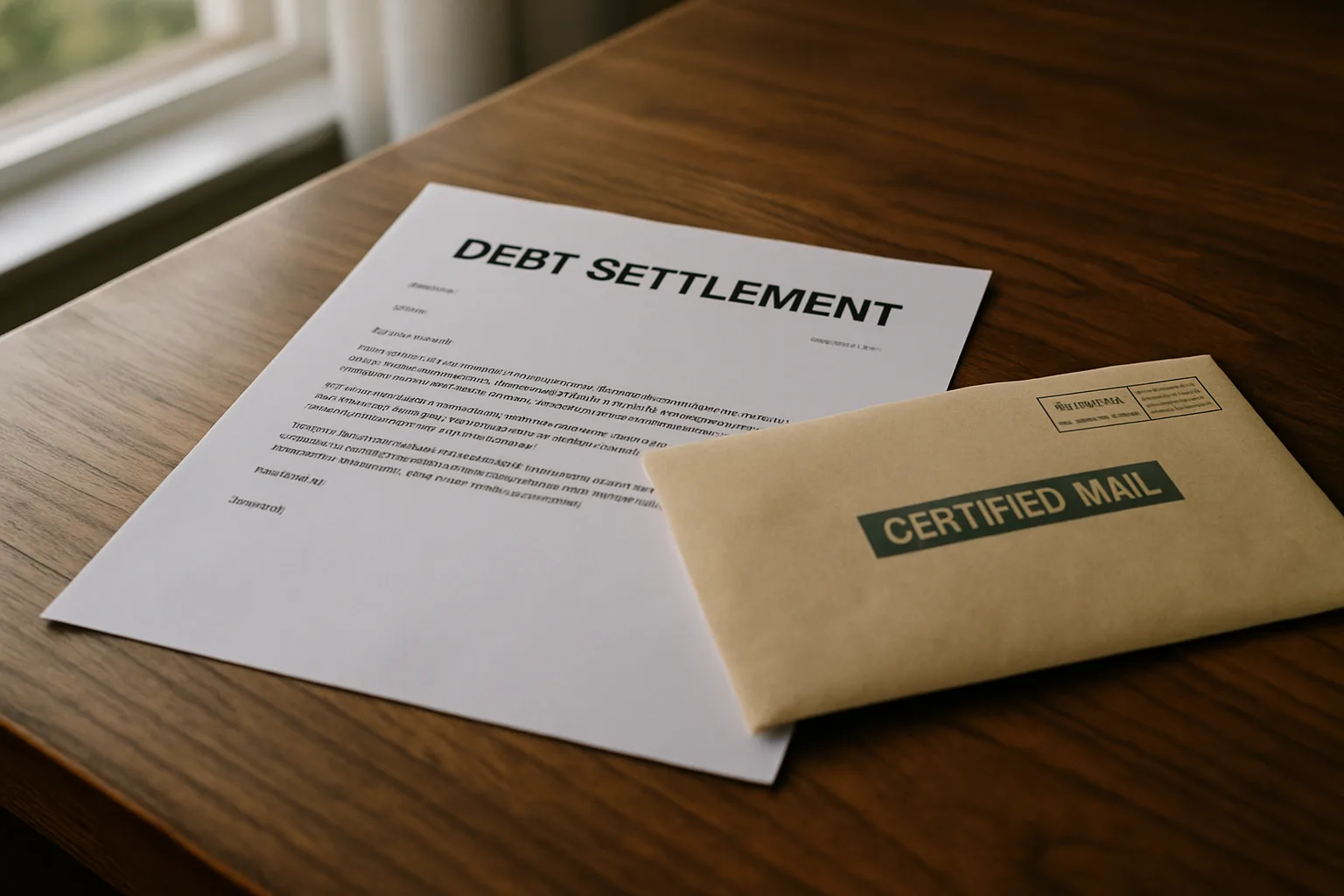
You'll find both nonprofit and for-profit companies offering debt consolidation services. The key differences are in fees, motivation, and transparency.
| Feature | Nonprofit Credit Counseling | For-Profit Debt Consolidation |
|---|---|---|
| Fee structure | Low setup fee (~$30–$50) + monthly fee (~$25–$50) | Often higher fees; may charge a percentage of debt enrolled |
| Funding | Partly from creditor "fair share" contributions | Entirely from consumer fees |
| Primary goal | Help you become debt-free with financial education | Profit from your enrollment |
| Services | Free budget counseling, educational resources | May focus only on selling the consolidation plan |
| Regulation | Often accredited by NFCC or FCAA | Varies; some are legitimate, others are predatory |
Nonprofit doesn't automatically mean trustworthy — some for-profit companies also provide good service. But nonprofit agencies are generally more focused on your financial well-being than on making money from your debt.
Why Creditor "Fair Share" Contributions Matter
Nonprofit agencies receive a "fair share" contribution from creditors, usually a small percentage of the payments they collect. This helps keep your fees low — often $30–$50 per month instead of hundreds.
For-profit companies don't get this funding, so they rely entirely on your fees. This can lead to higher costs for you. Some for-profit firms charge enrollment fees of $500 or more, plus monthly fees that eat into your payment.
Always ask about fee structures before signing up. A reputable nonprofit will provide a clear written agreement with all costs disclosed upfront.
How to Spot a Predatory For-Profit Company
Some for-profit companies use deceptive marketing to appear nonprofit. They may use names like "Debt Help Center" or "Credit Solutions" without being accredited.
Watch for companies that promise to reduce your debt by 50% or more quickly. Legitimate DMPs take 3–5 years and involve paying the full balance, not settling for less.
Also avoid companies that ask for payment before providing any services. A legitimate agency will offer free counseling first and only charge fees after you enroll.
Debt Relief vs. Debt Consolidation: What's the Difference?
You'll often see the terms "debt relief" and "debt consolidation" used interchangeably, but they're not the same. Debt relief is a broad category that includes any strategy to reduce or manage debt — such as debt settlement, bankruptcy, or credit counseling. Debt consolidation is a specific tool within that category.
When people search "debt relief vs debt consolidation," they're usually trying to understand which approach is better. The answer depends on your financial situation. Debt consolidation (especially through a nonprofit) works best if you have a steady income and can afford to pay the full balance over time.
Debt relief options like settlement or bankruptcy are more drastic and are typically used when you can't pay the full amount.
Similarly, "debt relief vs consolidation" and "debt resolution vs debt consolidation" are common comparisons. Debt resolution is another term for debt settlement — where you negotiate to pay less than you owe. That's very different from consolidation, where you pay the full balance but with better terms.
When Debt Relief Makes More Sense Than Consolidation
If you are already behind on payments and have no realistic way to catch up, debt relief options like settlement may be more appropriate. Consolidation requires consistent monthly payments, which you may not be able to afford.
For example, if you have $20,000 in debt but only $200 per month to spare, a DMP might not work because the minimum payment would be higher. In that case, settlement or bankruptcy might be the only path.
However, debt relief options come with serious consequences. Settlement damages your credit and forgiven debt may be taxable. Bankruptcy stays on your report for years.
Always explore consolidation first if you can afford it.
Debt Settlement vs. Debt Consolidation: Which Is Better?

This is one of the most common questions people ask. The short answer: debt consolidation is generally safer and less damaging to your credit, but debt settlement can reduce the total amount you owe.
Here's a side-by-side look:
| Factor | Nonprofit Debt Consolidation (DMP) | Debt Settlement |
|---|---|---|
| Credit impact | Minimal to moderate; late payments stop once enrolled; credit score may improve over time | Severe; you stop paying creditors, which causes delinquencies and charge-offs; score drops significantly |
| Total cost | You pay the full balance plus modest fees, but with lower interest | You pay a lump sum less than the balance, plus high fees (15–25% of enrolled debt) |
| Time to complete | 3–5 years | 2–4 years |
| Risk | Low; you stay current on payments | High; creditors may sue you; forgiven debt may be taxable |
| Best for | People who can afford monthly payments but need lower interest | People who are already behind and can't pay the full amount |
If you can make your monthly payments but the interest is crushing you, nonprofit debt consolidation is usually the better choice. If you're already in default and can't see a way to pay the full balance, debt settlement might be worth exploring — but understand the risks. For a deeper dive, read our guide on debt settlement.
Real-World Example: Consolidation vs. Settlement
Imagine you owe $15,000 across three credit cards at an average 22% APR. With a DMP, your interest might drop to 6%, and your monthly payment could be $350. You would pay off the full $15,000 plus fees over about 4 years.
With debt settlement, you would stop paying for 6–12 months, letting your accounts become delinquent. A settlement company might negotiate a lump sum of $7,500, but you would pay fees of $1,500–$3,750. Your credit score would drop by 100–150 points.
In this scenario, consolidation saves you from credit damage and potential lawsuits. Settlement saves you money upfront but costs you in credit health and stress.
Debt Management Plan vs. Debt Consolidation: Are They the Same?
Many people use "debt management plan" and "debt consolidation" interchangeably, but technically they're different. A debt management plan is a specific type of nonprofit debt consolidation. The terms "debt management vs debt consolidation" often refer to the same thing when talking about credit counseling programs.
However, "debt consolidation" can also refer to a debt consolidation loan — where you borrow money to pay off your debts. That's a different product. A debt management plan is not a loan; it's a repayment program.
So when you compare "debt management plan vs debt consolidation," you're really comparing two different methods: a structured repayment plan vs. a new loan.
Which is better? A DMP is ideal if you can't qualify for a low-interest consolidation loan due to credit issues. A consolidation loan might be better if you have good credit and can get a rate lower than your current cards.
Comparing DMP and Consolidation Loan Costs
A DMP typically charges a setup fee of $30–$50 and a monthly fee of $25–$50. Over 4 years, that totals about $1,200–$2,400 in fees. Meanwhile, a consolidation loan might have an origination fee of 1–6% but no monthly fees.
For example, a $15,000 consolidation loan at 8% APR with a 3% origination fee would cost $450 upfront. Your monthly payment would be about $470 for 36 months. Total interest would be around $1,200.
With a DMP, your monthly payment might be lower because of negotiated interest rates, but you pay fees. Compare the total cost of both options before deciding.
Is Debt Consolidation Better Than Bankruptcy?
Bankruptcy is a legal process that can discharge most unsecured debts, but it comes with serious long-term consequences. The question "is debt consolidation better than bankruptcy" depends on your financial situation and goals.
Bankruptcy stays on your credit report for 7–10 years, can affect your ability to rent an apartment or get a job, and may require you to sell assets (Chapter 7). Debt consolidation, on the other hand, has a much smaller credit impact and allows you to repay your debts in full.
Generally, debt consolidation is better if you have a steady income and can afford to pay back what you owe over time. Bankruptcy is typically a last resort when you have no realistic way to repay your debts. If you're considering bankruptcy, it's wise to first speak with a credit counselor — many people find that a DMP can help them avoid bankruptcy altogether.
When Bankruptcy Might Be the Only Option
If your total unsecured debt exceeds your annual income and you have no way to increase earnings, bankruptcy may be unavoidable. For example, if you owe $50,000 but earn $30,000 per year with high rent and medical expenses, a DMP might not be feasible.
Bankruptcy can wipe out credit card debt, medical bills, and personal loans. However, it does not discharge student loans, child support, or tax debts in most cases. You also lose any assets that are not exempt under state law.
Speak with a bankruptcy attorney before making this decision. A credit counselor can also help you understand if a DMP could work instead.
Debt Consolidation vs. Settlement: A Quick Comparison
We touched on this earlier, but let's clarify "debt consolidation vs settlement" directly. Both are debt relief strategies, but they work very differently.
- Debt consolidation (especially nonprofit DMP): You pay the full balance over time with lower interest.
No debt is forgiven. Your credit is minimally impacted.
- Debt settlement: You stop paying creditors, save money, and then negotiate to pay a lump sum for less than you owe. The difference is forgiven, but your credit takes a big hit, and you may owe taxes on the forgiven amount.
For most people, consolidation is the safer, more predictable path.
Settlement is riskier but can provide a fresh start if you're truly unable to pay.
Tax Implications of Debt Settlement
When a creditor forgives $5,000 or more of debt, the IRS considers that taxable income. You may receive a Form 1099-C and owe taxes on the forgiven amount. This can be a surprise if you don't plan for it.
With consolidation, there is no forgiven debt, so no tax liability. This is another reason consolidation is often preferred. Always consult a tax professional before choosing settlement.
Some states also tax forgiven debt, adding to the cost. Research your state's laws before proceeding with settlement.
Where to Find Legitimate Nonprofit Debt Consolidation Programs
Finding a trustworthy nonprofit credit counseling agency is crucial. Here are some steps to ensure you're working with a legitimate organization:
- Check accreditation: Look for agencies accredited by the National Foundation for Credit Counseling (NFCC) or the Financial Counseling Association of America (FCAA).
- Verify with your state's attorney general: Many states regulate credit counseling agencies. Check for complaints or disciplinary actions.
- Read the fine print: Ask for a written agreement that clearly states all fees, the length of the program, and what happens if you miss a payment.
- Avoid upfront fees: Legitimate agencies typically charge a modest setup fee after you enroll, not before. Be wary of any company that demands payment before providing services.
- Get referrals: Ask friends, family, or a financial advisor for recommendations. You can also check the Better Business Bureau (BBB) for ratings.
Some well-known nonprofit agencies include Money Management International, GreenPath Financial Wellness, and InCharge Debt Solutions. These organizations have been helping consumers for decades.
How to Verify Accreditation
Visit the NFCC website and use their "Find an Agency" tool to locate accredited counselors near you. You can also call them directly to confirm an agency's membership status.
FCAA also maintains a list of member agencies. Check both organizations to ensure the agency is legitimate. Some agencies claim to be nonprofit but are not accredited by either group.
If an agency refuses to provide proof of accreditation, consider that a red flag. Legitimate agencies are proud of their credentials and will share them freely.
What to Expect During the Enrollment Process
After your free counseling session, the agency will present a proposed DMP. This document will list each creditor, the negotiated interest rate, and your monthly payment amount.
You will need to sign an agreement that outlines the terms. Take time to review it carefully. Ask about the cancellation policy and what happens if you miss a payment.
Once you sign, the agency contacts your creditors to finalize the plan. This process can take 2–4 weeks. During this time, continue making minimum payments to avoid late fees.
How to Choose Between Debt Relief Options
With so many options — debt consolidation, debt settlement, bankruptcy, debt management — it can be hard to decide. Here's a simple framework to help you think through it:
- Assess your ability to pay: Can you afford a monthly payment that covers your minimums plus some extra? If yes, consolidation or a DMP may work. If not, settlement or bankruptcy might be needed.
- Consider your credit goals: If you want to protect your credit score, consolidation is better. If your credit is already damaged and you need a fresh start, settlement or bankruptcy might be acceptable.
- Think about total cost: Consolidation costs less in the long run because you pay the full balance. Settlement costs less upfront but can have hidden costs (taxes, fees).
- Evaluate your timeline: A DMP takes 3–5 years. Settlement takes 2–4 years. Bankruptcy can be over in a few months but stays on your record for years.
For a complete overview of all your options, check out our guide on debt relief options.
Using a Decision Matrix
Create a simple table with your options and rate each on a scale of 1–5 for credit impact, cost, time, and risk. This visual comparison can clarify which path aligns with your priorities.
For example, if credit score is your top priority, consolidation would score 4–5, while settlement would score 1–2. If cost is most important, settlement might score higher.
Share this matrix with a credit counselor to get their professional input. They can help you weigh the trade-offs objectively.
Pros and Cons of Nonprofit Debt Consolidation
Like any financial strategy, nonprofit debt consolidation has advantages and disadvantages. Here's a balanced look:
Pros
- Lower interest rates: Creditors often reduce rates to 0–10% for DMP participants.
- Single monthly payment: Simplifies your finances and reduces stress.
- No new debt: You're not borrowing more money; you're paying off what you owe.
- Credit counseling: You get free budgeting advice and financial education.
- Less credit damage: Your credit score may dip initially but can recover as you make on-time payments.
Cons
- You must close credit accounts: Most creditors require you to close the cards enrolled in the plan, which can hurt your credit utilization.
- Not all debts qualify: Secured debts (like mortgages or car loans) and student loans are typically not included.
- Fees: While modest, the monthly fee adds up over the life of the plan.
- No debt reduction: You pay the full balance — no forgiveness.
- Commitment required: You need to stick with the plan for 3–5 years. Missing payments can lead to termination.
How to Mitigate the Cons
To minimize the impact of closing accounts, keep one card open for emergencies. Use it sparingly and pay off the balance each month to avoid new debt.
If you have secured debts, continue making separate payments on time. A DMP only covers unsecured debts, so your mortgage or car loan remains your responsibility.
Set up automatic payments to avoid missing a DMP payment. Most agencies offer this option, and it ensures you stay on track.
Common Myths About Nonprofit Debt Consolidation
Let's clear up some misconceptions:
- Myth: Nonprofit means free. While initial counseling is usually free, the DMP itself has fees. They're low, but not zero.
- Myth: It will ruin your credit. Actually, it can help your credit over time by reducing your utilization and ensuring on-time payments. The initial impact is small.
- Myth: All nonprofit agencies are the same. Quality varies. Some are excellent, others are poorly run. Do your research.
- Myth: You can keep using your credit cards. Most plans require you to stop using the enrolled cards. You can keep one card for emergencies, but the goal is to stop adding debt.
Myth: Creditors Will Never Agree to Lower Rates
Many people believe creditors won't negotiate, but this is false. Major credit card issuers like Chase, Bank of America, and Citibank regularly work with NFCC and FCAA agencies.
In fact, these creditors have dedicated departments that handle DMP accounts. They prefer receiving consistent payments over sending accounts to collections, which costs them money.
If a creditor refuses to participate, the agency will inform you before you enroll. You can then decide if the plan is still worthwhile.
What Happens After You Complete a Nonprofit Debt Consolidation Plan?
Once you make the final payment, the agency will confirm that all debts are paid in full. You'll receive a statement showing zero balances. Your credit report will reflect the accounts as "paid as agreed" or "closed," which is positive.
After the plan, you can start rebuilding your credit. Consider getting a secured credit card or a small credit-builder loan. The budgeting skills you learned during the plan will help you stay on track.
Many agencies offer post-program support to help you maintain your financial health.
It's also a good time to build an emergency fund so you don't have to rely on credit if unexpected expenses arise. The goal is to break the cycle of debt and create a stable financial future.
How to Rebuild Credit After a DMP
Start by checking your credit report for errors. Dispute any inaccuracies that could drag down your score. You can get free reports from AnnualCreditReport.com.
Apply for a secured credit card with a small deposit, such as $200–$500. Use it for small purchases and pay the balance in full each month. This builds positive payment history.
After 6–12 months of on-time payments, you may qualify for an unsecured card. Continue using credit responsibly to improve your score further.
How Nonprofit Debt Consolidation Affects Your Credit Score
Many people worry about the credit impact of enrolling in a nonprofit debt consolidation program. The truth is that the effect is usually small and temporary. When you first enroll, your credit score may dip slightly because you close credit card accounts.
However, the long-term benefits often outweigh this initial drop. As you make consistent on-time payments through the DMP, your payment history improves. Your credit utilization ratio also decreases because your balances are being paid down.
Over the 3-to-5-year plan, your score can actually rise significantly. Creditors report your accounts as "paid as agreed" once you complete the program. This positive history stays on your credit report for up to 10 years.
Understanding the Initial Score Drop
When you close credit cards, your total available credit decreases. This can increase your credit utilization ratio, which may lower your score temporarily. For example, if you had $10,000 in total credit and close $5,000, your utilization could spike.
However, as you pay down balances, your utilization drops again. After a few months, the positive effect of on-time payments usually offsets the initial dip. Most people see their scores recover within 6–12 months.
If you keep one card open with a low balance, the impact is even smaller. Discuss this strategy with your counselor before enrolling.
What Types of Debt Can Be Included in Nonprofit Debt Consolidation?
Nonprofit debt consolidation typically covers unsecured debts only. This includes credit cards, store cards, medical bills, personal loans, and some collection accounts. Secured debts like mortgages, auto loans, and student loans are usually excluded.
Some agencies may also include payday loans or certain types of installment loans. However, each creditor must agree to participate in the plan. Not all creditors will lower their rates, though most do for reputable programs.
If you have a mix of secured and unsecured debt, a DMP may still be helpful for the unsecured portion. You would continue making separate payments on your mortgage or car loan. The goal is to simplify the most stressful part of your debt load.
Debts That Typically Cannot Be Included
Student loans, both federal and private, are almost never included in a DMP. These loans have their own repayment options, such as income-driven plans or deferment.
Tax debts owed to the IRS or state government are also excluded. You must work directly with tax authorities to set up a payment plan.
Secured debts like auto loans and mortgages require collateral. If you stop paying, the lender can repossess your car or foreclose on your home. These debts are best managed separately.
How to Prepare for Your First Credit Counseling Session
Before you meet with a credit counselor, gather your financial documents. You'll need a list of all your debts, including balances, interest rates, and minimum payments. Also bring your monthly income and expense information.
Be honest about your spending habits and financial struggles. The counselor is there to help, not judge. They will use this information to create a realistic budget and determine if a DMP is right for you.
Ask questions during the session. Inquire about fees, the length of the program, and what happens if you miss a payment. A good counselor will answer everything clearly without pressure.
What to Bring to Your Session
Bring recent pay stubs, bank statements, and a list of your monthly bills. Include rent or mortgage, utilities, groceries, transportation, and insurance costs.
Also bring your most recent credit card statements and any collection notices. The more information you provide, the more accurate the counselor's advice will be.
If you have a spouse or partner, consider attending together. Joint debts affect both of you, and having both perspectives helps create a comprehensive plan.
Red Flags to Watch for in Debt Consolidation Companies
Not all companies that claim to offer nonprofit debt consolidation are legitimate. Watch for these warning signs:
- High upfront fees: Legitimate agencies charge modest fees after enrollment, not before. Avoid any company that demands payment before providing services.
- Promises of quick results: Debt consolidation takes 3–5 years. If a company promises to eliminate your debt in months, it's likely a scam.
- Pressure to enroll immediately: Reputable agencies give you time to think. High-pressure sales tactics are a red flag.
- No accreditation: Always verify NFCC or FCAA membership. Lack of accreditation is a major warning sign.
- Vague fee disclosures: If the company won't provide a written agreement with clear fees, walk away.
If you encounter any of these red flags, report the company to your state's attorney general. Protecting yourself from predatory companies is essential.
How to Report a Scam
Contact your state's attorney general's office to file a complaint. You can also report the company to the Federal Trade Commission (FTC) online.
The Better Business Bureau (BBB) accepts complaints about deceptive business practices. Filing a report can help warn other consumers.
If you lost money to a scam, contact your bank or credit card issuer immediately. They may be able to reverse charges or freeze your account.
How to Maximize Your Success in a Debt Management Plan
Sticking with a DMP for 3–5 years requires discipline. Here are tips to stay on track:
- Automate your payments: Set up automatic withdrawals from your bank account. This ensures you never miss a payment.
- Cut unnecessary expenses: Review your budget and reduce spending on non-essentials. Every dollar saved can go toward your debt.
- Build an emergency fund: Even a small savings cushion can prevent you from falling behind if unexpected costs arise.
- Avoid new debt: Resist the urge to open new credit cards or take out loans during the plan. Focus on paying off existing balances.
- Communicate with your agency: If your financial situation changes, contact your counselor immediately. They can adjust your plan if needed.
Remember that the DMP is a tool, not a magic solution. Your commitment is what ultimately leads to success.
What to Do If You Face a Financial Emergency
If you lose your job or face a medical crisis, contact your agency right away. They may be able to temporarily reduce your payment or put the plan on hold.
Some agencies offer hardship programs that allow you to skip a payment without penalty. However, interest may still accrue during that time.
If you cannot continue the plan, the agency can help you transition to another option. Never simply stop paying without communicating first.
Alternatives to Nonprofit Debt Consolidation
If a DMP isn't right for you, consider these alternatives:
- Debt consolidation loan: A personal loan from a bank or credit union to pay off multiple debts. This works best if you have good credit.
- Balance transfer credit card: Transfer high-interest balances to a card with a 0% introductory APR. This can save on interest but requires good credit.
- Home equity loan or HELOC: Using home equity to consolidate debt. This carries risk because your home is collateral.
- Debt settlement: Negotiating to pay less than you owe. This is riskier and damages your credit.
- Bankruptcy: A legal process that can discharge debts. This is a last resort with long-term consequences.
Each option has trade-offs. Compare them carefully based on your income, credit, and debt amount. A credit counselor can help you evaluate which path fits your situation.
When a Balance Transfer Card Makes Sense
If you have good credit (690 or higher) and a manageable debt amount, a balance transfer card can be effective. Many cards offer 0% APR for 12–18 months on transferred balances.
For example, transferring $5,000 to a card with 0% APR for 15 months allows you to pay it off interest-free if you make payments of $334 per month. This can save hundreds in interest.
However, balance transfer fees (typically 3–5% of the amount) apply. Also, if you don't pay off the balance before the promotional period ends, interest reverts to the regular rate, which can be high.
Key Takeaways
- Nonprofit debt consolidation (a Debt Management Plan) combines multiple debts into one payment with lower interest, through a credit counseling agency.
- It's different from debt settlement (which reduces what you owe) and bankruptcy (which wipes out debt but hurts credit for years).
- Legitimate programs are accredited by NFCC or FCAA, charge modest fees, and offer free initial counseling.
- This option works best if you have a steady income and can commit to 3–5 years of payments.
- Always verify an agency's credentials before enrolling, and avoid any company that demands large upfront fees.
Frequently asked questions
Does nonprofit debt consolidation hurt your credit score?
Can I include student loans in a nonprofit debt consolidation plan?
How long does a nonprofit debt consolidation plan take?
What happens if I miss a payment on my Debt Management Plan?
Is nonprofit debt consolidation the same as a debt consolidation loan?
This article is for general informational purposes only and does not constitute financial, legal or credit-repair advice. Always consult a qualified financial advisor or credit counselor about your specific circumstances.

Written & reviewed by
Can OTUEditor
Can OTU is the editor of this site, curating and reviewing every guide for accuracy and clarity.
View all guides →