Debt Consolidation: How It Works and Is It Worth It?
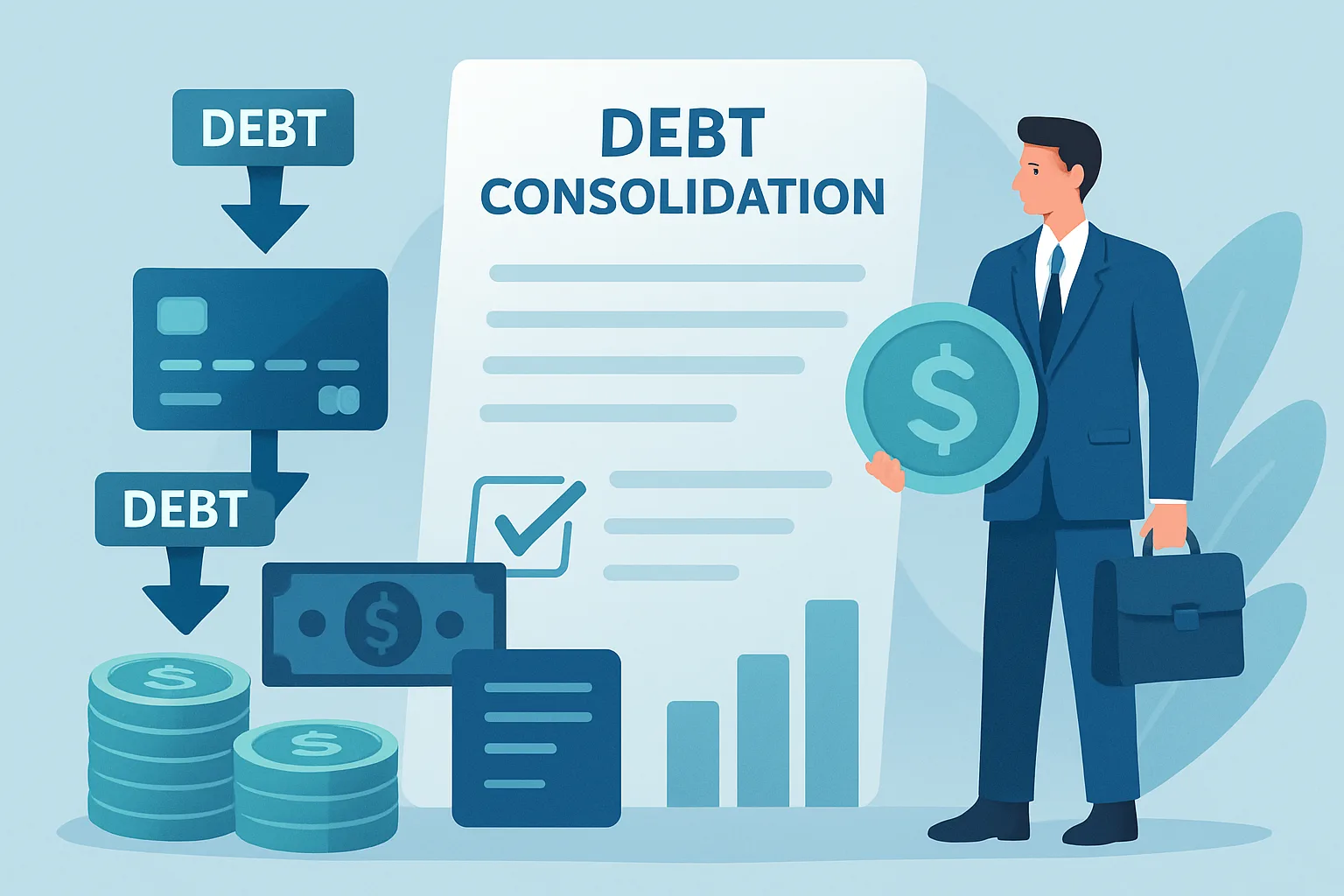
Debt consolidation is a strategy that many Americans consider when they feel overwhelmed by multiple debts. The idea is simple: you take out a single loan or credit product to pay off several existing debts, leaving you with just one monthly payment. But is it the right move for everyone? This article explains how debt consolidation works, the different methods available, and the key factors to weigh before deciding if it's worth it.
Please note that this article provides general information and is not financial advice. Every financial situation is unique, so consider consulting a qualified professional before making major decisions.
Whether you're dealing with credit card balances, personal loans, or medical bills, understanding your options is the first step toward financial freedom. Let's dive into the details of debt consolidation and help you decide if it fits your needs.
What Is Debt Consolidation?
Debt consolidation is the process of combining multiple debts into a single new loan or payment plan. The goal is to simplify your finances and potentially reduce the interest rate you're paying. Instead of juggling several due dates and minimum payments, you make one payment each month. This can make budgeting easier and reduce the chance of missing a payment.
Common types of debt that people consolidate include credit card balances, personal loans, medical bills, and sometimes even student loans. However, not all debts qualify—secured debts like mortgages or car loans are usually not consolidated through standard methods.
It's important to understand that debt consolidation does not erase your debt. It simply reorganizes it. You still owe the full amount, but hopefully under better terms. If you don't address the underlying spending habits, you may end up in more debt after consolidating.
For example, consider a borrower named Sarah who has $15,000 in credit card debt spread across four cards with interest rates ranging from 18% to 24%. She also has a $5,000 personal loan at 12% interest. By consolidating these into a single personal loan at 10% interest, Sarah reduces her monthly payments from roughly $650 to $520 and simplifies her financial life. However, if Sarah continues using her credit cards for discretionary spending after consolidation, she could quickly accumulate new debt on top of the consolidation loan, worsening her overall financial situation.
Debt consolidation works best when used as part of a broader financial plan that includes budgeting, spending discipline, and a commitment to avoiding new debt. Without these elements, consolidation can become a temporary fix rather than a lasting solution.
How Debt Consolidation Works
The basic mechanism of debt consolidation involves obtaining a new loan or credit product to pay off your existing debts. Once the old debts are paid off, you focus on repaying the new consolidation loan. Here's a step-by-step overview:
- Assess your debts: List all your debts, including balances, interest rates, and monthly payments.
- Choose a consolidation method: Options include a personal loan, balance transfer credit card, home equity loan, or debt management plan.
- Apply for the consolidation product: Lenders will check your credit score and income to determine eligibility and terms.
- Use the funds to pay off existing debts: Once approved, the lender sends you the money (or pays creditors directly in some cases).
- Repay the consolidation loan: You make fixed monthly payments over the loan term, ideally at a lower interest rate.
The success of this strategy depends on securing a lower interest rate and not accumulating new debt. If you can't get a rate lower than your current average, consolidation may not save you money.
Let's walk through a more detailed example. Imagine you have $20,000 in total debt: $8,000 on a credit card at 22% APR, $7,000 on another card at 19% APR, and $5,000 on a personal loan at 15% APR. Your current minimum payments total $600 per month, with much of that going toward interest. You apply for a personal consolidation loan of $20,000 at 11% APR with a 4-year term. If approved, your new monthly payment would be about $517, saving you $83 per month. Over the life of the loan, you'd pay approximately $4,816 in interest, compared to potentially over $8,000 if you continued with minimum payments on the original debts. However, if your credit score is lower and you only qualify for a 20% APR, your monthly payment would be about $610, and total interest would exceed $9,000, making consolidation less beneficial.
It's also crucial to understand that the application process itself can affect your credit. When you apply for a personal loan or balance transfer card, the lender performs a hard inquiry, which can temporarily lower your credit score by a few points. Multiple applications within a short period can compound this effect, so it's wise to shop around within a focused timeframe, typically 14 to 45 days, depending on the credit scoring model.
Types of Debt Consolidation
There are several ways to consolidate debt, each with its own pros and cons. Understanding these options helps you choose the best fit for your situation.
Personal Loans for Debt Consolidation
A personal loan is a common choice. You borrow a lump sum from a bank, credit union, or online lender and use it to pay off your debts. Personal loans are typically unsecured, meaning no collateral is required. Interest rates can range from around 6% to 36% depending on your credit. The loan term is usually 2 to 5 years. This option works well if you have good credit and can qualify for a rate lower than your current debts.
For instance, if you have a credit score of 720, you might qualify for a personal loan at 8% APR from a credit union. With $12,000 in debt, a 3-year term would yield a monthly payment of about $376 and total interest of roughly $1,536. Compare this to keeping the debt on credit cards at 22% APR, where minimum payments might stretch over a decade and cost thousands more in interest. Personal loans also offer fixed payments, making budgeting predictable.
However, personal loans often come with origination fees ranging from 1% to 8% of the loan amount. On a $10,000 loan with a 5% fee, you'd receive only $9,500, but you'd still owe $10,000. Always factor these fees into your cost calculations. Some lenders also charge prepayment penalties, though many do not, so read the fine print carefully.
Balance Transfer Credit Cards
With a balance transfer credit card, you move existing credit card balances to a new card that offers a low or 0% introductory APR for a set period (often 12-18 months). This can save you significant interest if you pay off the balance before the promotional period ends. However, there is usually a balance transfer fee of 3% to 5% of the amount transferred. This method is best for those with good credit who can commit to paying off the debt quickly.
Consider this scenario: You have $8,000 in credit card debt at 20% APR. You transfer the balance to a new card offering 0% APR for 15 months with a 3% fee ($240). To pay off the full $8,240 within the promotional period, you'd need to pay about $549 per month. If you succeed, you save the $1,600 in interest you would have paid on the original card over 15 months. But if you only pay the minimum of $200 per month, you'll still owe about $5,240 when the 0% period ends, and the remaining balance will accrue interest at the card's standard rate, which could be 22% or higher.
Balance transfers are ideal for people who have a clear repayment plan and the discipline to stick to it. They're less suitable for those with large debts that can't be paid off within the promotional period, as the post-promotion interest rates are often higher than average.
Home Equity Loans or HELOCs
If you own a home, you might consider a home equity loan or home equity line of credit (HELOC). These are secured by your home, so interest rates are generally lower. However, they put your house at risk if you default. This option is for homeowners with sufficient equity and stable income. It's not recommended if you can't handle the risk of losing your home.
For example, if your home is worth $300,000 and you owe $200,000 on your mortgage, you have $100,000 in equity. A home equity loan of $30,000 at 7% APR with a 10-year term would result in a monthly payment of about $348. This could be used to pay off $30,000 in high-interest credit card debt. The interest savings could be substantial, but the risk is real: if you lose your job or face a financial emergency and can't make payments, the lender could foreclose on your home.
HELOCs work differently, offering a revolving line of credit that you can draw from as needed, often with variable interest rates. While this provides flexibility, it also introduces uncertainty if rates rise. Both options require careful consideration of your ability to repay and the potential consequences of default.
Debt Management Plans (DMPs)
A debt management plan is offered by nonprofit credit counseling agencies. The agency negotiates with your creditors to lower interest rates and create a single monthly payment. You make one payment to the agency, which distributes it to your creditors. DMPs typically take 3-5 years to complete. They can be a good option if you have trouble qualifying for a loan or need structured support.
Suppose you have $25,000 in unsecured debt across multiple credit cards with an average APR of 24%. A credit counseling agency negotiates with your creditors to reduce the APR to 10% and waive late fees. Your single monthly payment becomes $530 for 5 years, totaling $31,800. Without the DMP, minimum payments would stretch much longer and cost significantly more in interest. The agency typically charges a small monthly fee, often $25 to $50, which is included in your payment.
DMPs are particularly helpful for people who lack the credit score to qualify for a personal loan or balance transfer. They also provide accountability and financial education, helping you address the habits that led to debt. However, you must close the credit card accounts included in the plan, which can temporarily lower your credit score due to reduced available credit.
Debt Consolidation vs. Other Debt Relief Options
Debt consolidation is just one of several debt relief options. It's important to understand how it compares to alternatives like debt settlement, bankruptcy, and credit counseling.
Unlike debt settlement, which involves negotiating to pay less than you owe, debt consolidation requires paying the full amount. Settlement can damage your credit more severely and may have tax consequences. Consolidation is generally less risky for your credit score if you make payments on time.
Bankruptcy is a legal process that can discharge most debts but has long-lasting credit effects. Debt consolidation is a less drastic option for those who can manage payments with better terms. Credit counseling offers education and sometimes a DMP, which is similar to consolidation but with professional guidance.
Choosing the right path depends on your debt amount, income, credit score, and financial goals. If you're unsure, speaking with a nonprofit credit counselor can help clarify your options.
To illustrate the differences, consider a borrower with $30,000 in unsecured debt and a credit score of 580. Debt consolidation through a personal loan would likely result in a high interest rate, perhaps 30% or more, making it costly. Debt settlement might reduce the balance to $15,000, but it would severely damage credit and potentially trigger tax liability on forgiven debt. Bankruptcy could discharge the debt entirely, but it would remain on credit reports for 7 to 10 years. A DMP might offer a middle ground, with reduced interest rates and a structured repayment plan, though it requires closing accounts and committing to a 3-5 year plan.
Pros and Cons of Debt Consolidation
Like any financial strategy, debt consolidation has advantages and disadvantages. Weighing these carefully will help you decide if it's worth it.
Pros
- Simplified payments: One monthly payment instead of multiple due dates.
- Potential lower interest rate: If you qualify, you can reduce the interest you pay overall.
- Fixed repayment schedule: Personal loans offer a clear payoff date.
- Possible credit score improvement: Paying off revolving credit (like credit cards) can lower your credit utilization ratio, which may boost your score.
- No need to negotiate with creditors: You pay off existing debts in full.
Cons
- Requires good credit: The best rates are reserved for those with good to excellent credit.
- Fees: Balance transfers often have fees; personal loans may have origination fees.
- Risk of accumulating more debt: Without discipline, you might run up new credit card balances.
- Longer repayment term: Lower monthly payments may mean paying more interest over time if the term is extended.
- Secured options risk assets: Home equity loans put your home at risk.
Let's expand on the risk of accumulating more debt. A study by the Federal Reserve found that consumers who consolidate credit card debt often increase their overall debt levels within two years, partly because they continue using credit cards for new purchases. This phenomenon, sometimes called the "consolidation trap," occurs when people treat consolidation as a fresh start without changing their spending habits. To avoid this, it's essential to create a budget, cut up or freeze credit cards, and build an emergency fund to cover unexpected expenses without relying on credit.
Another often-overlooked con is the potential for a longer repayment term to increase total interest. For example, consolidating $10,000 at 10% APR over 5 years results in total interest of $2,748, while the same debt over 3 years yields $1,616 in interest. The lower monthly payment of the 5-year term might seem attractive, but it costs $1,132 more in interest. Always calculate the total cost, not just the monthly payment.
Is Debt Consolidation Worth It?
Determining whether debt consolidation is worth it depends on your specific circumstances. Generally, it can be a good move if you can secure a lower interest rate and are committed to not taking on new debt. It's less beneficial if you have poor credit and can't qualify for favorable terms, or if you're likely to rack up new balances.
Consider these scenarios where consolidation might be worth it:
- You have high-interest credit card debt and can qualify for a personal loan with a rate under 10%.
- You can pay off a balance transfer card within the 0% APR period.
- You want the simplicity of one payment and can stick to a budget.
Scenarios where it might not be worth it:
- Your credit score is below 600, leading to high rates.
- You have a small amount of debt that you can pay off quickly on your own.
- You're considering a home equity loan but can't afford the risk.
Remember, debt consolidation is a tool, not a cure. It works best when combined with sound financial habits. If you're struggling with overspending, consider addressing that first.
To help you decide, create a simple comparison table. List your current debts with their balances, APRs, and monthly payments. Then, estimate the terms of a consolidation loan you might qualify for based on your credit score. Calculate the total interest and monthly payment for each scenario. If the consolidation option saves you at least $100 per month or reduces your total interest by 20% or more, it's likely worth pursuing. If the savings are minimal or negative, consider other strategies.
How Debt Consolidation Affects Your Credit Score
Debt consolidation can affect your credit score in several ways, both positive and negative. Understanding these effects helps you make an informed decision.
Short-term negative effects: When you apply for a new loan or credit card, the lender performs a hard inquiry, which can temporarily lower your score by a few points. Also, if you close old credit card accounts after paying them off, your credit utilization ratio may increase if you have other balances, potentially hurting your score.
Long-term positive effects: Consolidating can lower your credit utilization ratio if you pay off revolving accounts. Making on-time payments on the new loan builds a positive payment history. Over time, your score may improve as you reduce your overall debt.
To minimize negative impacts, keep old credit card accounts open (even if you don't use them) and avoid applying for multiple loans at once. The key is to use consolidation as a stepping stone to better credit habits.
Let's look at a detailed example. Suppose you have three credit cards with a combined limit of $20,000 and a total balance of $15,000, giving you a credit utilization ratio of 75%. After consolidating with a personal loan, you pay off the cards, but you keep the accounts open. Your utilization drops to 0% on those cards, which can boost your credit score by 30 to 50 points, assuming you don't have other revolving balances. However, the new loan adds to your installment debt, which has a smaller impact on your score. If you close the credit card accounts, your total available credit drops, and if you have any other balances, your utilization could spike, hurting your score.
Another factor is the average age of your credit accounts. Opening a new loan lowers the average age, which can reduce your score slightly. But this effect diminishes over time as the account ages. Overall, the net effect of consolidation on your credit score is usually positive if you make all payments on time and avoid new debt.
Common Mistakes to Avoid with Debt Consolidation
Many people make mistakes that undermine the benefits of consolidation. Here are some pitfalls to watch out for:
- Not addressing the root cause: If you consolidate but continue overspending, you'll end up with both the consolidation loan and new debt.
- Choosing a longer term to lower payments: This may reduce monthly payments but increase total interest paid.
- Ignoring fees: Origination fees, balance transfer fees, and closing costs can eat into savings.
- Consolidating the wrong debts: Avoid consolidating low-interest debts like student loans into a higher-rate personal loan.
- Using secured debt to pay unsecured debt: Putting your home or car at risk for credit card debt is dangerous.
Being aware of these mistakes can help you use consolidation effectively. Always read the fine print and calculate the total cost before proceeding.
For instance, consider a borrower who consolidates $10,000 in credit card debt at 22% APR into a personal loan at 15% APR over 5 years. The monthly payment drops from $250 to $238, but the total interest on the loan is $4,280, compared to $3,300 if they paid off the credit cards in 3 years. The borrower chose the longer term to lower payments, but ended up paying $980 more in interest. A better approach would be to choose the shortest term you can afford, even if the monthly payment is higher.
Another common mistake is consolidating student loans into a personal loan. Federal student loans offer benefits like income-driven repayment plans, deferment, and forbearance that private loans don't. Consolidating them into a personal loan forfeits these protections, which could be costly if you face financial hardship. Always consider the unique features of each debt type before consolidating.
Alternatives to Debt Consolidation
If debt consolidation isn't right for you, there are other paths to consider. One common question is do credit repair companies work? While they may help fix errors on your credit report, they don't reduce your debt. For debt reduction, you might explore debt settlement or bankruptcy, but these have serious consequences.
Another option is the debt snowball or avalanche method, where you pay off debts one by one without consolidating. This requires discipline but avoids new loans. You can also seek help from a nonprofit credit counseling agency for budgeting advice and a debt management plan.
For a broader look at strategies, check out our guide on how to get out of debt. It covers multiple approaches and helps you create a personalized plan.
The debt snowball method involves paying off your smallest debt first while making minimum payments on others, then rolling that payment to the next smallest debt. This provides psychological wins that can motivate you. The debt avalanche method focuses on the highest-interest debt first, saving more money in interest but requiring more discipline. Both methods can be effective without the need for a new loan, and they avoid the risks associated with consolidation.
Another alternative is negotiating directly with creditors. Some credit card companies offer hardship programs that temporarily lower interest rates or waive fees. This isn't consolidation, but it can provide relief without a new loan. Contact your creditors, explain your situation, and ask about available options. While not guaranteed, many creditors are willing to work with borrowers who are proactive.
Steps to Take Before Consolidating
Before you apply for a consolidation loan, take these steps to ensure you're prepared:
- Check your credit score: Know where you stand. You can get free scores from many sources.
- Calculate your debt-to-income ratio: Lenders look at this to assess your ability to repay.
- Shop around: Compare offers from multiple lenders, including banks, credit unions, and online platforms.
- Read the terms: Understand interest rates, fees, repayment term, and any penalties.
- Create a budget: Ensure you can afford the new monthly payment and still cover living expenses.
- Plan for the future: Commit to not using credit cards for new purchases until the debt is paid off.
Taking these steps reduces the risk of consolidation backfiring. It also helps you choose the best product for your needs.
Let's expand on shopping around. Don't just accept the first offer you receive. Use prequalification tools that perform a soft credit check, allowing you to see potential rates without affecting your credit score. Compare at least three to five lenders, focusing on the APR, fees, and loan term. Credit unions often offer lower rates for members, while online lenders may provide faster funding. Banks may have stricter requirements but competitive rates for existing customers. A difference of even 2% in APR can save you hundreds of dollars over the life of the loan.
Also, consider the impact of your debt-to-income (DTI) ratio. Lenders typically prefer a DTI below 36%, including the new loan payment. If your DTI is higher, you may need to pay down some debt first or increase your income before applying. Calculate your DTI by dividing your total monthly debt payments by your gross monthly income. For example, if you earn $5,000 per month and have $1,800 in debt payments, your DTI is 36%, which is borderline for many lenders.
Real-Life Example: How Consolidation Could Work
Let's look at an illustrative example. Suppose you have $10,000 in credit card debt spread across three cards with an average APR of 22%. Your minimum payments total $250 per month, but most of that goes to interest. If you consolidate with a personal loan at 10% APR for 3 years, your monthly payment would be about $323. Over the loan term, you'd pay roughly $1,613 in interest. If you continued with the credit cards making only minimum payments, you'd pay much more in interest over time (potentially thousands).
However, if you can't qualify for a 10% rate and get 25% instead, consolidation might not save you money. Always run the numbers for your specific situation.
This example is for illustration only. Actual results vary based on credit, loan terms, and repayment behavior.
Let's add another scenario. Imagine you have $25,000 in debt across five credit cards with an average APR of 20%. Your minimum payments total $625 per month. You qualify for a balance transfer card with 0% APR for 18 months and a 3% fee ($750). To pay off the full $25,750 within 18 months, you'd need to pay about $1,431 per month. If you can afford that, you save the $4,500 in interest you would have paid on the original cards over that period. But if you can only pay $800 per month, you'll still owe about $11,350 when the promotional period ends, and that balance will accrue interest at the card's standard rate of 24%, costing you an additional $2,724 in interest over the next year. In this case, consolidation might not be worth it unless you can commit to the higher payment.
When to Seek Professional Help
If you're overwhelmed by debt or unsure which option is best, consider speaking with a nonprofit credit counselor. They can review your finances, explain options, and help you create a plan. Avoid for-profit companies that charge high fees for debt consolidation services—you can often do it yourself for free.
If your debt is very high relative to your income, or if you're considering bankruptcy, consult a bankruptcy attorney. They can advise on whether Chapter 7 or Chapter 13 is appropriate.
Remember, the goal is to become debt-free, not just to move debt around. Professional guidance can provide clarity and accountability.
Nonprofit credit counseling agencies, such as those affiliated with the National Foundation for Credit Counseling (NFCC), offer free initial consultations. During the session, a certified counselor will review your income, expenses, and debts, then recommend options. If a DMP is appropriate, they'll explain the costs and commitment involved. These agencies are funded by creditors and grants, so they don't charge high upfront fees. Be wary of companies that demand large fees before providing services, as these are often scams.
If you're considering bankruptcy, understand the differences between Chapter 7 and Chapter 13. Chapter 7 liquidates non-exempt assets to pay creditors and discharges most debts, but it requires a means test based on your income. Chapter 13 involves a 3-5 year repayment plan and allows you to keep your assets. Both have serious long-term consequences, including a negative impact on your credit for up to 10 years, so they should be considered only after exploring all other options.
The Psychological Impact of Debt Consolidation
Beyond the financial mechanics, debt consolidation can have a significant psychological impact. For many people, managing multiple debts creates constant stress, anxiety, and a sense of being overwhelmed. Consolidation can provide mental relief by reducing the number of bills to track and creating a clear path to becoming debt-free.
However, this psychological benefit can also be a double-edged sword. Some borrowers feel a false sense of accomplishment after consolidating, leading them to relax their financial discipline. They might think, "I've solved my debt problem," and resume spending habits that caused the debt in the first place. This is why it's crucial to pair consolidation with a mindset shift. Treat the consolidation as a tool, not a solution, and commit to building an emergency fund, sticking to a budget, and avoiding new debt.
Consider the story of John, who consolidated $18,000 in credit card debt into a personal loan. Initially, he felt relieved and motivated to pay off the loan quickly. But after six months, he started using his credit cards again for small purchases, reasoning that he had "room" in his budget since his loan payment was lower than his previous minimum payments. Within a year, he had accumulated another $5,000 in credit card debt on top of the loan. John's experience illustrates the importance of addressing the behavioral aspects of debt, not just the financial ones.
To harness the psychological benefits of consolidation, set specific goals and track your progress. Use a debt payoff calculator to see how much you'll save in interest and when you'll be debt-free. Celebrate milestones, like paying off 25% or 50% of the loan, to maintain motivation. And consider working with a financial therapist or counselor if you struggle with emotional spending or other behavioral issues.
How to Choose the Right Consolidation Method
Selecting the best consolidation method depends on your credit score, debt amount, homeownership status, and personal preferences. Here's a framework to guide your decision:
- If you have good credit (700+) and a moderate debt amount ($5,000 to $30,000): A personal loan or balance transfer card are strong candidates. Compare APRs, fees, and terms to find the best deal.
- If you have fair credit (600-699) and need structured support: A debt management plan through a nonprofit credit counseling agency may be the best option, as it doesn't require a high credit score and offers professional guidance.
- If you own a home with significant equity and have a large debt amount ($30,000+): A home equity loan or HELOC could provide lower rates, but only if you're comfortable with the risk of losing your home.
- If you have poor credit (below 600) or a small debt amount (under $5,000): Consolidation may not be cost-effective. Focus on DIY methods like the debt snowball or avalanche, or seek credit counseling.
For example, Maria has a credit score of 680 and $12,000 in credit card debt. She doesn't own a home. A personal loan might offer her an APR of 15%, while a balance transfer card with 0% APR for 15 months could work if she can pay $800 per month. A DMP might reduce her APR to 10% but require closing her accounts. Maria should compare the total costs of each option, considering her ability to make higher payments. If she can commit to $800 per month, the balance transfer card is the cheapest. If not, the DMP or personal loan are better fits.
Another factor is the speed of funding. Personal loans from online lenders can fund within 24-48 hours, while home equity loans may take weeks. If you need immediate relief, a personal loan or balance transfer might be preferable. If you can wait, a home equity loan could offer better terms.
Key takeaways
- Debt consolidation combines multiple debts into one payment, often with a lower interest rate.
- Common methods include personal loans, balance transfer cards, home equity loans, and debt management plans.
- It works best for those with good credit who can avoid new debt.
- Weigh the pros and cons carefully; consolidation is not a cure for overspending.
- Alternatives exist, including DIY payoff methods and professional credit counseling.
- Always compare offers and read the fine print before committing.
Frequently asked questions
Does debt consolidation hurt your credit score?
Can I consolidate debt with bad credit?
What debts can be consolidated?
Is debt consolidation the same as debt settlement?
How long does debt consolidation take?
This article is for general informational purposes only and does not constitute financial, legal or credit-repair advice. Always consult a qualified financial advisor or credit counselor about your specific circumstances.

Written & reviewed by
Can OTUEditor
Can OTU is the editor of this site, curating and reviewing every guide for accuracy and clarity.
View all guides →