The Minimum Payment Trap: Why It Keeps You in Debt
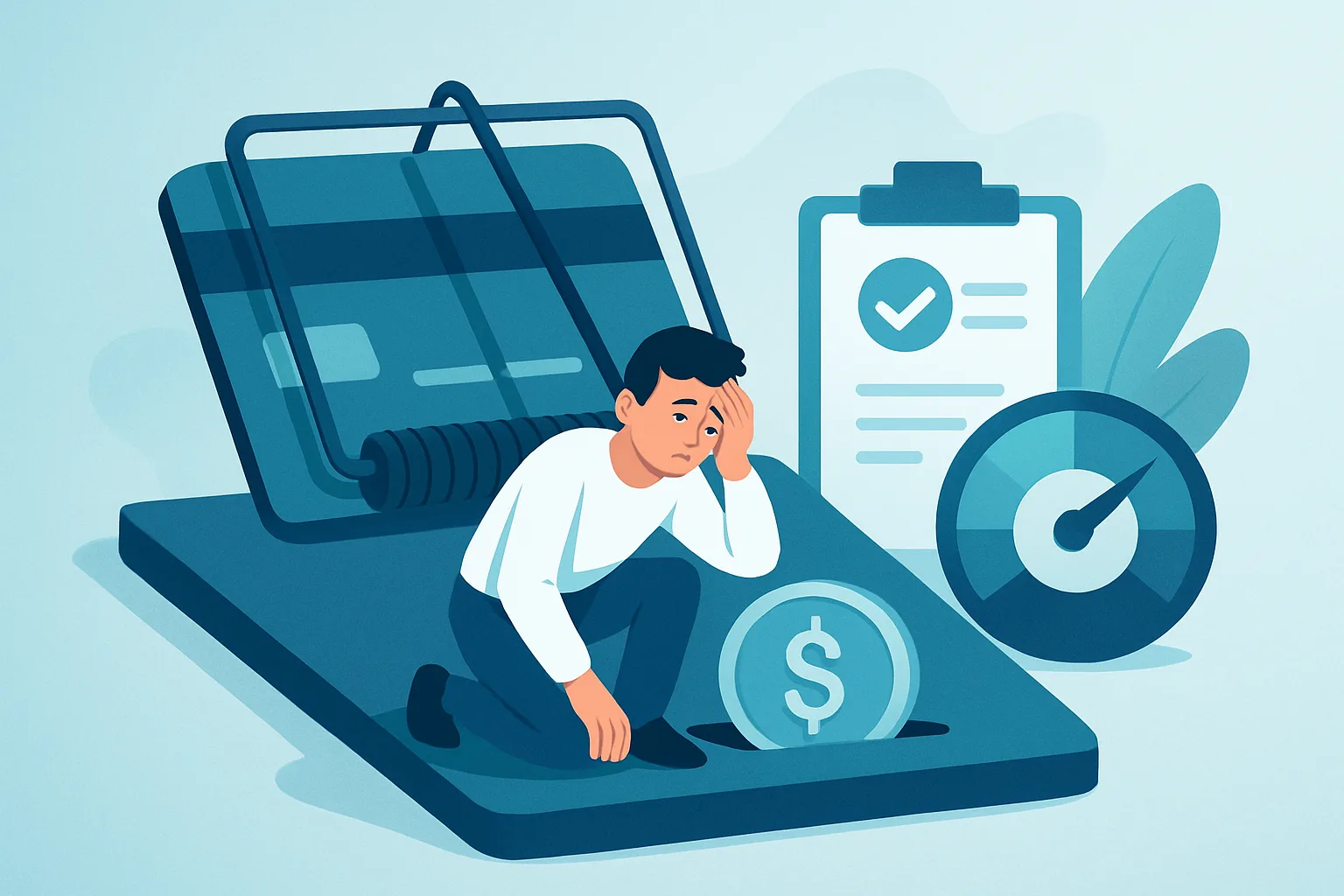
If you've ever looked at your credit card statement and felt a wave of relief that the minimum payment is surprisingly low, you're not alone. That small number can feel like a lifeline when money is tight. But here's the hard truth: that seemingly helpful minimum payment is actually one of the most effective tools credit card companies use to keep you in debt for years—sometimes decades.
This is what financial experts call the "minimum payment trap." It's not a scam, but it's a system designed to maximize the interest you pay while making you feel like you're making progress. In this article, we'll break down exactly how the trap works, why it's so dangerous, and—most importantly—how you can escape it. We'll cover real numbers, practical strategies, and answer the questions that keep people stuck.
Remember, this article is for informational purposes only and does not constitute financial advice. Your situation is unique, so consider consulting a qualified professional before making major financial decisions.
What Is the Minimum Payment Trap?
The minimum payment trap is the cycle that occurs when you only pay the minimum amount due on your credit card each month. Because the minimum payment is typically just 1-3% of your balance (or a flat fee, like $25), a large portion of that payment goes toward interest rather than the principal balance. As a result, your debt shrinks very slowly—or not at all if you continue to make new purchases.
For example, if you owe $5,000 on a card with a 20% APR and only make the minimum payment (say $100), it could take you over 20 years to pay off the balance, and you'd end up paying more than $8,000 in interest alone. That's the trap: you feel like you're paying every month, but the debt barely budges. This happens because the minimum payment is calculated to cover mostly interest and fees, leaving only a tiny fraction to reduce the principal. Over time, the compounding interest works against you, making it feel like you're running on a treadmill—exerting effort but going nowhere. For instance, consider a cardholder named Sarah who owes $3,000 at 18% APR. Her minimum payment starts at $60. After one year of paying only the minimum, she might have paid $720, but her balance could still be around $2,800 because most of her payments went to interest. This is the essence of the trap: the debt persists despite consistent payments.
How Minimum Payments Are Calculated
Credit card issuers calculate minimum payments differently, but most use one of two methods:
- Percentage of balance: Typically 1-3% of the total balance, plus any fees or interest charged that month.
- Flat fee: A fixed amount (e.g., $25 or $35) if the balance is below a certain threshold.
Some cards also have a clause that if your minimum payment would be less than a certain amount (like $15), they'll charge that amount instead. The key point: the minimum is set to keep you paying for as long as possible. For example, if you have a $10,000 balance at 22% APR, the minimum might be $200 initially. As you pay down the balance, the minimum decreases proportionally, which means you're paying less each month just when you need to pay more to overcome interest. This sliding scale ensures that the repayment period stretches out, often for decades. Some issuers also include any late fees or over-limit fees in the minimum, further reducing the amount that goes to principal. Understanding this calculation is crucial because it reveals why paying just the minimum is a losing strategy—it's designed to maximize lender profits, not your financial freedom.
The True Cost of Minimum Payments: An Example
Let's look at a concrete example to see how devastating the minimum payment trap can be. Suppose you have a credit card debt of $6,000 with an APR of 22%. If you stop using the card and make only the minimum payment (starting at $120, decreasing as the balance drops), here's what happens:
- Time to pay off: Approximately 25 years
- Total interest paid: Over $10,000
- Total cost: Over $16,000 for a $6,000 debt
Now, if you increase your monthly payment to just $200 (still a modest amount), you'd pay off the debt in about 3.5 years and pay only around $2,400 in interest. That's a savings of over $7,600. This illustrates why breaking the minimum payment habit is so critical. To make this even more vivid, consider a different scenario: a $2,500 debt at 24% APR with a minimum payment of $50. Over 30 years, you'd pay nearly $7,000 in interest alone, totaling $9,500 for the original $2,500. But if you paid $100 monthly, you'd be debt-free in about 3 years and pay only $1,100 in interest. These numbers show that the minimum payment trap isn't just a minor inconvenience—it's a financial anchor that can sink your long-term goals. The power of compounding interest works against you when you pay the minimum, but it works for you when you pay more, because each extra dollar reduces the principal faster, cutting future interest charges.
Why Credit Card Companies Want You to Pay the Minimum
Credit card companies are businesses, and their goal is to make money. They earn income from three main sources: interest charges, annual fees, and merchant fees. When you pay only the minimum, you maximize their interest income. In fact, the minimum payment structure is deliberately designed to extend repayment as long as possible. For example, if a cardholder carries a $4,000 balance at 20% APR and pays only the minimum, the issuer earns over $6,000 in interest over 20 years. That's a 150% return on the original loan, far more than if the cardholder paid off the balance quickly. Issuers also benefit from the "revolver" model—customers who carry balances are more profitable than those who pay in full each month. According to industry reports, interest charges account for a significant portion of credit card revenue, and minimum payments are a key driver of that revenue.
According to the Consumer Financial Protection Bureau (CFPB), many cardholders don't realize how long it will take to pay off a balance if they only make minimum payments. That's why federal law requires credit card statements to include a "minimum payment warning" showing how long it will take to pay off the balance and the total cost. But even with that warning, it's easy to ignore the numbers and keep paying the minimum. The warning often appears in small print, and many consumers overlook it, especially when they're focused on just making the payment. Credit card companies rely on this behavioral bias—people tend to prioritize short-term relief over long-term consequences. By keeping the minimum low, they make it easy for you to stay in debt, all while collecting steady interest payments. For more on breaking free, see our guide on how to pay off credit card debt.
How the Minimum Payment Trap Affects Your Credit Score
Making minimum payments on time each month will keep your credit score from dropping due to late payments. However, it can still hurt your score in other ways:
- High credit utilization: If you carry a large balance relative to your credit limit, your credit utilization ratio stays high, which lowers your score. Paying only the minimum keeps that balance high for longer. For example, if you have a $10,000 limit and a $9,000 balance, your utilization is 90%, which can drop your score by 50-100 points. Even after a year of minimum payments, your balance might still be $8,500, keeping utilization above 80%.
- Debt-to-income ratio: Lenders look at your total debt relative to your income. A large credit card balance can make you look riskier, even if you're making payments. For instance, if you earn $50,000 a year and have $15,000 in credit card debt, your debt-to-income ratio is 30%, which may disqualify you from mortgages or auto loans at favorable rates.
- Missed opportunities: Being stuck in debt may prevent you from taking other financial steps, like saving for retirement or buying a home. The money you spend on interest could otherwise be invested in a 401(k) or used for a down payment. Over time, this opportunity cost can amount to tens of thousands of dollars in lost wealth.
Additionally, if you ever miss a minimum payment, you'll face late fees, penalty APRs (which can jump to 29% or higher), and a significant credit score drop. The trap thus creates a precarious situation where you're constantly at risk of slipping into worse financial trouble. Even if you pay on time, the high utilization from carrying a balance can make it harder to get approved for new credit or result in higher interest rates on loans.
Signs You're Stuck in the Minimum Payment Trap
How do you know if you're in the trap? Here are common signs:
- Your credit card balance hasn't decreased in months (or years) despite making regular payments. For example, you might have paid $1,200 over the past year, but your balance only dropped by $200.
- You feel like you're "treading water" — paying every month but not seeing progress. This often leads to frustration and a sense of hopelessness.
- You regularly use your card for new purchases while carrying a balance, which adds to the debt. This is known as "revolving debt," and it can spiral quickly because new purchases start accruing interest immediately.
- You check your statement and see that most of your payment went to interest, not principal. For instance, on a $5,000 balance at 22% APR, your minimum payment might be $125, with $92 going to interest and only $33 to principal.
- You've been paying on the same debt for more than a year with little change. If you've had the same card for three years and still owe $4,000, you're likely trapped.
If any of these sound familiar, it's time to take action. Recognizing these signs early can prevent years of financial strain. Many people don't realize they're trapped until they've been paying for five or ten years, by which point they've already paid thousands in unnecessary interest. Awareness is the first step toward breaking free.
How to Escape the Minimum Payment Trap
Breaking free requires a plan. Here are actionable steps you can take:
1. Stop Using Your Credit Cards
This is the first and most important step. If you keep adding new charges, you'll never get ahead. Switch to cash or debit for everyday spending until your balance is under control. For example, if you typically spend $500 a month on groceries and gas, use a debit card or cash instead. This prevents new interest charges and allows every dollar you pay to go toward reducing existing debt. It may require a lifestyle adjustment, but it's essential for escaping the trap.
2. Pay More Than the Minimum
Even an extra $20 or $50 a month can make a huge difference. Use our earlier example: increasing from $120 to $200 cut repayment time from 25 years to 3.5 years. Aim to pay as much as you can afford. If you can't afford a large increase, start small—$10 extra per month can shave months off your repayment timeline. For instance, on a $3,000 balance at 18% APR, paying $75 instead of $60 can save you $1,500 in interest and cut repayment time by 10 years. Every dollar counts, so look for ways to free up cash, like canceling unused subscriptions or eating out less.
3. Consider a Balance Transfer
If you have good credit, you might qualify for a balance transfer card with a 0% introductory APR for 12-18 months. This allows your entire payment to go toward principal. Be aware of transfer fees (typically 3-5%) and make sure you can pay off the balance before the promotional period ends. For example, transferring a $5,000 balance to a card with 0% APR for 15 months and a 3% fee ($150) means you owe $5,150. If you pay $343 per month, you'll be debt-free in 15 months with no interest. However, if you don't pay it off in time, the remaining balance will be hit with the regular APR, which could be 20% or higher. Learn more about how to get out of credit card debt for strategies like this.
4. Choose a Debt Repayment Strategy
Two popular methods are the debt snowball and the debt avalanche. The snowball focuses on paying off the smallest balance first for psychological wins, while the avalanche targets the highest interest rate first to save money. Compare them in our article on debt snowball vs avalanche. For example, if you have three cards—$500 at 15%, $2,000 at 22%, and $3,000 at 18%—the snowball would have you pay off the $500 card first, giving you a quick victory. The avalanche would target the $2,000 card at 22% first, saving more in interest over time. Both methods work; choose the one that keeps you motivated.
5. Create a Budget and Cut Expenses
Find extra money in your budget by cutting non-essentials like dining out, subscriptions, or entertainment. Use that money to boost your debt payments. Even a small cut can add up over time. For instance, canceling a $15 monthly streaming service and reducing restaurant spending by $50 per month gives you $65 extra for debt payments. Over a year, that's $780, which could reduce your repayment time by several months. Track your spending for a month to identify areas where you can trim, and redirect those funds to your credit card.
6. Seek Professional Help if Needed
If your debt feels overwhelming, consider credit counseling from a nonprofit agency. They can help you set up a debt management plan (DMP) that may lower your interest rates and consolidate payments. For example, a DMP might reduce your APR from 22% to 10%, allowing you to pay off debt faster. Nonprofit counselors can also negotiate with creditors to waive fees or set up a payment plan. This option is especially useful if you have multiple cards and are struggling to keep up with minimum payments. Just be sure to choose a reputable agency accredited by the National Foundation for Credit Counseling (NFCC).
What Happens If You Only Pay the Minimum for Years?
If you continue paying only the minimum for years, several things happen:
- Your debt remains high, and you pay thousands in interest. For a $7,000 balance at 20% APR, you might pay over $12,000 in interest over 25 years.
- Your credit utilization stays elevated, potentially hurting your credit score. A high utilization ratio (above 30%) can lower your score by 50-100 points, making it harder to get loans or favorable rates.
- You may become trapped in a cycle where you need to use credit for emergencies because your cash is tied up in debt. For instance, if your car breaks down and you have no savings, you might put the repair on a credit card, adding to the balance and perpetuating the cycle.
- You delay other financial goals, like saving for retirement or a down payment on a home. The interest you pay could otherwise be invested, leading to lost compound growth. For example, $200 per month invested at 7% return over 20 years could grow to over $100,000.
In extreme cases, if you miss payments, you could face late fees, penalty APRs, and damage to your credit that takes years to repair. A single missed payment can drop your credit score by 50-100 points, and a pattern of missed payments can lead to collections, lawsuits, or wage garnishment. The longer you stay in the trap, the harder it becomes to escape, as the debt grows through interest and fees.
Can You Negotiate a Lower Minimum Payment?
Technically, you can't negotiate a lower minimum payment—the minimum is set by the card issuer's terms. However, you can sometimes negotiate a lower interest rate, which would reduce the interest portion of your payment and allow more to go toward principal. Call your card issuer and ask for a rate reduction. If you have a good payment history, they may agree. For example, if your APR is 24% and you negotiate it down to 15%, your minimum payment might drop from $100 to $85, but more of that $85 will go to principal. This can accelerate repayment without increasing your payment amount. Be polite and persistent; mention that you're considering a balance transfer to a lower-rate card, as this can motivate them to offer a reduction.
Alternatively, enrolling in a hardship program might temporarily lower your minimum payment, but it could also close your account or affect your credit. Always read the fine print. Hardship programs are designed for people facing financial difficulties, such as job loss or medical emergencies. They may reduce your APR and minimum payment for a set period, but they often require you to stop using the card. Weigh the pros and cons carefully, and consult a credit counselor if you're considering this option.
The Psychological Impact of the Minimum Payment Trap
Beyond the financial costs, the minimum payment trap takes a toll on your mental health. Constantly seeing a high balance despite making payments can lead to stress, anxiety, and a sense of failure. Many people feel ashamed or embarrassed about their debt, which prevents them from seeking help. For example, a study by the American Psychological Association found that financial stress is a leading cause of anxiety, affecting sleep, relationships, and work performance. The trap also creates a "debt mindset" where you feel powerless, making it harder to take proactive steps. Recognizing this psychological burden is important—it's not just about numbers, but about your well-being. Breaking free can bring a sense of relief and empowerment, improving both your finances and your mental health. Consider talking to a therapist or joining a support group if debt-related stress is affecting your life.
How to Avoid the Minimum Payment Trap in the Future
Prevention is easier than escape. Here's how to avoid falling into the trap:
- Pay your balance in full each month. This is the golden rule of credit cards. If you can't, at least pay more than the minimum. Set up automatic payments for the full balance to avoid forgetting.
- Build an emergency fund. Having 3-6 months of expenses saved means you won't have to rely on credit cards for unexpected costs. For example, if you have a $1,000 emergency fund, you can cover a car repair without adding to your credit card balance.
- Use credit cards responsibly. Only charge what you can afford to pay off by the due date. Treat your credit card like a debit card—if you don't have the cash, don't buy it.
- Monitor your statements. Check each month to see how much of your payment goes to interest versus principal. Awareness is key. If you see that interest is consuming most of your payment, it's a red flag that you need to pay more.
Additionally, consider setting a personal rule: never carry a balance for more than one month. If you do carry a balance, create a plan to pay it off within three months. This discipline prevents the trap from taking hold. Also, avoid opening multiple credit cards, as this can lead to overspending and higher minimum payments across accounts.
Common Myths About Minimum Payments
Let's clear up some misconceptions:
- Myth: Paying the minimum builds credit faster. Fact: Paying on time builds credit, but carrying a balance doesn't help. Paying in full is best. In fact, carrying a balance can hurt your score due to high utilization.
- Myth: The minimum payment warning on my statement is just a suggestion. Fact: It's required by law and shows the true cost of minimum payments. Take it seriously. The warning typically says something like "If you make only the minimum payment, you will pay more in interest and it will take longer to pay off your balance."
- Myth: If I pay the minimum, I'm making progress. Fact: As we've seen, you're mostly paying interest, and the principal barely moves. For example, after a year of minimum payments on a $5,000 balance, you might have paid $1,200 but only reduced the principal by $200.
Another common myth is that you need to carry a balance to build credit. This is false—credit scoring models reward on-time payments and low utilization, not carrying debt. In fact, paying in full each month shows responsible credit use and can improve your score over time.
Tools to Help You Escape the Trap
Several online calculators can show you how long it will take to pay off your debt with different payment amounts. The CFPB also offers resources on credit card debt. Use these tools to create a realistic plan. For example, a debt payoff calculator can show that increasing your payment from $100 to $150 on a $5,000 balance at 20% APR cuts repayment time from 25 years to 7 years and saves $6,000 in interest. Many banks also offer free financial planning tools within their apps. For official information, visit the CFPB's credit card resources. Additionally, consider using a spreadsheet to track your progress—seeing the balance drop each month can be motivating. Some people also use the "debt thermometer" method, where they color in a chart as they pay off debt, providing a visual representation of their progress.
How to Stay Motivated During Repayment
Escaping the minimum payment trap can take months or years, so staying motivated is crucial. Set small milestones, like paying off the first $500 or reaching a 50% utilization ratio. Celebrate these wins with a small, non-financial reward, like a movie night or a walk in the park. Track your progress visually—use a chart or app that shows your balance decreasing. For example, if you owe $8,000, break it into $1,000 chunks and celebrate each chunk paid off. Also, remind yourself of the long-term benefits: financial freedom, less stress, and the ability to save for goals like a vacation or retirement. Join online communities or forums where people share their debt repayment journeys; this can provide encouragement and accountability. Finally, if you slip up and use your card, don't give up—just refocus and continue. Persistence is key to breaking free from the trap.
Key Takeaways
- The minimum payment trap keeps you in debt for decades by focusing payments on interest rather than principal.
- Even a small increase in your monthly payment can dramatically reduce repayment time and total interest.
- Strategies like balance transfers, debt snowball/avalanche, and budgeting can help you break free.
- Always pay more than the minimum if you carry a balance, and aim to pay in full each month.
- If you're struggling, seek help from a nonprofit credit counselor or explore debt management options.
Frequently asked questions
How long will it take to pay off credit card debt if I only make minimum payments?
Is it bad to only pay the minimum on my credit card?
Can I negotiate a lower minimum payment with my credit card company?
What is the best way to escape the minimum payment trap?
Does paying the minimum payment hurt my credit score?
This article is for general informational purposes only and does not constitute financial, legal or credit-repair advice. Always consult a qualified financial advisor or credit counselor about your specific circumstances.

Written & reviewed by
Can OTUEditor
Can OTU is the editor of this site, curating and reviewing every guide for accuracy and clarity.
View all guides →