How to Handle Credit Card Debt Settlement Companies
- Reputable settlement companies charge roughly 15–25% of the debt you enroll, and federal rules stop phone-sold programs from collecting fees before a settlement is reached.
- Free options — hardship programs, nonprofit credit counseling, and a self-run payoff plan — are worth trying before you damage your credit with settlement.
- Anyone who promises to wipe out your debt, tells you to stop paying before you've read the contract, or asks for an upfront fee is a red flag.
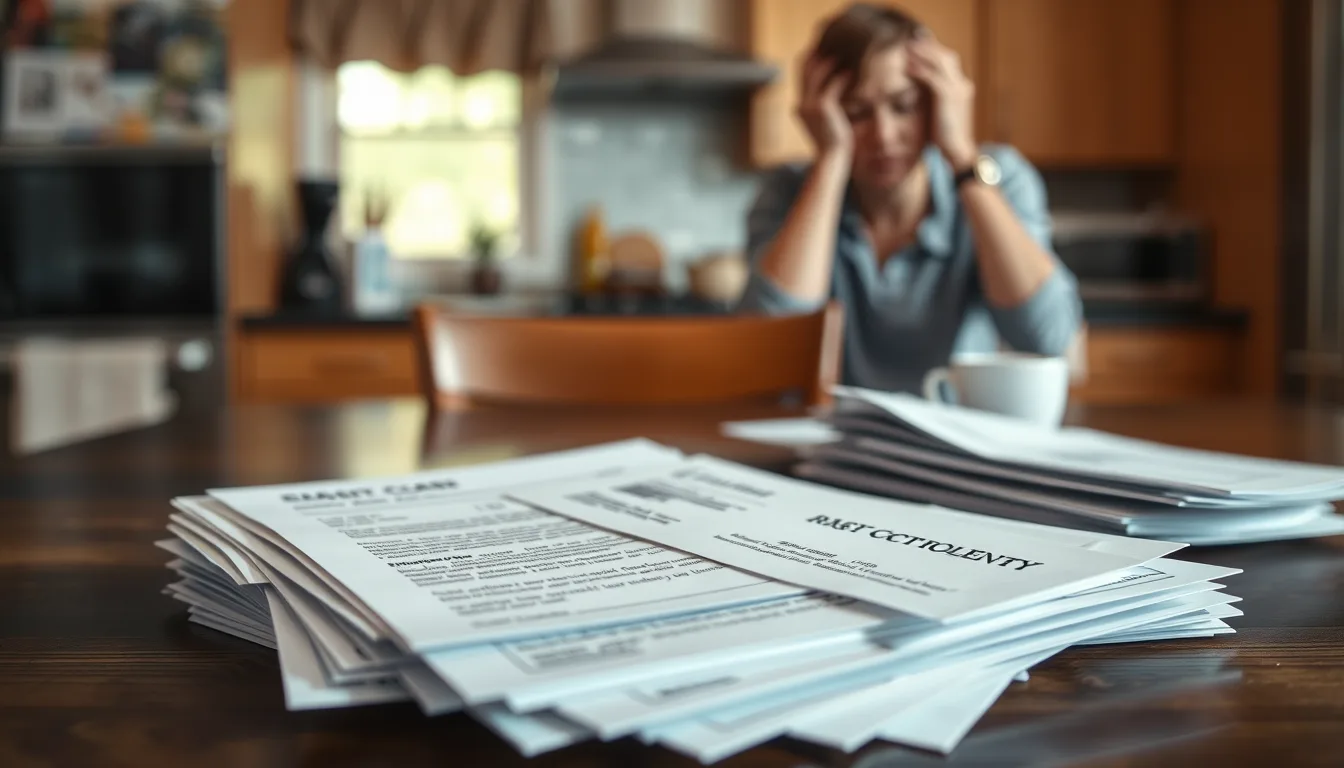
If you're reading this with a knot in your stomach and a stack of statements on the kitchen table, take a breath first. You're not the first person to wonder whether a credit card debt settlement company is the way out, and you won't be the last. Plenty of Americans with balances they can't keep up with look at settlement every year.
Here's the honest version: settlement genuinely helps some people, and quietly wrecks things for others. The difference usually comes down to whether they asked the right questions before signing.
This guide walks you through both sides. You'll see what these companies actually do, what they charge, how to tell a real one from a predator, and the free options worth trying first. Then you'll get a step-by-step process for handling a settlement company if you decide that's your route.
One note before we go further: this is general information, not financial advice. Your situation is yours, and a nonprofit counselor or a bankruptcy attorney can look at the details in a way an article can't.
What do credit card debt settlement companies actually do?
A debt settlement company — sometimes called a debt relief or debt negotiation firm — tries to talk your credit card issuers into accepting less than you owe. Instead of paying $18,000 on a card, you might end up paying $9,000 and calling it even. The company handles the negotiation and takes a fee for it.
Here's the part people don't always catch up front: most programs ask you to stop paying your cards. You put money into a dedicated savings account instead. The company waits until you've banked enough to make a lump-sum offer on one account, then moves to the next.
That takes time. Two years is typical. Four isn't unusual.
And while it's happening, your accounts go delinquent, your phone rings, your credit score drops, and your balances keep climbing with interest and late fees.
Settlement is built for a specific situation: you truly can't pay what you owe, you've already tried cheaper routes, and you're either facing bankruptcy or seriously considering it. It's rarely the right first move.
Is debt settlement the same as debt consolidation?
No — and mixing them up is one of the most expensive mix-ups out there. Consolidation means combining balances into one new loan or card, usually at a lower rate, and paying back every dollar. Settlement means paying less than you owe and having the rest forgiven.
Consolidation can help your credit if you keep up the payments. Settlement hurts your credit in the short term, because missed payments come first. They're opposites, not variations on a theme.
Credit counseling sits somewhere else again. A nonprofit counselor might put you on a debt management plan, where you repay the full balance over roughly three to five years at a reduced interest rate. You can read more about that path in our guide on how to pay off credit card debt.
How do debt settlement companies make money?

Most charge a percentage of the debt you enroll. That usually lands between 15% and 25% of the total you put into the program. It's not a small number.
Say you enroll $20,000 across four cards. At a 20% fee, you'd owe the settlement company about $4,000 on top of whatever you pay your creditors. That example is illustrative — your quote depends on the company, your state, and how much you owe.
Some firms also tack on monthly service fees, setup fees, or a separate charge per account settled. A handful of states cap these fees. Others don't allow percentage-based fees at all.
Check what your state permits before you sign anything.
When do you actually pay the fee?
This is where the law matters. Under the Federal Trade Commission's Telemarketing Sales Rule, for-profit debt relief companies that sell over the phone can't charge you until they've settled a debt, you've agreed to the settlement, and you've made at least one payment to the creditor.
Translation: no upfront fees. If a company wants money before it has done anything, that's your signal to hang up. The FTC lays out the rules and common tricks in its guide to debt relief and credit repair scams.
Are these companies legitimate, or should you run?
Both exist. Debt settlement is a legal, regulated industry in most states, and some firms do exactly what they promise. Others are built to collect fees and leave you worse off.
The good news: it's not hard to tell them apart if you know what to check. A few minutes of research will save you thousands.
- Check the state license. Most states require debt settlement companies to be licensed or registered. Your state attorney general's office or banking regulator will have a lookup tool.
- Read complaints, not testimonials. Search the company name plus "complaint" and check the CFPB's complaint database. A pattern of complaints about refunds is a warning sign.
- Ask for the contract before you talk numbers. A real company will send written disclosures without pressure.
Red flags that should end the conversation immediately: promises that a specific creditor "always settles," guarantees that your credit will be fine, requests for your account login credentials, or pressure to sign today because the offer expires. Real negotiations don't work on countdown timers.
What does debt settlement do to your credit score?

It hurts — sometimes badly — and there's no way around that. To settle, you generally have to fall behind first, and every missed payment gets reported to the credit bureaus.
Here's the timeline most people live through. You miss a payment at 30 days. Then 60.
Then 90. Around the 180-day mark, the issuer typically charges the debt off and may sell it to a collection agency. Each of those marks lands on your credit report.
Negative items stay for seven years from the date of the original delinquency. A settled account usually shows as settled for less than the full balance, which still reads as a negative to most lenders.
How far your score drops depends on where you started. Someone with a strong score and a clean file can lose well over 100 points. Someone already at 550 has less room to fall.
The rebound is real, though. Once the accounts are resolved, on-time payments on any remaining credit start rebuilding your file. Most people see meaningful improvement within a year or two of finishing the program.
Step-by-step: how to handle a debt settlement company
If you've decided settlement is worth exploring, work through these steps in order. Don't skip ahead.
- Write down every debt first. Every card, every balance, every APR, every minimum payment. You can't judge a settlement offer if you don't know the starting line.
- Run a rough settlement math check yourself. Multiply your total debt by 0.5 to get a ballpark settlement, then add the fee (say 20%). If the total is close to what you actually owe, settlement isn't saving you much.
- Verify the license and complaint history. State regulator lookup, CFPB complaint database, Better Business Bureau. Ten minutes here is worth more than any sales pitch.
- Request the written agreement and read it line by line. Look for the fee structure, what happens if a creditor won't negotiate, whether you can cancel, and who holds your money.
- Confirm the savings account is yours. Your money should sit in an account in your name that only you control. A company that wants to hold your funds is a problem.
- Ask what happens to your credit and your taxes. Forgiven debt over $600 is usually reported to the IRS on a 1099-C form and can count as taxable income. Ask how they handle that.
- Set a check-in schedule. Ask for written progress updates every 30 to 60 days. A legitimate firm will welcome the question.
One more step people forget: keep paying at least the minimum on any card you're not enrolling. Letting every account go delinquent at once does more damage than you need.
Before you sign: free options worth trying first
Settlement should be near the end of the list, not the start. These four options cost little or nothing, and any of them might make settlement unnecessary.
Option 1: Ask your card issuer for a hardship plan
Call the number on the back of your card and say plainly: "I'm having trouble keeping up and I'd like to know about hardship options." Banks routinely offer reduced APRs, waived late fees, or a fixed payment plan for six to twelve months.
They say no sometimes. Call back and ask again — different representatives have different authority. And ask specifically about the bank's own internal relief program, not just the collections department.
Option 2: Get nonprofit credit counseling
Nonprofit counseling agencies affiliated with the National Foundation for Credit Counseling offer free or low-cost sessions. They'll review your budget and, if it fits, set up a debt management plan with reduced interest rates.
Skip any "counseling" agency that pushes a debt management plan before looking at your budget, or that charges large upfront fees.
Option 3: Try negotiating a settlement yourself
You can do what the companies do. Call the collection department, ask to speak with someone who can settle, and make an offer. Start around 30% to 40% of what you owe and be ready to pay a lump sum.
Get any agreement in writing before you send a dime, and keep records of every call. Doing it yourself takes more effort but saves the 15–25% fee entirely.
Option 4: Move balances to a 0% card if your credit still allows it
A balance transfer card with a 0% introductory APR for 12 to 21 months can wipe out interest while you pay down principal. Expect a transfer fee of roughly 3% to 5%.
This works best when you can realistically clear the balance before the promo period ends. And it requires decent credit, which many people in this situation no longer have.
How to pay off credit card debt fast without settling
If you're searching for how to pay off credit card debt fast, you probably don't want to hear "make a budget and wait." Fair enough. Here's the actual playbook, in the order that tends to work.
Step 1: List every card with its real numbers
Balance, APR, minimum payment, due date. All of it on one sheet of paper. Most people are carrying one or two cards they've quietly stopped looking at, and those are often the ones doing the most damage.
Step 2: Decide which card gets the extra money
If you want to minimize interest, throw every spare dollar at the highest-APR balance while paying minimums on the rest. That's the avalanche method. If you need momentum, attack the smallest balance first — the snowball method — and knock accounts out one at a time.
Both work. Motivation beats math for a lot of people. Our breakdown of debt snowball vs avalanche covers which one fits your temperament.
Step 3: Call and ask for a lower interest rate
One five-minute call can drop your APR by several points. Call, say you've been a customer for X years, and ask whether they can lower your rate to keep your business. Even a few points of APR changes how fast you pay down credit card debt quickly.
Step 4: Automate the minimums
Set autopay on every card so you never eat a late fee or a penalty APR again. Late payments are the single fastest way to make a payoff plan 40% more expensive.
Step 5: Throw every windfall at the target card
Tax refunds, bonuses, birthday money, the extra paycheck in a three-paycheck month. Lump sums do more damage to a balance than dribbling in extra $20 payments.
Step 6: Add income, not just cuts
Cutting expenses has a floor. Income doesn't. A weekend gig, a raise, selling things you don't use — an extra $300 a month aimed at one card can wipe out a $5,000 balance in under two years.
Step 7: Stop new charges on the cards you're paying down
This is the step people skip. Paying $400 a month toward a card while still swiping it means you're treading water. Switch to cash or debit until the balances are gone.
If you want a deeper walkthrough of each of these moves, our piece on how to get out of credit card debt goes further into the mechanics.
How can I pay off credit card debt fast on a low income?
This is the question that keeps people up at night. The answer isn't glamorous, but it's real: you don't need a huge income. You need a plan that survives a small budget.
Start by finding your true spare cash. Total your take-home pay, subtract rent, utilities, food, transportation, insurance, and minimum debt payments. Whatever's left — even $40 — is your attack money.
Then pick one card and send that $40 every month, on top of the minimum. It sounds tiny. On a $3,000 balance at 24% APR, an extra $50 a month can shave roughly a year off the payoff.
That's illustrative, but the direction holds.
Next, hunt for one-time money. A tax refund of $1,500 aimed at a single card changes the math overnight. So does selling a piece of furniture or picking up two weekends of work.
And call your issuers. Hardship programs exist precisely for people with limited income, and a reduced rate can free up real money each month.
If the numbers truly don't work — if your minimums eat more than half your take-home pay — that's when a nonprofit counselor or a bankruptcy attorney is worth the call. Not because you failed. Because the math changed.
How do I pay off credit card debt fast when collections are already calling?
Once an account goes to collections, the playbook shifts. Your score has already taken the hit, so the goal now is damage control and resolution.
First, don't ignore the calls. Answer once, ask the caller to send written validation of the debt — the amount, the original creditor, and their authority to collect. They're required to provide it if you ask within 30 days of their first contact.
Second, don't pay anything until you've confirmed the debt is yours and the amount is right. Collectors buy old debts in bulk and sometimes chase the wrong person or the wrong balance.
Third, be careful about reviving an old debt. In most states, debts have a statute of limitations — often three to six years, though it varies. A partial payment or a written promise to pay can restart that clock.
Check your state's rule before you agree to anything.
Fourth, if you can pay, negotiate. Offer a lump sum and ask for a written agreement stating the payment satisfies the debt in full.
How to remove debt collection from your credit report
Short answer: accurate collections stay for seven years, and no company can legally delete them early. But that doesn't mean you're stuck — there are real moves here.
Dispute anything inaccurate. If the balance is wrong, the account isn't yours, or the collection is listed twice, file a dispute with each credit bureau. They have 30 days to investigate. Fixing genuine errors is the most reliable way to remove debt collection from a credit report.
Ask for a goodwill deletion, carefully. Some collectors will agree to remove a paid collection as part of a settlement. Get it in writing before you pay. It's never guaranteed, and many collectors won't do it — but it costs nothing to ask.
Consider paying it. A paid collection still shows on your report, but newer credit scoring models treat paid collections more kindly than unpaid ones. And it stops new damage.
Watch out for credit repair scams. Any company promising to erase accurate negative marks is lying. You can dispute items yourself for free, and so can a nonprofit counselor.
| Situation | Best move | Typical timeline |
|---|---|---|
| Collection is inaccurate | File a dispute with each bureau | 30 days per investigation |
| Collection is accurate and unpaid | Negotiate a settlement with written terms | Weeks to months |
| Collection is accurate and paid | Ask for goodwill deletion, then wait it out | Up to 7 years from delinquency |
| Debt is past the statute of limitations | Consult an attorney before paying anything | Varies by state |
Settlement vs. credit counseling vs. consolidation vs. bankruptcy
Four paths, four very different trade-offs. Here's how they stack up side by side.
| Option | What happens | Typical cost | Credit impact |
|---|---|---|---|
| Debt settlement | Pay less than you owe after falling behind | 15–25% of enrolled debt in fees | Severe short-term damage |
| Credit counseling / DMP | Repay in full at reduced interest | Modest monthly fee | Mild; often improves over time |
| Consolidation loan | One new loan pays off the cards | Interest on the new loan | Can help if payments stay on time |
| Chapter 7 bankruptcy | Most unsecured debt discharged | Court and attorney fees | Severe, up to 10 years on report |
None of these is universally "best." A debt management plan beats settlement for someone who can afford the payments. Bankruptcy beats both for someone with no realistic path to repayment and heavy collection pressure.
Talk to a nonprofit counselor before choosing. They're free in most cases, and they'll tell you honestly if a debt management plan won't fit your budget.
What if you already signed with a settlement company and regret it?
You're not stuck. Plenty of people sign, then realize the fee is bigger than expected or the calls are worse than they imagined.
Start by reading the cancellation clause. Many contracts include a cooling-off window — often three days, sometimes longer depending on your state. If you're inside it, cancel in writing and keep proof.
If you're past the window, check what you've actually paid and what's been settled. Some companies will release you from future fees even if they keep what you've already paid. Ask in writing.
You can also revoke any authorization that lets the company debit your account. Call your bank, put a stop payment in place, and confirm it in writing.
If the company misrepresented fees, promised results it didn't deliver, or charged you before settling anything, file a complaint with the CFPB at consumerfinance.gov/complaint and with your state attorney general.
How to spot and report a debt relief scam
Debt relief scams follow a script. Once you've seen it, it's hard to miss.
- They call you first, often claiming to be from a "government debt relief program."
- They demand an upfront fee before doing any work.
- They tell you to stop paying your creditors immediately, before you've signed anything.
- They guarantee a specific result — "we'll cut your debt in half" — with no caveats.
- They ask for your card numbers, bank logins, or Social Security number before you've seen a contract.
Real companies don't cold-call with guarantees. They don't need your bank password. And they don't rush you.
If you've been targeted, report it to the FTC at ReportFraud.ftc.gov and to your state attorney general. Reports are what get these operations shut down, and they help the next person avoid the same trap.
Questions to ask before you sign anything
Bring these to the call. A good company answers them without flinching.
- What's the total fee, in dollars, for my specific debt amount?
- When exactly do I pay that fee, and what happens if no creditor settles?
- Who holds my money while I'm saving?
- What happens to my credit, and how long will it take to recover?
- Will you negotiate with all my creditors, or only some?
- Can I cancel, and do I get a refund of anything I've paid?
- What happens if a creditor sues me while I'm in the program?
- Are you licensed in my state, and what's your license number?
If any answer comes back vague or defensive, that's your answer. Walk away.
Key takeaways
- Know what you're buying. Settlement means paying less than you owe after falling behind. It damages your credit for years, and it's a last resort, not a first step.
- Fees run roughly 15–25% of enrolled debt. Federal rules bar phone-sold debt relief companies from collecting fees before a debt is settled — so no upfront money.
- Try the free options first. Hardship plans, nonprofit credit counseling, and self-negotiation all cost little or nothing and may make settlement unnecessary.
- You can often pay off credit card debt fast without settling. List every balance, attack the highest APR or smallest balance, ask for lower rates, and aim windfalls at one card at a time.
- Accurate collections can't be deleted early. Dispute errors, negotiate in writing, ask for goodwill removals, and ignore anyone promising a guaranteed cleanup.
- Verify before you sign. Check the state license, read complaints, get every fee in writing, and confirm your money stays in an account you control.
Frequently asked questions
Are credit card debt settlement companies legitimate?
How much do debt settlement companies charge?
Will debt settlement ruin my credit score?
Can I settle credit card debt myself instead of hiring a company?
How can I remove a debt collection from my credit report?
This article is for general informational purposes only and does not constitute financial, legal or credit-repair advice. Always consult a qualified financial advisor or credit counselor about your specific circumstances.

Written & reviewed by
Can OTUEditor
Can OTU is the editor of this site, curating and reviewing every guide for accuracy and clarity.
View all guides →