How to Get Out of Credit Card Debt Fast
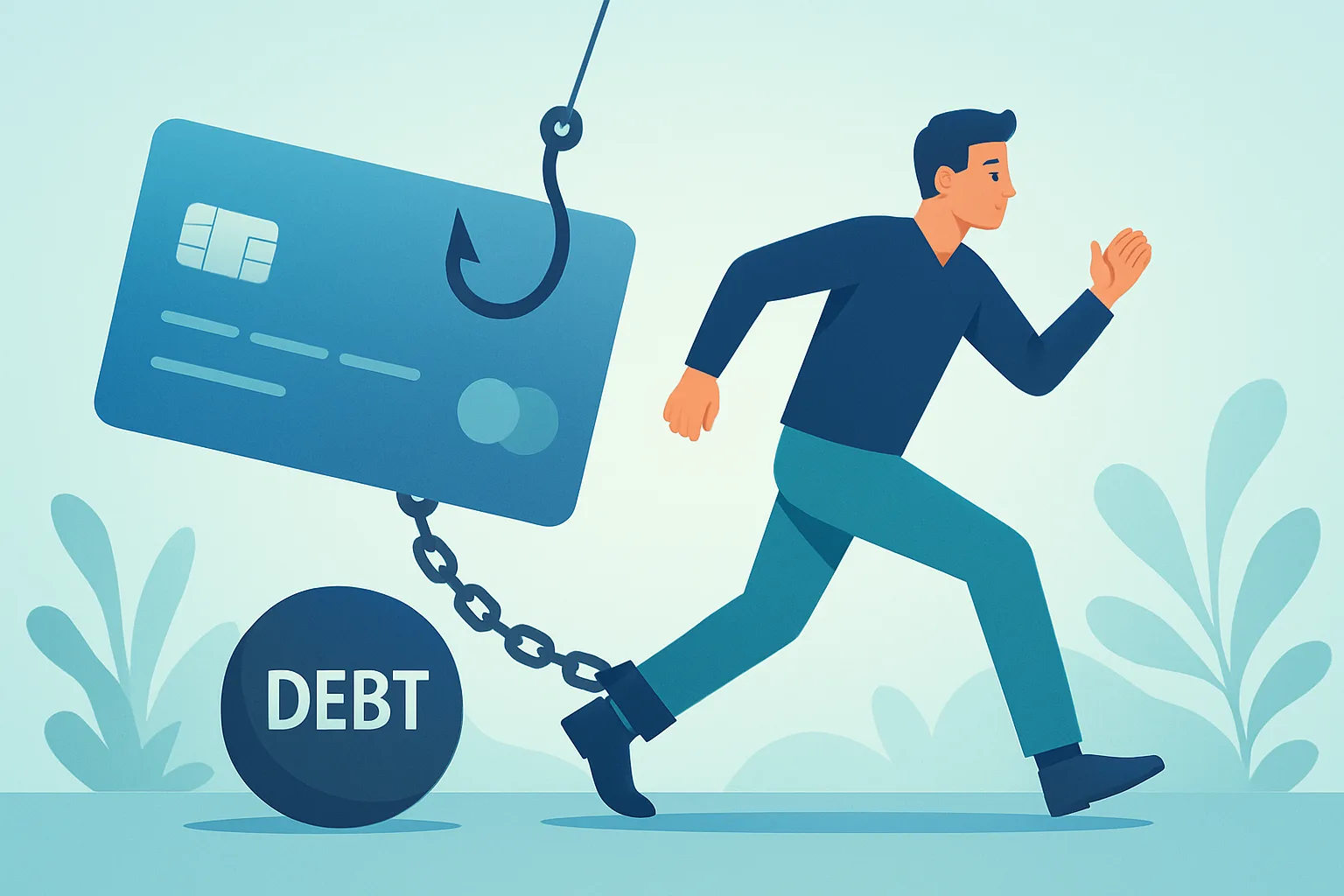
Credit card debt can feel like a heavy weight that never lifts. You make payments every month, but the balance barely budges. If you’re looking for a way out, you’re not alone. Millions of Americans carry credit card balances, and many are searching for effective strategies to become debt-free. This article explains practical, step-by-step methods to get out of credit card debt quickly, without resorting to gimmicks or risky shortcuts.
Before diving into specific tactics, it’s important to understand that there is no one-size-fits-all solution. Your best approach depends on your total debt, interest rates, income, and spending habits. The goal here is to provide you with a clear roadmap so you can choose the path that fits your situation. Remember, this is general information, not financial advice. Always consider consulting a qualified professional for personalized guidance.
Let’s start with the basics: getting out of credit card debt requires a combination of reducing new charges, paying more than the minimum, and using the right repayment strategy. The faster you want to be debt-free, the more aggressive your plan needs to be. Below, we break down the most effective methods, from simple budgeting techniques to consolidation options and even debt relief programs.
Assess Your Debt Situation Honestly
The first step in any debt payoff journey is to know exactly what you owe. Gather all your credit card statements and list each card’s balance, interest rate (APR), and minimum monthly payment. This gives you a clear picture of your total debt and the cost of carrying it. Without this information, you can’t create an effective plan.
Many people avoid looking at their debt because it feels overwhelming. But facing the numbers is empowering. Once you see the total, you can break it down into manageable pieces. For example, if you have $15,000 across three cards with APRs ranging from 18% to 25%, you know which card is costing you the most. This clarity is the foundation for every decision that follows. Let’s say Card A has a $5,000 balance at 25% APR, Card B has $6,000 at 20%, and Card C has $4,000 at 18%. The minimum payments might be $150, $180, and $120 respectively, totaling $450 per month. With that information, you can see that Card A is the most expensive, costing roughly $104 in interest per month, while Card C costs about $60. Understanding these numbers helps you prioritize which debt to attack first, whether by balance or by rate.
Also, check your credit report for free at AnnualCreditReport.com. You might find errors that inflate your debt or hurt your credit score. Disputing inaccuracies can improve your credit, which may help you qualify for lower-interest consolidation options later. For instance, a mistaken late payment on your report could drop your score by 50 points, making it harder to get a balance transfer card. Correcting that error could raise your score and open up better options.
Stop Adding New Debt
Paying off debt is nearly impossible if you’re still swiping your cards for new purchases. The first rule of getting out of debt is to stop digging the hole deeper. That means putting your credit cards away and using cash or debit for all expenses. If you need to keep a card for emergencies, leave it at home or freeze it in a block of ice (literally) to create a barrier to impulse spending.
This step is about changing your mindset. Instead of viewing credit cards as a source of funds, see them as tools that you’ve overused. For the duration of your debt payoff plan, commit to a cash-only lifestyle. This might require adjusting your budget, but it’s a temporary sacrifice for long-term freedom. Once the debt is gone, you can reintroduce credit cards responsibly. Consider this: if you’re paying $300 per month toward a $10,000 balance at 22% APR, but you also add $200 in new charges each month, your net progress is only $100. That means it will take over 7 years to pay off the debt, assuming no interest changes. By stopping new charges, you can pay it off in about 4 years. The difference is dramatic.
Create a Bare-Bones Budget
To free up money for debt payments, you need to know where your money is going. Create a budget that covers only essentials: housing, utilities, food, transportation, and minimum debt payments. Everything else—dining out, subscriptions, entertainment—should be cut or reduced to the bare minimum. The goal is to maximize the amount you can put toward your debt each month.
Use the 50/30/20 rule as a starting point: 50% of income for needs, 30% for wants, and 20% for savings and debt. But when you’re in debt payoff mode, you might shift to 50/20/30 or even 50/10/40. Every dollar counts. Track your spending with a free app or a simple spreadsheet. Look for recurring charges you forgot about, like unused gym memberships or streaming services. Cancel them and redirect that money to your debt. For example, if you earn $4,000 per month, a 50/10/40 split means $2,000 for needs, $400 for wants, and $1,600 for debt and savings. That’s a huge increase from the typical $800 you might allocate if you followed the standard 50/30/20. With $1,600 per month going to debt, you could pay off a $15,000 balance in under 10 months, assuming no interest—but with interest, it might take 11-12 months. Still, it’s far faster than the 5+ years it would take with minimum payments.
Consider a temporary side hustle to accelerate your progress. Even an extra $200 a month from freelancing, driving for a rideshare, or selling unused items can shave months off your repayment timeline. The more you can throw at your debt, the faster you’ll be free. For instance, if you add $200 to your monthly debt payment, a $10,000 balance at 20% APR that would take 4 years to pay off with $300 monthly payments could be paid off in about 2.5 years with $500 monthly payments. That’s a significant reduction in time and interest.
Choose a Repayment Strategy: Debt Snowball vs Avalanche
Once you have extra cash, you need a systematic way to allocate it. The two most popular methods are the debt snowball and the debt avalanche. Both involve paying minimums on all debts except one, but they differ in which debt you target first. Understanding the debt snowball vs avalanche approach can help you pick the one that keeps you motivated.
The debt snowball method focuses on paying off the smallest balance first, regardless of interest rate. Once that debt is gone, you roll the payment you were making into the next smallest debt. This creates a “snowball” effect and provides quick wins that build momentum. It’s ideal if you need psychological boosts to stay on track. However, you may pay more in interest over time compared to the avalanche method. For example, imagine you have three debts: $2,000 at 22% APR, $4,000 at 18%, and $6,000 at 20%. With the snowball, you pay off the $2,000 first, then the $4,000, then the $6,000. You might feel a sense of accomplishment after just a few months when that first card is gone. But because the $6,000 debt at 20% is left for last, you’ll accrue more interest on it over time. In contrast, the avalanche method would target the $2,000 at 22% first (highest rate), then the $6,000 at 20%, then the $4,000 at 18%. This saves you money on interest but may take longer to see a full payoff if the highest-rate debt is also large.
The debt avalanche method targets the debt with the highest interest rate first. This saves you the most money in interest because you eliminate the most expensive debt fastest. Mathematically, it’s the most efficient, but it can take longer to see a debt fully paid off if the highest-rate debt is also large. Choose the method that aligns with your personality. The best strategy is the one you’ll stick with. If you’re someone who needs frequent rewards to stay motivated, the snowball is likely better. If you’re disciplined and focused on numbers, the avalanche will save you more. Either way, you’re making progress.
Consider a Balance Transfer Credit Card
If you have good credit (typically a score of 670 or higher), a balance transfer credit card can give you a temporary 0% APR period, often 12 to 21 months. You transfer your existing balances to the new card and pay no interest during the promotional period. This allows 100% of your payment to go toward the principal, accelerating payoff. However, there’s usually a transfer fee of 3% to 5% of the amount transferred, so calculate whether the savings outweigh the fee.
Balance transfers work best if you can pay off the entire balance before the promotional rate ends. If you don’t, the remaining balance will be subject to the card’s regular APR, which can be high. Also, avoid using the new card for purchases, as those may have a different interest rate and can complicate payoff. Compare offers carefully, looking at the length of the 0% period, fees, and the regular APR after the promo ends. For example, suppose you transfer $10,000 to a card with a 3% fee ($300) and a 15-month 0% APR period. If you pay $687 per month, you’ll pay off the full $10,300 in 15 months. Without the transfer, at a 22% APR, paying $687 per month would take about 17 months and cost roughly $1,200 in interest. The transfer saves you $900 in interest, minus the $300 fee, for a net savings of $600. But if you only pay $500 per month, you’ll have a remaining balance of about $2,800 after 15 months, which will then accrue interest at the regular rate (say 24%). That could wipe out your savings. So, it’s crucial to have a realistic payoff plan.
Explore a Personal Loan for Debt Consolidation
Another option is to take out a personal loan to pay off your credit cards. This replaces multiple high-interest payments with one fixed monthly payment at a potentially lower interest rate. Personal loans from banks, credit unions, or online lenders can offer rates from around 6% to 36%, depending on your credit. If your credit card APRs are 20% or higher, a loan at 10% could save you significant money.
The key is to ensure the loan’s monthly payment fits your budget and that you don’t run up new credit card debt after consolidation. A personal loan provides a structured payoff timeline, typically 2 to 5 years, which can help you stay disciplined. However, if your credit isn’t great, you might not qualify for a low rate. Before applying, compare offers from multiple lenders and check for any origination fees. For a detailed comparison, see our guide on balance transfer vs personal loan. For instance, if you consolidate $15,000 in credit card debt at an average 22% APR into a personal loan at 10% over 3 years, your monthly payment would be about $484, compared to $450 in minimum payments that barely reduce the principal. Over 3 years, you’d pay roughly $2,400 in interest with the loan, versus over $5,000 with the credit cards if you only paid minimums. That’s a savings of $2,600. But if your credit score is 620, you might only qualify for a 20% loan, which would make the payment $557 per month and total interest about $5,000—not much better than the cards. So, shop around.
Use the Debt Management Plan (DMP) Option
If your debt is overwhelming and you’re struggling to make minimum payments, a debt management plan (DMP) through a nonprofit credit counseling agency could help. In a DMP, the counselor negotiates with your creditors to lower interest rates and waive fees. You make a single monthly payment to the agency, which distributes it to your creditors. DMPs typically take 3 to 5 years to complete.
Credit counseling agencies like the National Foundation for Credit Counseling (NFCC) offer DMPs. They charge modest setup and monthly fees, but these are usually much lower than the interest you’d otherwise pay. A DMP can reduce your interest rates to around 8% to 10%, making it easier to pay off debt. However, it requires closing your credit card accounts, which may temporarily hurt your credit score. It’s a solid option if you need professional help and a structured plan. For example, if you have $20,000 in credit card debt at an average 24% APR, your minimum payments might be $600 per month, but only $200 goes to principal. With a DMP, the agency negotiates rates down to 9%, and you pay $500 per month. Over 4 years, you’d pay off the full $20,000 plus about $4,000 in interest and fees, versus $20,000 plus $12,000 in interest without the DMP. That’s a significant savings, but you must commit to closing the accounts and not using credit during the plan.
Look Into Debt Settlement (With Caution)
Debt settlement involves negotiating with creditors to accept a lump sum payment that is less than the full amount you owe. This can reduce your principal, but it comes with risks. Debt settlement companies often charge high fees, and the process can damage your credit score significantly because you stop making payments to save up for settlements. Creditors may also sue you for the unpaid balance.
Debt settlement is typically a last resort for those who are already delinquent and cannot afford minimum payments. If you’re considering it, research reputable companies and understand the tax implications—forgiven debt over $600 may be considered taxable income. For a broader overview of your options, including settlement, check our page on debt relief options. For instance, if you owe $15,000 and a settlement company negotiates a lump sum of $9,000, you save $6,000 in principal. But you might pay the company a fee of 20% of the saved amount ($1,200), and you’ll likely have to stop making payments for 6-12 months, during which your credit score could drop by 100-150 points. Additionally, the IRS may tax the $6,000 forgiven as income, adding a tax bill of up to $2,000 depending on your bracket. So, the net benefit might be only $2,800, and your credit is damaged. It’s a risky path.
Consider Bankruptcy as a Last Resort
Bankruptcy is a legal process that can discharge most unsecured debts, including credit card debt. It provides a fresh start but has serious long-term consequences. Chapter 7 bankruptcy liquidates assets to pay creditors, while Chapter 13 sets up a repayment plan over 3 to 5 years. Bankruptcy stays on your credit report for 7 to 10 years, making it difficult to get loans, rent an apartment, or even get a job in some fields.
Bankruptcy should only be considered after you’ve exhausted other options and your debt is truly unmanageable. It’s not a quick fix; it’s a life-altering decision. If you’re considering it, consult a bankruptcy attorney to understand the implications for your specific situation. Most people can avoid bankruptcy with disciplined use of the strategies above. For example, if you have $50,000 in credit card debt and no way to pay even minimums, Chapter 7 could wipe it out, but you might lose non-exempt assets like a second car or investment property. Your credit score, which might already be low, could drop to 500, and you’ll struggle to rent an apartment or get a car loan for years. In contrast, a DMP or aggressive payoff plan might take 5-7 years but preserve your credit and assets. Bankruptcy is a drastic step, but for some, it’s the only way out.
Boost Your Income to Pay Faster
Cutting expenses can only go so far. To accelerate your debt payoff, increasing your income is a powerful lever. Look for opportunities to earn extra money: a part-time job, freelance work, gig economy apps, or selling items you no longer need. Even a temporary second job can generate hundreds of extra dollars per month.
Consider turning a hobby into income. If you’re good at writing, graphic design, or tutoring, platforms like Upwork or Fiverr can connect you with clients. If you have a car, driving for Uber or Lyft can bring in cash on your schedule. Use any windfalls—tax refunds, bonuses, gifts—to make lump-sum debt payments. Every extra dollar reduces the time you’ll be in debt. For instance, if you earn an extra $500 per month from a side hustle, and you’re paying $500 per month on a $10,000 debt at 20% APR, you can double your payment to $1,000 per month. That cuts the payoff time from about 2.5 years to just over 1 year, saving you roughly $1,200 in interest. Even a one-time tax refund of $2,000 applied to the same debt could reduce the payoff time by 4 months and save $400 in interest.
Negotiate Lower Interest Rates
You might be able to lower your credit card interest rates simply by asking. Call your credit card issuers and request a rate reduction. If you have a history of on-time payments, they may be willing to work with you. Be polite and persistent. Even a few percentage points can save you hundreds of dollars in interest over a year.
If they refuse, consider transferring the balance to a card with a lower rate or consolidating with a personal loan. Another tactic is to ask for a hardship program if you’re experiencing financial difficulty. Many issuers offer temporary rate reductions or waived fees for customers who explain their situation. It never hurts to ask. For example, if you have a $10,000 balance at 24% APR, a 4% reduction to 20% saves you $400 per year in interest. Over 3 years, that’s $1,200. If you’re persistent and call every 6 months, you might get multiple reductions. One person I know called their issuer and said, “I’ve been a customer for 5 years with on-time payments, but I’m struggling with high interest. Can you lower my rate?” The issuer dropped it from 22% to 15% on the spot. That saved them $700 per year on a $10,000 balance.
Automate Payments to Avoid Missed Deadlines
Missing a credit card payment can trigger late fees, penalty APRs, and damage to your credit score. To stay on track, set up automatic payments for at least the minimum amount due. Better yet, automate a fixed amount above the minimum that aligns with your debt payoff plan. This ensures consistency and removes the temptation to skip a payment.
If you’re using the snowball or avalanche method, you’ll need to adjust your automatic payments as you pay off each debt. Set calendar reminders to review your plan monthly. Automation is a tool, not a substitute for active management. Keep an eye on your accounts to catch any errors or unauthorized charges. For instance, set up an automatic payment of $500 on the 1st of each month for your highest-interest card. When that card is paid off, redirect the $500 to the next card. Without automation, you might forget a payment and incur a $35 late fee, plus your rate could jump to 29.99% as a penalty. That could cost you hundreds in extra interest over a year. Automation prevents that.
Stay Motivated and Track Progress
Paying off debt is a marathon, not a sprint. It’s easy to lose motivation, especially if the process takes a year or more. To stay inspired, celebrate small victories. When you pay off a card, treat yourself to a small reward (within your budget). Track your progress visually—color in a chart or use a debt payoff app that shows your balance decreasing.
Join online communities like Reddit’s r/personalfinance or r/debtfree for support. Share your goals with a trusted friend or family member who can hold you accountable. Remember why you started: financial freedom, less stress, and the ability to save for your future. Keep that vision front and center. For example, create a thermometer chart on your wall that you color in as you pay off each $1,000. When you hit $5,000, treat yourself to a $20 dinner out. When you hit $10,000, take a weekend hike. These small rewards keep you going. Also, track your net worth monthly—as debt decreases and savings increase, you’ll see tangible progress that motivates you to continue.
Understand the Impact of Interest Compounding
One of the most insidious aspects of credit card debt is how interest compounds daily or monthly. When you carry a balance, interest is calculated on your average daily balance, and if you don’t pay it off, that interest gets added to the principal, so you pay interest on interest. This can make debt grow even if you’re making minimum payments. Understanding this can motivate you to pay more than the minimum.
For example, consider a $5,000 balance at 22% APR with a minimum payment of $100 per month. In the first month, interest is about $92 (22% / 12 months * $5,000), so only $8 goes to principal. The next month, the balance is $4,992, and interest is again about $91.50, so only $8.50 goes to principal. At this rate, it would take over 7 years to pay off the debt, and you’d pay nearly $4,000 in interest. But if you pay $200 per month, you’d pay it off in about 2.5 years and pay only $1,200 in interest. The difference is stark. By understanding compounding, you see that every extra dollar you pay today saves you from paying interest on that dollar for years to come. This knowledge can help you prioritize debt payments over discretionary spending.
Build an Emergency Fund to Prevent Relapse
One of the biggest reasons people fall back into credit card debt is that they have no emergency savings. When an unexpected expense arises—like a car repair or medical bill—they turn to credit cards again. To break this cycle, start building a small emergency fund even while paying off debt. Aim for $500 to $1,000 initially, then work up to 3-6 months of expenses after the debt is gone.
This might seem counterintuitive because you want to put every dollar toward debt, but an emergency fund is a safety net that prevents new debt. For instance, if your car breaks down and costs $800 to fix, without savings you might put it on a credit card, adding $800 to your balance. With a $1,000 emergency fund, you can pay cash and avoid new debt. Even if you slow your debt payoff by a month or two, you’re protecting yourself from a potential spiral. So, allocate a small portion of your budget—say $50 per month—to a separate savings account. Once you have $1,000, redirect that $50 to debt. This strategy ensures you don’t undo your progress when life happens.
Key takeaways
- Know exactly what you owe: list all balances, APRs, and minimum payments.
- Stop using credit cards and create a bare-bones budget to free up cash.
- Choose a repayment strategy: debt snowball for motivation, avalanche for maximum interest savings.
- Consider balance transfers or personal loans if you have good credit; explore DMPs or debt settlement if you’re struggling.
- Increase income, negotiate rates, and automate payments to stay consistent.
- Bankruptcy is a last resort with serious long-term consequences.
- Stay motivated by tracking progress and celebrating milestones.
Frequently asked questions
What is the fastest way to get out of credit card debt?
Should I pay off credit card debt or save money first?
Will paying off credit card debt hurt my credit score?
Can I negotiate credit card debt myself?
What is the difference between debt consolidation and debt settlement?
This article is for general informational purposes only and does not constitute financial, legal or credit-repair advice. Always consult a qualified financial advisor or credit counselor about your specific circumstances.

Written & reviewed by
Can OTUEditor
Can OTU is the editor of this site, curating and reviewing every guide for accuracy and clarity.
View all guides →