How to Pay Off Credit Card Debt
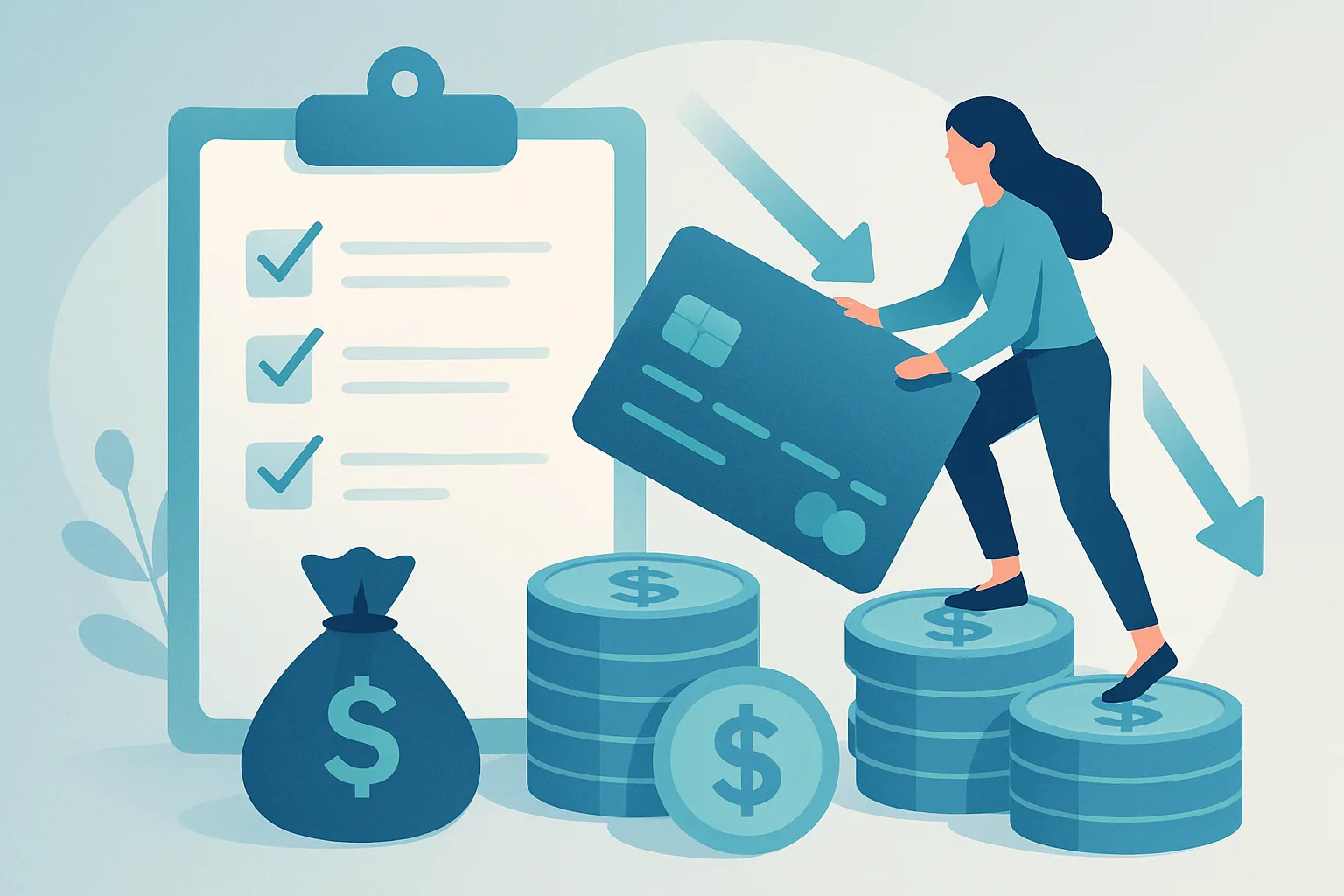
Credit card debt can feel overwhelming, but you are not alone. Millions of Americans carry balances from month to month, and the path to becoming debt-free is clearer than you might think. This guide will walk you through practical steps to tackle what you owe, from understanding your debt to choosing a repayment strategy that fits your life. Remember, this information is for educational purposes only and does not constitute financial advice. The journey to financial freedom requires patience, discipline, and a solid plan, but every step you take brings you closer to your goal.
Before diving into specific methods, it helps to take a deep breath and assess where you stand. Knowing the total amount you owe, the interest rates on each card, and your minimum monthly payments gives you a solid starting point. From there, you can explore options like the debt snowball or avalanche method, balance transfers, or even debt consolidation. Each approach has its own strengths, and the best one depends on your personal situation and goals. For example, if you have multiple cards with balances ranging from $500 to $5,000, the snowball method might help you gain momentum quickly by eliminating the smallest balance first. On the other hand, if you have a single large balance on a high-interest card, the avalanche method could save you hundreds of dollars in interest over time.
This article covers everything a beginner needs to know about how to pay off credit card debt. We will break down the steps, explain the pros and cons of popular strategies, and offer tips to stay motivated along the way. Whether you have a small balance or a large one, the principles remain the same: stop adding new debt, pay more than the minimum, and stick with a plan. By the end of this expanded guide, you will have a comprehensive understanding of the tools and techniques available to you, empowering you to take control of your financial future.
Understanding Your Credit Card Debt
The first step in any debt repayment journey is to get a clear picture of what you owe. Gather all your credit card statements or log into your online accounts. Write down the balance, interest rate (APR), and minimum payment for each card. This list becomes your roadmap. Many people are surprised to see how much they owe when they add it all up, but facing the numbers is essential. For instance, you might discover that you have three cards: Card A with a $2,500 balance at 22% APR and a $75 minimum payment, Card B with a $1,200 balance at 18% APR and a $40 minimum payment, and Card C with a $4,000 balance at 15% APR and a $100 minimum payment. Seeing these numbers in black and white can be a wake-up call, but it also gives you a clear target to work toward.
Credit card debt is typically unsecured, meaning there is no collateral like a house or car backing it. That also means interest rates can be high—often 15% to 25% or more. The longer you carry a balance, the more interest accrues, making it harder to pay off. Understanding this can motivate you to act quickly. Also, note any promotional rates that may expire soon, as those can spike your payments later. For example, if you have a card with a 0% introductory APR that expires in six months, you need to prioritize paying off that balance before the promotional period ends to avoid retroactive interest charges. Additionally, consider the impact of compound interest: if you carry a $3,000 balance at 20% APR and only make the minimum payment of $60 per month, it could take you over 10 years to pay off the debt and cost you more than $4,000 in interest alone. This stark reality underscores the importance of a proactive repayment strategy.
Stop Adding New Debt
While you work on paying off existing debt, it is critical to avoid adding more. That means using credit cards only for purchases you can pay off in full each month, or better yet, switching to cash or debit for a while. If you are tempted to keep swiping, consider leaving your cards at home or freezing them in a block of ice (literally). The goal is to break the cycle of spending beyond your means. For example, if you typically spend $200 per month on dining out using your credit card, challenge yourself to use cash for those meals instead. You might find that you naturally spend less when you see the physical money leaving your wallet.
If you have an emergency, try to build a small emergency fund of $500 to $1,000 before aggressively paying down debt. This prevents you from relying on credit cards when unexpected expenses pop up. Even a tiny buffer can make a big difference in staying on track. Imagine your car needs a $600 repair. Without an emergency fund, you might be tempted to put that expense on your credit card, adding to your debt. But with a $1,000 emergency fund, you can cover the repair without derailing your repayment plan. To build this fund, consider setting aside a small amount from each paycheck—even $25 per week adds up to $1,300 in a year. You can also sell unused items around your home, like old electronics or furniture, to jump-start your savings.
Choose a Repayment Strategy
Two of the most popular methods for paying off credit card debt are the debt snowball and the debt avalanche. Each has its own philosophy, and you can learn more about the differences in our detailed guide on debt snowball vs avalanche. Briefly, the snowball method focuses on paying off the smallest balance first, giving you quick wins that build momentum. The avalanche method targets the highest interest rate first, saving you the most money over time. For example, if you have a $500 balance on one card and a $3,000 balance on another, the snowball method would have you pay off the $500 card first, giving you a sense of accomplishment within a few months. The avalanche method, however, would prioritize the card with the highest APR, even if that card has a larger balance.
Which one is right for you? If you need motivation and visible progress, the snowball may be better. If you are mathematically inclined and want to minimize total interest, go with the avalanche. Either way, the key is to pay more than the minimum on one card while making minimum payments on the rest. Once that card is paid off, roll that payment amount to the next card. To illustrate, suppose you have $300 per month to put toward debt beyond the minimum payments. With the snowball method, you might pay off your smallest card in three months, then use that freed-up payment amount to attack the next card. With the avalanche method, you might focus on the highest-interest card for six months before seeing your first balance eliminated, but you would save more in interest over the long run.
Debt Snowball Method
List your credit cards from smallest balance to largest. Pay the minimum on all cards except the smallest one. Put any extra money toward that smallest balance until it is gone. Then move to the next smallest. This method is praised by many financial experts because the psychological boost of paying off a card quickly can keep you motivated. For instance, if your smallest balance is $400 and you can put an extra $200 per month toward it, you could pay it off in just two months. That success can fuel your determination to tackle the next card. The snowball method is particularly effective for people who have struggled with motivation in the past, as the frequent small victories reinforce positive financial habits.
Debt Avalanche Method
List your cards from highest APR to lowest. Pay the minimum on all cards except the one with the highest interest rate. Throw all extra cash at that card until it is paid off. Then attack the next highest rate. This method saves you the most money in interest, but it may take longer to see your first card paid off if the highest-rate card also has a large balance. For example, if your highest APR is 24% on a $5,000 balance, it might take you eight months to pay it off with extra payments, while a smaller balance at a lower rate could have been eliminated sooner. However, by focusing on the high-interest card first, you could save hundreds of dollars in interest charges over the life of your debt. This method is ideal for those who are disciplined and motivated by numbers rather than emotional wins.
Consider a Balance Transfer
If you have good credit, a balance transfer credit card with a 0% introductory APR can give you breathing room. You move your existing balances to the new card and pay no interest for a set period, typically 12 to 18 months. This allows your payments to go entirely toward principal. However, there is usually a balance transfer fee of 3% to 5% of the amount transferred. Make sure you can pay off the full balance before the promotional period ends, or you will face high interest on the remaining balance. For example, if you transfer a $4,000 balance to a card with a 3% fee, you will pay $120 upfront. If you can pay off the entire $4,120 within 15 months, you save all the interest you would have paid on your original card. But if you only pay off $3,000 and the promotional period ends, you could be hit with interest on the remaining $1,120 at a rate of 20% or more.
Balance transfers work best for people who have a clear repayment plan and the discipline to avoid new charges on the new card. Also, remember that you may not be able to transfer balances between cards from the same bank. Shop around for the best offer and read the fine print. For instance, some cards offer 0% APR for 18 months with no balance transfer fee, while others have a fee but a longer promotional period. Compare offers carefully, and consider using a balance transfer calculator to estimate your savings. Additionally, avoid using the new card for purchases, as those may not be covered by the 0% APR and could accrue interest immediately.
Explore Debt Consolidation
Another option is to consolidate your credit card debt with a personal loan. These loans typically have fixed interest rates and fixed monthly payments, which can simplify your finances. If your credit score has improved since you opened your cards, you might qualify for a rate lower than your current APRs. The loan proceeds are used to pay off your cards, leaving you with one monthly payment. For example, if you have three cards with APRs of 22%, 18%, and 15%, and you qualify for a personal loan at 10% APR, you could save significantly on interest. Your monthly payment might be $300 for three years, compared to $350 in minimum payments across your cards, and you would pay off the debt in a predictable timeframe.
Be cautious: consolidation loans often come with origination fees, and if the loan term is long, you might end up paying more interest overall even with a lower rate. Also, avoid running up new credit card balances after consolidating, or you will be in a worse position. For instance, if you take out a $10,000 loan to pay off your cards but then charge another $5,000 on those cards, you will have $15,000 in debt instead of $10,000. To prevent this, consider closing your credit card accounts or cutting up the cards after consolidation. Additionally, shop around for the best loan terms from multiple lenders, including banks, credit unions, and online lenders. Compare APRs, fees, and repayment terms to find the most cost-effective option for your situation.
Negotiate Lower Interest Rates
You can sometimes lower your credit card interest rates simply by asking. Call your card issuers and request a rate reduction. Mention that you have other offers or are considering a balance transfer. Even a few percentage points can save you money. If you have a history of on-time payments, they may be willing to work with you. It never hurts to ask. For example, if you have a card with a 22% APR and you call to request a reduction to 18%, you could save $40 per year on a $2,000 balance. Over several years, that adds up. Be polite and persistent; if the first representative says no, ask to speak to a supervisor or try again later.
If you are struggling to make payments, you might also ask about hardship programs. Some issuers offer temporary rate reductions or waived fees for customers facing financial difficulty. This can give you a chance to catch up without damaging your credit further. For instance, if you lose your job, you could explain your situation to your card issuer and request a 90-day forbearance or a reduced interest rate. While this may temporarily affect your credit, it is often better than missing payments entirely. Document all your conversations, including the date, time, and name of the representative you spoke with, and follow up in writing to confirm any agreements.
Create a Budget That Prioritizes Debt
To free up money for debt repayment, you need a budget. Track your income and expenses for a month to see where your money goes. Then identify areas to cut back, like dining out, subscriptions, or entertainment. Allocate as much as possible to your debt payments. Even an extra $50 per month can speed up your progress. For example, if you cancel a $15 monthly streaming service and reduce your coffee shop visits by $35 per month, you have an extra $50 to put toward your credit card. Over a year, that is $600 in additional payments, which could reduce your repayment time by several months.
Consider using the 50/30/20 budgeting rule: 50% of income for needs, 30% for wants, and 20% for savings and debt repayment. If your debt is high, you may need to adjust the percentages. The goal is to find a sustainable plan that allows you to pay off debt without feeling deprived. For instance, if you earn $4,000 per month, the 50/30/20 rule suggests $2,000 for needs (rent, utilities, groceries), $1,200 for wants (entertainment, dining out), and $800 for savings and debt. If your minimum debt payments are $400, you could put the remaining $400 toward extra payments. But if your debt is larger, you might need to reduce your wants category to $800 and put $1,200 toward debt. Use a budgeting app or spreadsheet to track your progress and adjust as needed.
Increase Your Income
Sometimes cutting expenses is not enough. Boosting your income can accelerate your debt payoff. Look for a side hustle, freelance work, or overtime at your current job. Sell items you no longer need, like electronics or clothing. Use any windfalls, such as tax refunds or bonuses, to make lump-sum payments on your debt. For example, if you receive a $1,200 tax refund, putting that entire amount toward your highest-interest credit card could save you $200 in interest over the next year, depending on your APR.
Even a temporary increase in income can make a significant difference. For example, driving for a ride-share service a few hours a week could bring in an extra $100-$200 per month. Put that directly toward your credit card with the highest priority. Other side hustle ideas include pet sitting, tutoring, freelance writing, or selling handmade crafts online. If you have a skill like graphic design or coding, you can find freelance gigs on platforms like Upwork or Fiverr. The key is to dedicate the extra income exclusively to debt repayment, not to lifestyle inflation. Set up an automatic transfer from your checking account to your credit card payment each time you receive side hustle income.
Use the Debt Snowball or Avalanche with Extra Payments
Whichever method you choose, the key is to pay more than the minimum. Minimum payments are designed to keep you in debt for years. Use a debt payoff calculator to see how much you can save by paying extra each month. For instance, if you have a $5,000 balance at 18% APR with a $100 minimum payment, paying $150 per month could save you hundreds in interest and cut your repayment time by years. Specifically, paying $150 per month instead of $100 could reduce your repayment time from over 7 years to about 3.5 years and save you more than $1,500 in interest. That is a powerful incentive to find extra money in your budget.
Make sure your extra payments are applied to the principal. Sometimes credit card companies apply extra payments to future minimums unless you specify. Write a note on your check or select the option online to apply extra to the highest-rate balance. For example, if you pay $200 on a card with a $50 minimum, indicate that you want the extra $150 applied to the principal. You can also call your card issuer to confirm how extra payments are handled. Some issuers allow you to set up automatic extra payments, which can help you stay consistent. Additionally, consider making biweekly payments instead of monthly payments. By paying half your monthly amount every two weeks, you make 26 half-payments per year, which equals 13 full payments instead of 12. This extra payment each year can accelerate your payoff even further.
Avoid Common Pitfalls
Many people fall into traps that slow their progress. One common mistake is closing paid-off credit card accounts. Closing accounts can lower your available credit and hurt your credit score. Instead, keep the account open but cut up the card or store it away. For example, if you pay off a card with a $5,000 limit and close it, your total available credit decreases, which could increase your credit utilization ratio if you have balances on other cards. A higher utilization ratio can lower your credit score. By keeping the account open, you maintain that available credit, which helps your score as long as you don't use the card.
Another pitfall is taking on new debt while paying off old. Resist the urge to use cards for non-essential purchases. For instance, if you see a sale on electronics, remind yourself that the temporary satisfaction is not worth the long-term interest costs. Also, beware of debt settlement companies that promise to erase your debt for a fee. Many are scams or leave you with damaged credit. If you are considering professional help, look for nonprofit credit counseling agencies that offer debt management plans. These agencies can negotiate lower rates and consolidate payments without the high fees of for-profit companies. For example, a reputable agency might negotiate a 10% reduction in your interest rates and consolidate your payments into one monthly amount, with a small monthly fee of $30-$50. This is far better than paying a debt settlement company thousands of dollars upfront with no guarantee of results.
Monitor Your Credit Score
As you pay down debt, your credit score should improve. A lower credit utilization ratio (the amount of credit you are using compared to your total limit) is a key factor. Aim to keep your utilization below 30%, and ideally under 10%. Check your credit reports regularly for errors. If you find mistakes, learn how to dispute errors on your credit report to ensure your score reflects your true payment history. For example, if you see a credit card account listed as open that you actually closed, or a late payment that you made on time, disputing these errors can boost your score by 20-50 points or more.
Your credit score matters because it affects your ability to get loans, rent an apartment, and even get a job. Keeping it healthy while paying off debt sets you up for future financial success. Use free credit monitoring services like Credit Karma or AnnualCreditReport.com to track your progress. You are entitled to one free credit report from each of the three major bureaus (Equifax, Experian, and TransUnion) every 12 months. Stagger your requests throughout the year to monitor your credit regularly. Additionally, consider signing up for credit score alerts that notify you of significant changes, such as a new account opened in your name or a sudden drop in your score, which could indicate identity theft.
Stay Motivated for the Long Haul
Paying off credit card debt takes time, often months or years. To stay motivated, celebrate small victories. When you pay off a card, treat yourself to something small (within your budget). Track your progress visually, like coloring in a chart or using a debt tracker app. Share your goals with a friend or family member who can encourage you. For example, create a debt payoff thermometer that you fill in as you pay down each card. Each time you reach a milestone, like paying off 25% of your total debt, reward yourself with a movie night or a favorite meal. These small celebrations reinforce your commitment and make the journey more enjoyable.
Remember why you started: to reduce stress, save money on interest, and gain financial freedom. Every payment brings you closer to that goal. If you hit a setback, don't give up. Adjust your plan and keep moving forward. For instance, if you have an unexpected expense that forces you to use your credit card, don't view it as a failure. Instead, revise your budget to accommodate the new debt and continue with your repayment strategy. Consider joining an online community or forum for debt payoff support, where you can share your progress and learn from others. Many people find that accountability partners help them stay on track. You can also listen to podcasts or read books about debt freedom to keep your motivation high.
When to Seek Professional Help
If your debt feels unmanageable despite your best efforts, consider talking to a nonprofit credit counselor. They can help you create a budget, negotiate with creditors, and possibly enroll you in a debt management plan. This is different from debt settlement, which often harms your credit. A reputable counselor will explain all options without pressure. For example, if you have $20,000 in credit card debt and cannot make the minimum payments, a credit counselor might negotiate a lower interest rate with your creditors and consolidate your payments into a single monthly amount. This can reduce your monthly payment and help you become debt-free in 3-5 years.
You can also find more resources on how to get out of credit card debt faster. The key is to take action, no matter how small. Starting today is better than waiting. Even if you can only afford an extra $25 per month, that is $300 per year in additional payments. Over time, that adds up. Remember, you have the power to change your financial situation. With the right strategy, discipline, and support, you can eliminate your credit card debt and build a brighter financial future.
Key takeaways
- Face your debt: list all balances, APRs, and minimum payments to create a clear starting point.
- Stop adding new debt by using cash or debit and building a small emergency fund.
- Choose a repayment method: debt snowball for motivation or debt avalanche for maximum interest savings.
- Consider balance transfers or consolidation loans if you qualify and have a solid repayment plan.
- Negotiate lower rates, create a budget, and increase income to accelerate payments.
- Avoid common pitfalls like closing accounts or taking on new debt.
- Monitor your credit score and dispute errors to keep your progress on track.
- Stay motivated with small celebrations and seek professional help if needed.
Frequently asked questions
What is the fastest way to pay off credit card debt?
Should I close my credit card accounts after paying them off?
How does a balance transfer affect my credit score?
Can I negotiate my credit card debt myself?
What is the difference between debt consolidation and debt settlement?
This article is for general informational purposes only and does not constitute financial, legal or credit-repair advice. Always consult a qualified financial advisor or credit counselor about your specific circumstances.

Written & reviewed by
Can OTUEditor
Can OTU is the editor of this site, curating and reviewing every guide for accuracy and clarity.
View all guides →