How Do You Pay Off Credit Card Debt Without a Loan?
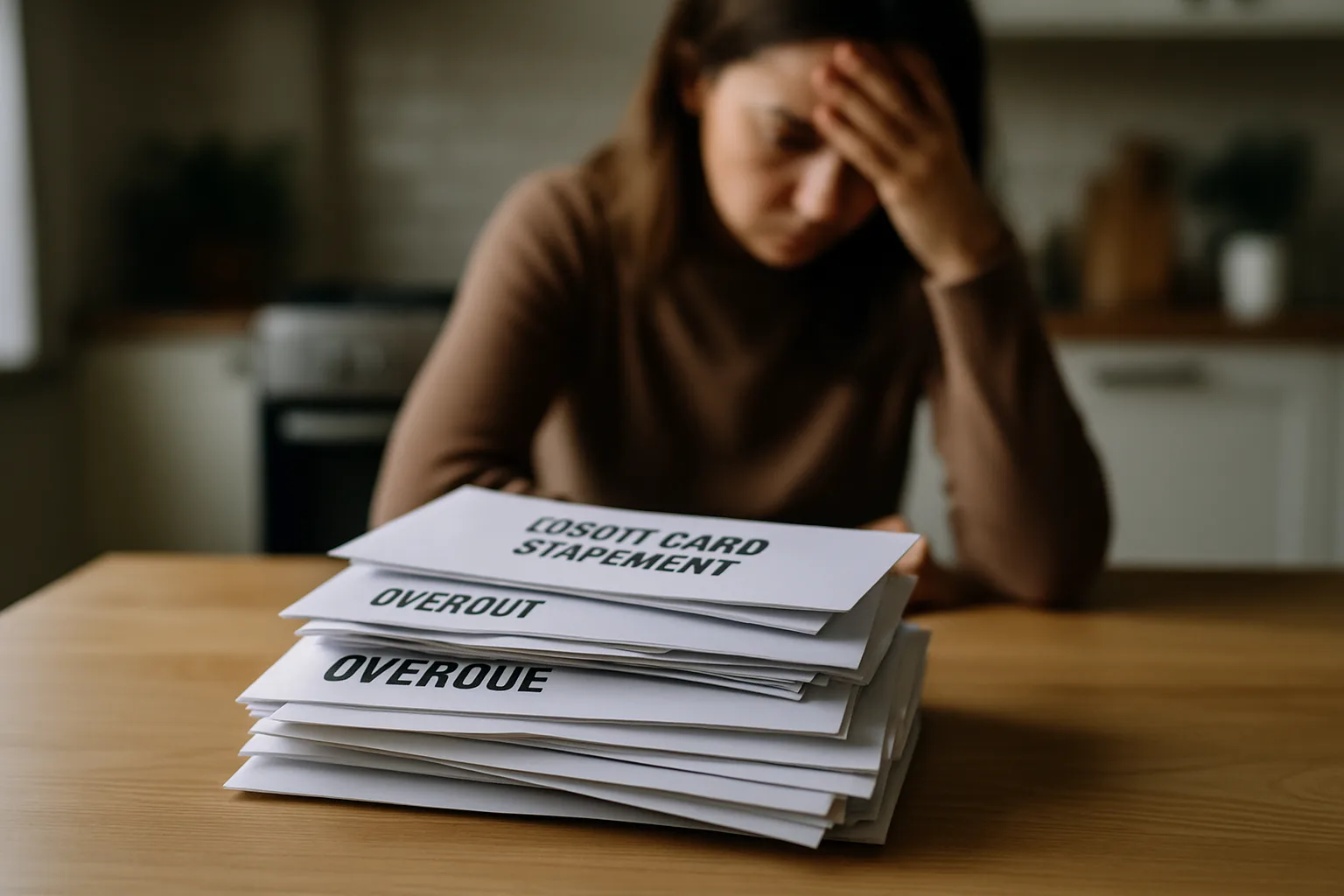
- Stop using credit cards and create a bare-bones budget.
- Choose a repayment strategy: snowball (smallest balance first) or avalanche (highest interest first).
- Consider a balance transfer to a 0% APR card to save on interest.
- Boost income with side jobs or sell unused items.
- Negotiate with creditors for lower rates or hardship programs.
If you're carrying credit card debt and don't want to take out another loan, you're not alone. Many people prefer to avoid more debt while they work to pay off what they already owe. The good news is that you have several effective options to how to pay off credit card debt without a loan — and this guide will walk you through each one step by step.
Credit card debt can feel overwhelming, especially when high interest rates make your balance grow faster than you can pay it down. But with a clear plan and some discipline, you can become debt-free without borrowing more money. This article covers the most practical methods, from budgeting and debt repayment strategies to negotiating with creditors and increasing your income.
Remember, this is general information, not financial advice. Your situation is unique, so consider talking to a nonprofit credit counselor if you need personalized help. Now let's dive into the steps you can take starting today.
Step 1: Stop Using Your Credit Cards
The first and most important step is to stop adding new charges. If you keep using your cards while trying to pay off debt, you're running in place. Put your cards in a drawer or freeze them in a block of ice — literally.
Remove them from online wallets and payment apps. Use cash or a debit card for all purchases until your debt is gone.
For example, imagine you have a $5,000 balance on a card with a 22% APR. If you continue charging $200 in groceries each month, your balance will barely budge even with extra payments. Stopping new charges ensures every dollar you pay reduces your principal.
This simple shift can cut months off your repayment timeline.
Why Stopping Usage Is Critical
Credit card interest compounds daily, so new purchases start accruing interest immediately. Even if you pay the statement balance, you lose the grace period on new charges while carrying a balance. By freezing your cards, you break this cycle and regain control of your spending.
Consider using a cash envelope system for variable expenses like dining out or entertainment. This physical method helps you stick to your budget without relying on plastic. Many people find it easier to track spending when they see cash leaving their wallet.
Step 2: Create a Bare-Bones Budget
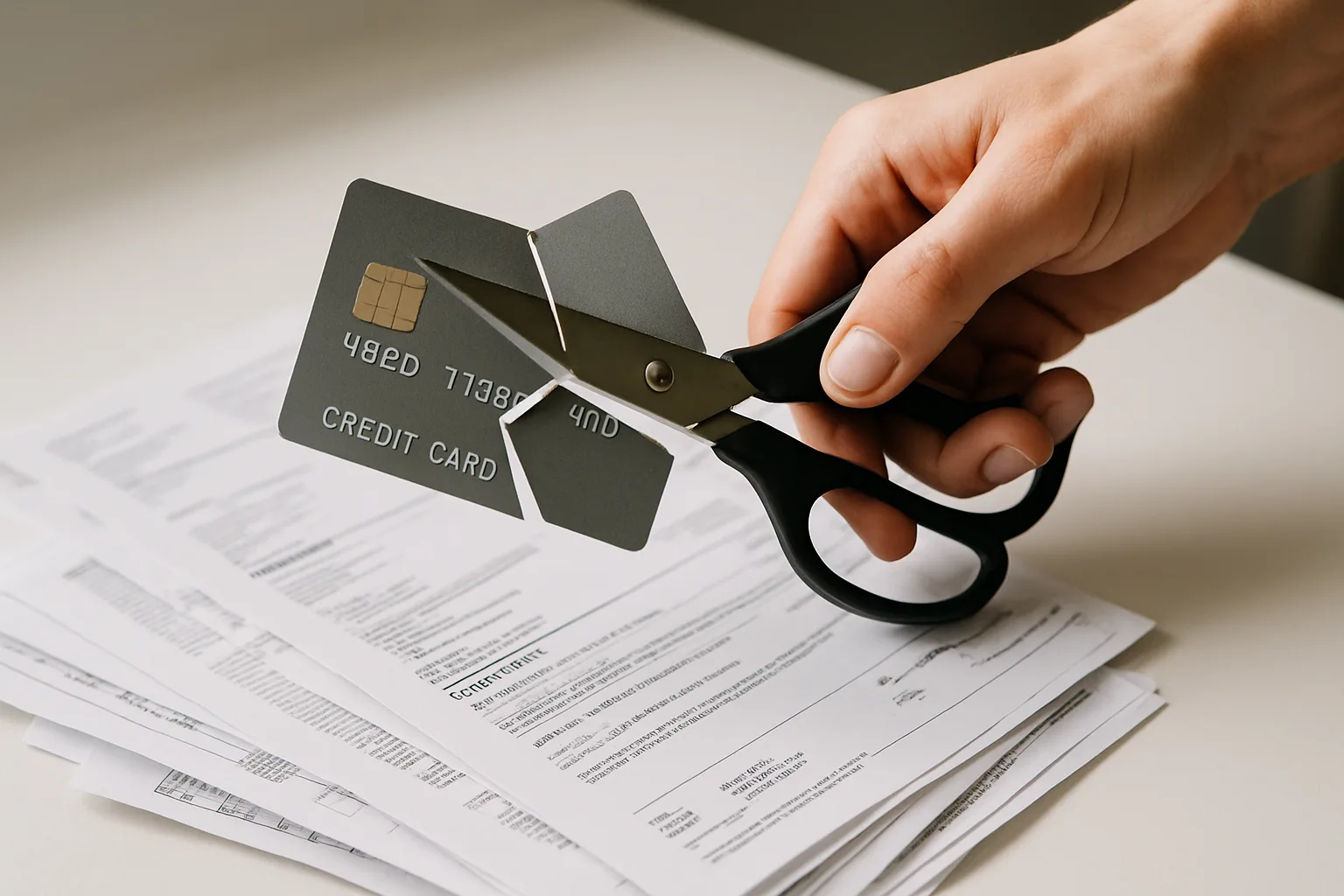
List your essential expenses: rent, utilities, food, transportation, minimum debt payments. Cut everything else — subscriptions, dining out, entertainment. Every dollar you free up can go toward debt.
Use a simple spreadsheet or a budgeting app. The goal is to find extra money each month to throw at your credit cards.
For instance, if you cancel a $15 streaming service and a $10 gym membership, that's $25 more per month. Over a year, that's $300 directly toward your debt. Small cuts add up faster than you think, especially when combined with other savings.
How to Identify Hidden Expenses
Review your bank statements for the last three months to spot recurring charges you forgot about. A $5 monthly app subscription or a $3 coffee habit may seem minor, but they drain your budget. List every non-essential expense and decide which ones to eliminate temporarily.
Use the 50/30/20 rule as a starting point: 50% for needs, 30% for wants, and 20% for savings and debt. During your debt payoff period, shift the wants category to debt payments. This adjustment can free up hundreds of dollars each month without sacrificing necessities.
Step 3: Choose a Debt Repayment Strategy
Two popular methods can help you how to pay off credit card debt fast: the debt snowball and the debt avalanche. Both involve paying minimums on all cards and putting extra money toward one card at a time. The difference is which card you target first.
Debt Snowball Method
List your debts from smallest to largest balance. Pay minimums on everything, then put any extra cash toward the smallest debt. Once that's paid off, roll that payment to the next smallest.
This method gives you quick wins and keeps you motivated. Many people find it easier to stick with.
For example, if you have three cards with balances of $500, $2,000, and $8,000, you focus on the $500 card first. After paying it off in two months, you feel a sense of accomplishment. That momentum carries you through the larger balances.
Debt Avalanche Method
List debts by interest rate, highest to lowest. Pay minimums on all, then put extra money toward the highest-rate debt first. This saves you the most money on interest over time.
It's mathematically optimal but can take longer to see a debt eliminated if the highest-rate card also has a large balance.
Suppose you have a card with $3,000 at 24% APR and another with $5,000 at 15% APR. The avalanche method targets the 24% card first, saving you roughly $270 in interest over a year compared to the snowball. Use an online calculator to compare the two methods for your specific balances.
Not sure which to choose? Read our detailed comparison of debt snowball vs avalanche to see which fits your personality and financial situation.
Step 4: Negotiate Lower Interest Rates
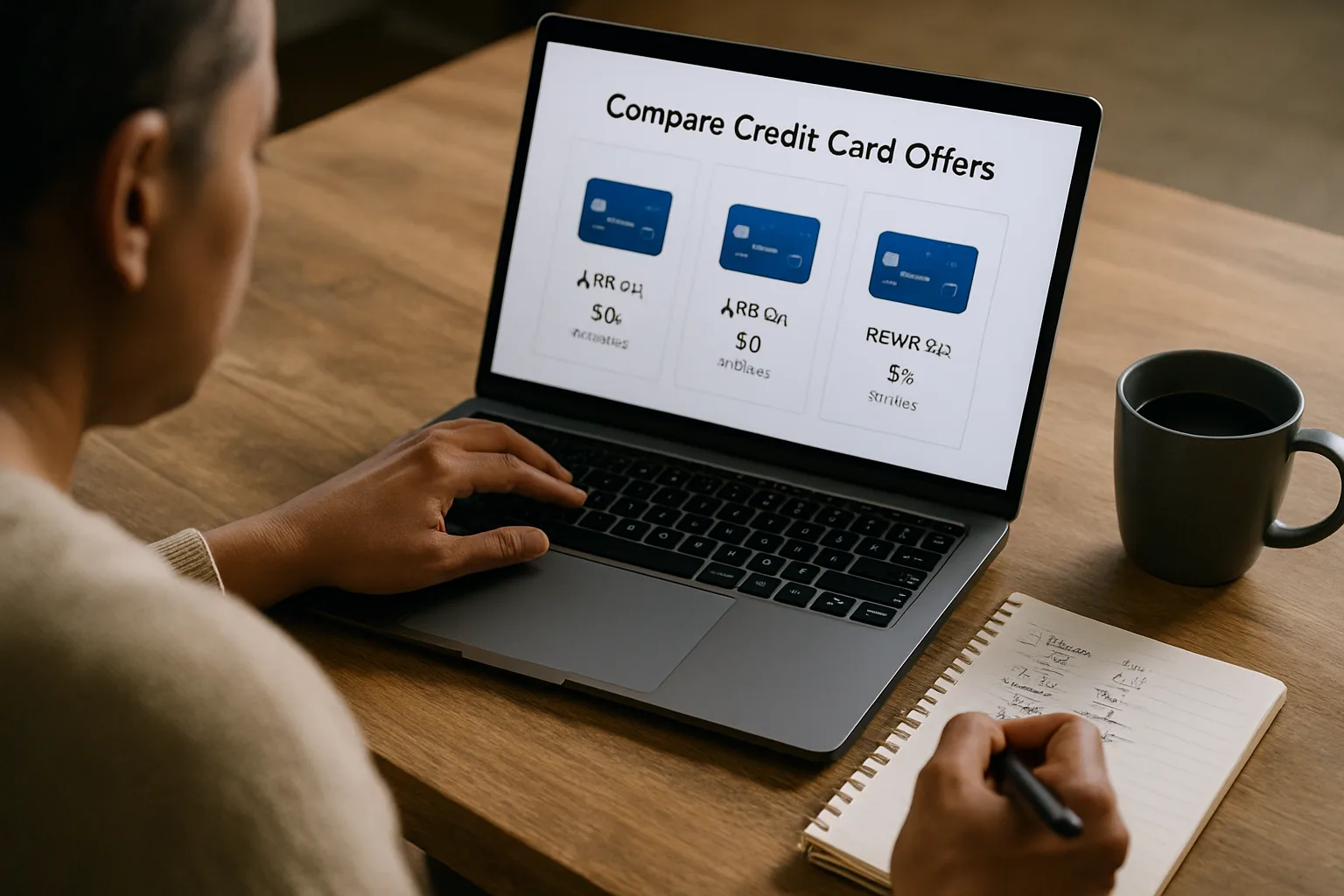
Call your credit card companies and ask for a lower APR. Explain your situation — you're trying to pay off debt and need relief. If you've been a good customer, they may reduce your rate temporarily or permanently.
Even a few percentage points can save you hundreds of dollars. Be polite and persistent. If they say no, try again in a few months.
Prepare before you call by knowing your current APR, payment history, and how long you've been a customer. For instance, if you've had the card for five years with on-time payments, mention that loyalty. A typical reduction might be from 22% to 15%, which on a $5,000 balance saves about $350 in interest over a year.
What to Say During the Call
Start with a friendly tone: "I've been a loyal customer for years, but I'm struggling with high interest. Can you offer a lower rate or a hardship program?" If the first representative says no, ask to speak to a supervisor. Some companies have dedicated retention teams that can authorize rate reductions.
Document the call, including the date, time, and name of the person you spoke with. If they agree to a lower rate, confirm it in writing via email or letter. This protects you if the rate reverts unexpectedly later.
Step 5: Consider a Balance Transfer
A balance transfer moves your debt to a new credit card with a 0% introductory APR, usually for 12-18 months. This stops interest from accruing, so every payment goes directly to principal. You'll typically pay a transfer fee of 3-5% of the amount transferred.
Make sure you can pay off the balance before the promotional period ends, or you'll face high interest on the remaining amount.
Balance transfers work best if you have good credit and a manageable debt load. They're one of the fastest ways to how to quickly pay off credit card debt without a loan.
For example, if you transfer $4,000 to a card with a 0% APR for 15 months and a 3% fee ($120), you need to pay about $275 per month to clear the balance. Without the transfer, at 20% APR, the same monthly payment would leave you with a balance after 15 months. The savings can be substantial.
How to Qualify for a Balance Transfer Card
Check your credit score first; most 0% APR cards require a score of 670 or higher. If your score is lower, consider a secured card or a card from a credit union. Also, avoid transferring more than you can realistically pay off within the promotional period, or the deferred interest could hurt you.
Read the fine print for terms like "deferred interest" or "retroactive interest." Some cards charge interest on the entire transferred amount if you don't pay it off in time. Stick with cards that offer true 0% APR without hidden clauses.
Step 6: Use the Debt Avalanche or Snowball — Pick One and Stick to It
Whichever method you chose in Step 3, commit to it. Write down your repayment plan and track your progress. Celebrate each paid-off card.
Consistency is more important than perfection. If you slip up, just get back on track the next month.
Create a visual tracker, like a chart on your wall or a spreadsheet with colored cells. Each time you make an extra payment, update the tracker. Seeing the numbers drop reinforces your motivation and helps you stay disciplined.
How to Automate Your Plan
Set up automatic payments for at least the minimum on each card to avoid late fees. Then schedule an extra automatic transfer to the targeted card on payday. This removes the temptation to spend the money elsewhere.
Automation turns your plan into a habit that runs on autopilot.
Review your progress monthly and adjust if needed. If you receive a raise or bonus, increase your extra payment amount. Small increases compound over time, shaving months off your repayment timeline.
Step 7: Increase Your Income
Cutting expenses only goes so far. To accelerate your debt payoff, consider earning extra money. Side hustles like driving for a ride-share, delivering food, freelancing, or pet sitting can bring in hundreds of dollars a month.
Sell unused items around your house — clothes, electronics, furniture. Use every extra dollar to pay down debt faster.
Even a temporary part-time job can make a huge difference. The goal is to throw as much money as possible at your debt until it's gone.
For instance, a weekend gig delivering groceries could earn you $200 per week. That's $800 per month directly toward your credit card balance. Over six months, that's nearly $5,000 in extra payments, potentially cutting your debt payoff time in half.
Ideas for Side Hustles
- Drive for Uber, Lyft, or DoorDash during peak hours like evenings and weekends.
- Freelance on platforms like Upwork or Fiverr if you have skills like writing, graphic design, or virtual assistance.
- Rent out a spare room on Airbnb or a parking space if you live in a busy area.
- Participate in paid online surveys or user testing through sites like UserTesting or Swagbucks.
Choose a hustle that fits your schedule and skills. Even 10 hours per week can generate significant extra income. Track your earnings and apply them directly to your debt to see fast progress.
Step 8: Use Windfalls Wisely
Tax refunds, bonuses, gifts, or any unexpected money should go straight to your credit card debt. It's tempting to spend it on something fun, but using it to pay off debt will bring you closer to financial freedom. Think of it as giving your future self a gift.
For example, a $1,200 tax refund could eliminate a high-interest card entirely. That frees up the monthly minimum payment you were making, which you can then redirect to the next debt. Windfalls can accelerate your timeline by months.
How to Plan for Windfalls
If you expect a bonus at work, decide in advance how much will go to debt. A common rule is to allocate 50% to debt, 30% to savings, and 20% to something fun. This balances progress with reward, keeping you motivated without derailing your plan.
Set up a separate savings account for windfalls so you're not tempted to spend them impulsively. Transfer the money to your debt payment account as soon as it arrives. Automating this step removes the decision-making process and ensures you stick to your goal.
Step 9: Consider Debt Management Plans
If you're struggling to make minimum payments, a nonprofit credit counseling agency can set up a Debt Management Plan (DMP). They negotiate with your creditors to lower interest rates and consolidate your payments into one monthly amount. You make a single payment to the agency, and they distribute it to your creditors.
This is not a loan — it's a structured repayment program. It can help you how to pay down credit card debt fast without borrowing.
For instance, if you have three cards with APRs of 22%, 18%, and 15%, a DMP might reduce them to an average of 8-10%. Your monthly payment could drop by 30-40%, making it easier to stay on track. The program typically lasts 3-5 years, after which you're debt-free.
How to Find a Reputable Agency
Look for agencies accredited by the National Foundation for Credit Counseling (NFCC) or the Financial Counseling Association of America (FCAA). Avoid for-profit companies that charge high upfront fees. A legitimate agency will offer a free initial consultation and explain all fees upfront.
During the consultation, the counselor will review your budget and debts to determine if a DMP is right for you. They'll also discuss alternatives like bankruptcy if your situation is severe. Always ask for a written agreement before enrolling.
Step 10: Avoid Debt Settlement Companies
Debt settlement companies promise to reduce your balance by negotiating with creditors, but they charge high fees and often damage your credit. They typically ask you to stop making payments, which leads to late fees, penalties, and collections. Many people end up worse off.
If you're considering this route, talk to a nonprofit credit counselor first. They can explain the risks and offer safer alternatives.
For example, a debt settlement company might charge 15-25% of the enrolled debt as a fee. On a $10,000 balance, that's $1,500 to $2,500. Meanwhile, your credit score could drop by 100 points or more due to missed payments.
The savings you get from settlement may be offset by these costs.
Why Debt Settlement Is Risky
When you stop paying, creditors may sue you for the full amount, leading to wage garnishment or bank levies. The IRS may also consider forgiven debt as taxable income, creating a new tax bill. Most people who start debt settlement never complete the program, leaving them with worse credit and more debt.
Instead, explore options like a DMP or direct negotiation with creditors. These alternatives preserve your credit and avoid the high fees associated with settlement companies. Always read the fine print before signing any agreement.
Step 11: Protect Your Credit Score
While paying off debt, keep your credit score as healthy as possible. Pay all bills on time, even if it's just the minimum. Avoid closing old credit cards after you pay them off — keeping them open helps your credit utilization ratio.
Check your credit report annually for free at AnnualCreditReport.com. If you find errors, dispute them.
For instance, closing a card with a $5,000 limit after paying it off reduces your total available credit. If you have another card with a $2,000 balance, your utilization jumps from 20% to 40%, which can lower your score. Keeping old accounts open maintains your credit history length and available credit.
How to Monitor Your Credit
Use free credit monitoring services like Credit Karma or Experian to track your score monthly. Set up alerts for any changes, such as new accounts opened in your name or late payments reported. Early detection of errors or fraud can prevent long-term damage.
If you find an error, such as a paid-off debt still showing as active, dispute it online with the credit bureau. They must investigate within 30 days. Correcting errors can boost your score by 20-50 points, making it easier to qualify for balance transfers or lower rates.
Step 12: Deal with Collections if Necessary
If a debt goes to collections, don't ignore it. You can negotiate a pay-for-delete agreement: you pay a lump sum (often less than the full amount) and the collection agency removes the account from your credit report. Get the agreement in writing before you pay.
This is a legitimate way to how to remove debt collection from credit report. Be aware that paying a collection doesn't automatically remove it — you must negotiate that upfront.
For example, if you owe $2,000 to a collection agency, you might offer $1,200 as a settlement. In exchange, request that they delete the account from your credit report. This can improve your score by 50-100 points, depending on the severity of the negative mark.
How to Negotiate a Pay-for-Delete
Start by requesting a debt validation letter to confirm the debt is yours and the amount is accurate. Then, write a settlement offer letter stating the amount you're willing to pay and the condition of deletion. Send it via certified mail with return receipt requested to create a paper trail.
If the agency agrees, get the agreement in writing before sending any payment. Keep copies of all correspondence and the final agreement. Once you pay, monitor your credit report to ensure the deletion occurs within 30-60 days.
Step 13: Stay Motivated
Paying off debt without a loan takes time and discipline. Track your progress visually — color in a chart or use a debt payoff app. Find an accountability partner.
Remind yourself why you're doing this: less stress, more freedom, better financial future. Every payment brings you closer to zero.
For instance, create a "debt thermometer" on your wall with a line for each $1,000 milestone. Color it in as you pay down each chunk. Seeing the red shrink gives you a tangible sense of accomplishment.
Share your progress with a friend or family member who can cheer you on.
How to Handle Setbacks
If you miss a payment or have an unexpected expense, don't give up. Adjust your budget temporarily and resume your plan as soon as possible. Setbacks are normal, but consistency over the long term matters more than perfection.
Use a journal to reflect on what caused the setback and how to prevent it next time.
Celebrate small wins, like paying off a card or reaching a 50% debt reduction. Reward yourself with a small, non-financial treat, like a movie night at home or a walk in the park. Positive reinforcement keeps you engaged and motivated.
Step 14: Avoid Common Pitfalls
Don't fall for quick fixes or scams. There's no magic way to erase debt instantly. Avoid taking out a new loan to pay off credit cards — that just moves the problem.
Don't use your home equity unless you're sure you can make the payments. And don't give up if you have a setback. Just start again.
For example, a debt consolidation loan might seem appealing, but if you don't change your spending habits, you'll end up with both the loan and new credit card debt. Similarly, using a home equity line of credit puts your house at risk if you can't pay. Stick with the strategies outlined here that don't involve new debt.
Red Flags to Watch For
- Companies that promise to erase debt for a fee without any action on your part.
- Offers that require you to stop paying creditors or give them access to your accounts.
- High-pressure sales tactics or demands for upfront payment before services are rendered.
- Guarantees that sound too good to be true, like "we'll reduce your debt by 50% in 30 days."
Always verify a company's reputation with the Better Business Bureau or your state's attorney general. If something feels off, trust your instincts and seek advice from a nonprofit credit counselor.
Step 15: Celebrate Your Debt-Free Day
When you make your final payment, celebrate! You've accomplished something significant. Then redirect the money you were paying toward debt into savings and investments.
Build an emergency fund so you never have to rely on credit cards again. You've learned how to pay off credit card debt without a loan — now you can stay debt-free for life.
For instance, if you were paying $500 per month toward debt, start putting that $500 into a high-yield savings account. Within six months, you'll have a $3,000 emergency fund. After that, consider investing in a retirement account or paying off other debts like student loans.
How to Stay Debt-Free Long-Term
Create a post-debt budget that includes savings, investments, and discretionary spending. Use credit cards responsibly by paying the full balance each month to avoid interest. Set up automatic transfers to savings so you're building wealth without thinking about it.
Review your financial goals annually and adjust as needed. Celebrate your progress each year by reflecting on how far you've come. Staying debt-free is a lifelong habit, but with the right systems in place, it becomes second nature.
For more detailed strategies, check out our complete guide on how to pay off credit card debt. And if you need a step-by-step plan from start to finish, read our article on how to get out of credit card debt.
Key takeaways
- Stop using credit cards and create a strict budget to free up money for debt payments.
- Choose between debt snowball (smallest balance first) or avalanche (highest interest first) to stay motivated and save money.
- Consider balance transfers to 0% APR cards or negotiate lower interest rates directly with creditors.
- Increase your income with side hustles or sell unused items to accelerate payoff.
- Protect your credit by paying on time and dealing with collections strategically.
Frequently asked questions
Can I pay off credit card debt without a loan if I have bad credit?
What is the fastest way to pay off credit card debt without a loan?
Will paying off credit card debt hurt my credit score?
What if I can't even make minimum payments?
How do I remove a collection account from my credit report after paying off the debt?
This article is for general informational purposes only and does not constitute financial, legal or credit-repair advice. Always consult a qualified financial advisor or credit counselor about your specific circumstances.

Written & reviewed by
Can OTUEditor
Can OTU is the editor of this site, curating and reviewing every guide for accuracy and clarity.
View all guides →