Credit Card Delinquency Is at a 15-Year High: What Should You Do?
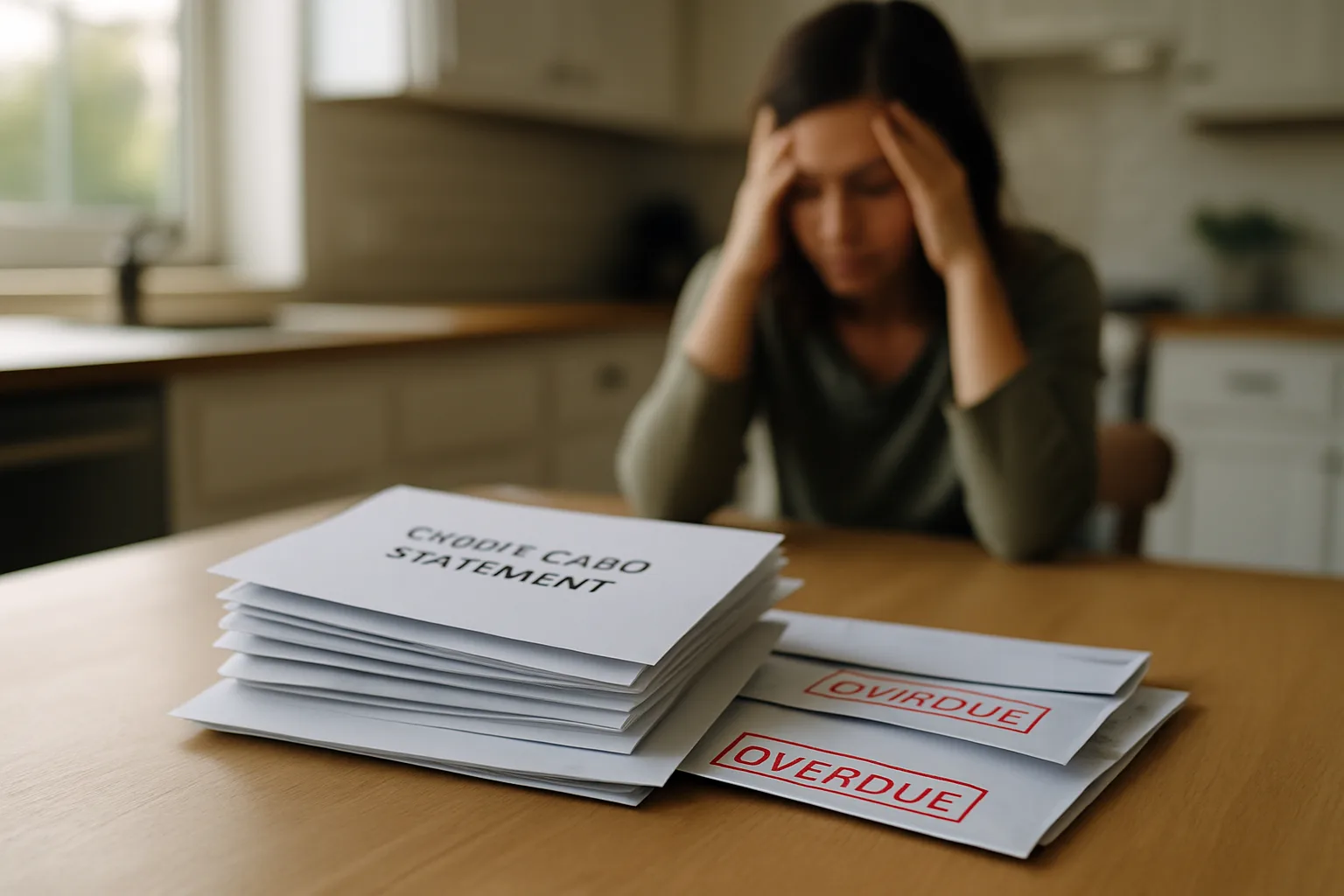
- Delinquency rates hit 15-year highs in 2024, with more than 3% of accounts seriously delinquent.
- Being 30+ days late can drop your credit score by 50-100 points; 90+ days late can lead to charge-off.
- You can recover with a structured plan: stop using cards, prioritize payments, and choose a payoff strategy.
If you've been seeing headlines about credit card delinquency hitting a 15-year high, you might be worried — especially if you're carrying a balance yourself. You're not alone. Millions of Americans are in the same boat, and the stress can feel overwhelming.
But here's the good news: there are clear, proven steps you can take to get back on track, even if your income is tight.
This article explains what delinquency means, why it matters, and exactly what you can do about it. You'll get a practical, step-by-step plan to pay off your credit card debt and rebuild your financial health. Remember, this is general information, not professional financial advice — but it's a solid starting point.
Let's start with the basics.
What Is Credit Card Delinquency?
Delinquency simply means you've missed a payment. Credit card companies report your payment status to the credit bureaus every 30 days. Here's how it breaks down:
- 30 days late — first delinquency stage. Your credit score takes a hit, and you'll likely get a late fee.
- 60 days late — more severe. The card issuer may increase your interest rate (penalty APR).
- 90+ days late — serious delinquency. Your account may be charged off (written off as a loss), and the debt may be sold to a collection agency.
- 180+ days late — charge-off is likely. The damage to your credit is severe.
The current 15-year high means that a larger percentage of accounts are behind. According to the Federal Reserve Bank of New York, as of mid-2024, serious delinquency (90+ days late) on credit cards rose above 3% — the highest since 2009. That's a red flag, but it also means many people are dealing with the same issue.
For example, imagine you have a credit card with a $2,000 balance and you miss the due date by 35 days. Your issuer reports that 30-day delinquency to the credit bureaus. Your credit score could drop by 60 points, and you'll owe a late fee of around $35.
If you miss another month and hit 60 days late, your APR might jump from 18% to 29.99%. That penalty APR applies to your existing balance and new purchases. This makes it much harder to catch up.
Why Is Delinquency at a 15-Year High?
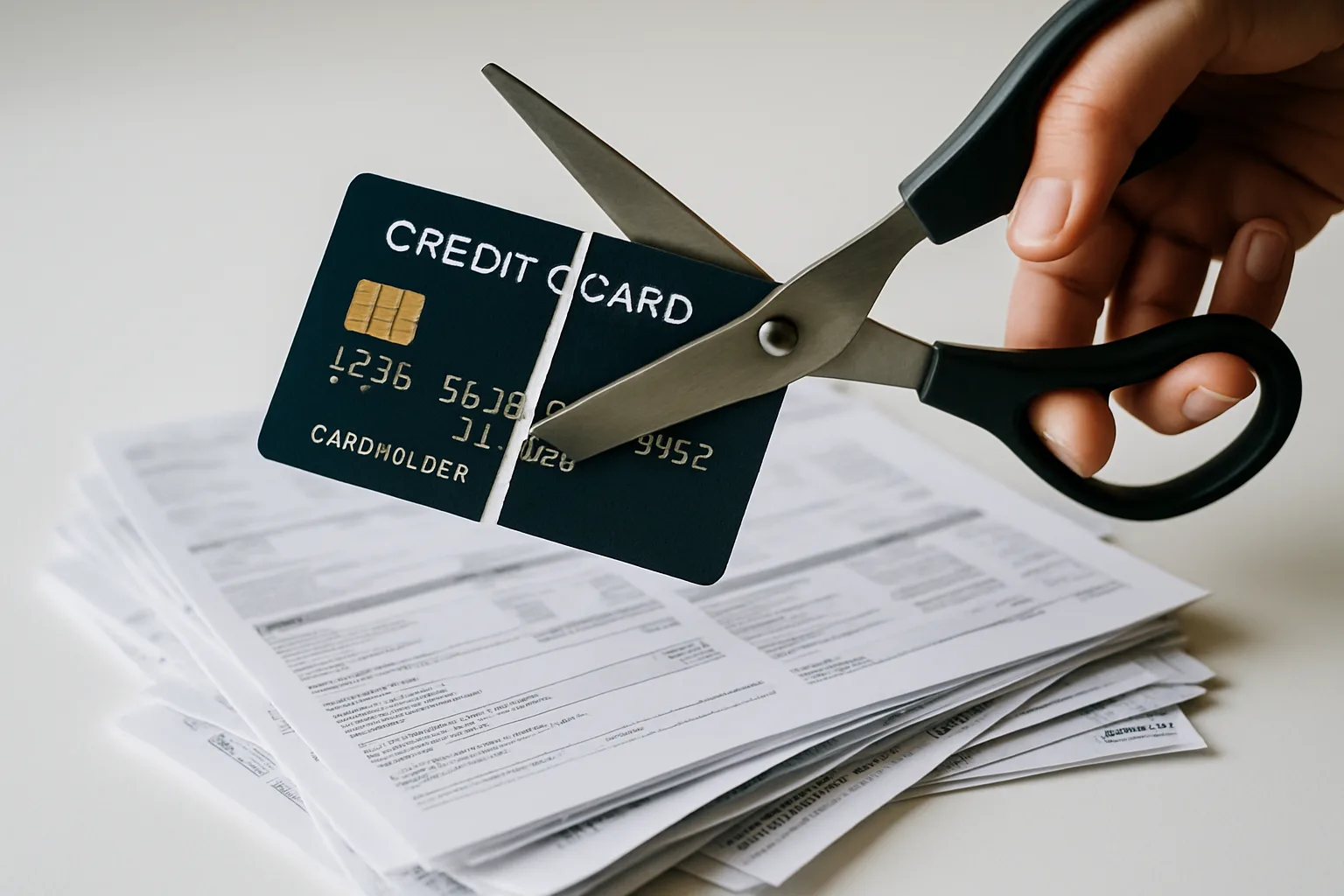
Several factors have converged:
- Inflation and higher living costs — everyday expenses have risen faster than wages for many households.
- Record credit card debt — total credit card balances exceeded $1 trillion in 2023.
- Higher interest rates — the Federal Reserve's rate hikes have pushed credit card APRs to over 20% on average.
- Pandemic savings depleted — stimulus checks and savings buffers are gone for many.
- Student loan payments restarting — added financial pressure for millions.
If you're struggling, it's not because you made bad choices. The economic environment has been tough. But you can still take control.
Consider a typical family: their grocery bill has gone up by $150 per month since 2021. Their rent increased by $200. Meanwhile, their wages only rose by $100 per month.
That $250 gap often gets filled by credit cards, leading to growing balances and eventual missed payments.
The restart of student loan payments in October 2023 added an average of $300 to $400 per month for millions of borrowers. For someone already living paycheck to paycheck, that extra expense can push them past the breaking point.
What Happens When You're Delinquent?
The consequences are real, but they're not permanent. Here's what to expect:
- Credit score drop — a 30-day late payment can lower your score by 50-100 points. A 90-day late can drop it 100+ points.
- Late fees and penalty APR — you'll be charged up to $41 per late payment, and your interest rate could jump to 29.99% or higher.
- Collection calls — after 60-90 days, the issuer may call you repeatedly. After charge-off, a third-party collector may contact you.
- Legal action — in some cases, the creditor may sue you for the unpaid balance. This is less common but possible.
The good news: you can recover from delinquency. Late payments stay on your credit report for 7 years, but their impact lessens over time, especially as you add positive payment history.
For instance, a single 30-day late payment might drop your score from 720 to 670. After 12 months of on-time payments, your score could climb back to 700. After 24 months, it might be back to 720 or higher, assuming other factors are stable.
If your account is charged off, the creditor sells your debt to a collection agency for pennies on the dollar. That agency then tries to collect the full amount from you. Even after charge-off, you can still negotiate to pay less than the full balance.
How to Pay Off Credit Card Debt Fast: A Step-by-Step Plan

If you're ready to tackle your debt, here's a clear, actionable plan. These steps work whether you're behind on payments or just want to pay off balances faster.
Step 1: Stop Using Your Credit Cards
This might seem obvious, but it's crucial. If you keep charging, you're digging a deeper hole. Put your cards away — freeze them in a block of ice if you have to.
Switch to cash or debit for everyday spending. You can't pay off debt if you're adding to it.
One reader told us she kept her cards in a jar of water in the freezer. By the time they thawed, she had time to think about whether the purchase was necessary. This simple trick helped her cut her credit card spending by 40% in the first month.
If you have a card linked to digital wallets like Apple Pay or Google Pay, remove it from those apps too. Out of sight really does mean out of mind when it comes to credit card temptation.
Step 2: List All Your Debts
Write down every credit card you have, along with the balance, minimum payment, and interest rate. This gives you a clear picture of what you owe. Include any other debts like personal loans or medical bills if you're tackling everything together.
Create a simple table on paper or in a spreadsheet. For example, you might list: Card A ($3,200 at 22% APR, $85 minimum), Card B ($1,500 at 19% APR, $45 minimum), and Card C ($5,800 at 24% APR, $140 minimum). Seeing all the numbers in one place reduces anxiety and helps you plan.
Update this list every month as you make payments. Watching the balances shrink is motivating. It also helps you catch any errors, like incorrect interest charges or fees.
Step 3: Check Your Budget for Extra Cash
Look at your income and expenses. Where can you cut back? Maybe it's eating out, subscriptions, or streaming services.
Even $50 a month can make a difference. Use a budgeting app or a simple spreadsheet. The goal is to find money you can put toward debt each month.
For example, if you cancel two streaming services ($30 total) and eat out one less time per week ($40), you've freed up $70 per month. That's $840 per year going straight to your debt. Small changes add up quickly.
Review your bank statements from the last three months. Look for recurring charges you forgot about, like a gym membership you never use or an app subscription. Canceling these can free up cash without changing your lifestyle.
Step 4: Contact Your Credit Card Issuers
If you're already delinquent, call your card companies. Explain your situation. They may offer hardship programs, such as lower interest rates, waived fees, or reduced minimum payments.
It's not guaranteed, but it's worth asking. Be polite and persistent. You can say something like, "I'm struggling to make payments and want to work out a plan."
One person we spoke with called Capital One after missing two payments. The representative agreed to lower her APR from 24% to 12% for six months and waived the late fees. That saved her over $300 in interest and fees during the hardship period.
If the first representative says no, ask to speak with a supervisor. Some issuers have a dedicated hardship department. Be prepared to explain your situation clearly, including your income, expenses, and how much you can afford to pay each month.
Step 5: Choose a Payoff Strategy
Two popular methods are the debt snowball and the debt avalanche. Here's a quick comparison:
| Method | How It Works | Best For |
|---|---|---|
| Debt Snowball | Pay off the smallest balance first, then roll that payment to the next smallest. | People who need quick wins to stay motivated. |
| Debt Avalanche | Pay off the highest interest rate first, then move to the next highest. | People who want to save the most on interest. |
Both work. Choose the one that fits your personality. For a deeper dive, check out our guide on debt snowball vs avalanche.
Let's see how they compare with real numbers. Suppose you have three debts: Card A ($500 at 18%), Card B ($2,000 at 22%), and Card C ($3,500 at 15%). With the snowball, you pay off Card A first in about 3 months.
That feels great. With the avalanche, you tackle Card B first because it has the highest rate. You save about $150 in interest over the life of the debts, but it takes 8 months to see your first payoff.
Neither method is wrong. If you're the type who needs emotional wins, go snowball. If you're purely analytical, choose avalanche.
The most important thing is to pick one and stick with it.
Step 6: Make Extra Payments Whenever Possible
Even small extra payments can save you money on interest. For example, if you owe $5,000 at 22% APR and pay $150/month instead of the minimum $100, you'll save hundreds in interest and pay off the debt months faster. Use windfalls like tax refunds, bonuses, or gifts to make lump-sum payments.
Imagine you get a $1,000 tax refund. If you put that toward your credit card balance, you instantly reduce the principal. That means less interest accrues each month.
In the example above, a $1,000 lump sum would save you about $400 in interest and shorten your payoff time by 10 months.
Set up automatic extra payments if possible. Even $25 per week adds up to $1,300 per year. Many banks allow you to schedule recurring transfers from checking to your credit card.
Automating the process removes the temptation to spend that money elsewhere.
Step 7: Consider a Balance Transfer
If you have good credit (660+), a balance transfer card with a 0% introductory APR can help you pay off debt faster without accruing interest. You'll typically pay a 3-5% transfer fee, but if you can pay off the balance within the promotional period (often 12-18 months), it's worth it. Be careful not to use the old cards again.
For instance, transfer a $4,000 balance to a card offering 0% APR for 15 months with a 3% fee ($120). If you pay $275 per month, you'll clear the balance before the promo ends. You save about $800 in interest compared to keeping it on a 22% APR card.
Be aware that balance transfer cards often require good or excellent credit. If your score has dropped due to delinquency, you might not qualify. In that case, focus on the other steps first to rebuild your credit, then revisit this option later.
Step 8: Look Into Debt Consolidation
A personal loan with a lower interest rate can simplify payments and reduce your monthly outlay. This works best if you have decent credit and can qualify for a rate lower than your credit card APRs. Make sure the loan term is short enough that you're not paying more in the long run.
Suppose you have three cards with a total balance of $10,000 and an average APR of 22%. You qualify for a personal loan at 12% for 3 years. Your monthly payment drops from $400 (minimums) to $332.
You'll also pay off the debt in exactly 3 years instead of potentially decades.
Be cautious with longer loan terms. A 5-year loan at 12% would have a lower monthly payment ($222), but you'd pay more total interest ($3,320 vs $1,952). Always calculate the total cost before signing.
Step 9: If You're Overwhelmed, Seek Professional Help
Nonprofit credit counseling agencies can help you create a debt management plan (DMP). They negotiate with creditors to lower interest rates and fees, and you make one monthly payment to the agency. This is a legitimate option if you can't manage on your own.
Avoid for-profit debt settlement companies that charge high fees and may damage your credit further.
For example, a credit counselor might negotiate your APRs down from 22% to 10% and waive late fees. You then pay a single monthly amount to the agency, which distributes it to your creditors. The entire process typically takes 3-5 years.
The National Foundation for Credit Counseling (NFCC) is a reputable starting point. Their certified counselors offer free initial consultations. They can also help you create a budget and explore all your options before committing to a DMP.
Step 10: Stay Consistent and Track Progress
Paying off debt is a marathon, not a sprint. Celebrate small victories — like paying off a card or reaching a milestone. Use a debt payoff tracker or app to see your progress.
Consistency is key. Even if you can only pay an extra $20 a month, it adds up.
One effective method is to create a visual tracker. Draw a thermometer on a whiteboard and color it in as you pay down debt. Each time you add color, you get a dopamine boost that reinforces your behavior.
Over months, the visual progress keeps you motivated.
Set monthly check-ins with yourself. Review your budget, update your debt list, and adjust your strategy if needed. If you got a raise or cut a major expense, increase your payment amount.
Small adjustments compound over time.
How to Quickly Pay Off Credit Card Debt When You're Already Delinquent
If you're already 30, 60, or 90 days late, the priority shifts slightly. Here's what to do:
- Catch up on payments first — if you can, bring the account current. That stops the late fees and penalty APR from piling up.
- Negotiate with the issuer — ask if they'll remove late fees or re-age the account (report it as current) if you make a payment. Some issuers have goodwill policies.
- Focus on the most delinquent account — if you have multiple cards, prioritize the one that's furthest behind to avoid charge-off.
- Consider a hardship program — many issuers offer temporary relief, like lower interest rates or deferred payments. Call and ask.
Remember, once you're delinquent, your credit score has already taken a hit. The best thing you can do is start making on-time payments again. Over time, your score will recover.
Let's say you're 60 days late on one card and 30 days late on another. Focus on the 60-day delinquent card first. Pay at least the minimum to bring it to 30 days late.
Then work on the other card. This prevents any account from reaching charge-off status.
When you call your issuer, be honest about your financial situation. If you've lost your job or had a medical emergency, mention that. Some issuers have specific hardship programs for these situations.
They might offer a temporary rate reduction or allow you to skip a payment without penalty.
How Do You Pay Off a Credit Card If You Have No Extra Money?
This is the toughest situation. If your budget is already stretched thin, here are some options:
- Increase income — pick up a side gig like delivery driving, freelancing, or pet sitting. Even a few hundred dollars a month can help.
- Cut expenses drastically — consider a temporary lifestyle change, like moving in with family, getting a roommate, or selling unused items.
- Use the debt snowball — if you can free up even $25 a month by cutting a subscription, put it toward the smallest debt. The momentum builds.
- Ask for help — family or friends may be willing to lend you money without interest. Be clear about repayment terms.
- Explore government assistance — programs like SNAP (food stamps) or rental assistance can free up cash for debt payments. Check benefits.gov.
It's not easy, but many people have done it. You can too.
For example, one woman started driving for DoorDash on weekends. She earned an extra $150 per week after gas. That $600 per month allowed her to pay off a $3,000 card in 5 months.
She then used that freed-up minimum payment to tackle her next card.
Selling unused items can also generate quick cash. Go through your closets, garage, and storage. List items on Facebook Marketplace, Craigslist, or eBay.
Even $200 from old electronics or clothing can make a meaningful payment on your smallest debt.
How to Pay Down Credit Card Debt Fast: The Math
Let's look at an example. Suppose you owe $10,000 on a card with 22% APR. Your minimum payment is about $200 per month.
If you only pay the minimum, it'll take over 30 years and cost more than $15,000 in interest. But if you pay $400 per month, you'll be debt-free in about 3 years and pay only $3,500 in interest. That's a huge difference.
The key is to pay as much above the minimum as possible. Even an extra $50 a month can shave years off your repayment time. Use an online payoff calculator to see your numbers.
Here's another example: a $5,000 balance at 20% APR with a $100 minimum payment. Paying only the minimum takes 8 years and costs $4,200 in interest. Paying $150 per month cuts that to 4 years and $2,100 in interest.
Paying $200 per month finishes in 2.5 years with only $1,200 in interest.
Most credit card statements show how long it will take to pay off the balance if you only make the minimum payment. That number is often shocking — 20, 30, or even 40 years. Use that as motivation to pay more.
How Can I Pay Off Credit Card Debt Fast? Common Mistakes to Avoid
Here are pitfalls that can slow you down:
- Only paying the minimum — this keeps you in debt for decades.
- Using cards while paying them off — you're just treading water.
- Ignoring the debt — avoidance makes it worse. Face it head-on.
- Taking out a payday loan — these have extremely high interest rates and can trap you in a cycle of debt.
- Falling for debt settlement scams — be wary of companies that promise to settle your debt for pennies on the dollar but charge upfront fees. Legitimate nonprofit credit counseling is a safer bet.
Another common mistake is transferring a balance to a new card and then using the old card again. This doubles your available credit but also doubles your temptation. Close the old card or cut it up to prevent this.
Some people also make the mistake of paying off a card and then immediately closing the account. Closing a card reduces your total available credit, which can increase your credit utilization ratio and lower your score. Keep old accounts open, even if you don't use them.
How to Get Out of Credit Card Debt Fast: When to Consider Bankruptcy
Bankruptcy is a last resort, but it's an option if your debt is truly unmanageable. Chapter 7 bankruptcy wipes out most unsecured debt, including credit cards, but you may have to sell assets. Chapter 13 sets up a 3-5 year repayment plan.
Bankruptcy stays on your credit report for 7-10 years, but it can give you a fresh start. Consult a bankruptcy attorney to discuss your situation. For more on alternatives, see our guide on how to get out of credit card debt.
Bankruptcy should only be considered after you've exhausted other options. If your total debt exceeds your annual income and you have no realistic way to pay it off within 5 years, it might be worth exploring. An attorney can help you determine if you qualify for Chapter 7 based on the means test.
Filing for bankruptcy stops collection calls, wage garnishments, and lawsuits immediately through an automatic stay. While the credit impact is severe, many people find that their score begins to recover within 2-3 years after discharge. Some even qualify for new credit cards within a year, though with high interest rates.
How to Pay Off Credit Card Debt Fast: The Role of Credit Scores
Your credit score will be affected by delinquency, but you can rebuild it. Here's how:
- Pay all bills on time going forward — payment history is the biggest factor (35% of your score).
- Keep credit utilization low — aim to use less than 30% of your available credit. If you can, pay down balances to 10% or less.
- Don't close old accounts — closing cards reduces your available credit and can hurt your score. Keep them open but don't use them.
- Check your credit reports — you're entitled to a free report from each bureau annually at annualcreditreport.com. Look for errors and dispute them.
Your score will improve gradually. Be patient.
For example, if you have a $10,000 total credit limit and a $3,000 balance, your utilization is 30%. Paying that down to $1,000 drops utilization to 10%, which can boost your score by 20-30 points. Combine that with 6 months of on-time payments, and you could see a 50-80 point recovery.
If you find errors on your credit report, such as a late payment that you actually made on time, dispute it with the credit bureau. They must investigate within 30 days. Removing even one incorrect negative item can significantly improve your score.
How to Pay Off Credit Cards Fast: A Realistic Timeline
How long it takes depends on your debt amount, income, and how aggressively you pay. Here's a rough guide:
- $5,000 debt — with $200 extra per month, you can be debt-free in about 2 years.
- $10,000 debt — with $400 extra per month, about 2.5 years.
- $20,000 debt — with $800 extra per month, about 2.5 years.
These are estimates. The key is to start now and stay consistent.
Your actual timeline depends on your interest rate and how much you can pay above the minimum. Use an online calculator to get a personalized estimate. For instance, a $7,500 balance at 24% APR with $300 monthly payments takes about 3 years and 2 months.
Increasing payments to $400 cuts that to 2 years and 1 month.
Remember that your income may increase over time. If you get a raise or a new job, put that extra money toward debt. What starts as a 3-year plan could become a 2-year plan with a promotion or side hustle income.
How to Quickly Pay Off Credit Card Debt: Tools and Resources
Take advantage of free tools:
- Debt payoff calculators — available on sites like Bankrate and NerdWallet.
- Budgeting apps — Mint, YNAB, or EveryDollar can help you track spending.
- Credit counseling — the National Foundation for Credit Counseling (NFCC) offers free or low-cost advice. Call 1-800-388-2227.
- Consumer Financial Protection Bureau (CFPB) — provides resources on dealing with debt collectors and understanding your rights. Visit consumerfinance.gov for more.
For a comprehensive guide, check out our page on how to pay off credit card debt.
Many credit card issuers also offer free credit score monitoring through their apps or websites. Use this to track your progress as you pay down debt. Seeing your score tick up each month is a powerful motivator.
The CFPB also provides sample letters for disputing errors on your credit report and for communicating with debt collectors. These templates take the guesswork out of writing professional correspondence. Download them for free from their website.
Understanding the Emotional Impact of Delinquency
Being delinquent on credit cards often brings shame, anxiety, and stress. You might feel like you've failed financially. But remember, millions of Americans are in the same situation right now.
The emotional toll can actually make it harder to take action. Many people avoid opening bills or answering calls from creditors. This avoidance only deepens the problem.
It's important to acknowledge your feelings without letting them paralyze you. Talk to a trusted friend or family member about your debt. Sometimes just sharing the burden can lighten it.
Consider joining a support group or online forum for people paying off debt. Communities like r/personalfinance on Reddit offer encouragement and practical tips. You are not alone in this struggle.
One study found that people who discuss their financial goals with others are 33% more likely to achieve them. Accountability partners can check in on your progress and celebrate your wins. Even a weekly text message from a friend can keep you on track.
If the stress feels overwhelming, consider speaking with a therapist who specializes in financial anxiety. Some therapists offer sliding scale fees based on income. Your mental health is just as important as your credit score.
How Delinquency Affects Your Financial Future Beyond Credit Scores
Delinquency doesn't just hurt your credit score. It can also impact your ability to rent an apartment, get a job, or secure insurance. Landlords often check credit reports before approving leases.
Some employers, especially in finance or government, review credit history during hiring. A delinquency could raise red flags. Insurance companies may charge higher premiums based on your credit profile.
These consequences can feel overwhelming, but they are not permanent. As you rebuild your payment history, these effects will fade. The key is to start the recovery process now.
For example, after six months of on-time payments, many landlords will consider your application. Focus on the steps you can control today.
If you're applying for an apartment and your credit is still recovering, offer to pay a larger security deposit or provide proof of steady income. Some landlords are willing to work with tenants who are transparent about their situation.
For job applications, be prepared to explain any credit issues if asked. Focus on the steps you're taking to improve your finances. Employers are often more interested in your current responsibility than past mistakes.
Dealing with Debt Collectors: Your Rights and Strategies
When your account is charged off and sold to a collection agency, you'll start hearing from debt collectors. This can be intimidating, but you have rights under the Fair Debt Collection Practices Act (FDCPA). Collectors cannot call before 8 a.m. or after 9 p.m., and they cannot harass you.
You have the right to request written verification of the debt. Send a certified letter asking for proof that you owe the amount they claim. If they cannot provide it, they must stop collection efforts.
Consider negotiating a settlement with the collector. Many will accept a lump sum payment of 30-50% of the balance. Get any agreement in writing before sending money.
Be aware that settling for less than the full amount may have tax implications. The forgiven debt may be considered taxable income. Consult a tax professional if you're considering this route.
For example, if you owe $5,000 to a collector, you might offer $2,000 as a lump sum settlement. If they accept, get the agreement in writing stating that the debt is considered paid in full. Then send the payment via certified check or money order to have proof of payment.
If a collector violates the FDCPA — for instance, by calling you at work after you've asked them to stop — you can file a complaint with the CFPB or sue them in small claims court. Some consumers have received $1,000 in statutory damages for such violations.
Building an Emergency Fund While Paying Off Debt
It might seem counterintuitive, but building a small emergency fund can actually help you pay off debt faster. Without one, any unexpected expense — like a car repair or medical bill — will likely go on a credit card. This can undo your progress.
Aim to save $500 to $1,000 in a separate savings account before aggressively paying down debt. This gives you a buffer against life's surprises. Once you have that cushion, redirect all extra money to debt.
After your debt is paid off, build a full emergency fund of 3-6 months of expenses. This will protect you from falling back into delinquency in the future. It's a cycle-breaker.
For example, if your car needs a $600 repair and you have a $1,000 emergency fund, you can pay cash instead of using a card. That keeps your debt payoff plan on track.
Start your emergency fund by saving just $20 per week. In one year, you'll have over $1,000. Put this money in a high-yield savings account where it earns interest but is still easily accessible.
Don't invest it in the stock market, as you need it to be liquid for emergencies.
If you're tempted to use your emergency fund for non-emergencies, define what counts as an emergency. Car repairs, medical deductibles, and essential home repairs qualify. New shoes or concert tickets do not.
Write down your definition and stick to it.
The Psychology of Debt Payoff: Staying Motivated
Paying off debt is a long journey, and motivation can wane. One effective technique is to visualize your goal. Create a vision board or write down why you want to be debt-free — maybe it's financial freedom, less stress, or saving for a house.
Break your debt into smaller milestones. For instance, celebrate when you pay off 25% of your total debt. Reward yourself with something small and free, like a movie night at home.
Track your progress visually. Use a thermometer chart on your fridge or a debt payoff app that shows your balance dropping. Seeing the numbers go down provides a powerful psychological boost.
Remember that setbacks happen. If you miss a payment or have an unexpected expense, don't give up. Just get back on track the next month.
Consistency over time is what matters most.
One popular technique is the "debt snowball" method, which is as much about psychology as math. Paying off the smallest debt first gives you a quick win. That dopamine hit motivates you to tackle the next debt.
Many people find this approach more sustainable than the mathematically optimal avalanche method.
Another strategy is to gamify your debt payoff. Challenge yourself to find $50 in savings each week. Turn it into a game with your partner or roommate.
Whoever finds the most savings gets to choose the celebration activity when a debt is paid off.
Key Takeaways
- Credit card delinquency is at a 15-year high, but you can recover with a structured plan.
- Stop using cards, list your debts, and find extra money in your budget.
- Choose a payoff method: debt snowball for motivation, debt avalanche for interest savings.
- If you're delinquent, catch up first, then negotiate with issuers for hardship programs.
- Avoid scams and consider nonprofit credit counseling if you're overwhelmed.
- Stay consistent, track progress, and celebrate small wins.
Frequently asked questions
What is the difference between delinquency and default?
How long does a late payment stay on my credit report?
Can I remove a late payment from my credit report?
Should I pay off a delinquent account or save for emergencies first?
Will a credit card company sue me for a delinquent balance?
This article is for general informational purposes only and does not constitute financial, legal or credit-repair advice. Always consult a qualified financial advisor or credit counselor about your specific circumstances.

Written & reviewed by
Can OTUEditor
Can OTU is the editor of this site, curating and reviewing every guide for accuracy and clarity.
View all guides →