Nonprofit Credit Counseling: How It Works and Is It Free?
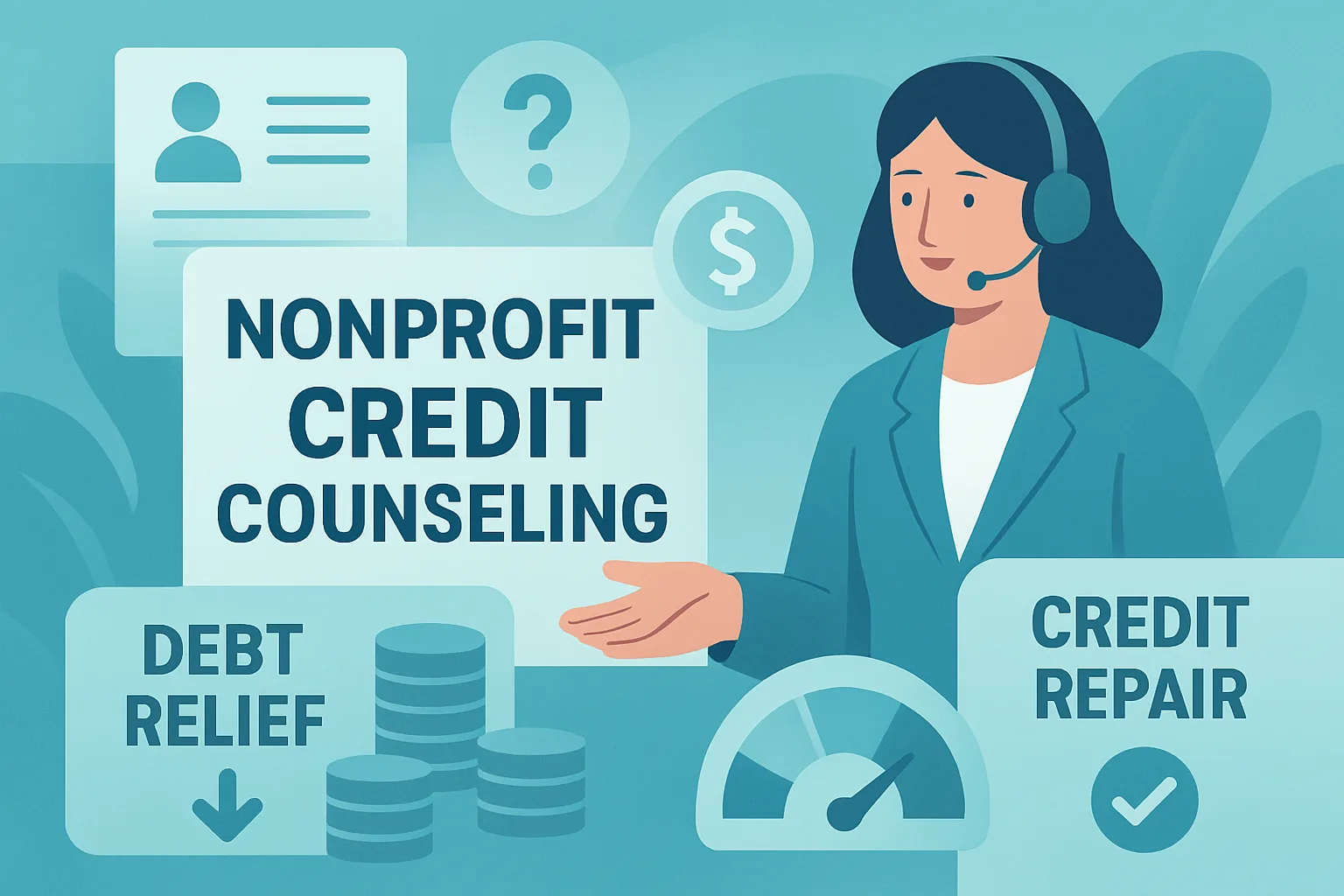
During a counseling session, you'll discuss your income, expenses, and debts. The counselor will help you identify areas where you can cut costs and may suggest a debt management plan (DMP) if appropriate. A DMP is a structured repayment program where you make one monthly payment to the counseling agency, which then distributes the funds to your creditors. In many cases, creditors agree to lower interest rates or waive fees because they are working with a reputable agency.
To illustrate, imagine you have three credit cards with balances totaling $15,000 and interest rates ranging from 18% to 24%. A certified counselor might help you create a budget that frees up $400 per month for debt repayment. Through a DMP, the agency negotiates with your credit card issuers to reduce the interest rates to an average of 10%. Instead of paying minimums that barely cover interest, you now make a single monthly payment of $400, which the agency distributes. Over three to five years, you pay off the full $15,000, but you save thousands in interest compared to paying the original rates. This is a concrete example of how credit counseling works in practice—though individual results vary and are not guaranteed.
Is Nonprofit Credit Counseling Free?
The short answer is: the initial counseling session is almost always free. Most reputable nonprofit agencies offer a free one-hour session with a certified counselor. If you enroll in a debt management plan, there may be a setup fee (often around $30–$50) and a monthly maintenance fee (typically $25–$50 per month). Some agencies waive these fees if you cannot afford them. The key is to ask upfront about all costs.
Federal Trade Commission (FTC) guidelines require credit counseling agencies to disclose all fees before you sign up. Be wary of any agency that asks for a large upfront payment or promises to eliminate your debt quickly — that's a red flag. True nonprofit counseling is about education and sustainable repayment, not quick fixes.
For example, consider a family earning $45,000 per year with $12,000 in credit card debt. They attend a free initial session where the counselor helps them create a budget. The counselor recommends a DMP with a $40 setup fee and a $35 monthly fee. Over the three-year plan, the total fees amount to $1,300. However, the negotiated lower interest rates save them approximately $2,400 in interest over the same period. So, net savings are about $1,100. This illustrates that while the DMP is not entirely free, it can still be cost-effective. Always request a written cost estimate before enrolling.
How Does Credit Counseling Work Step by Step?
Step 1: Find a Reputable Agency
Start by looking for agencies that are accredited by the NFCC or FCAA. You can also check with your state's attorney general or consumer protection agency for complaints. The Consumer Financial Protection Bureau (CFPB) offers guidance on choosing a credit counselor.
Step 2: Attend a Counseling Session
You'll meet with a certified counselor (often by phone or online). Be prepared to share details about your income, monthly expenses, and debts. The counselor will review your situation and help you create a budget. They may also pull your credit report (with your permission) to get a full picture.
Step 3: Explore Options
Based on your analysis, the counselor will discuss possible next steps. This could include self-help budgeting, a debt management plan, or a referral to other resources. If a DMP seems right, they'll explain how it works.
Step 4: Enroll in a Debt Management Plan (If Appropriate)
If you and the counselor agree that a DMP is suitable, you'll sign an agreement. The agency will then contact your creditors to negotiate lower interest rates and set up a payment schedule. You'll make one monthly payment to the agency, and they'll pay your creditors. The plan typically lasts 3–5 years.
Step 5: Follow the Plan
You'll need to stick to the budget and make payments on time. The agency will send you regular statements showing how your payments are distributed. Many people find the structure helpful because it simplifies debt management.
Let's walk through a detailed example. Sarah has $20,000 in unsecured debt across four credit cards. She contacts an NFCC-accredited agency and schedules a free phone session. During the 45-minute call, she shares her monthly take-home pay of $3,800, her rent of $1,200, utilities of $300, groceries of $500, and minimum credit card payments totaling $600. The counselor identifies that Sarah can cut $150 from dining out and subscriptions, freeing up $750 per month for debt repayment. The counselor explains that a DMP could reduce her average interest rate from 22% to 9%. Sarah agrees to enroll. The agency charges a $50 setup fee and a $40 monthly fee. Over 36 months, Sarah pays $750 per month to the agency, which distributes the funds. She pays off the full $20,000 plus $3,240 in interest (compared to over $8,000 at original rates), and total fees are $1,490. This step-by-step process shows how credit counseling transforms a chaotic debt situation into a manageable plan.
What Are the Pros and Cons of Nonprofit Credit Counseling?
Pros
- Free initial counseling: You get professional advice without any cost.
- Lower interest rates: Through a DMP, creditors may reduce your rates, saving you money.
- Single monthly payment: Simplifies bill paying.
- Educational resources: Many agencies offer workshops and tools to improve financial literacy.
- No negative credit impact: Unlike debt settlement, credit counseling does not require you to stop paying bills, so your credit score is not directly harmed.
Cons
- Fees: Monthly DMP fees can add up, though they are usually modest.
- Requires discipline: You must stick to the budget and make payments on time.
- Not for all debts: DMPs typically only cover unsecured debts like credit cards and medical bills. Mortgages, student loans, and car loans are usually excluded.
- May take years: A DMP can last 3–5 years, which requires patience.
- Some creditors may not participate: Not all creditors agree to work with credit counseling agencies.
For instance, one major advantage is the educational component. Many agencies offer free online courses on budgeting, saving, and credit management. A client might complete a six-week workshop on building an emergency fund, which helps prevent future debt. On the downside, if a client loses their job during the DMP, they may struggle to keep up with payments. Some agencies offer hardship programs, but not all do. Additionally, while most major credit card issuers participate in DMPs, smaller lenders or collection agencies might not. In such cases, those debts must be handled separately, which adds complexity.
Credit Counseling vs Debt Settlement: What's the Difference?
This is one of the most common questions people have when exploring debt relief options. Credit counseling and debt settlement are fundamentally different approaches.
Credit counseling focuses on education and repayment. You pay back your debts in full, but with lower interest rates and fees. Your credit score is not directly damaged, though enrolling in a DMP may be noted on your credit report. It's a slower process but generally safer for your credit.
Debt settlement, on the other hand, involves negotiating with creditors to accept a lump-sum payment that is less than the full amount owed. You typically stop making payments to creditors and instead save money in a special account. This can damage your credit score significantly because you are not paying as agreed. Debt settlement is riskier and may lead to lawsuits from creditors. It's usually considered a last resort.
In short: credit counseling helps you pay what you owe; debt settlement helps you pay less than you owe but with major credit consequences. For a deeper dive, see our article on debt settlement.
Consider a concrete comparison. With credit counseling, a person with $25,000 in credit card debt might pay $500 per month for 60 months, totaling $30,000 (including fees and interest at reduced rates). Their credit score might dip slightly due to account closures but could recover as they make on-time payments. With debt settlement, the same person might stop payments for 12 months, save $300 per month in a settlement account, then negotiate a lump sum of $12,500. However, during those 12 months, late fees and interest pile up, and the credit score drops by 100–150 points. Creditors may sue, and the IRS may consider forgiven debt as taxable income. This stark contrast highlights why credit counseling is generally the safer path.
Credit Counseling vs Debt Consolidation: How Do They Compare?
Another common comparison is debt consolidation vs credit counseling. Debt consolidation involves taking out a new loan to pay off multiple debts, leaving you with one monthly payment. This can be done through a personal loan, balance transfer credit card, or home equity loan.
Credit counseling does not involve taking on new debt. Instead, it restructures your existing debts through a DMP. The key difference: debt consolidation requires good credit to qualify for a low-interest loan, while credit counseling is available to anyone regardless of credit score. Also, debt consolidation may have lower monthly payments but can extend the repayment period. Credit counseling typically aims to pay off debt within 3–5 years.
Which is better? It depends on your credit score, debt amount, and financial discipline. If you have good credit and can qualify for a low-interest loan, consolidation might be a good option. If your credit is damaged or you need professional guidance, credit counseling may be more appropriate.
For example, imagine two people with $15,000 in credit card debt. Person A has a credit score of 720 and qualifies for a personal loan at 8% APR with a 48-month term. Their monthly payment is $366, and total interest is $2,568. Person B has a score of 580 and cannot get a consolidation loan. They turn to credit counseling, enroll in a DMP, and negotiate rates down to 10%. Their monthly payment is $380 over 48 months, with total fees and interest of $3,240. Person A saves more, but Person B still gets a structured plan without needing good credit. This illustrates how each option serves different financial profiles.
How Much Does Nonprofit Credit Counseling Cost?
As mentioned, the initial session is usually free. If you enroll in a DMP, expect a setup fee of $30–$50 and a monthly fee of $25–$50. Some agencies charge on a sliding scale based on your income. The total cost over the life of a 3-year plan might be $1,000–$2,000, but this is often offset by the savings from lower interest rates. Always ask for a written estimate before signing up.
Be cautious of agencies that charge high upfront fees or pressure you to enroll quickly. Legitimate nonprofits are transparent about costs.
To provide a more detailed breakdown, consider a typical DMP. The setup fee covers administrative costs like setting up creditor accounts and processing initial paperwork. The monthly fee covers ongoing account maintenance, payment processing, and counselor support. Some agencies also charge a small fee for each creditor payment (e.g., $2 per creditor per month). If you have five creditors, that adds $10 to your monthly fee. Over 36 months, that's an extra $360. Always ask for a full fee schedule. For instance, one major NFCC-accredited agency charges a $39 setup fee and a $33 monthly fee, with no per-creditor fees. Another charges $50 setup and $45 monthly, but waives the monthly fee after 12 months of on-time payments. These variations mean you should shop around.
Will Credit Counseling Hurt My Credit Score?
Credit counseling itself does not directly hurt your credit score. However, enrolling in a DMP may be noted on your credit report as "credit counseling" or "debt management plan." This notation is not negative, but some lenders may view it as a sign that you had trouble managing debt. Your score may also be affected if you close credit card accounts as part of the plan, which can increase your credit utilization ratio.
Overall, the impact on your credit is usually minimal compared to debt settlement or bankruptcy. In fact, by helping you make on-time payments and reduce debt, credit counseling can improve your credit over time.
Let's examine this more closely. When you enroll in a DMP, your credit report might show a remark like "Account included in debt management plan." This is a neutral notation—it does not lower your score directly. However, if the DMP requires you to close credit card accounts, your total available credit decreases. If you have a $5,000 balance and close a card with a $10,000 limit, your utilization jumps from 50% to 100%, which can drop your score by 30–50 points. To mitigate this, some agencies advise keeping one card open for emergencies. Additionally, as you make on-time payments through the DMP, your payment history improves, which is the biggest factor in credit scoring. Over 12–24 months, many clients see their scores rise by 50–100 points as balances decrease. This long-term benefit often outweighs any short-term dip.
How to Choose a Reputable Nonprofit Credit Counseling Agency
Not all agencies are created equal. Here are tips to find a trustworthy one:
- Check accreditation: Look for agencies certified by the NFCC or FCAA.
- Verify with the Better Business Bureau (BBB) and state regulators.
- Ask about fees upfront. Avoid agencies that won't disclose costs.
- Read reviews and complaints online.
- Ensure counselors are certified (e.g., through the NFCC).
The CFPB also provides a list of questions to ask before choosing an agency.
Beyond these basics, consider the agency's longevity. Agencies in operation for 20+ years often have established relationships with creditors. Check if they are a member of the Association of Independent Consumer Credit Counseling Agencies (AICCCA). Look for transparent websites that list fees, services, and counselor credentials. For example, a reputable agency might have a page detailing their sliding fee scale for low-income clients. Avoid agencies that advertise "debt elimination" or "credit repair" alongside counseling—these are different services. Finally, call the agency and ask to speak with a counselor before committing. A legitimate counselor will ask about your financial situation and offer a free session without pressure.
What Debts Can Be Included in a Debt Management Plan?
Debt management plans typically cover unsecured debts such as:
- Credit cards
- Medical bills
- Personal loans
- Collection accounts
Secured debts like mortgages, auto loans, and student loans are usually not included. However, some agencies may offer separate counseling for these debts.
It's important to understand the nuances. For credit cards, most major issuers like Visa, Mastercard, American Express, and Discover participate in DMPs. Medical bills from hospitals and clinics are often included, but debts owed to individual doctors or small practices may not be. Personal loans from banks or credit unions are typically included, but payday loans are often excluded due to their short-term nature. Collection accounts—even those for old debts—can be included, but the creditor must agree to the terms. For example, a $2,000 medical bill that went to collections can be added to a DMP if the collection agency agrees to the reduced interest rate. However, if you have a car loan or mortgage, those must be handled separately. Some agencies offer housing counseling for mortgage modifications, but that is a distinct service.
When Should You Consider Nonprofit Credit Counseling?
Credit counseling is a good option if:
- You are struggling to make minimum payments on credit cards or other unsecured debts.
- You want professional guidance to create a budget and repayment plan.
- You want to avoid debt settlement or bankruptcy.
- You have a steady income but need help managing debt.
It may not be suitable if you have very little income or if your debts are primarily secured (like a mortgage). In those cases, other options like loan modification or bankruptcy might be more appropriate.
Consider specific scenarios. A single mother with $8,000 in credit card debt and a stable job earning $35,000 per year is a good candidate. She can afford minimum payments but feels overwhelmed. A counselor helps her budget and enrolls her in a DMP, reducing her interest from 20% to 8%. She pays off the debt in 36 months. In contrast, a retiree with $50,000 in medical debt and no income beyond Social Security may not benefit from a DMP because there is no disposable income to commit. For that person, bankruptcy or medical debt forgiveness programs might be more appropriate. Similarly, someone with a $200,000 mortgage and $5,000 in credit card debt might only need counseling for the credit card, while the mortgage requires a separate loan modification discussion. These examples show that credit counseling is not one-size-fits-all.
Alternatives to Nonprofit Credit Counseling
If credit counseling isn't right for you, consider these alternatives:
- Debt consolidation loan: Combine debts into one loan with a lower interest rate (requires good credit).
- Balance transfer credit card: Transfer high-interest balances to a card with a 0% introductory APR (requires good credit).
- Debt settlement: Negotiate to pay less than you owe (risky, damages credit).
- Bankruptcy: Legal process to discharge debts (last resort, severe credit impact).
Each option has pros and cons. It's wise to consult with a credit counselor first to explore all possibilities.
Let's expand on these alternatives with concrete details. A debt consolidation loan might be ideal for someone with $10,000 in debt and a 740 credit score. They could get a 5-year loan at 7% APR, with monthly payments of $198 and total interest of $1,880. A balance transfer card with 0% APR for 18 months could work for someone with $5,000 in debt who can pay $278 per month to clear it before the promotional period ends. Debt settlement, while risky, might be considered by someone with $30,000 in debt who cannot make minimum payments and faces imminent default. They might settle for $15,000 over 24 months, but their credit score could drop 150 points. Bankruptcy, such as Chapter 7, discharges most unsecured debts but stays on your credit report for 10 years. For example, a person with $60,000 in medical debt and no assets might file Chapter 7, eliminating the debt entirely but losing access to credit for years. Each alternative carries trade-offs that a credit counselor can help you evaluate.
Common Myths About Nonprofit Credit Counseling
Myth 1: Credit counseling is the same as debt settlement. No — credit counseling focuses on repayment, while debt settlement reduces the amount owed.
Myth 2: Credit counseling will ruin my credit. It generally has little to no negative impact, especially compared to debt settlement or bankruptcy.
Myth 3: Nonprofit means free for everything. While initial counseling is free, DMPs have fees — but they are usually low.
Myth 4: I can only use credit counseling if I'm in deep debt. Actually, anyone can benefit from financial education and budgeting help.
Let's debunk these myths further. Myth 1 persists because some for-profit companies masquerade as nonprofits. Always verify accreditation. Myth 2 is partially true—while credit counseling itself doesn't hurt, closing accounts can. However, the impact is minor compared to the 200-point drop from bankruptcy. Myth 3: Some people assume "nonprofit" means all services are free, but DMP fees are necessary to cover operational costs. Myth 4: Even someone with no debt can benefit from a free budgeting session to learn how to save for a home or retirement. For instance, a recent graduate with $2,000 in student loans and a new job might use credit counseling to create a budget that accelerates loan repayment while building savings. These myths often prevent people from seeking help, so understanding the facts is crucial.
What Happens After You Complete a Debt Management Plan?
Completing a DMP is a significant achievement, but it's important to know what comes next. Once you make the final payment, the credit counseling agency will send you a completion letter and notify your creditors that the plan is fulfilled. Your credit report will show the accounts as "paid as agreed" or "paid in full," which is positive. However, the DMP notation may remain for a few years, though its impact diminishes over time.
After completion, many people experience a credit score increase because their debt-to-income ratio improves and their payment history is strong. For example, a client who started with a 620 credit score and $18,000 in debt might finish the plan with a 700 score and zero credit card balances. The key is to avoid falling back into debt. Counselors often recommend building an emergency fund of 3–6 months of expenses, using credit sparingly, and continuing to budget. Some agencies offer post-completion workshops or check-ins to help you maintain financial health. This phase is critical because without new habits, old patterns can return.
How to Prepare for a Credit Counseling Session
To get the most out of your free session, preparation is essential. Gather the following documents before your appointment:
- Recent pay stubs or proof of income
- List of monthly expenses (rent, utilities, groceries, transportation, insurance, etc.)
- Statements for all debts (credit cards, loans, medical bills) showing balances, interest rates, and minimum payments
- Your most recent credit report (you can get a free copy at annualcreditreport.com)
- Any correspondence from creditors or collection agencies
During the session, be honest about your spending habits. If you eat out frequently or have subscription services you forgot about, mention them. The counselor can't help if they don't have the full picture. For example, one client discovered they were spending $200 per month on streaming services and takeout. By cutting that to $50, they freed up $150 for debt repayment. Also, ask questions: How long will the DMP take? What happens if I miss a payment? Can I still use credit cards? (Usually, you must agree not to take on new credit during the plan.) Preparation turns a 45-minute session into a productive roadmap.
Key takeaways
- Nonprofit credit counseling offers free initial sessions and low-cost debt management plans to help you repay unsecured debts.
- It is not the same as debt settlement or debt consolidation — it focuses on education and structured repayment.
- Credit counseling typically does not harm your credit score and can improve it over time.
- Always choose an accredited agency and ask about fees upfront.
- Consider credit counseling if you need professional guidance and want to avoid more drastic options like debt settlement or bankruptcy.
Frequently asked questions
Is nonprofit credit counseling really free?
Will credit counseling hurt my credit score?
What's the difference between credit counseling and debt settlement?
Can credit counseling help with student loans or mortgages?
How do I find a legitimate nonprofit credit counseling agency?
This article is for general informational purposes only and does not constitute financial, legal or credit-repair advice. Always consult a qualified financial advisor or credit counselor about your specific circumstances.

Written & reviewed by
Can OTUEditor
Can OTU is the editor of this site, curating and reviewing every guide for accuracy and clarity.
View all guides →