Is Credit Counseling Better Than Debt Settlement?

This article breaks down exactly how each option works, what they cost, how they affect your credit, and which one is better for different situations. You'll also learn practical steps to debt consolidation and other strategies to get out of debt faster. Remember, this is general information, not financial advice — your situation is unique.
Let's start with the basics so you can make an informed decision.
What Is Credit Counseling?
Credit counseling is a free or low-cost service where a certified counselor reviews your entire financial picture — income, expenses, debts — and helps you create a plan. The most common option is a Debt Management Plan (DMP).
With a DMP, you make one monthly payment to the credit counseling agency, and they distribute it to your creditors. The agency negotiates with creditors to lower your interest rates and waive late fees. You pay off the full balance, but at a reduced cost over time.
Credit counseling is offered by nonprofit agencies like the National Foundation for Credit Counseling (NFCC) or Money Management International. These agencies are accredited and follow strict standards.
Key features of credit counseling:
- You pay off 100% of your debt, but with lower interest and fees.
- Your credit score may dip slightly at first, but it can recover as you make on-time payments.
- It typically takes 3–5 years to complete a DMP.
- Fees are low — usually a small monthly fee ($30–$50) and a modest setup fee.
How a Debt Management Plan Works in Practice
Imagine you owe $15,000 across three credit cards with interest rates averaging 22%. Your minimum payments total $450 per month, but most goes to interest.
Through a DMP, the agency negotiates your rates down to 8% across all cards. Your monthly payment drops to $300, and you pay off the full $15,000 in about four years.
You make one payment to the agency, and they handle distribution. This simplifies your finances and reduces stress.
Who Should Consider Credit Counseling First
Credit counseling is ideal for people who still have a steady income and can make minimum payments. It works best when you are not yet in collections.
If you have a job and can commit to a monthly payment plan, credit counseling offers a structured path. It avoids the severe credit damage of settlement.
Many people enroll because they feel overwhelmed by multiple due dates. Consolidating payments into one monthly bill reduces anxiety.
What Is Debt Settlement?
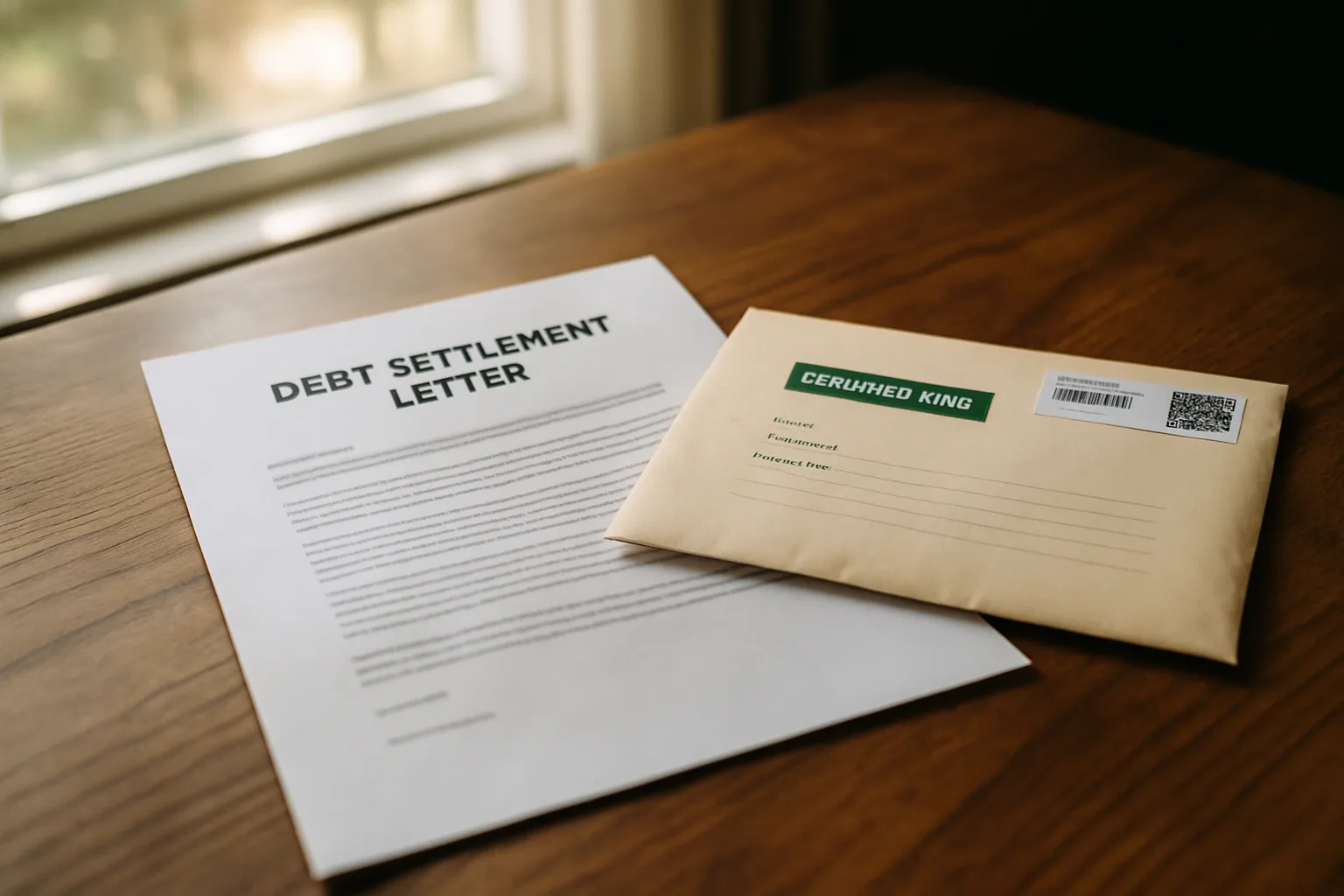
Debt settlement (also called debt negotiation) is a process where a company negotiates with your creditors to accept a lump-sum payment that's less than the full amount you owe. For example, you might owe $10,000 and settle for $5,000.
You stop paying your creditors and instead make monthly payments into a dedicated savings account. Once you've saved enough, the settlement company negotiates a lump-sum settlement. This process usually takes 2–4 years.
Debt settlement is typically offered by for-profit companies. It's a more aggressive approach and carries significant risks. Learn more about how it works in our guide to debt settlement.
Key features of debt settlement:
- You pay less than the full balance — often 40–60% of what you owe.
- Your credit score drops significantly because you stop making payments.
- You may face collection calls, lawsuits, and wage garnishment.
- Fees are high — typically 15–25% of the enrolled debt.
- Any forgiven debt over $600 is considered taxable income by the IRS.
The Debt Settlement Timeline: What to Expect
When you enroll, you stop paying creditors immediately. This triggers late payments after 30 days and charge-offs after 180 days.
Your settlement company waits until your debt is in collections to negotiate. This can take 6–12 months per account.
Once a settlement is reached, you pay the lump sum from your savings account. The entire process can stretch 2–4 years, during which your credit suffers.
Who Might Benefit from Debt Settlement
Debt settlement is often considered by people who have already missed payments. If your credit is already damaged, you have less to lose.
It can also be an alternative to bankruptcy for those with overwhelming debt. However, it is not a quick fix.
You need to have a lump sum of cash or the ability to save one. Without that, settlement negotiations cannot proceed.
Credit Counseling vs Debt Settlement: Side-by-Side Comparison
Here's a quick comparison to see the differences at a glance.
| Factor | Credit Counseling | Debt Settlement |
|---|---|---|
| How it works | Lower interest rates, pay full balance | Negotiate to pay less than owed |
| Credit impact | Minor dip, then recovery | Severe damage (missed payments) |
| Time to complete | 3–5 years | 2–4 years |
| Cost | Low monthly fees | 15–25% of enrolled debt |
| Risk | Low | High (lawsuits, collections) |
| Tax consequences | None (paid in full) | Forgiven debt may be taxable |
| Best for | Those who can make minimum payments | Those already behind on payments |
Which Option Is Better for Your Credit Score?

Credit counseling is far better for your credit score. Here's why.
With credit counseling, you continue making payments — just at a lower interest rate. Your credit report will show that you're paying on time, which helps your score. Some creditors may even report the account as "paying as agreed."
With debt settlement, you stop making payments entirely. That means late payments, charge-offs, and collections will appear on your credit report. These negative marks can stay for 7 years and drop your score by 100 points or more.
If you're worried about your credit, credit counseling is the clear winner.
How Credit Scores Are Calculated During Each Process
Payment history makes up 35% of your FICO score. Credit counseling keeps this positive, while debt settlement turns it negative.
Credit utilization is 30% of your score. With a DMP, your balances decrease steadily, improving utilization. With settlement, balances grow as fees and interest pile up.
Length of credit history matters too. Credit counseling preserves your accounts, while settlement often leads to closed accounts that shorten your history.
Long-Term Credit Recovery After Each Option
After credit counseling, your score can bounce back within a year or two. On-time payments rebuild your history quickly.
After debt settlement, recovery takes much longer. Negative marks remain for up to seven years.
You may need to rebuild credit with secured cards or credit-builder loans. This takes patience and discipline.
How to Pay Off Credit Card Debt Fast: Which Option Helps?
If you're looking for how to pay off credit card debt fast, both options can help, but in different ways.
Credit counseling doesn't reduce the principal, but it lowers your interest rate significantly — sometimes to 0–10%. That means more of your payment goes to the principal, so you can pay off debt faster than if you were paying high interest on your own.
Debt settlement reduces the total amount you owe, which can also help you get out of debt faster. But the process itself takes time because you have to save up a lump sum. And during that time, your credit is taking a beating.
If you want to how to quickly pay off credit card debt without destroying your credit, credit counseling is usually the better bet.
Comparing Timelines: Which Gets You Debt-Free Sooner?
With credit counseling, you typically finish in 3–5 years. You pay the full balance but at lower rates, so progress is steady.
With debt settlement, you might finish in 2–4 years, but the first 6–12 months involve no payments to creditors. You're just saving money.
Consider a $20,000 debt. Under credit counseling at 8% interest, paying $400 monthly takes about 5 years. Under settlement, you might settle for $10,000 after 18 months, then pay fees and taxes — total time around 3 years.
How to Accelerate Debt Payoff with Either Option
You can speed up credit counseling by making extra payments when possible. Even small additional amounts reduce interest costs.
With debt settlement, you can save faster by cutting expenses or earning extra income. A larger lump sum means quicker settlements.
Both options require discipline. The faster you pay, the less you spend on fees and interest.
How to Pay Down Credit Card Debt Fast: Practical Steps
Whether you choose credit counseling or debt settlement, here are practical steps to how to pay down credit card debt fast.
- Stop using your credit cards. Put them away or freeze them.
- Create a budget and cut unnecessary expenses.
- Consider a balance transfer to a 0% APR card if you have good credit.
- Look into how to pay down credit card debt quickly by using the debt snowball or avalanche method.
- Contact a nonprofit credit counselor for a free consultation.
These steps can help you how can i pay off credit card debt fast regardless of which option you choose.
The Debt Snowball vs Avalanche Method
The debt snowball method focuses on paying off the smallest balance first. This gives you quick wins and motivation.
The debt avalanche method targets the highest interest rate first. This saves you the most money over time.
Both methods work well alongside credit counseling. They are less effective with debt settlement since you stop making payments entirely.
Using Windfalls to Pay Down Debt Faster
Tax refunds, bonuses, or gifts can dramatically accelerate your debt payoff. Apply these directly to your highest-interest debt.
With credit counseling, a windfall can shorten your DMP by months. With settlement, it can help you reach your savings goal sooner.
Avoid spending windfalls on non-essentials. Every dollar applied to debt reduces your total cost.
How to Remove Debt Collection from Credit Report
If you've already gone through debt settlement or fallen behind on payments, you might have collections on your credit report. Here's how to remove debt collection from credit report.
First, verify the debt is yours. Under the Fair Debt Collection Practices Act (FDCPA), you can request debt validation. If the collector can't prove the debt, you can dispute it and have it removed.
Second, consider a pay-for-delete agreement. Some collectors will remove the collection from your credit report if you pay the full amount. Get this agreement in writing before you pay.
Third, dispute errors. According to the Consumer Financial Protection Bureau (CFPB), you can dispute inaccurate information on your credit report. If the collection is old or has errors, you may be able to get it removed.
For more details, see our guide on how to remove collection debt from credit report.
Understanding the Statute of Limitations on Debt
Each state has a statute of limitations on debt collection, typically 3–6 years. After this period, collectors cannot sue you.
However, the debt can still appear on your credit report for up to 7 years from the first missed payment. Paying an old debt can restart the clock.
If your debt is old, consult a consumer attorney before making any payments. You may be able to negotiate removal more easily.
How to Dispute Collection Accounts Successfully
Send a debt validation letter within 30 days of first contact. The collector must provide proof or stop collection.
Check your credit report for errors like wrong amounts or duplicate entries. Dispute these online with each credit bureau.
If the collection is removed, your score can improve quickly. This is a key step in credit repair after debt settlement.
When Credit Counseling Is the Better Choice
Credit counseling is the better choice if:
- You can still make your minimum payments each month.
- You have a steady income and can commit to a 3–5 year plan.
- You want to protect your credit score as much as possible.
- You have mostly credit card debt (not loans or medical bills).
- You're willing to close your credit card accounts (required for most DMPs).
Credit counseling is a gentler path. It won't erase your debt, but it will make it manageable and help you become debt-free without the severe consequences of settlement.
Real-Life Example: Sarah's Success with Credit Counseling
Sarah had $18,000 in credit card debt with 24% interest. She could make minimum payments but felt stuck.
She enrolled in a DMP through a nonprofit agency. Her interest rates dropped to 9%, and her monthly payment went from $450 to $320.
After 4 years, Sarah paid off the full $18,000. Her credit score, initially 640, rose to 720 by the end.
What Happens If You Miss a Payment During Credit Counseling
Missing a payment can get you removed from the DMP. Your creditors may then reinstate higher interest rates.
Most agencies allow a grace period of a few days. Contact them immediately if you anticipate a problem.
If you drop out, you may owe back fees. It is crucial to stay committed to the plan.
When Debt Settlement Might Make Sense
Debt settlement might be the better choice if:
- You're already behind on payments and can't catch up.
- Your credit is already damaged, so you have less to lose.
- You have a lump sum of cash available to settle debts.
- You're facing bankruptcy and want an alternative.
Debt settlement is a high-risk, high-reward strategy. It can reduce your debt substantially, but it comes with significant downsides. Only consider it if you've exhausted other options.
Real-Life Example: Mark's Debt Settlement Journey
Mark had $25,000 in credit card debt and had already missed 3 months of payments. His credit score had dropped from 680 to 580.
He enrolled in a debt settlement program. After 18 months, he settled his debts for $12,500 total. He paid $3,125 in fees and $2,500 in taxes.
Mark's total cost was $18,125, saving nearly $7,000. But his credit score stayed below 600 for 3 years.
When to Walk Away from Debt Settlement
If you cannot save enough for settlements, the program will fail. You may end up deeper in debt.
If you face multiple lawsuits, debt settlement may not protect you. Bankruptcy could be a safer option.
Always consult a bankruptcy attorney before committing to settlement. Some situations require legal protection.
Cost Comparison: Which Option Costs Less?
On the surface, debt settlement seems cheaper because you pay less than the full balance. But when you factor in fees, taxes, and credit damage, the total cost can be higher.
Let's compare with an example. Suppose you owe $20,000 in credit card debt.
| Option | Total Cost (Illustrative) | Time | Credit Impact |
|---|---|---|---|
| Credit Counseling | $20,000 + $1,500 in fees = $21,500 | 4 years | Minor, then positive |
| Debt Settlement | $10,000 settlement + $2,500 fee + $2,000 tax = $14,500 | 3 years | Severe negative marks |
Debt settlement costs less out of pocket, but the credit damage can cost you more in higher interest rates on future loans, insurance premiums, and even job opportunities.
Hidden Costs of Debt Settlement
Beyond fees and taxes, debt settlement can increase your insurance premiums. Many insurers check credit scores, and a lower score means higher rates.
You may also face difficulty renting an apartment or getting a cell phone plan. Landlords and utilities often run credit checks.
Over 5 years, these hidden costs could add $5,000 or more to your total expense. Factor this into your decision.
How to Calculate Your True Cost of Debt Settlement
Add up all fees, taxes, and potential credit-related costs. Include higher interest on future loans and insurance.
Compare this to the total cost of credit counseling. Include your monthly payments and fees.
Use a debt calculator to see the long-term impact. This helps you make an informed choice.
How Debt Consolidation Fits Into the Picture
Debt consolidation is another option that sometimes gets confused with credit counseling. It involves taking out a new loan to pay off multiple debts.
You can consolidate through a personal loan, balance transfer credit card, or home equity loan. This simplifies payments and may lower your interest rate.
Unlike credit counseling, debt consolidation doesn't involve negotiation with creditors. You qualify based on your credit score and income. For more, see our guide on debt consolidation.
When to Choose Consolidation Over Counseling
If you have good credit (680 or higher), debt consolidation may be cheaper than credit counseling. You can get a 0% balance transfer card or a low-interest personal loan.
If your credit is fair or poor, credit counseling may be your only affordable option. Consolidation loans for bad credit often have high rates.
Compare the total cost of each option before deciding. Use online calculators to estimate your payments.
Can You Consolidate After Credit Counseling?
Some people use credit counseling first to improve their credit score. Then they consolidate remaining debt at a lower rate.
This two-step approach can save money over the long term. However, you must complete the DMP first.
Check with your credit counselor before taking on new debt. Some DMPs prohibit new credit accounts.
Frequently Asked Questions
Can I do credit counseling and debt settlement at the same time?
No. You can't be in both programs simultaneously. Creditors won't agree to a settlement if you're already on a debt management plan. You need to choose one path.
Will credit counseling stop collection calls?
Yes, once you enroll in a DMP, creditors typically stop calling because they're receiving payments through the agency. Debt settlement does not stop calls until a settlement is reached.
How long does debt settlement stay on my credit report?
The negative marks from missed payments and settlements can stay on your credit report for up to 7 years from the date of the first missed payment. Credit counseling accounts are typically reported as paid as agreed, so they don't have a negative impact.
Is debt settlement a scam?
Not all debt settlement companies are scams, but many charge high fees and deliver poor results. The FTC has taken action against several companies for deceptive practices. Always research a company thoroughly before signing up.
What's the success rate of credit counseling vs debt settlement?
Credit counseling DMPs have a completion rate of about 40–50%. Debt settlement completion rates are lower, around 25–40%, because many people drop out when they realize the severity of the credit damage or can't save enough for settlements.
Can I negotiate my own debt settlement?
Yes, you can negotiate directly with creditors. This saves you the 15–25% fee that settlement companies charge.
However, creditors may be less willing to negotiate with individuals. Professional negotiators often have established relationships.
If you choose to DIY, start with small debts and get all agreements in writing. Be prepared for pushback.
What happens if I file for bankruptcy instead?
Bankruptcy can wipe out most unsecured debts, but it stays on your credit report for 7–10 years. It is a last resort.
Credit counseling is often required before filing Chapter 7. Many people try counseling first.
Consult a bankruptcy attorney to understand your options. Each case is different.
How to Choose Between Credit Counseling and Debt Settlement
Start by assessing your current financial situation. Can you make minimum payments each month?
If yes, credit counseling is likely the better choice. If no, debt settlement or bankruptcy may be necessary.
Consider your long-term goals. Protecting your credit score helps with future loans, housing, and jobs.
Steps to Make Your Decision
- List all your debts, interest rates, and minimum payments.
- Calculate your monthly income and essential expenses.
- Determine if you can afford minimum payments.
- Contact a nonprofit credit counselor for a free session.
- Compare their proposal to a debt settlement estimate.
Take your time. Rushing into a decision can lead to costly mistakes.
When to Seek Professional Help
If you are facing lawsuits or wage garnishment, consult an attorney. Legal advice is essential in these situations.
If you feel overwhelmed, a credit counselor can provide clarity. They offer free initial consultations.
Never pay upfront for debt relief services. Reputable agencies charge only after they deliver results.
Key takeaways
- Credit counseling is generally better for your credit score and overall financial health if you can afford your minimum payments.
- Debt settlement reduces what you owe but comes with high fees, tax consequences, and severe credit damage.
- Before choosing either option, talk to a nonprofit credit counselor for a free assessment of your situation.
- If you're already in collections, focus on how to remove debt collection from credit report and consider all options, including bankruptcy.
- No matter which path you choose, the most important step is to stop using credit cards and create a realistic budget.
Frequently asked questions
Can I do credit counseling and debt settlement at the same time?
Will credit counseling stop collection calls?
How long does debt settlement stay on my credit report?
Is debt settlement a scam?
What's the success rate of credit counseling vs debt settlement?
This article is for general informational purposes only and does not constitute financial, legal or credit-repair advice. Always consult a qualified financial advisor or credit counselor about your specific circumstances.

Written & reviewed by
Can OTUEditor
Can OTU is the editor of this site, curating and reviewing every guide for accuracy and clarity.
View all guides →