How Does Debt Settlement Affect Your Credit Score?

- Your score drops before settlement even happens, due to missed payments.
- A settled account is less damaging than bankruptcy but more damaging than paying in full.
- You can rebuild your credit score after settlement with responsible habits over time.
If you're struggling with debt, you've probably heard about debt settlement as a way to reduce what you owe. But you're also worried about your credit score — and rightfully so. Your credit score affects your ability to rent an apartment, get a car loan, or even land a job.
So how bad is the damage, really?
The short answer is that debt settlement will hurt your credit score, but the damage isn't permanent. Many people come out the other side with a clean slate and a plan to rebuild. This article walks you through exactly what happens to your score, step by step, so you can decide if settlement is worth it for your situation.
Remember, this is general information, not financial advice. Everyone's situation is different, so consider talking to a credit counselor or a bankruptcy attorney before making big decisions.
What Is Debt Settlement and How Does It Work?
Debt settlement is when you (or a company you hire) negotiate with your creditors to accept less than the full amount you owe. For example, you might owe $10,000 on a credit card and settle for $5,000. In exchange, the creditor agrees to forgive the remaining balance.
But here's the catch: to get that deal, you typically stop making payments to the creditor. The settlement company asks you to put money into a special account each month. Once enough funds build up, they negotiate a lump-sum payment.
During this time, your accounts go delinquent — and that's what hurts your credit.
The Mechanics of a Typical Settlement Program
Most settlement programs last 24 to 48 months. You make monthly deposits into a dedicated savings account, not to your creditors. The settlement company then uses those funds to negotiate with each creditor one at a time.
For example, if you have three credit cards totaling $15,000, the company might first target the smallest balance. They offer a lump sum of $3,000 on a $5,000 debt, and the creditor may accept $3,500. You pay that from your saved funds, and the remaining $1,500 is forgiven.
This process repeats for each debt. Meanwhile, your credit reports show missed payments, charge-offs, and eventually the settlement notation. The entire timeline from first missed payment to final settlement can span one to three years.
How Does Debt Settlement Affect Your Credit Score Immediately?
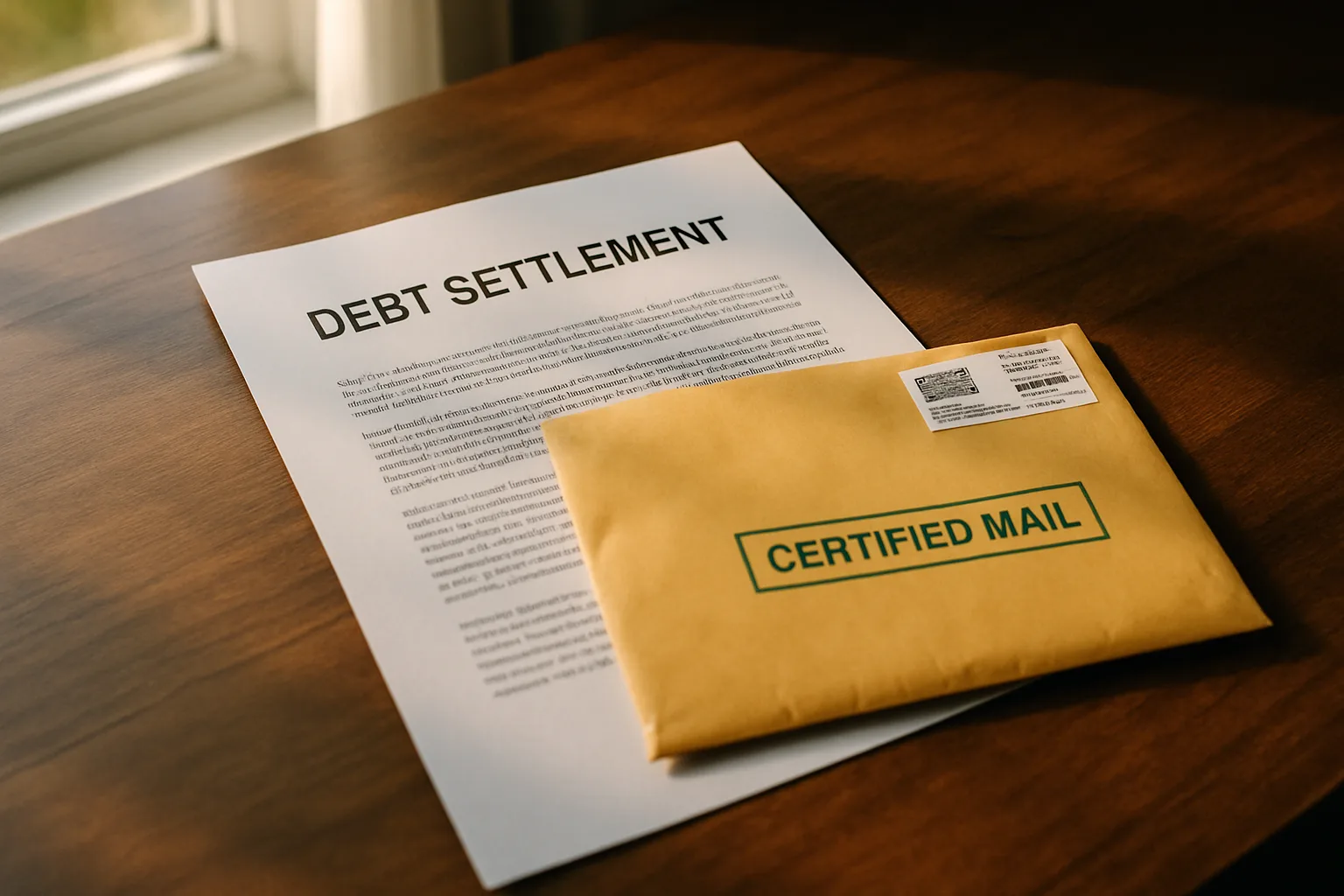
Your credit score takes a hit before the settlement is even completed. Here's the timeline of damage:
- Missed payments: As soon as you stop paying, your creditor reports 30-day, 60-day, and 90-day late payments. Payment history makes up 35% of your FICO score, so this alone can drop your score by 50–100 points.
- Charge-off: After about 180 days of non-payment, the creditor "charges off" the debt — meaning they write it off as a loss. This is a serious negative mark.
- Settlement notation: When you finally settle, the account is reported as "settled for less than the full balance." While better than "charge-off" or "collection," it's still negative.
Overall, expect a drop of 100–150 points or more, depending on your starting score. Someone with a 700 score might fall to 550–600. Someone with a 650 might fall to 500–550.
Why the Drop Happens in Stages
The credit score drop is not a single event. It accumulates as each late payment is reported. A 30-day late payment might only drop your score 20–30 points if you have a strong history.
But a 90-day late payment can drop it 50–70 points.
When the charge-off appears, that's another 30–50 point drop. Finally, the settlement notation itself can cause a 20–40 point drop. So the total damage builds over several months.
For example, imagine a borrower named Sarah with a 720 FICO score. She stops paying her $8,000 credit card debt. After 60 days of missed payments, her score falls to 670.
After 180 days and a charge-off, it drops to 610. After the settlement is reported, her score settles at 580.
How Long Does Debt Settlement Stay on Your Credit Report?
The negative marks from debt settlement stay on your credit report for seven years from the date of the first missed payment that led to the settlement. This includes late payments, charge-offs, and the settlement notation itself.
However, the impact lessens over time. After two or three years, the score effect diminishes, especially if you're adding positive information like on-time payments on other accounts.
The Seven-Year Clock Explained
The seven-year period starts from the original delinquency date. That's the date you first missed a payment that led to the settlement. If you stopped paying in June 2024, the settlement notation will fall off in June 2031.
During years one and two, the settlement has the most negative impact. Your score may be 100–150 points lower than it would be without the mark. By year three, the impact may shrink to 50–70 points.
By year five, it might be only 20–30 points.
This gradual decay happens because credit scoring models weigh recent information more heavily. Older negative marks have less influence on your score. So time is your ally in the rebuilding process.
Debt Settlement vs. Other Debt Relief Options: Credit Impact Comparison

It helps to see how settlement stacks up against other debt relief options. Here's a quick comparison:
| Option | Credit Score Impact | Time on Report | Debt Reduction |
|---|---|---|---|
| Debt settlement | Severe (100–150+ point drop) | 7 years | 40–60% of balance |
| Debt consolidation | Minor (temporary dip from new credit inquiry) | N/A (if paid on time) | No reduction (you pay full balance) |
| Bankruptcy (Chapter 7) | Very severe (200+ point drop) | 10 years | Most debts discharged |
| Credit counseling (DMP) | Minimal to moderate (may be noted on report) | Until plan ends | Some interest rate reductions |
As you can see, settlement is a middle ground. It hurts less than bankruptcy but more than consolidation or credit counseling. The trade-off is that you can reduce your debt significantly without going to court.
Why Settlement Is Less Damaging Than Bankruptcy
Bankruptcy stays on your credit report for 10 years for Chapter 7, and 7 years for Chapter 13. It also involves a public court process. Settlement is a private negotiation that only appears on your credit report as a notation.
Lenders view bankruptcy as a more extreme measure. Some lenders will approve you for a mortgage two years after a settlement, but may require four years after a bankruptcy. So settlement offers a faster path to new credit.
However, settlement still signals financial distress. You'll need to demonstrate responsible credit use afterward to rebuild trust with lenders. The comparison table shows that settlement strikes a balance between relief and credit damage.
Can You Remove Debt Settlement From Your Credit Report?
Many people wonder: how to remove debt collection from credit report or how to remove collection debt from credit report after settlement. The truth is, accurate negative information — like a settled account — cannot be removed before seven years. However, you can take steps to ensure the information is reported correctly:
- Dispute errors: If the settlement amount, date, or account status is wrong, file a dispute with the credit bureaus (Equifax, Experian, TransUnion). You can do this online or by mail.
- Request a pay-for-delete: Some collection agencies may agree to delete the account from your report if you pay the settlement. This is not guaranteed and is less common with original creditors.
- Wait it out: Time is the most reliable healer. After seven years, the item falls off automatically.
For more details on disputing errors, visit the Consumer Financial Protection Bureau's guide on disputing credit report errors.
How to Spot Errors in Your Settlement Reporting
Common errors include the wrong settlement date, an incorrect balance, or the account being listed as "charge-off" instead of "settled." You should check your credit reports from all three bureaus at AnnualCreditReport.com.
If you find an error, gather supporting documents like the settlement agreement and proof of payment. File a dispute online with each bureau that has the error. The bureau must investigate within 30 days.
If the error is corrected, your score may improve immediately. For example, if a charge-off is incorrectly listed instead of a settlement, correcting it could raise your score by 20–40 points. So always verify the accuracy of your reports.
How to Pay Off Credit Card Debt Fast Without Destroying Your Credit
If you're looking for how to pay off credit card debt fast or how to quickly pay off credit card debt without the credit damage of settlement, here are strategies that preserve your score:
- Debt snowball or avalanche: List debts smallest to largest (snowball) or highest interest first (avalanche). Pay minimums on all but the target debt, and put extra money there. This keeps accounts current.
- Balance transfer credit card: Move high-interest balances to a card with a 0% intro APR. You'll need good credit to qualify, but it stops interest from piling up.
- Personal loan for consolidation: A fixed-rate loan can simplify payments and lower interest. Again, good credit helps.
These methods don't reduce what you owe, but they protect your credit score. If you're wondering how to pay down credit card debt fast, the key is to increase payments and lower interest rates — not to stop paying.
Real Example: Snowball vs. Settlement
Consider two people with $12,000 in credit card debt. Person A uses the snowball method, paying $400 per month. They pay off the debt in 36 months with no credit damage.
Their score stays around 680.
Person B chooses settlement. They stop paying, their score drops to 550, and after 18 months they settle for $6,000. They save $6,000 but their score is damaged for years.
By month 36, Person B's score might be back to 620 if they rebuild carefully.
Person A ends up with a better score and no negative marks. But Person B saved money. The choice depends on your priorities: preserving credit or reducing debt faster.
How Can I Pay Off Credit Card Debt Fast When I Have Bad Credit?
If your credit is already damaged, you might feel stuck. But there are still ways to how can i pay off credit card debt fast even with a low score:
- Credit counseling: Nonprofit agencies can help you set up a debt management plan (DMP). They negotiate lower interest rates with creditors, and you make one monthly payment. Your credit may take a small hit from the DMP notation, but it's far less than settlement.
- Side hustles: Extra income from gig work, freelancing, or selling unused items can accelerate payments without harming your credit.
- Negotiate directly: You can call your credit card company and ask for a hardship program. Some may lower your interest rate or waive fees temporarily. This doesn't require stopping payments.
If you're determined to how to pay down credit card debt quickly, every extra dollar helps. Even $20 more per month can shave months off your repayment timeline.
How a Debt Management Plan Works in Practice
Under a DMP, you work with a credit counseling agency. They contact your creditors and ask for lower interest rates, often reducing rates from 25% to 8–10%. You then make one monthly payment to the agency, which distributes the funds.
The DMP typically lasts 3–5 years. Your credit report may show "debt management plan" or "credit counseling" next to the accounts. This is a neutral notation, not a negative one.
Some lenders view it positively because it shows you're taking action.
For example, if you owe $10,000 at 22% interest, a DMP might lower the rate to 9%. Your monthly payment drops from $300 to $250, and you pay off the debt in 48 months instead of 60. Your credit score remains stable throughout the process.
How to Pay Off Credit Card Debt Quick: A Step-by-Step Plan
For those who want how to pay off credit card debt quick without settlement, here's a realistic plan:
- Stop adding new debt. Cut up cards or freeze them in a block of ice. Use cash or debit only.
- List all debts with balances, minimum payments, and interest rates.
- Choose a payoff method: snowball (motivation) or avalanche (math).
- Find extra money: Cut subscriptions, eat out less, or take on a side job.
- Automate payments so you never miss a due date.
- Celebrate milestones to stay motivated.
This approach won't reduce your balance like settlement, but it keeps your credit intact and builds good habits.
Sample Timeline for a $5,000 Debt
Suppose you owe $5,000 at 20% interest with a $150 minimum payment. Using the avalanche method, you pay $200 per month. You'll pay off the debt in 31 months and pay $1,200 in interest.
If you find an extra $100 per month from a side hustle, you pay $300 total. The debt is gone in 19 months, and you pay only $700 in interest. Your credit score never drops because you never miss a payment.
Compare that to settlement: you stop paying for 6 months, your score drops 100 points, and you settle for $3,000. You save $2,000 but your score is damaged. The step-by-step plan shows that with discipline, you can avoid that damage entirely.
What Happens to Your Credit Score After Settlement?
Once the settlement is complete, your credit report will show the account as "settled" or "paid for less than the full balance." Your score will likely remain low for a while because the negative marks are still fresh.
But here's the good news: you can start rebuilding immediately. The settlement itself doesn't prevent you from opening new credit accounts or improving your score. It's just a scar that fades over time.
Post-Settlement Score Recovery Timeline
In the first six months after settlement, your score may stay flat or even drop slightly as the settlement notation appears. After 12 months of positive credit behavior, you might see a 30–50 point increase.
By month 24, many people with consistent on-time payments and low utilization reach scores in the 620–660 range. By month 36, scores in the 660–700 range are possible. This assumes you open a secured card and use it responsibly.
For example, a borrower named James settled $15,000 in debt in January 2024. His score was 540. He got a secured card with a $300 limit in March 2024.
By January 2025, his score was 610. By January 2026, it reached 670. The key was never missing a payment on the secured card.
How to Rebuild Your Credit After Debt Settlement
Rebuilding takes patience, but it's absolutely doable. Here are steps to take right after settlement:
- Get a secured credit card. You put down a deposit (say $200) that becomes your credit limit. Use it for small purchases and pay in full each month. This adds positive payment history.
- Become an authorized user. Ask a family member with good credit to add you to their card. You get the benefit of their positive history without needing to use the card.
- Pay all bills on time. Payment history is the biggest factor in your score. Set up autopay or reminders.
- Keep credit utilization low. Use less than 30% of your available credit — ideally under 10%.
- Monitor your credit. Use free tools like Credit Karma or AnnualCreditReport.com to track progress and spot errors.
Within 12–24 months of responsible credit use, many people see their scores climb back into the mid-600s or higher.
Choosing the Right Secured Card
Not all secured cards are equal. Look for one with a low annual fee, no monthly maintenance fee, and the option to graduate to an unsecured card after 6–12 months. Some popular options include the Discover it Secured Card and the Capital One Platinum Secured Card.
Use the card for a recurring expense like a streaming subscription. Set up autopay to pay the full balance each month. This builds a perfect payment history without risking overspending.
After 6–12 months, the card issuer may automatically review your account and return your deposit. You then have an unsecured card with a higher limit. This positive history helps offset the settlement mark on your report.
Should You Choose Debt Settlement to Improve Your Credit?
This might sound counterintuitive, but some people choose settlement precisely to improve their credit in the long run. How? If you're already missing payments and drowning in debt, your score is already suffering.
Settlement can stop the bleeding by resolving the debt, so you can start fresh.
Compare two scenarios:
- Scenario A: You keep struggling, miss payments for months, and eventually default. Your score is trashed anyway, and you still owe the full amount.
- Scenario B: You settle the debt, take a hit, but then have a clean slate to rebuild.
For many, Scenario B leads to a better credit score two years down the road than Scenario A. That's the logic behind settlement as a credit repair tool — but it only works if you commit to rebuilding afterward.
When Settlement Becomes a Strategic Choice
Imagine you owe $20,000 across four cards. You've already missed two payments on each. Your score has dropped from 700 to 600.
You're getting collection calls and you can't afford the minimums.
If you continue missing payments, your score will drop to 500–550 within six months. You'll still owe $20,000 plus fees. If you settle for $10,000, your score will be around 550–580, but you'll owe half as much.
Then you can rebuild.
Two years later, the person who settled might have a score of 640. The person who didn't settle might still have a score of 520 and still owe $20,000. In this case, settlement was the better path for both finances and credit.
Common Myths About Debt Settlement and Credit Scores
Let's clear up a few misunderstandings:
- Myth: Settlement ruins your credit forever. No, negative marks fall off after seven years, and you can rebuild much sooner.
- Myth: You can remove accurate settled accounts. No, only errors can be disputed. Accurate information stays.
- Myth: All settlement companies are scams. Some are, but legitimate ones exist. Do your research before signing up.
- Myth: Your score will bounce back immediately after paying. No, the negative marks remain, but their impact lessens over time.
Debunking the "Forever Damage" Myth
Many people believe that a settled account will haunt them for life. In reality, the Fair Credit Reporting Act limits negative information to seven years. After that, it must be removed automatically.
Furthermore, credit scoring models like FICO 9 and VantageScore 4.0 ignore paid collection accounts entirely. So if your settled account is a collection, it may have zero impact on newer scoring models. This is a major advantage for consumers who settle and pay.
For example, if you settle a $5,000 collection in 2024, FICO 9 may not penalize you for it after 2025. Older models like FICO 8 will still penalize you, but many lenders now use newer models. So the damage is less severe than commonly believed.
When to Consider Debt Settlement vs. Other Options
Debt settlement makes sense if:
- You have a lump sum of money (from savings, a bonus, or a tax refund) that can cover a settlement.
- Your credit is already damaged from missed payments.
- You've tried other options like consolidation but don't qualify due to low credit.
- You're facing a realistic threat of lawsuit or wage garnishment.
It's not a good fit if:
- You can afford your minimum payments.
- You have good credit and want to preserve it.
- Your debt is relatively small and manageable.
- You're not prepared for the phone calls from collectors.
Always weigh the credit impact against the financial relief. Sometimes a temporary score drop is worth getting out of debt for good.
Assessing Your Debt-to-Income Ratio
Your debt-to-income (DTI) ratio is a key factor in deciding between settlement and other options. If your DTI is above 50%, you may struggle to afford minimum payments. Settlement could be the only way to reduce your monthly obligations.
For example, if you earn $3,000 per month and owe $1,800 in minimum payments, your DTI is 60%. You can't sustain that. Settlement could reduce your debt by 40–60%, lowering your DTI to a manageable level.
If your DTI is below 40%, you might qualify for a consolidation loan or a DMP. These options preserve your credit score better than settlement. So calculate your DTI before making a decision.
The Role of Credit Utilization After Settlement
Credit utilization is the amount of credit you use compared to your total available credit. It makes up 30% of your FICO score, so it matters a lot after settlement.
When you settle a debt, that account is closed or shows a zero balance. Your total available credit drops, which can increase your overall utilization ratio if you have other cards with balances.
For example, if you had two cards with a $5,000 limit each and a $2,000 balance on one, your utilization was 20% ($2,000 out of $10,000). After settling and closing one card, your total limit becomes $5,000, and your utilization jumps to 40% ($2,000 out of $5,000). This can hurt your score further.
To counter this, keep any remaining credit card balances low. Pay them down aggressively or ask for a credit limit increase on cards you keep open.
Strategies to Lower Utilization After Settlement
If you have a card with a $1,000 limit and a $500 balance, your utilization is 50%. Pay that balance down to $100, and your utilization drops to 10%. This can boost your score by 20–30 points.
You can also request a credit limit increase on cards you keep open. For example, if your limit is $1,000 and you ask for $2,000, your utilization on that card drops from 50% to 25% without paying anything. The issuer may do a soft pull that doesn't affect your score.
Another option is to open a new secured card with a $500 deposit. This adds $500 to your total available credit, lowering your overall utilization. Just be sure to use the new card responsibly and pay it off each month.
How Debt Settlement Affects Different Credit Score Models
Not all credit scores are the same. FICO and VantageScore are the two main models, and they treat settled accounts slightly differently.
FICO considers a settled account as a negative mark, but it's less severe than a charge-off or collection. VantageScore may weigh recent payment history more heavily, so the impact of a settlement can fade faster if you rebuild quickly.
Lenders often use FICO scores for mortgage and auto loan decisions. A settled account can make it harder to qualify for these loans for the first few years.
However, some lenders specialize in "credit rebuilding" products. They may overlook a past settlement if you show stable income and recent on-time payments.
FICO 8 vs. FICO 9: Key Differences
FICO 8 is the most widely used version for credit card and auto lending. It penalizes settled accounts heavily for the first two years. FICO 9, released in 2014, ignores paid collection accounts entirely.
So if your settled account is in collections and you pay it, FICO 9 won't penalize you.
VantageScore 3.0 and 4.0 also treat settled accounts more leniently. They focus on recent payment history and utilization. So if you rebuild quickly, your VantageScore may recover faster than your FICO 8 score.
For example, a settled account might drop your FICO 8 score by 100 points, but only drop your VantageScore 4.0 by 60 points. This means you might qualify for some credit products sooner than you think. Always check which score model your lender uses.
Tax Implications of Debt Settlement and Your Credit
Debt settlement can also affect your taxes, which indirectly relates to your credit. The IRS considers forgiven debt over $600 as taxable income.
For example, if you settle a $10,000 debt for $5,000, the forgiven $5,000 is reported to the IRS on Form 1099-C. You must include this as income on your tax return.
If you can't pay the tax bill, it could lead to a tax lien. A tax lien is a public record that appears on your credit report and can drop your score by 100 points or more.
To avoid this, check if you qualify for the insolvency exclusion. If your total debts exceed your assets at the time of settlement, you may not owe taxes on the forgiven amount. Consult a tax professional for guidance.
How to Handle the 1099-C Form
When you receive a 1099-C from a creditor, it will show the amount of debt forgiven in Box 2. You must report this on your tax return as "other income." If you don't, the IRS may audit you and assess penalties.
To claim the insolvency exclusion, file IRS Form 982. You'll need to list your total liabilities and assets on the date of settlement. If your liabilities exceed your assets, you can exclude the forgiven amount from income.
For example, if you had $50,000 in debts and $30,000 in assets when you settled, you were insolvent by $20,000. If the forgiven debt was $5,000, you can exclude all of it. This saves you from paying taxes on the settlement amount.
How Debt Settlement Affects Your Ability to Get New Credit
After settlement, you may find it harder to get approved for new credit cards or loans. Lenders see the settled account as a sign of financial distress.
Many credit card companies will not approve you if you have a recent settlement on your report. Some may offer you a secured card or a card with a high interest rate and low limit.
Auto lenders and mortgage lenders often require a waiting period of two to four years after settlement. During this time, you need to show consistent income and on-time payments.
However, some lenders specialize in "credit rebuilding" products. They may overlook a past settlement if you show stable income and recent on-time payments.
Waiting Periods for Major Loans
For an FHA mortgage, you typically need to wait two years after a debt settlement. For a conventional mortgage, the wait is often four years. Auto lenders may approve you after one year if you have a steady job and a down payment.
During the waiting period, focus on building a strong credit profile. Keep your utilization low, pay all bills on time, and avoid new hard inquiries. This demonstrates to lenders that you've changed your financial habits.
For example, if you settled debt in 2024, you might qualify for an FHA mortgage in 2026. By then, your score could be 640–680 if you've rebuilt diligently. The key is patience and consistent behavior.
Key takeaways
- Debt settlement typically drops your credit score by 100–150 points due to missed payments and the settlement notation.
- Negative marks stay on your credit report for seven years, but the impact fades over time.
- You can rebuild your credit after settlement with secured cards, on-time payments, and low utilization.
- Alternatives like debt consolidation or credit counseling may have less credit impact if you qualify.
- Always consider your unique financial situation and consult a professional before choosing settlement.
Frequently asked questions
How many points does your credit score drop after debt settlement?
Can I remove a settled debt from my credit report early?
Is debt settlement better for your credit than bankruptcy?
How long after debt settlement can I get a credit card?
Will debt settlement stop collection calls?
This article is for general informational purposes only and does not constitute financial, legal or credit-repair advice. Always consult a qualified financial advisor or credit counselor about your specific circumstances.

Written & reviewed by
Can OTUEditor
Can OTU is the editor of this site, curating and reviewing every guide for accuracy and clarity.
View all guides →