Federal vs Private Student Loan Relief: What Options Do You Actually Have?

- Federal loans: IDR plans cap payments at 10-20% of discretionary income and forgive remaining balances after 20-25 years.
- Private loans: Options are limited to refinancing (if you have good credit) or debt settlement (which damages credit).
- Your best path depends on loan type, income, and long-term goals — start by confirming whether your loans are federal or private.
If you're struggling to make your student loan payments, you're not alone. Millions of Americans are in the same boat, and the good news is that you have options. But the type of relief you can get depends heavily on one thing: whether your loans are federal or private.
Federal loans come with built-in safety nets like income-driven repayment plans and forgiveness programs. Private loans, on the other hand, are governed by the terms of your contract with a bank or credit union — and those terms rarely include forgiveness.
This article walks you through the key differences between federal and private student loan relief, so you can figure out which path actually makes sense for your situation. We'll cover income-driven plans, consolidation, settlement, and even how to pay off student loans with low income. Remember, this is general information, not financial advice.
Your specific circumstances may vary, so it's always a good idea to talk to a qualified professional before making big decisions.
What's the difference between federal and private student loans?
Federal student loans are issued by the U.S. Department of Education. They come with standardized interest rates and benefits set by law. Private student loans are issued by banks, credit unions, or online lenders.
Their terms vary widely based on your credit score and the lender's policies.
| Feature | Federal Loans | Private Loans |
|---|---|---|
| Interest rate | Fixed, set by Congress | Fixed or variable, based on credit |
| Income-driven repayment | Yes, several plans available | Rarely offered |
| Forgiveness programs | Public Service Loan Forgiveness, IDR forgiveness | No federal forgiveness; some lenders offer limited relief |
| Deferment/forbearance | Automatic for economic hardship | At lender's discretion |
| Default consequences | Wage garnishment, tax refund seizure | Lawsuit, wage garnishment (court order) |
How loan type affects your relief options
The differences in the table above shape every relief strategy available to you. Federal loans are designed with borrower protections in mind. Private loans prioritize the lender's financial interests.
For example, a federal borrower can automatically pause payments during unemployment. A private borrower must beg their lender for the same courtesy.
This distinction matters because it determines your starting point. If you have federal loans, you have a safety net. If you have private loans, you need to be more proactive and creative.
Always verify your loan type before choosing a path.
Federal student loan relief options
Income-driven repayment (IDR) plans
IDR plans cap your monthly payment at a percentage of your discretionary income — usually 10% to 20%. If you have a low income, your payment could be as low as $0. After 20 or 25 years of qualifying payments, any remaining balance is forgiven.
This is one of the best ways to manage federal loans when you're struggling to pay.
To apply, you need to submit an application through the Federal Student Aid website and provide income information. Your payment will be recalculated annually based on your updated income. If your income stays low, your payment stays low.
Types of IDR plans available
There are several IDR plans, each with its own formula. The Saving on a Valuable Education (SAVE) plan calculates payments based on 10% of discretionary income. The Pay As You Earn (PAYE) plan also uses 10% but caps payments at the standard 10-year amount.
The Income-Based Repayment (IBR) plan uses 15% for older loans.
For example, consider a borrower with $40,000 in federal loans and an income of $35,000. Under SAVE, their monthly payment might be around $150. Under IBR, it could be closer to $200.
The choice depends on your loan origination date and family size.
Public Service Loan Forgiveness (PSLF)
If you work full-time for a qualifying government or nonprofit employer, you may be eligible for PSLF. After making 120 qualifying monthly payments under an IDR plan, the rest of your federal direct loans are forgiven tax-free. This program has strict requirements, so make sure you understand the rules before relying on it.
For instance, a teacher earning $45,000 with $60,000 in loans could have their entire balance forgiven after 10 years. But they must certify their employment annually and remain on an IDR plan. Missing one certification could delay forgiveness by months.
Deferment and forbearance
If you're experiencing temporary financial hardship, you can postpone payments through deferment or forbearance. During deferment, interest doesn't accrue on subsidized loans. During forbearance, interest accrues on all loans.
These options give you breathing room but can increase your total debt over time.
For example, a borrower who uses forbearance for 12 months on a $30,000 loan at 5% interest will see their balance grow by about $1,500. This is a short-term fix, not a long-term strategy. Use it only when you have no other choice.
Federal loan consolidation
You can combine multiple federal loans into one Direct Consolidation Loan. This simplifies payments and can give you access to additional IDR plans and forgiveness programs. However, consolidation may reset your payment count toward IDR forgiveness, so weigh the pros and cons.
Learn more about debt consolidation and how it fits into your overall strategy.
Consider a borrower with five different federal loans, each with a different servicer. Consolidation merges them into a single monthly payment. But if they have already made 50 payments toward IDR forgiveness, consolidation starts the clock over at zero.
That could add years to their repayment timeline.
Private student loan relief options
Private lenders are not required to offer income-driven plans or forgiveness. Your options depend on your lender and your creditworthiness. Here's what you can explore:
Refinancing
If you have good credit and a steady income, you might qualify for a lower interest rate by refinancing your private loans with a new lender. This can lower your monthly payment and total interest. But refinancing federal loans into a private loan means losing federal protections — so only refinance federal loans if you're sure you won't need IDR or forgiveness.
For example, a borrower with a 750 credit score and $50,000 in private loans at 8% interest could refinance to 5%. That saves about $1,500 per year in interest. However, if they lose their job, the new lender may not offer forbearance.
Always read the fine print.
Loan modification or hardship programs
Some private lenders offer temporary relief like reduced payments or forbearance if you're facing financial hardship. Contact your lender directly to ask about options. Be prepared to explain your situation and provide documentation.
For instance, a borrower who loses their job might call their lender and request a three-month forbearance. Some lenders like SoFi or Discover offer this, but it's not guaranteed. You may need to provide proof of unemployment or medical hardship.
Debt settlement
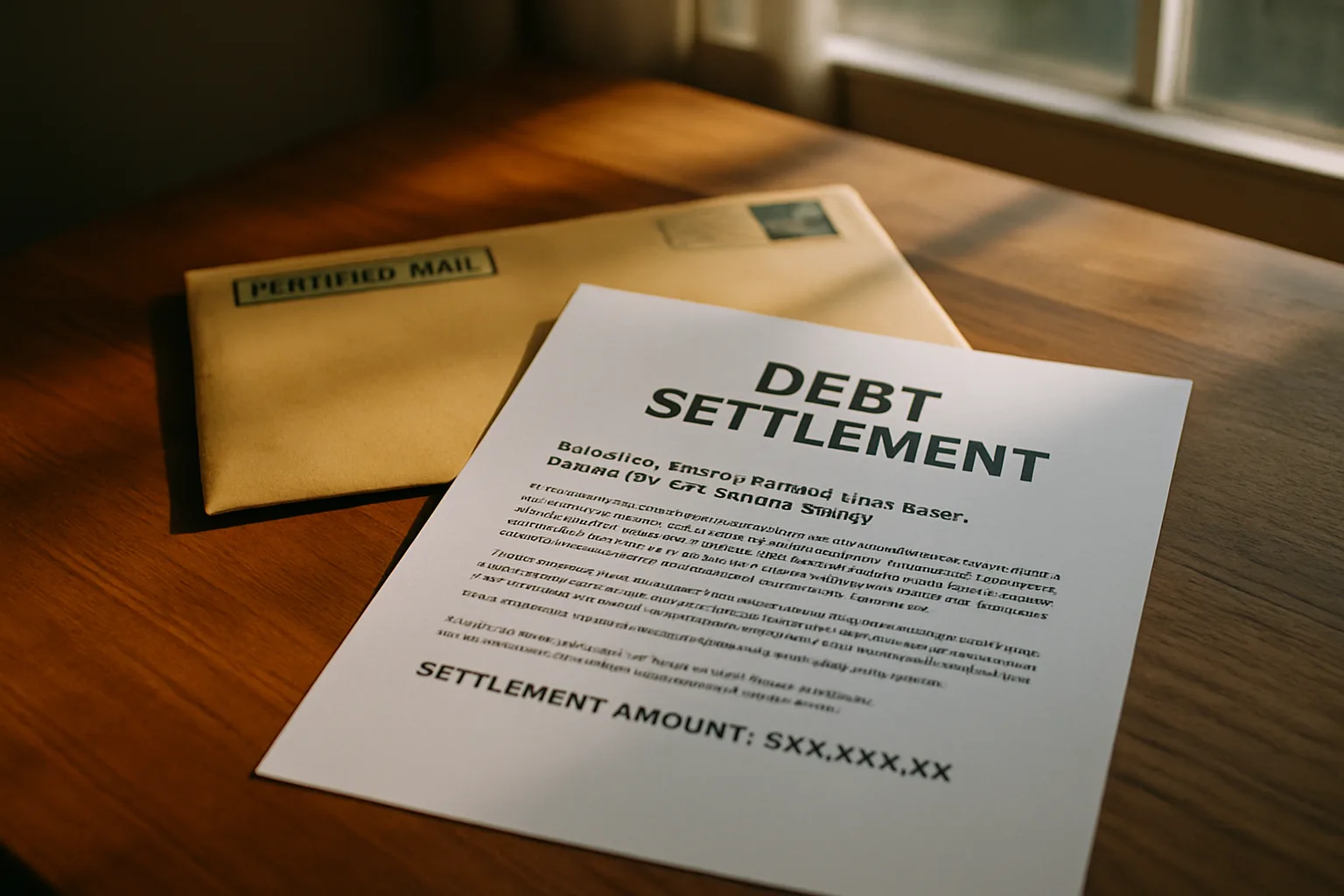
If you're in default and can't pay, you may be able to negotiate a lump-sum settlement for less than the full balance. This will severely damage your credit and may trigger tax consequences. It's a last resort.
For a deeper look, see our guide on debt settlement.
Imagine a borrower with $20,000 in defaulted private loans. They might negotiate a settlement for $10,000, but they need to pay it in one lump sum. The forgiven $10,000 is considered taxable income.
Plus, their credit score could drop by 100 points or more.
How to pay off student loans with low income

If your income is low, your best bet is to use federal IDR plans. Your payment will be based on your income, not your balance. For example, if you earn $30,000 a year and have $50,000 in federal loans, your monthly payment under the SAVE plan could be around $100 or less.
If your income is below 150% of the poverty line, your payment could be $0.
For private loans, low income makes refinancing difficult. You might need to contact your lender to request a temporary hardship arrangement. Some lenders offer interest-only payments or forbearance for a few months.
If you have multiple private loans, consider focusing on the highest-interest one first while making minimum payments on the rest.
Using the SAVE plan for maximum relief
The SAVE plan is particularly generous for low-income borrowers. It excludes 225% of the poverty line from your income calculation. For a single person, that means the first $32,800 of income is not counted.
So if you earn $35,000, your payment is based on only $2,200 of discretionary income.
That results in a monthly payment of about $18. If your income drops to $30,000, your payment falls to $0. This plan also waives unpaid interest, so your balance won't grow.
It's the most protective IDR plan available today.
How to pay off student loans fast with low income
Paying off loans quickly on a low income is tough, but not impossible. Here are a few strategies:
- Make extra payments whenever you can — even $20 a month helps reduce principal.
- Use windfalls like tax refunds or bonuses to make lump-sum payments.
- Consider a side hustle or gig work to generate extra income specifically for loan payments.
- If you have federal loans, avoid IDR if you can afford the standard payment — IDR extends your term and increases total interest.
Remember, paying off loans fast is a luxury. If you're struggling to cover basic needs, prioritize your essentials first. There's no shame in taking the slow route.
Practical example of fast repayment on a low income
Consider a borrower earning $30,000 with $25,000 in federal loans at 4.5% interest. The standard 10-year payment is about $260 per month. That's 10% of their income, which is tight.
But if they pick up a weekend gig earning $200 extra per month, they can put that toward loans.
By paying $460 per month, they cut the repayment term from 10 years to about 5 years. They save roughly $3,000 in interest. This requires discipline, but it's achievable with a side hustle like food delivery or tutoring.
Debt consolidation loan vs debt relief: Which is better for student loans?
This is a common question, and the answer depends on your loan type and goals.
| Option | Best for | How it works | Credit impact |
|---|---|---|---|
| Federal consolidation | Federal loans only | Combines loans into one, may lower payment via IDR | No direct credit impact; may increase term |
| Private refinancing | Good credit, stable income | New loan pays off old ones, lower rate possible | Hard inquiry; can improve credit if payments are on time |
| Debt settlement | Defaulted private loans | Negotiate lump-sum payment for less than balance | Severe credit damage, stays on report 7 years |
If you have federal loans, consolidation through the government is usually better than private consolidation because you keep federal protections. For private loans, refinancing is the best option if you qualify. Debt settlement should only be a last resort.
For a broader view, check out our overview of debt relief options.
When consolidation makes sense for federal loans
Federal consolidation is ideal if you have multiple loans with different servicers. It simplifies your life by creating one monthly bill. It also unlocks IDR plans that may not be available for older loan types, like FFEL loans.
For example, a borrower with FFEL loans from 2005 cannot access the SAVE plan. By consolidating into a Direct Consolidation Loan, they become eligible. This can dramatically lower their monthly payment.
But again, consolidation resets the IDR forgiveness clock.
Can you get student loan forgiveness for private loans?
Generally, no. Private student loans are not eligible for federal forgiveness programs like PSLF or IDR forgiveness. Some private lenders may offer limited forgiveness in cases of death or disability, but it's rare.
If you're struggling with private loans, focus on refinancing or negotiating with your lender.
Rare exceptions for private loan forgiveness
Some private lenders discharge loans if the borrower dies or becomes permanently disabled. For instance, Sallie Mae offers death discharge for cosigners as well. A few lenders may forgive loans if the school closed fraudulently, but this is not common.
For example, if a borrower took out a private loan to attend a school that later shut down due to fraud, they might get relief. But this requires legal action or a lender's goodwill. It's not a reliable path.
What happens if you default on federal vs private student loans?
Defaulting on federal loans has serious consequences: the government can garnish your wages (up to 15% of disposable income), seize your tax refunds, and even reduce your Social Security benefits. You can rehabilitate federal loans by making nine on-time payments.
Defaulting on private loans leads to collection calls, lawsuits, and wage garnishment (only after a court order). Private lenders can also sue you and get a judgment that allows them to seize assets. There's no government rehabilitation program for private loans.
How to recover from default on federal loans
Federal loan rehabilitation is straightforward. You agree to make nine consecutive, voluntary, on-time payments. The amount is 15% of your discretionary income.
Once completed, the default is removed from your credit report, and you regain access to IDR plans and deferment.
For example, a borrower earning $40,000 with defaulted federal loans might pay $200 per month for nine months. After that, their loans are current again. This is a lifeline that private borrowers don't have.
How to recover from default on private loans
Private loan default is harder to escape. You can try to negotiate a settlement or pay the full balance. Some lenders offer a reinstatement program if you catch up on missed payments, but this is rare.
Your credit will be damaged for seven years.
Consider a borrower who defaults on $15,000 in private loans. The lender might sue and get a judgment for the full amount plus fees. The borrower could then negotiate a payment plan, but the judgment stays on their credit report.
This can make it hard to rent an apartment or get a car loan.
How to choose the right relief option
Start by identifying your loan type. Log into the National Student Loan Data System (NSLDS) to see your federal loans. For private loans, check your credit report or contact your lender.
Then ask yourself:
- Do I need a lower monthly payment now? → Federal IDR or private hardship program.
- Do I want to pay off debt fast? → Refinance (if good credit) or make extra payments.
- Am I in default? → Federal loan rehabilitation or private settlement.
- Do I work in public service? → PSLF for federal loans.
Creating a personalized action plan
Once you answer these questions, write down your next steps. For federal loans, apply for an IDR plan online at studentaid.gov. For private loans, contact your lender and ask about hardship options.
If you're in default, start rehabilitation or settlement negotiations immediately.
For example, a borrower with $45,000 in federal loans and a job at a nonprofit should apply for PSLF and an IDR plan. A borrower with $30,000 in private loans and good credit should shop for refinancing rates. A borrower in default should prioritize rehabilitation or settlement.
Common scams to avoid
Be wary of companies that promise to erase your student loans for an upfront fee. Legitimate relief options are free through the Department of Education or your lender. Never pay for help with federal loan applications.
If a company guarantees forgiveness or asks for your FSA ID password, it's a scam.
Red flags to watch for
Scammers often use high-pressure tactics. They might say "act now" or "limited time offer." They may ask for your FSA ID, which gives them access to your loan accounts. Some even charge monthly fees for services you can do yourself for free.
For instance, a company might promise to lower your payments to $0 for a $500 fee. But you can apply for an IDR plan yourself in 30 minutes at no cost. If a company asks for payment before delivering results, walk away.
Report them to the Federal Trade Commission.
The role of credit scores in student loan relief
Your credit score plays a major role in private loan relief options. Lenders check your credit before approving refinancing or hardship programs. A higher score means better rates and more flexibility.
For federal loans, your credit score does not matter for IDR plans or forgiveness. These programs are based on income, not credit history. This makes federal loans far more accessible for borrowers with poor credit.
How to improve your credit for private loan refinancing
If you have private loans and a low credit score, focus on building credit before refinancing. Pay all bills on time, reduce credit card balances, and avoid new debt. Even a 50-point increase can save you thousands in interest.
For example, a borrower with a 650 credit score might get a 9% rate on a $40,000 private loan. After improving to 700, they could refinance to 6%. That saves about $1,200 per year in interest.
Use a free credit monitoring service to track your progress.
How to handle student loans during a financial crisis
If you lose your job or face a medical emergency, your student loans can feel overwhelming. For federal loans, apply for an economic hardship deferment immediately. This pauses payments on subsidized loans without accruing interest.
For private loans, call your lender as soon as you know you'll miss a payment. Explain your situation and ask for forbearance or a reduced payment plan. Lenders are more likely to help if you communicate early.
Example of crisis management for federal loans
Consider a borrower who loses their job with $35,000 in federal loans. They apply for an economic hardship deferment, which lasts up to three years. During that time, no payments are required, and interest does not accrue on subsidized loans.
After finding a new job at a lower salary, they switch to the SAVE plan. Their payment drops to $50 per month. This combination of deferment and IDR keeps them afloat without damaging their credit.
How to manage student loans with a cosigner
Private loans often require a cosigner, usually a parent or relative. If you struggle to pay, the cosigner becomes responsible. This can strain relationships and hurt their credit.
For federal loans, cosigners are not required. This is a major advantage for borrowers who want to protect their family. If you have private loans with a cosigner, consider refinancing to release them once your credit improves.
Steps to release a cosigner from private loans
Many private lenders offer cosigner release after 24 to 48 on-time payments. You must meet income and credit requirements. Contact your lender to ask about their specific policy.
For example, a borrower with a cosigner on a $25,000 private loan makes on-time payments for two years. Their credit score rises to 720. They apply for cosigner release and are approved.
The cosigner is no longer liable, which protects their financial future.
Key takeaways
- Federal loans offer income-driven repayment, forgiveness, and deferment — use these before considering private solutions.
- Private loans have fewer protections; refinancing is the best option if you have good credit.
- How to pay off student loans with low income: use IDR for federal loans; request hardship help for private loans.
- How to pay off student loans fast with low income: make extra payments when possible, but don't sacrifice essentials.
- Debt consolidation loan vs debt relief: consolidation (federal or private refinancing) is usually better than settlement, which damages credit.
- Always verify loan type before choosing a strategy. Start at studentaid.gov for federal loans.
For official information on federal student loan relief, visit StudentAid.gov.
Frequently asked questions
Can I get income-driven repayment for private student loans?
Is it better to consolidate federal student loans or refinance with a private lender?
What happens if I can't pay my private student loans?
Can I get student loan forgiveness if I have both federal and private loans?
How do I know if my student loans are federal or private?
This article is for general informational purposes only and does not constitute financial, legal or credit-repair advice. Always consult a qualified financial advisor or credit counselor about your specific circumstances.

Written & reviewed by
Can OTUEditor
Can OTU is the editor of this site, curating and reviewing every guide for accuracy and clarity.
View all guides →