Which Should You Choose: a Debt Management Plan or Debt Settlement?

- DMPs keep you paying 100% of principal but at lower interest, with less credit damage.
- Debt settlement forgives a portion of debt but hurts your credit score significantly.
- Your choice depends on your income, savings, and how much damage you can tolerate.
If you're drowning in credit card debt, you've probably heard terms like "debt management plan" and "debt settlement" thrown around. They sound similar, but they work very differently. One keeps you paying what you owe — just at a lower interest rate.
The other asks creditors to forgive part of your balance. Both can help, but they're not interchangeable.
This article breaks down the key differences between a debt management plan vs debt settlement, including costs, credit impact, and success rates. By the end, you'll know exactly which path fits your situation — and which one to avoid if you're not careful.
Remember: this is general information, not financial advice. Everyone's situation is different, so consider talking to a nonprofit credit counselor or a bankruptcy attorney before making a decision.
What Is a Debt Management Plan (DMP)?
A debt management plan (DMP) is a structured repayment program offered by nonprofit credit counseling agencies. You make one monthly payment to the agency, and they distribute it to your creditors. In return, creditors often agree to lower your interest rates, waive late fees, and set a fixed payoff timeline — usually three to five years.
DMPs are designed for people who have a steady income but are struggling with high interest rates. You pay back 100% of what you owe, but at a much lower cost. It's not a loan — it's a repayment plan.
How a DMP Works
- You meet with a certified credit counselor who reviews your finances.
- If a DMP is right for you, the counselor enrolls your eligible debts (usually credit cards and some medical bills).
- Creditors agree to reduced interest rates — sometimes as low as 0–10% — and waive late fees.
- You make one monthly payment to the agency, which pays your creditors on time.
- You agree not to use credit cards while on the plan.
Most DMPs last 3–5 years. You'll see a note on your credit report that you're on a debt management plan, but as long as you make payments on time, your credit score can recover over time.
Who Benefits Most from a DMP?
A DMP works best for people with steady jobs and manageable debt levels. For example, if you owe $15,000 on credit cards at 22% APR, a DMP can cut your rate to 8%. That means your monthly payment drops from $450 to $300, making it easier to stay current.
You also avoid the stress of dealing with multiple creditors each month. The agency handles all communication and payment distribution for you. This single-payment structure reduces the chance of missing a due date.
However, a DMP requires discipline. You must commit to not using credit cards during the plan. If you open new accounts or miss payments, creditors may revoke the lower rates and fees.
What Is Debt Settlement?
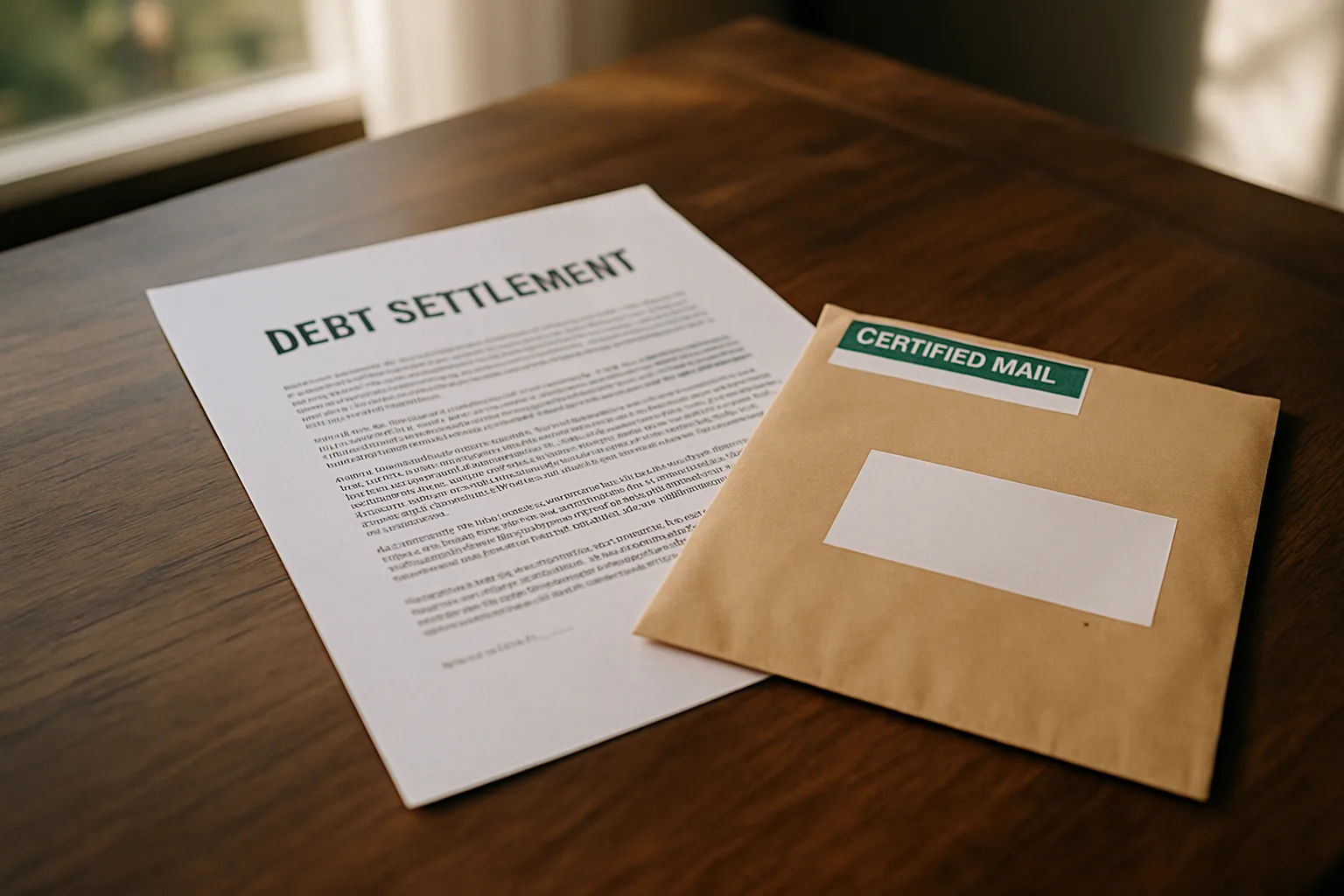
Debt settlement (also called debt negotiation or debt relief) is a process where you — or a company you hire — negotiate with creditors to accept less than the full amount owed. For example, you might owe $10,000 and settle for $5,000. The creditor forgives the rest.
Debt settlement is typically offered by for-profit companies. You stop making payments to creditors and instead deposit money into a dedicated savings account. Once you've saved enough, the company negotiates a lump-sum settlement.
This process can take 2–4 years.
Because you stop paying your bills, your credit score takes a big hit. Late payments, charge-offs, and collections will appear on your credit report. Settled debts are also marked as "settled for less than the full balance," which is still negative but better than a charge-off.
How Debt Settlement Works
- You stop making payments to creditors (this is required — you can't settle if you're current).
- You deposit money each month into a special escrow account.
- The settlement company negotiates with each creditor once you have enough saved.
- You pay the settlement company a fee — usually 15–25% of the enrolled debt.
- Forgiven debt over $600 may be taxable as income (IRS Form 1099-C).
Debt settlement is riskier than a DMP, but it can reduce your total debt by 40–60% (before fees).
When Debt Settlement Makes Sense
Consider debt settlement if you have a lump sum available, like a tax refund or inheritance. For instance, if you owe $30,000 and can save $15,000 over two years, settlement might work. You could settle for $15,000 and pay $4,500 in fees, totaling $19,500 — a savings of $10,500.
But the risk is real. Creditors may sue you for non-payment, especially if the debt is large. Some creditors, like certain credit unions, rarely settle.
You might end up with a judgment against you, leading to wage garnishment.
Also, the tax bill on forgiven debt can be a shock. If $10,000 is forgiven, you could owe $2,200 in taxes (at 22% bracket). Plan for that cost when calculating your savings.
Debt Management Plan vs Debt Settlement: Side-by-Side Comparison
| Factor | Debt Management Plan (DMP) | Debt Settlement |
|---|---|---|
| Debt repaid | 100% of principal | 40–60% of principal (before fees) |
| Credit impact | Moderate — late payments avoided; plan noted on credit report | Severe — missed payments, charge-offs, settlements on report |
| Time to completion | 3–5 years | 2–4 years |
| Fees | Low — monthly admin fee ($25–50), setup fee (~$50) | High — 15–25% of enrolled debt |
| Provider type | Nonprofit credit counseling agency | For-profit settlement company (or DIY) |
| Tax consequences | None | Forgiven debt over $600 may be taxable |
| Success rate | High (65–80% completion) | Moderate (40–60% completion) |
Credit Impact: Which Hurts More?

Debt settlement hurts your credit much more than a DMP. Here's why:
With a DMP, you never miss a payment. Your credit report shows that you're on a debt management plan, but your payment history stays clean. Your credit utilization goes down as you pay off balances.
Over time, your score can recover.
With debt settlement, you intentionally stop paying. That means 30-, 60-, 90-day late payments, then charge-offs, then collections. These negative marks stay on your credit report for seven years.
Your score can drop 100–200 points or more.
If you need to keep a decent credit score for a mortgage, car loan, or job, a DMP is the safer choice. If your credit is already damaged and you need a fresh start, settlement might be worth the hit.
How Long Does Each Affect Your Credit?
A DMP's impact is temporary. The note on your credit report disappears once you complete the plan, usually after 3–5 years. Your on-time payments during the plan can actually boost your score over time.
Debt settlement's impact lasts longer. Late payments and charge-offs stay for seven years from the first missed payment. Even after you settle, the "settled for less" notation remains for seven years.
Your score may not fully recover until that time passes.
For example, if you start settlement in 2025 and finish in 2028, the negative marks stay until 2032. That's a long time to rebuild. In contrast, a DMP completed in 2028 leaves a clean record by 2028 or 2029.
Cost Comparison: DMP vs Settlement
Let's compare costs using an illustrative example. Suppose you owe $20,000 in credit card debt at 22% APR.
Debt Management Plan
- Interest rate reduced to 8%
- Monthly payment: ~$400
- Total repaid: ~$20,000 + $2,000 in interest = $22,000
- Fees: ~$50 setup + $30/month × 48 months = $1,490
- Total cost: ~$23,490
Debt Settlement
- Settlement amount: 50% of principal = $10,000
- Settlement fee: 20% of enrolled debt ($20,000) = $4,000
- Possible tax on forgiven debt: ~$2,000 (assuming 22% bracket on $10,000)
- Total cost: ~$16,000
In this example, settlement saves about $7,490 — but at the cost of severe credit damage and risk of failure. Plus, you need to save a lump sum, which isn't always possible.
Hidden Costs to Watch For
DMPs have few hidden costs. The monthly fee is transparent, and setup fees are low. Some agencies waive fees if you can't afford them.
Always ask for a written fee schedule before enrolling.
Debt settlement has more hidden costs. Some companies charge a "maintenance fee" for the escrow account. Others charge per settlement, not per debt, so you might pay more if you have many small debts.
Always read the fine print.
Also, if a settlement company fails to settle a debt, you still owe the full amount. You might have paid fees for nothing. Check for a "money-back guarantee" or "no settlement, no fee" policy before signing.
Which Is Better for Your Credit Score?
If your credit score is a priority, a DMP wins hands down. You'll still have a note on your credit report, but your payment history stays positive. Many people see their scores improve within 12–18 months of starting a DMP.
Debt settlement trashes your score in the short term. But if you're already behind on payments, your score may already be low. In that case, settlement might not make things much worse — and you'll be debt-free sooner.
If you're current on payments but struggling, a DMP is almost always better for your credit.
Real-World Credit Score Examples
Let's look at two scenarios. Sarah has a 650 credit score and enrolls in a DMP. After one year of on-time payments, her score rises to 680.
After three years, she completes the plan and her score hits 720.
Tom has a 620 score and chooses settlement. He stops paying, and within six months his score drops to 520. After settling in two years, his score slowly climbs to 580.
He can't get a mortgage until the negative marks age off.
Sarah's path is clearly better for credit health. Tom's path only makes sense if he has no other option and needs immediate debt reduction.
Success Rates: Which Plan Actually Works?
Completion rates matter. A DMP has a higher completion rate because the payments are manageable and you're not relying on a lump sum. According to the National Foundation for Credit Counseling, about 65–80% of people who start a DMP complete it.
Debt settlement has a lower completion rate — around 40–60%. Many people drop out because they can't save enough, or creditors refuse to settle. Some settlement companies have been criticized for charging fees upfront without delivering results.
If you want a higher chance of success, a DMP is the safer bet.
Why DMPs Have Higher Success Rates
DMPs succeed because they're predictable. Your monthly payment is fixed, and you know exactly when you'll be debt-free. Creditors are more willing to cooperate because they get paid in full over time.
Debt settlement fails when people can't save enough. Life happens — a car repair or medical bill can drain your escrow account. If you can't save the lump sum, you can't settle.
Some people abandon the process after paying fees for years.
Also, creditors may refuse to settle if they think you can pay. If your income is too high, they'll push for full payment. Settlement works best when you're truly unable to pay, not just unwilling.
Debt Management vs Debt Consolidation: What's the Difference?
Many people confuse debt management plans with debt consolidation. They're not the same.
Debt consolidation means taking out a new loan (or balance transfer card) to pay off multiple debts. You then make one payment to the new lender. This can lower your interest rate if you qualify, but it requires good credit.
A debt management plan is not a loan. You don't borrow money. Instead, a credit counseling agency negotiates lower rates with your existing creditors.
You pay the agency, and they pay your creditors. No new debt is created.
If you have good credit, debt consolidation might be cheaper and faster. If your credit is fair or poor, a DMP is often the only way to get lower rates.
When to Choose Consolidation Over a DMP
Debt consolidation works if you have a credit score above 660 and can qualify for a low-interest personal loan. For example, a $15,000 loan at 10% APR with a three-year term costs about $484 per month. That's often less than credit card minimums.
But consolidation has risks. If you don't fix the spending habits, you might run up new credit card debt while paying off the loan. That doubles your debt load.
A DMP includes counseling to help you avoid that trap.
Also, consolidation loans often have origination fees (1–6% of the loan amount). Factor that into your cost comparison. A DMP's fees are usually lower and more transparent.
Credit Counseling vs Debt Settlement: Which Is More Ethical?
Nonprofit credit counseling agencies (like those offering DMPs) are required to provide education and counseling. They're regulated by state and federal laws. Their goal is to help you become debt-free without damaging your credit.
Debt settlement companies are for-profit. Some are reputable, but many charge high fees and make promises they can't keep. The Consumer Financial Protection Bureau (CFPB) has taken action against several settlement companies for deceptive practices.
If you're considering settlement, do your research. Check with the Better Business Bureau and your state attorney general. Avoid any company that charges fees before settling your debts — that's illegal in many states.
For most people, credit counseling is the more ethical and safer choice.
How to Spot a Bad Debt Settlement Company
Watch for red flags like guaranteed results. No company can guarantee a specific settlement percentage. If they promise to cut your debt by 60%, be skeptical.
Creditors have the final say.
Also, avoid companies that pressure you to stop paying creditors immediately. A reputable company will explain the risks first. If they rush you, walk away.
Legitimate companies give you time to think.
Finally, check for complaints with the CFPB or state regulators. A history of unresolved complaints is a warning sign. You can also ask for references from past clients.
Bankruptcy Versus Debt Settlement: When Is Settlement Better?
If you're considering bankruptcy, debt settlement might be a middle ground. Both damage your credit, but bankruptcy stays on your report for 7–10 years. Settlement stays for 7 years but looks slightly less severe to future lenders.
Bankruptcy is a legal process that wipes out most unsecured debts. It's expensive (court fees, attorney fees) and requires means testing. Debt settlement is informal — no court involved.
If you have a lump sum available (from a tax refund, inheritance, or savings), settlement might avoid bankruptcy. But if you have no way to pay anything, Chapter 7 bankruptcy might be the only option.
Talk to a bankruptcy attorney before deciding. Some people file bankruptcy after failing at settlement, which wastes time and money.
Comparing the Long-Term Impact
Bankruptcy has a more severe stigma. Some employers, landlords, and lenders view it as a last resort. Settlement is seen as a negotiated resolution, which can be less damaging in some contexts.
However, bankruptcy wipes out debt completely. Settlement leaves you paying a portion. If your debt is $50,000 and you can only save $10,000, bankruptcy might be the only realistic option.
Also, bankruptcy stops collections and lawsuits immediately. Settlement does not. If a creditor sues you during the settlement process, you may have to file bankruptcy anyway.
Plan accordingly.
How to Choose Between a DMP and Debt Settlement
Here's a simple decision framework:
Choose a DMP if:
- You have a steady income that covers your minimum payments (or close to it).
- You want to protect your credit score.
- You can commit to 3–5 years of payments.
- You want a structured plan with support.
Choose debt settlement if:
- You can't afford minimum payments and have no way to increase income.
- You have a lump sum available (or can save one).
- Your credit is already damaged, and you don't need it soon.
- You're willing to risk being sued by creditors (it happens).
Consider bankruptcy if:
- Your debt is overwhelming (more than half your annual income).
- You have no realistic way to pay anything.
- You're facing wage garnishment or lawsuits.
If you're unsure, start with a free session with a nonprofit credit counselor. They can help you see all your debt relief options clearly.
Step-by-Step Decision Process
- List all your debts, including balances, interest rates, and minimum payments.
- Calculate your monthly income and essential expenses (rent, food, utilities).
- See if you have any leftover money for debt payments. If yes, a DMP might work.
- If you have no leftover money, consider settlement or bankruptcy.
- Talk to a credit counselor for a professional assessment.
This process takes about an hour but can save you years of regret. Don't skip the math — emotions can cloud judgment.
Can You Do Both? Combining DMP and Settlement
Technically, you can't be on a DMP and do debt settlement at the same time for the same debts. But you might use a DMP for some debts (like credit cards) and settle others (like medical bills).
However, this gets complicated. Most credit counseling agencies require you to enroll all eligible debts. And settlement companies usually want you to stop paying all creditors.
If you have a mix of debts, talk to a professional. A fee-only financial planner or a credit counselor can help you create a custom plan.
Example of a Hybrid Approach
Suppose you have $10,000 in credit card debt and $5,000 in medical bills. You might enroll the credit cards in a DMP to protect your credit. For the medical bills, you could negotiate a payment plan directly with the hospital or settle for a lower amount.
Medical debt is often easier to settle because hospitals are nonprofit and may forgive balances. Credit card companies are less flexible. A hybrid approach lets you use the best tool for each debt type.
But be careful: mixing strategies can confuse your finances. Keep clear records of which debts are in which program. Miss a payment on one and you could undo the benefits of the other.
Common Myths About DMPs and Debt Settlement
Myth: DMPs are the same as debt consolidation.
False. A DMP is a repayment plan, not a loan. You don't borrow new money.
Myth: Debt settlement always saves you 50%.
Not always. Some creditors refuse to settle, or the settlement amount is higher. Fees and taxes eat into savings.
Myth: You can settle your own debts for free.
You can, but it's time-consuming and stressful. Creditors are often harder on individuals than on companies. Still, DIY settlement saves the 15–25% fee.
Myth: A DMP will ruin your credit.
It doesn't ruin it, but it does have a temporary impact. Many people see scores improve after a year of on-time payments.
Myth: Debt settlement companies are all scams.
Some are reputable, but many are not. Do your homework. Check for accreditation with the American Fair Credit Council (AFCC) or the International Association of Professional Debt Arbitrators (IAPDA).
Real Stories: DMP vs Settlement
Maria, 34, from Ohio: Maria had $18,000 in credit card debt at 24% APR. She could make minimum payments but was getting nowhere. She enrolled in a DMP through a nonprofit agency.
Her interest rates dropped to 9%, and she paid off the debt in 4 years. Her credit score went from 620 to 720.
James, 45, from Texas: James lost his job and fell behind on $25,000 in credit card debt. He couldn't afford a DMP. He hired a settlement company and stopped paying.
After 2.5 years, he settled for $12,000 (plus $5,000 in fees). His credit score dropped to 550, but he avoided bankruptcy.
Both outcomes are valid — but Maria's path was smoother and less damaging.
Another Story: The DIY Settler
Linda, 52, from Florida: Linda owed $8,000 on a single credit card. She called the creditor directly and offered $4,000 as a lump sum. The creditor accepted.
She paid no fees and avoided a settlement company. Her credit still took a hit, but she saved thousands.
Linda's story shows that DIY settlement works for small, single debts. For multiple debts, it's harder to manage. But if you have the time and patience, it's worth trying before paying a company.
Remember: creditors are more likely to settle if you're already delinquent. If you're current, they have little incentive to negotiate.
Final Verdict: Which Should You Choose?
For most people, a debt management plan is the better choice. It's safer, cheaper in the long run, and less damaging to your credit. You pay back what you owe, but at a manageable pace.
Debt settlement is a last resort. Use it only if you can't afford a DMP, you have a lump sum, and you're prepared for the credit hit. And if you do go that route, work with a reputable company — or better yet, negotiate yourself.
If you're unsure, start with a free credit counseling session. They'll help you compare debt settlement and DMPs for your specific numbers. No obligation, no judgment — just a clear path forward.
Key takeaways
- A DMP lets you repay 100% of your debt at lower interest rates, with less credit damage.
- Debt settlement forgives part of your debt but severely hurts your credit and carries higher risk.
- Choose a DMP if you can afford payments and want to protect your credit.
- Choose settlement only if you can't afford minimum payments and have a lump sum available.
- Always start with a free consultation from a nonprofit credit counseling agency.
- For more information, see the CFPB's guide on debt management plans.
Frequently asked questions
Can I switch from a debt management plan to debt settlement?
Will a debt management plan or debt settlement affect my taxes?
How long does each option stay on my credit report?
Which option is better if I have a mortgage or car loan?
Can I negotiate debt settlement on my own without a company?
This article is for general informational purposes only and does not constitute financial, legal or credit-repair advice. Always consult a qualified financial advisor or credit counselor about your specific circumstances.

Written & reviewed by
Can OTUEditor
Can OTU is the editor of this site, curating and reviewing every guide for accuracy and clarity.
View all guides →