Is Debt Consolidation Better Than Bankruptcy?

This article compares both options side by side: how they work, what they cost, how they impact your credit, and who each one is best for. By the end, you'll know which path fits your situation. Remember, this is general information, not financial advice — consider talking to a bankruptcy attorney or credit counselor for your specific case.
We'll cover everything from debt relief options to the nitty-gritty of credit scores, so you can make an informed choice.
What Is Debt Consolidation?
Debt consolidation means combining multiple debts into a single loan or payment plan. You take out a new loan — often at a lower interest rate — and use it to pay off your credit cards, medical bills, or other unsecured debts. Then you make one monthly payment to the new lender.
Common ways to consolidate include balance transfer credit cards, personal loans, and home equity loans. The goal is to simplify payments and save on interest. But it only works if you stop using credit cards and stick to the repayment plan.
Debt consolidation doesn't reduce what you owe — it just reorganizes it. You still pay back the full principal plus interest, though at a lower rate.
How Debt Consolidation Works in Practice
Imagine you have three credit cards with balances of $5,000, $4,000, and $3,000. Each card charges 22% APR. Your total debt is $12,000, and minimum payments eat up $400 monthly.
You apply for a personal loan of $12,000 at 10% APR over three years. Your new monthly payment is about $387. You use the loan to pay off all three cards immediately.
Now you owe one lender instead of three. Over three years, you save roughly $2,400 in interest compared to keeping the cards. That's real money back in your pocket.
Types of Debt Consolidation Loans
Not all consolidation tools are the same. Here are the most common options:
- Personal loans: Unsecured loans from banks, credit unions, or online lenders. Fixed rates and terms from 1–7 years.
- Balance transfer credit cards: Transfer existing card balances to a new card with a 0% intro APR for 12–21 months.
A 3–5% transfer fee applies.
- Home equity loans or HELOCs: Secured by your home. Lower rates but risk foreclosure if you default.
- 401(k) loans: Borrow from your retirement account. No credit check, but you miss market gains and may face taxes if you leave your job.
Each option has trade-offs.
Personal loans are the most common because they're straightforward and don't require collateral.
What Is Bankruptcy?
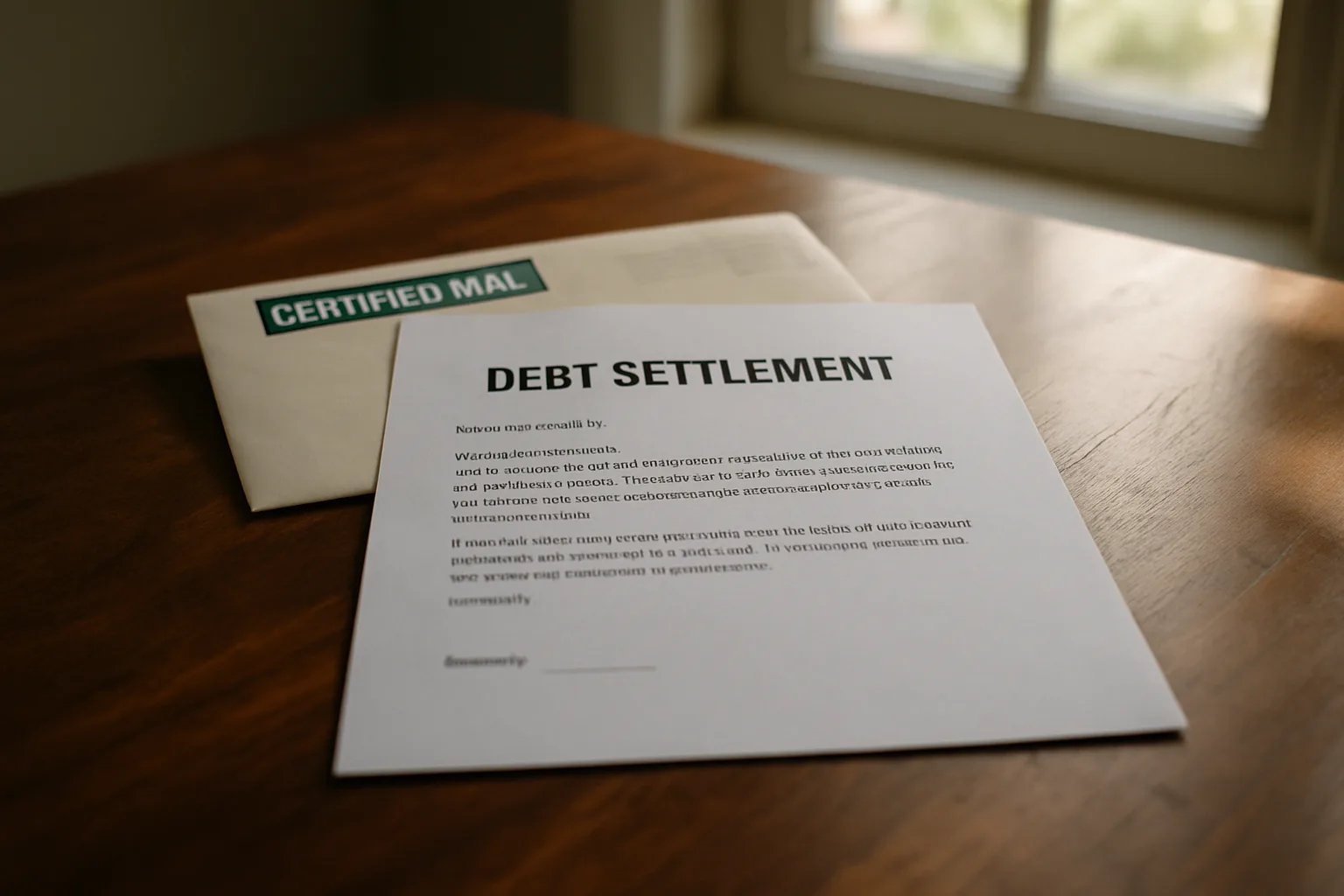
Bankruptcy is a legal process that wipes out most unsecured debts (like credit cards, medical bills, and personal loans). It's designed for people who can't repay what they owe. There are two main types for individuals: Chapter 7 and Chapter 13.
Chapter 7 liquidates non-exempt assets to pay creditors, and remaining debts are discharged. It takes about 4–6 months. Chapter 13 sets up a 3–5 year repayment plan based on your income; any remaining balance is discharged at the end.
Bankruptcy stops collection calls, wage garnishments, and lawsuits immediately due to an automatic stay. But it stays on your credit report for 7 years (Chapter 13) or 10 years (Chapter 7).
Chapter 7 Bankruptcy: The Fresh Start
Chapter 7 is often called "liquidation" bankruptcy. A court-appointed trustee sells your non-exempt assets — things like a second car, valuable jewelry, or investment property — to pay creditors. Exempt assets like your primary home, basic car, and household goods are protected up to state limits.
For example, if you have $50,000 in credit card debt and $5,000 in a savings account, the trustee may take the savings to pay creditors. But your $200,000 home with a $180,000 mortgage might be exempt. The entire process usually wraps up in four to six months.
After discharge, you owe nothing on those credit cards. But your credit score drops by 150–200 points overnight. You cannot file Chapter 7 again for eight years.
Chapter 13 Bankruptcy: The Repayment Plan
Chapter 13 is for people with regular income who can pay back some debts over time. You propose a three-to-five-year plan to repay a portion of what you owe. The court approves the plan, and you make monthly payments to a trustee who distributes the money to creditors.
For instance, if you earn $60,000 per year and owe $40,000 in unsecured debt, your plan might require $500 monthly for five years. After that, remaining balances are discharged. Chapter 13 can stop foreclosure and allow you to catch up on missed mortgage payments.
Chapter 13 stays on your credit report for seven years. It's less damaging than Chapter 7 but still a major hit. You must complete the entire plan to get the discharge.
How Do They Compare Side by Side?
Let's put them in a table so you can see the differences at a glance.
| Factor | Debt Consolidation | Bankruptcy |
|---|---|---|
| Credit impact | Minor dip from hard inquiry; improves over time with on-time payments | Severe drop (100–200+ points); stays 7–10 years |
| Debt reduction | No reduction — you pay full amount | Most unsecured debts discharged |
| Time to complete | 2–5 years (loan term) | 4–6 months (Ch 7) or 3–5 years (Ch 13) |
| Cost | Interest + possible fees | Court filing fees ($300–$400) + attorney fees ($1,000–$3,000) |
| Public record | No | Yes — bankruptcy filings are public |
| Stops collections | No (you still owe) | Yes — automatic stay stops all collection |
| Risk | If you miss payments, credit suffers; could lose collateral if secured loan | Loss of non-exempt assets (Ch 7); credit ruined for years |
Which Option Is Better for Your Credit Score?

Debt consolidation is far better for your credit. When you consolidate, your credit score may dip slightly from the hard inquiry and new account, but as you make on-time payments, your score can recover and even improve. Over time, your credit utilization ratio drops, which boosts your score.
Bankruptcy, on the other hand, is a credit killer. Your score can drop 100–200 points or more. It stays on your credit report for 7–10 years, making it hard to get new credit, rent an apartment, or even get a job.
That said, many people do rebuild their credit after bankruptcy — it just takes years of disciplined payments.
How Bankruptcy Affects Your Credit Score Over Time
Immediately after bankruptcy, your score might fall from 680 to 480. That's a catastrophic drop. Lenders see you as high-risk for years.
But recovery is possible. After one year, with secured credit cards and on-time payments, you might reach 580. After three years, 620.
After seven years, you could be back to 680 or higher — assuming no new negative marks.
Debt consolidation, by contrast, might cause a 10–20 point drop from the hard inquiry. After six months of on-time payments, your score often rises above where it started. The difference in recovery speed is dramatic.
Cost Comparison: Which One Costs Less?
Debt consolidation typically costs less upfront. You pay interest on the loan (hopefully at a lower rate than your current debts) and maybe a balance transfer fee (3–5%). There are no court costs or attorney fees.
Bankruptcy costs vary. Filing fees are around $300–$400, and attorney fees range from $1,000 to $3,000 or more. If you can't afford that, you may qualify for a fee waiver or payment plan.
But the long-term cost to your credit can be higher in terms of higher interest rates and denied opportunities.
In most cases, consolidation is cheaper if you can qualify for a decent rate. But if your debts are so high you can't pay them even with a lower rate, bankruptcy might be the only affordable path.
Hidden Costs of Each Option
Debt consolidation has hidden costs too. If you use a balance transfer card and don't pay off the balance before the intro period ends, you'll owe deferred interest at the regular rate — often 20% or more. That can erase your savings.
Bankruptcy has hidden costs like mandatory credit counseling courses. You must complete two courses: one before filing and one before discharge. Each costs $25–$50.
Also, your attorney may charge extra for complex cases involving businesses or multiple properties.
Consider the opportunity cost of bankruptcy. You may be unable to buy a home for two to four years after filing. Renting may require a co-signer or higher deposit.
These costs add up quickly.
When Is Debt Consolidation the Better Choice?
Debt consolidation works best when:
- You have a steady income to make monthly payments.
- Your total debt is manageable (typically under $20,000–$30,000).
- You can qualify for a low-interest loan or balance transfer card.
- You're committed to not racking up new debt.
- Your credit score is decent (650+) — otherwise you may not get a good rate.
If you check these boxes, consolidation is likely your best bet. It keeps your credit intact and gives you a clear repayment timeline.
Real-World Example: When Consolidation Works
Meet Sarah. She has $18,000 in credit card debt across four cards with APRs from 19% to 26%. Her credit score is 680.
She earns $55,000 per year and pays $1,200 in rent.
Sarah qualifies for a personal loan at 11% APR over three years. Her monthly payment drops from $600 to $589 — not a huge change, but the interest savings total $2,800 over the loan term. She closes her credit cards and sticks to a budget.
After 18 months, Sarah's credit score rises to 720. She has paid off $9,000 of the loan. She avoids bankruptcy entirely.
Consolidation was the right move because she had income, decent credit, and manageable debt.
When Is Bankruptcy the Better Choice?
Bankruptcy makes sense when:
- Your total debt is overwhelming (e.g., $50,000+ with no way to pay).
- You're facing wage garnishment, lawsuits, or foreclosure.
- Your income is too low to cover basic living expenses plus debt payments.
- You've tried other options (like consolidation) and still can't keep up.
- You need a legal fresh start.
Bankruptcy is not a failure — it's a tool designed for people in dire straits. But it should be your last resort after exploring other options.
Real-World Example: When Bankruptcy Is Necessary
Consider James. He lost his job during a recession and racked up $65,000 in credit card debt. His only income now is $2,000 per month from part-time work.
His rent is $1,200, and his minimum debt payments are $1,100 — more than he earns after rent.
James cannot qualify for a consolidation loan because his credit score is 520. He has no savings. Creditors are calling daily, and one has filed a lawsuit.
He consults a bankruptcy attorney and files Chapter 7.
Within five months, James's debts are discharged. He keeps his car (worth $4,000, exempt in his state). He starts rebuilding with a secured credit card.
Bankruptcy was the only realistic path because his income couldn't cover even minimum payments.
Debt Settlement vs. Debt Consolidation: What's the Difference?
You may have heard about debt settlement as an alternative. Debt settlement involves negotiating with creditors to pay a lump sum less than what you owe. It's different from consolidation, which pays the full amount.
In a debt settlement vs debt consolidation comparison, settlement can reduce your balance but damages your credit (missed payments during negotiation). Consolidation preserves your credit but doesn't reduce principal. Which is better?
It depends: if you have a lump sum to settle, settlement might work; if you can handle full payments, consolidation wins.
Similarly, debt resolution vs debt consolidation — debt resolution is another term for settlement. The same trade-offs apply.
How Debt Settlement Works Step by Step
Debt settlement typically involves stopping payments to creditors for three to six months. You save money in a dedicated account. Then a settlement company negotiates with each creditor to accept a reduced lump sum — often 40% to 60% of the balance.
For example, if you owe $20,000, you might settle for $10,000. But you'll have multiple missed payments on your credit report, dropping your score by 100 points or more. The forgiven debt may also be taxed as income.
Settlement is riskier than consolidation because creditors can sue you during the negotiation period. It's best suited for people who have a lump sum but can't afford full repayment.
Debt Management Plan vs. Debt Consolidation: Which Is Better?
A debt management plan (DMP) is offered by nonprofit credit counseling agencies. They negotiate with creditors to lower interest rates and set up a single monthly payment. It's similar to consolidation but without a new loan.
In the debt management plan vs debt consolidation debate, DMPs often have lower fees and don't require good credit. But they take 3–5 years and you must close credit card accounts. Consolidation gives you more flexibility but requires decent credit.
For many, a DMP is a middle ground — less severe than bankruptcy but more structured than DIY consolidation.
Who Should Choose a Debt Management Plan?
DMPs work well for people with moderate debt who struggle with high interest rates. For instance, if you owe $15,000 on credit cards at 22% APR, a DMP might negotiate rates down to 8%–10%. Your monthly payment drops from $450 to $350.
You must close all credit card accounts, which hurts your credit utilization initially. But after two years of on-time payments, your score often recovers. DMPs are ideal if you have poor credit (below 650) and can't qualify for a consolidation loan.
Nonprofit agencies like the National Foundation for Credit Counseling (NFCC) offer free initial consultations. They can help you decide if a DMP fits your situation.
Bankruptcy Versus Debt Settlement: Which One Hurts Less?
Comparing bankruptcy versus debt settlement, both damage your credit, but in different ways. Bankruptcy stays on your report for 7–10 years and is public record. Debt settlement stays for 7 years from the settlement date, and the missed payments leading up to it also appear as late payments.
Bankruptcy stops all collection activity immediately. Debt settlement does not — creditors can still sue you until you settle. Bankruptcy also discharges more types of debt (including some tax debt and medical bills).
If you can afford to settle, it may be less damaging than bankruptcy. But if you can't, bankruptcy offers a clean slate.
Credit Score Impact Comparison
Let's compare the credit score impact of each option. Suppose you owe $30,000 and your starting score is 650.
- Debt consolidation: Score drops to 640 initially, then rises to 700 after two years of on-time payments.
- Debt settlement: Score drops to 550 during missed payments, then recovers to 600 after settlement. Stays on report for 7 years.
- Chapter 7 bankruptcy: Score drops to 450, recovers to 550 after one year, 620 after three years. Stays for 10 years.
- Chapter 13 bankruptcy: Score drops to 500, recovers to 580 after two years. Stays for 7 years.
Consolidation clearly wins for credit health. But if you can't qualify, settlement or bankruptcy may be your only options.
Is Bankruptcy Better Than Debt Settlement?
The question is bankruptcy better than debt settlement depends on your financial situation. Bankruptcy is better if you have no way to pay a lump sum and need legal protection from creditors. Debt settlement is better if you can scrape together a lump sum and want to avoid the public record and longer credit impact of bankruptcy.
Both are serious options. Talk to a bankruptcy attorney and a credit counselor before deciding.
When Bankruptcy Beats Settlement
Bankruptcy is superior when you have no lump sum. Settlement requires you to save money while not paying creditors — a risky proposition. If a creditor sues you during that time, you may face wage garnishment anyway.
Bankruptcy also discharges debts that settlement cannot reduce, like certain medical bills and personal loans. And the automatic stay stops all lawsuits immediately. If you're being sued by multiple creditors, bankruptcy provides instant relief.
For example, if you owe $80,000 and have $2,000 in savings, you cannot settle for $40,000. You don't have the money. Chapter 7 wipes the slate clean with no lump sum required.
Debt Consolidation or Debt Settlement: How to Choose?
When deciding debt consolidation or debt settlement, ask yourself:
- Can I afford to pay my debts in full over time? → Consolidation
- Do I have a lump sum to settle for less? → Settlement
- Is my credit score still decent? → Consolidation
- Am I already behind on payments? → Settlement or bankruptcy
There's no one-size-fits-all answer. Your specific numbers — income, expenses, total debt, and credit score — will guide you.
Decision Matrix for Debt Relief Options
Use this quick matrix to narrow your choices:
| Situation | Best Option | Second Option |
|---|---|---|
| Good credit (650+), steady income, debt under $30k | Debt consolidation | Debt management plan |
| Poor credit (below 650), steady income, debt under $30k | Debt management plan | Debt consolidation (if you can qualify) |
| Good credit, lump sum available, debt over $20k | Debt settlement | Debt consolidation |
| No income, debt over $50k, lawsuits pending | Chapter 7 bankruptcy | Chapter 13 bankruptcy |
| Steady income, debt over $50k, want to keep assets | Chapter 13 bankruptcy | Debt settlement |
This matrix simplifies a complex decision. Always verify with a professional before committing.
How to Decide: A Step-by-Step Guide
Here's a practical process to help you choose:
- List your debts. Write down each creditor, balance, interest rate, and minimum payment.
- Calculate your total monthly debt payments. Compare to your monthly income after taxes.
- Check your credit score. If it's 650+, consolidation is possible. If below, consider a DMP or settlement.
- Consider your income stability. Can you commit to 3–5 years of payments? If not, bankruptcy may be safer.
- Talk to a nonprofit credit counselor. They can help you run the numbers for free.
- Consult a bankruptcy attorney. Many offer free initial consultations.
This approach ensures you don't overlook any option.
Tools to Help You Decide
Use online calculators to compare scenarios. A debt consolidation calculator shows your monthly payment and total interest at different rates. A bankruptcy means test calculator determines if you qualify for Chapter 7 based on your income.
Your state's median income determines Chapter 7 eligibility. For example, if your state's median income for a single person is $55,000 and you earn $45,000, you likely qualify. If you earn $65,000, you may need Chapter 13.
Gather your pay stubs, tax returns, and debt statements before meeting with a counselor. The more data you have, the better their advice will be.
Common Myths About Debt Consolidation and Bankruptcy
Let's clear up a few misconceptions:
- Myth: Debt consolidation ruins your credit. Actually, it can improve it over time if you make payments on time.
- Myth: Bankruptcy is an easy way out. It's a difficult process with long-lasting consequences.
- Myth: You can't get credit after bankruptcy. You can, but expect higher rates and stricter terms.
- Myth: Debt consolidation is the same as debt settlement. No — consolidation pays in full; settlement pays less.
Knowing the facts helps you avoid costly mistakes.
More Myths Debunked
Myth: All debts are discharged in bankruptcy. Not true. Student loans, child support, alimony, and most tax debts survive bankruptcy. You still owe those after filing.
Myth: You lose everything in Chapter 7. Exemptions protect your primary home, car (up to a value limit), clothing, and household goods. Most filers keep their essential property.
Myth: Debt consolidation companies are scams. Many are legitimate, but some charge high fees. Always check with the Better Business Bureau and read reviews before signing up.
What About Debt Management vs. Debt Consolidation?
We touched on this earlier, but let's go deeper. A debt management plan vs debt consolidation comparison shows that DMPs are offered by nonprofit agencies and involve negotiating lower interest rates. You make one payment to the agency, which distributes it to creditors.
No new loan is taken out.
DMPs typically have lower fees (setup fee ~$50, monthly fee ~$25–$50) and don't require good credit. But you must close all credit card accounts, which can hurt your credit utilization. Consolidation loans leave your accounts open, but you need decent credit to qualify.
If your credit is poor, a DMP might be your best bet. If your credit is fair or good, consolidation gives you more control.
Comparing Costs Over Time
Let's compare a DMP versus a consolidation loan for $15,000 in debt. With a DMP, interest rates drop to 9%, and you pay $311 monthly for 60 months. Total cost: $18,660.
With a consolidation loan at 11% over 36 months, you pay $491 monthly. Total cost: $17,676. The loan costs less overall but requires higher monthly payments.
If you can afford the higher payment, the loan saves money. If you need lower monthly payments, the DMP wins. Your cash flow determines the better choice.
The Emotional Impact of Debt Relief Choices
Debt stress affects your mental health. Studies show that financial worry is a leading cause of anxiety and depression. Choosing the right path can reduce that burden significantly.
Debt consolidation offers a sense of control. You have a clear plan and timeline. Bankruptcy, while stressful, provides immediate relief from collection calls and lawsuits.
Many filers report feeling a weight lifted after the automatic stay kicks in.
Consider your emotional tolerance. If you can handle the discipline of a repayment plan, consolidation may be less traumatic. If you're at your breaking point, bankruptcy's fresh start might be worth the long-term credit damage.
Support Resources for Debt Stress
Nonprofit credit counselors offer free emotional support alongside financial advice. They can help you create a budget and connect you with mental health resources if needed.
Online forums like Reddit's r/personalfinance and r/Bankruptcy provide peer support. Hearing others' stories can normalize your experience and reduce shame.
Remember that debt is a financial problem, not a moral failing. Millions of Americans have faced similar choices and rebuilt their lives. You can too.
Long-Term Financial Planning After Debt Relief
After consolidation or bankruptcy, your financial habits must change. Without new behaviors, you risk repeating the cycle. Start by building an emergency fund of $1,000 to $2,000 to avoid using credit for unexpected expenses.
Create a zero-based budget where every dollar has a job. Track your spending for 30 days to identify leaks. Cut subscriptions, dining out, and non-essentials until your debt is under control.
Consider a secured credit card to rebuild credit after bankruptcy. Use it for small purchases and pay the balance in full each month. Within 12–18 months, you may qualify for an unsecured card.
Rebuilding Credit After Bankruptcy
Rebuilding credit requires patience. Start with a secured card that reports to all three bureaus. Deposit $200–$500 as collateral, and keep utilization below 30%.
After six months, apply for a credit-builder loan from a credit union. These loans hold your savings as collateral and report on-time payments. After two years, you may qualify for a car loan or mortgage.
Monitor your credit reports annually at AnnualCreditReport.com. Dispute any errors immediately. With consistent effort, your score can reach 700 within five years of bankruptcy.
Key Takeaways
Choosing between debt consolidation and bankruptcy is a big decision. Here's what to remember:
- Debt consolidation is best for people with steady income and manageable debt who want to protect their credit.
- Bankruptcy is a last resort for overwhelming debt that you can't repay, offering a fresh start at a high cost to your credit.
- Other options like debt settlement and debt management plans sit in between — consider them if consolidation doesn't work.
- Always consult a professional (credit counselor or bankruptcy attorney) before deciding.
- Your choice depends on your unique financial picture — there's no universal winner.
No matter where you are, there's a path forward. Take it one step at a time.
Frequently asked questions
Can I consolidate debt after filing for bankruptcy?
Will debt consolidation stop collection calls?
How much debt do I need to have to file for bankruptcy?
Can I keep my credit cards if I file for bankruptcy?
Is debt consolidation or debt settlement better for my credit?
This article is for general informational purposes only and does not constitute financial, legal or credit-repair advice. Always consult a qualified financial advisor or credit counselor about your specific circumstances.

Written & reviewed by
Can OTUEditor
Can OTU is the editor of this site, curating and reviewing every guide for accuracy and clarity.
View all guides →