Zero-Based Budgeting to Pay Off Debt Faster
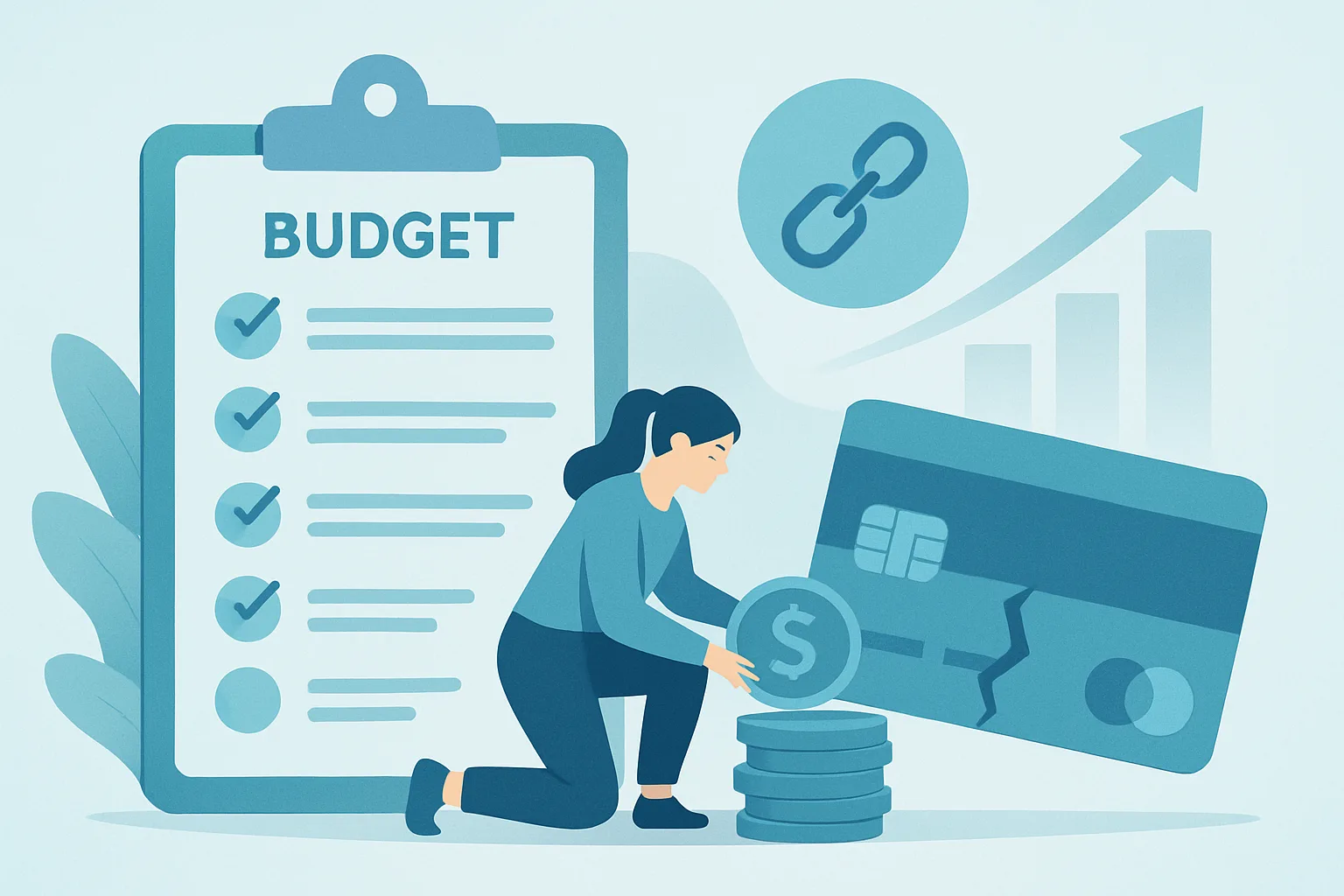
- Start by listing all monthly income and expenses.
- Allocate every dollar until you reach zero.
- Adjust each month as needed to stay on track.
If you're carrying credit card debt, you probably feel like you're spinning your wheels. You make payments, but the balance barely budges. That's because without a clear plan, extra money tends to disappear into everyday spending.
Zero-based budgeting changes that by giving every dollar a job—including a job that pays down your debt.
This method isn't about deprivation; it's about intention. When you know exactly where your money goes, you can make conscious choices that align with your goals. Many people find that zero-based budgeting helps them how to get out of debt faster than they ever thought possible.
In this guide, we'll walk you through the entire process, from setting up your first zero-based budget to staying motivated month after month. Whether you're wondering how to pay off my credit card debt faster or how to pay my credit card debt faster, this approach gives you a clear roadmap. Remember, this is general information, not financial advice—your situation is unique, and it's always wise to consult a professional.
What Is Zero-Based Budgeting?
Zero-based budgeting is a method where your total income minus your total expenses equals zero. That doesn't mean you spend every dollar; it means you assign every dollar a purpose—savings, debt payments, bills, groceries, and even fun money.
Unlike traditional budgeting, where you might look at last month's spending and adjust slightly, zero-based budgeting starts from scratch each month. You build your budget from zero, justifying every expense. This forces you to examine your spending habits and cut waste.
The core idea is simple: if you have $3,000 in income, you allocate that entire $3,000 to categories until you have $0 left. Every dollar has a name. This eliminates the "where did my money go?" feeling and puts you in control.
Think of it like a puzzle where each piece represents a dollar. You must place every piece into a category until the board is full. No piece can be left unassigned.
That clarity is what makes zero-based budgeting so effective for debt repayment.
Why Zero-Based Budgeting Helps You Pay Off Debt Faster
Debt repayment requires extra money beyond minimum payments. Zero-based budgeting helps you find that extra money by revealing hidden spending leaks.
When you track every dollar, you often discover you're spending $50 a month on coffee runs, $30 on unused subscriptions, or $100 on dining out. That's $180 you could redirect to your credit card. Over a year, that's over $2,000—enough to make a serious dent in your balance.
Additionally, zero-based budgeting forces you to prioritize. If debt freedom is your goal, you'll assign a large chunk of your income to debt payments before allocating money to wants. This intentionality accelerates your progress.
Many people who struggle with how to pay off my credit card debt faster find that zero-based budgeting is the missing piece. It turns vague intentions into concrete action.
For example, imagine you earn $4,000 monthly and currently pay $300 toward a credit card. With zero-based budgeting, you might find $400 in wasteful spending. You redirect that $400 to your card, making your monthly payment $700.
Your balance drops much faster than before.
The Psychology Behind the Method
Zero-based budgeting also changes your mindset about money. Instead of seeing leftover cash as "free money" to spend, you see it as a tool for your goals. This shift reduces impulse purchases and increases your savings rate.
When you assign every dollar a job, you become more mindful of each transaction. You ask yourself: "Does this purchase align with my budget?" That question alone can save you hundreds per month. Over time, these small decisions compound into significant debt reduction.
How to Create a Zero-Based Budget in 5 Steps
Step 1: List All Your Income Sources
Start with your after-tax income. Include your regular paycheck, side hustles, freelance work, child support, or any other money you expect to receive this month. Be realistic—don't count money you might not get.
Write down the total at the top of your budget. This is the amount you have to work with.
For example, if you earn $3,200 from your job and $300 from a side gig, your total income is $3,500. Use that number as your starting point. If your income varies, use the lowest amount you expect to receive.
Step 2: List All Your Expenses
Now list every single expense you anticipate for the month. Break them into fixed expenses (rent, car payment, insurance) and variable expenses (groceries, gas, entertainment, personal care). Don't forget annual or semi-annual expenses like car registration or holiday gifts—divide them by 12 and set aside money each month.
Be thorough. Missing an expense will throw off your budget. Look at past bank statements to catch everything.
Create categories such as housing, utilities, transportation, food, debt payments, savings, and discretionary spending. Under each category, list specific items. For instance, under food, list groceries ($400), dining out ($100), and coffee ($30).
This granularity helps you see exactly where your money goes.
Step 3: Subtract Expenses from Income to Reach Zero
Subtract your total expenses from your total income. The goal is to get to zero. If you have money left over, assign it to a category—debt payments, savings, or investing.
If you have a deficit, you need to cut expenses or increase income.
This step is where the magic happens. You might realize you're spending too much on dining out or subscriptions. Cut back until your budget balances.
For instance, if your income is $3,500 and your expenses total $3,200, you have $300 left. Assign that $300 to your credit card payment. Now your income minus expenses equals zero.
Every dollar has a job.
Step 4: Track Every Dollar Throughout the Month
Your budget is a plan, but you need to track actual spending to stay on course. Use a budgeting app, a spreadsheet, or even pen and paper. Check in weekly to see if you're overspending in any category.
If you overspend in one category, you must reduce spending in another to stay within your total. This discipline is key to making zero-based budgeting work.
For example, if you budgeted $100 for dining out but spent $150, you need to cut $50 from another category, like entertainment. This keeps your overall budget balanced and your debt payments on track.
Step 5: Adjust Each Month
No budget is perfect. At the end of the month, review what worked and what didn't. Adjust your categories for next month.
Maybe you underestimated groceries or overestimated entertainment. Tweak as needed.
Life changes, so your budget should too. The flexibility of zero-based budgeting allows you to adapt while staying in control.
If you find that your utility bills are consistently higher than expected, increase that category and reduce another. The goal is to create a budget that reflects your real life, not an ideal version of it.
How to Allocate Money for Debt Payments in Your Budget
When you create your zero-based budget, debt payments should be a non-negotiable category. Start with minimum payments for all debts to avoid late fees and credit damage. Then, put any extra money toward your highest-interest debt (the avalanche method) or the smallest balance (the snowball method).
For example, if you have $200 extra after covering essentials, assign that $200 to your credit card with the highest APR. Over time, this targeted approach saves you money on interest and speeds up payoff.
If you're wondering how to pay my credit card debt faster, this is the most direct way: make debt a priority category in your budget, not an afterthought.
Consider this scenario: You have three debts—a credit card with $5,000 at 22% APR, a personal loan with $3,000 at 10% APR, and a student loan with $10,000 at 5% APR. Your minimum payments total $250. You find $300 extra in your budget.
With the avalanche method, you put all $300 toward the credit card. With the snowball method, you put it toward the personal loan. Both strategies work; choose the one that motivates you most.
Creating a Debt Payoff Category
In your zero-based budget, create a specific category called "Debt Payoff" or "Credit Card Payments." List the amount you plan to pay each month. This makes debt repayment visible and intentional.
If you have multiple debts, break the category into subcategories. For instance, "Credit Card A Minimum" ($100), "Credit Card A Extra" ($200), "Student Loan Minimum" ($150). This level of detail helps you track progress on each debt.
Remember to include any debt-related fees or interest in your budget. If you have a balance transfer fee or annual fee, account for it. This ensures your budget is accurate and complete.
Zero-Based Budgeting vs. Other Budgeting Methods
| Method | How It Works | Best For |
|---|---|---|
| Zero-Based Budget | Assign every dollar a job until income minus expenses = $0 | People who want full control and detailed tracking |
| 50/30/20 Budget | 50% needs, 30% wants, 20% savings/debt | Beginners who want a simple guideline |
| Envelope System | Cash in envelopes for each category; when envelope is empty, stop spending | People who overspend with cards |
| Pay Yourself First | Automate savings/debt payments first, then spend the rest | People who struggle to save |
Zero-based budgeting is more hands-on than other methods, but it's also more effective for finding hidden money to put toward debt. If you've tried other approaches and still feel stuck, this might be the solution.
The 50/30/20 budget is great for simplicity, but it doesn't force you to examine every expense. Zero-based budgeting does. The envelope system works well for discretionary spending, but it doesn't handle fixed expenses as effectively.
Zero-based budgeting covers all categories.
Pay Yourself First is excellent for building savings, but it may not help you find extra money for debt. Zero-based budgeting reveals every potential dollar you can redirect. For debt repayment, that thoroughness is invaluable.
Common Mistakes to Avoid with Zero-Based Budgeting
Not Including Irregular Expenses
Many people forget about annual insurance premiums, car repairs, or holiday gifts. When those expenses pop up, they blow the budget. Plan for them by dividing the annual cost by 12 and setting that money aside each month.
For example, if your car insurance is $1,200 per year, set aside $100 per month. Create a category called "Annual Expenses" or "Sinking Funds." This prevents surprises and keeps your budget balanced.
Being Too Restrictive
If you cut all fun spending, you'll likely burn out and abandon the budget. Include a small amount for entertainment, dining out, or hobbies. A sustainable budget is one you can stick with long-term.
Allocate at least $50–$100 per month for discretionary spending. This could be for a movie, a coffee with friends, or a new book. When you allow yourself some flexibility, you're more likely to stay committed.
Not Tracking Daily Spending
Creating a budget is only half the battle. You must track your spending to ensure you're following it. Without tracking, you'll drift off course.
Set aside 10 minutes each evening to log your transactions. Or use an app that syncs with your bank accounts. Consistency is key.
If you skip tracking for a week, you might overspend without realizing it.
Giving Up After a Bad Month
Everyone has months where things go sideways. A car repair or medical bill can throw off your plan. Don't quit—just adjust and keep going.
Consistency over time is what matters.
If you have an unexpected expense, reduce your debt payment for that month and cover the emergency. Then, next month, return to your original plan. One bad month doesn't derail your entire journey.
Forgetting to Budget for Savings
While debt repayment is urgent, savings are also important. Without an emergency fund, you might rely on credit cards again. Include a small savings category in your budget, even if it's just $20 per month.
Build a starter emergency fund of $1,000 before aggressively paying off debt. This buffer protects you from falling back into debt when unexpected costs arise. Once you're debt-free, you can increase your savings rate.
How to Stay Motivated When Paying Off Debt
Debt repayment is a marathon, not a sprint. Here are ways to keep your motivation high:
- Celebrate small wins: Paid off a credit card? Treat yourself to a small reward (within budget).
- Track your progress visually: Use a debt payoff chart or app that shows your balance dropping.
- Find an accountability partner: Share your goals with a friend or join an online community.
- Remind yourself why: Write down your reasons for becoming debt-free—peace of mind, financial freedom, ability to save for the future.
If you're feeling overwhelmed, remember that many people have been where you are. Check out our guide on how to pay off debt fast with low income for more strategies tailored to tight budgets.
Consider creating a vision board with images of your goals. For example, a picture of a house you want to buy or a vacation you dream of. Place it where you see it daily.
This visual reminder keeps you focused during tough months.
Using Milestones to Stay Engaged
Break your debt into smaller milestones. For instance, if you owe $10,000, celebrate when you reach $9,000, then $8,000, and so on. Each milestone gives you a sense of accomplishment.
Reward yourself with non-financial treats. Take a walk in the park, watch a favorite movie, or spend time with loved ones. These rewards reinforce positive behavior without costing money.
Tools and Apps to Help You Zero-Based Budget
You don't have to do this with pen and paper. Several apps make zero-based budgeting easier:
- You Need a Budget (YNAB): Built specifically for zero-based budgeting. It syncs with your bank and helps you assign every dollar.
- EveryDollar: Created by Dave Ramsey, this app follows the zero-based method. Free version available.
- Goodbudget: Uses the envelope system digitally, which aligns with zero-based principles.
- Spreadsheets: Google Sheets or Excel templates are free and customizable.
Choose a tool that fits your style. The best budget tool is the one you'll actually use.
If you prefer a manual approach, use a notebook or a printable budget worksheet. Many free templates are available online. The key is to find a system that you can maintain consistently.
How to Choose the Right Tool
Consider your tech comfort level. If you're comfortable with apps, YNAB or EveryDollar are excellent choices. If you prefer simplicity, a spreadsheet might be better.
Test a few options for a month. Most apps offer free trials. See which one feels intuitive and helps you stick to your budget.
Remember, the tool is just a means to an end—your goal is debt freedom.
Real-Life Example: How Zero-Based Budgeting Paid Off $10,000 in Credit Card Debt
Consider Sarah, a teacher earning $3,500 per month after taxes. She had $10,000 in credit card debt at 18% APR. After listing her expenses, she realized she was spending $400 a month on takeout and coffee.
By cutting that to $150 and redirecting $250 to her credit card, she accelerated her payments.
She also found an unused gym membership ($50/month) and a streaming service she rarely watched ($15/month). She canceled both and added $65 to her debt payment. Combined with the minimum payment of $200, she was now paying $515 per month toward her card.
At that rate, she'd be debt-free in about 22 months instead of years. This is the power of zero-based budgeting—it uncovers money you didn't know you had.
Sarah also used the snowball method. She paid off her smallest debt first, which gave her a psychological win. That motivated her to keep going.
Within six months, she had paid off one card entirely, boosting her confidence.
Another Example: Mark's Journey
Mark, a graphic designer, earned $4,200 monthly. He had $8,000 in credit card debt and $5,000 in a personal loan. Using zero-based budgeting, he found $350 in unnecessary subscriptions and dining out.
He redirected that money to his highest-interest card.
He also started a side hustle that brought in an extra $400 per month. He assigned all of that to his debt. Within 18 months, Mark was debt-free.
He now uses zero-based budgeting to save for a down payment on a house.
These examples show that zero-based budgeting works for different income levels and debt amounts. The key is consistency and a willingness to examine your spending.
When Zero-Based Budgeting Might Not Be Enough
Zero-based budgeting is a powerful tool, but it's not a cure-all. If your debt is overwhelming—say, more than half your annual income—or if you're facing wage garnishment or lawsuits, you may need additional help.
In extreme cases, debt relief options like debt settlement, credit counseling, or even bankruptcy might be worth exploring. For example, understanding chapter 7 vs chapter 13 bankruptcy can help you make an informed decision if your situation is dire.
Zero-based budgeting works best when you have enough income to cover essentials and still have something left to pay down debt. If you're in a deep financial hole, consider speaking with a nonprofit credit counselor.
Signs that you might need professional help include: you can't make minimum payments, you're using credit cards for everyday expenses, or you're receiving collection calls. A credit counselor can help you explore options like debt management plans.
Combining Zero-Based Budgeting with Other Strategies
Even if you need additional help, zero-based budgeting can still be part of your plan. Use it to manage your income and expenses while you work with a counselor or explore debt settlement.
For instance, if you enter a debt management plan, your counselor will negotiate lower interest rates. Your zero-based budget can help you make the required monthly payments. This combination can be very effective.
Remember, zero-based budgeting is a tool, not a magic solution. It requires effort and discipline. But for many people, it's the first step toward financial freedom.
Frequently Asked Questions About Zero-Based Budgeting and Debt
How do I handle variable income with zero-based budgeting?
If your income fluctuates, base your budget on your lowest expected monthly income. Any extra money you earn above that can be assigned to debt or savings. This conservative approach prevents overspending.
For example, if you're a freelancer who earns between $3,000 and $5,000 per month, budget using $3,000. When you earn more, allocate the surplus to debt. This way, you're never caught short.
What if I have an emergency while on a zero-based budget?
Build an emergency fund category into your budget. Start with $1,000 if you're paying off debt, then work up to 3-6 months of expenses. When an emergency arises, use that fund instead of credit cards.
If you don't have an emergency fund yet, create a "Miscellaneous" category with a small buffer. This can cover minor emergencies without derailing your budget. For major emergencies, consider pausing your debt payments temporarily.
Can I use zero-based budgeting if I'm married?
Absolutely. Couples should sit down together each month to create the budget. This ensures both partners are on the same page and can prevent conflict over money.
Schedule a monthly "budget date" where you review income, expenses, and goals. Use this time to discuss any adjustments. When both partners are involved, the budget is more likely to succeed.
How long does it take to see results with zero-based budgeting?
Many people see a difference in their first month—they have more money left over to put toward debt. Significant debt reduction takes time, but the momentum builds quickly.
For example, if you find $200 extra per month, you'll pay off $2,400 in one year. Combined with interest savings, the impact is substantial. Stay consistent, and you'll see your balance drop month after month.
Do I need to budget for fun?
Yes! Including a small amount for fun makes your budget sustainable. Without it, you're more likely to give up.
Budgeting isn't about deprivation; it's about intentional spending.
Allocate at least 5-10% of your income to discretionary spending. This could be for hobbies, dining out, or entertainment. When you allow yourself some enjoyment, you're more likely to stick with your budget long-term.
For more information on budgeting and debt, the Consumer Financial Protection Bureau offers free resources at consumerfinance.gov.
Key takeaways
- Zero-based budgeting gives every dollar a purpose, helping you find extra money to pay off debt faster.
- Start by listing all income and expenses, then adjust until your budget equals zero.
- Prioritize debt payments in your budget and track spending to stay on course.
- Avoid common mistakes like forgetting irregular expenses or being too restrictive.
- Use tools like YNAB or EveryDollar to simplify the process.
- If debt is overwhelming, consider professional help or explore debt relief options.
Frequently asked questions
How do I handle variable income with zero-based budgeting?
What if I have an emergency while on a zero-based budget?
Can I use zero-based budgeting if I'm married?
How long does it take to see results with zero-based budgeting?
Do I need to budget for fun?
This article is for general informational purposes only and does not constitute financial, legal or credit-repair advice. Always consult a qualified financial advisor or credit counselor about your specific circumstances.

Written & reviewed by
Can OTUEditor
Can OTU is the editor of this site, curating and reviewing every guide for accuracy and clarity.
View all guides →