Chapter 7 vs Chapter 13 Bankruptcy: Which Is Right for You?
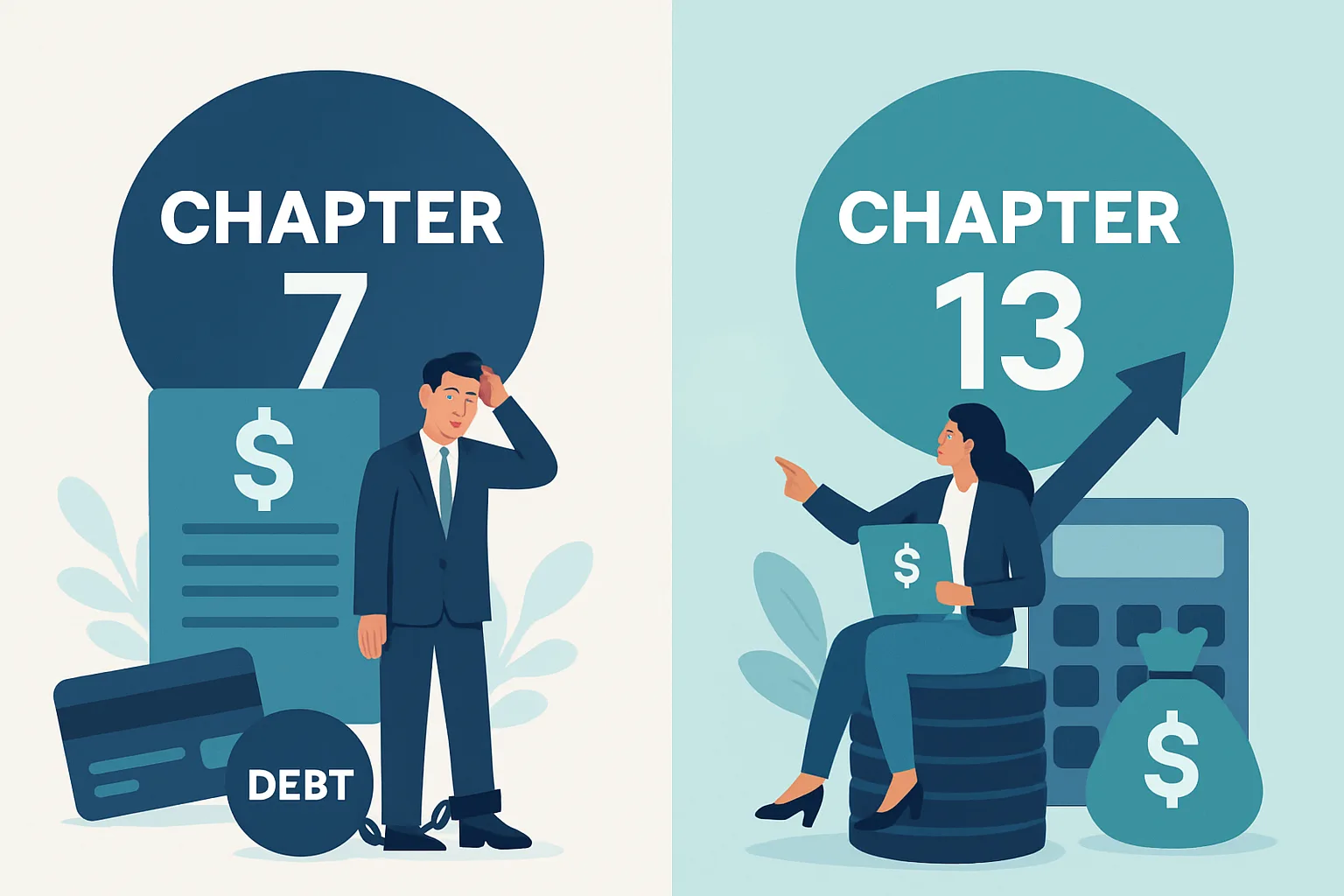
Understanding the Means Test for Chapter 7
If your income is above the median, you must calculate your disposable income. This involves subtracting allowed living expenses — such as housing, food, transportation, and taxes — from your monthly earnings. If your disposable income is low enough, you may still qualify for Chapter 7.
The means test is designed to prevent abuse of the system. It ensures that people who can afford to pay some of their debts do so through Chapter 13 instead. A bankruptcy attorney can help you navigate this complex calculation and determine your eligibility.
How the Means Test Calculation Works in Practice
Let's look at a concrete example to clarify the means test. Suppose you live in Texas and your average monthly income over the last six months is $5,500. The median income for a single-person household in Texas is approximately $5,200 per month.
Since your income is above the median, you must move to the second part of the test. You subtract IRS-standard living expenses, such as $1,200 for housing and utilities, $600 for food, and $400 for transportation. If your disposable income after these deductions is less than $150 per month, you likely pass the means test.
If your disposable income is higher, the test may presume you have enough to repay creditors. In that case, Chapter 13 becomes the more appropriate option. The means test uses standardized expense amounts, not your actual spending, which can be confusing without professional guidance.
Common Mistakes When Completing the Means Test
One common mistake is failing to include all allowable deductions. For example, you can deduct medical expenses that exceed a certain threshold, or expenses for elderly dependents. Missing these deductions could make you appear to have more disposable income than you actually do.
Another mistake is using incorrect income figures. The means test looks at the last six months of income, not your current income. If you recently lost a job, your past income might be higher, making the test harder to pass.
An attorney can help you adjust for changes in circumstances.
Finally, some filers forget to account for special circumstances like high childcare costs. The court may allow adjustments for such expenses if you can provide documentation. Always double-check your calculations or have a professional review them before filing.
Property Exemptions in Chapter 7
When you file Chapter 7, the trustee can sell your non-exempt assets to pay creditors. However, each state has exemption laws that protect certain property up to a specific value. Common exemptions include your primary residence (homestead exemption), a vehicle, household goods, clothing, and retirement accounts.
For example, if your state offers a $50,000 homestead exemption and your home equity is $40,000, you can keep your house. But if your equity is $70,000, the trustee may sell the home, give you $50,000, and use the remaining $20,000 to pay creditors. Understanding your state's exemptions is crucial before filing Chapter 7.
You can choose between federal and state exemption systems in some states. Federal exemptions offer different protections, such as up to $25,150 for a vehicle (as of 2025) and up to $13,400 for personal property. Your attorney can advise which set benefits you most based on your assets.
Detailed Examples of Exemption Protections
Consider a filer in Florida who owns a home worth $300,000 with a mortgage of $200,000. Their equity is $100,000, and Florida offers an unlimited homestead exemption. They can keep the entire home, regardless of its value, as long as it is their primary residence.
Now imagine a filer in New York with a car worth $15,000 and a loan balance of $5,000. Their equity is $10,000, and New York's vehicle exemption is $4,000. The trustee could sell the car, pay the loan, give the filer $4,000, and distribute the remaining $1,000 to creditors.
Retirement accounts like 401(k)s and IRAs are generally fully exempt under federal law. This means you can keep your retirement savings even in Chapter 7. However, state exemptions may have limits on certain accounts, so check your local laws.
How to Maximize Your Exemptions
You can maximize exemptions by using the "wildcard" exemption available in some states. This allows you to protect any property of your choice up to a certain value. For example, if your state offers a $1,000 wildcard, you can apply it to cash or other assets not covered by other exemptions.
Another strategy is to convert non-exempt assets into exempt ones before filing. For instance, you might use cash to pay down your mortgage or make contributions to a retirement account. However, this must be done carefully to avoid accusations of fraud.
Always consult an attorney before taking any action to protect assets. The timing of such conversions matters, as the court may look back at recent transactions. A professional can help you plan legally and ethically.
The Role of the Trustee in Chapter 13
In Chapter 13, a trustee oversees your repayment plan. You make monthly payments to the trustee, who then distributes the funds to your creditors according to the court-approved plan. The trustee also ensures you comply with the plan terms and makes recommendations to the court if issues arise.
The trustee's fee is typically a small percentage of each payment you make — usually around 5–10%. This fee is included in your plan payments, so you don't pay it separately. The trustee's role is to protect both you and your creditors by ensuring fair treatment.
You will have a meeting of creditors, called a 341 meeting, where the trustee asks you questions under oath. This meeting usually lasts 15–30 minutes and is a routine part of the process. Being prepared with your financial documents helps the meeting go smoothly.
What Happens at the 341 Meeting
At the 341 meeting, the trustee will verify your identity and review your bankruptcy petition. They may ask about your income, expenses, and the debts you listed. Creditors rarely attend, but they have the right to ask questions if they choose.
For example, the trustee might ask why your car payment is higher than the average in your area. You should have documentation ready, such as a loan agreement or repair receipts, to explain unusual expenses. Honest and clear answers help the process proceed without delays.
If the trustee finds discrepancies, they may request additional documents or postpone the meeting. In rare cases, they may recommend dismissal of your case if you fail to cooperate. Always arrive on time and bring the required paperwork, including tax returns and pay stubs.
How the Trustee Monitors Your Plan
After your plan is confirmed, the trustee monitors your monthly payments. If you miss a payment, the trustee will contact you to find out why. They may propose a modification to the plan if your income changes.
For instance, if you lose your job, the trustee might allow a temporary reduction in payments. However, you must provide proof of your new financial situation. The court must approve any changes to the plan.
If you consistently fail to make payments, the trustee can ask the court to dismiss your case. This would end the automatic stay, and creditors could resume collection actions. Staying in close communication with the trustee is essential for success.
How Chapter 13 Can Stop Foreclosure
One of the most powerful benefits of Chapter 13 is its ability to stop a foreclosure sale. When you file, an automatic stay immediately halts all collection actions, including foreclosure proceedings. This gives you time to propose a plan to catch up on missed mortgage payments over 3–5 years.
For example, if you are three months behind on your mortgage, you can include those missed payments in your Chapter 13 plan. You continue making your regular monthly mortgage payments plus an additional amount each month to cover the arrears. By the end of the plan, you are fully current on your mortgage.
This option is only available if you have a regular income to make the plan payments. You must also keep up with ongoing mortgage payments during the plan. If you fall behind again, the court may dismiss your case, and the foreclosure can resume.
How to Calculate Your Catch-Up Payment
To determine your catch-up payment, add up all missed mortgage payments and any fees. For instance, if you missed four payments of $1,200 each, plus $500 in late fees, your total arrears are $5,300. Over a 60-month plan, you would pay an extra $88 per month toward the arrears.
You must also continue making your regular mortgage payment of $1,200 each month. So your total monthly payment to the trustee would be $1,288 for the mortgage portion. This ensures you stay current while gradually paying off the past due amount.
If you have a second mortgage or home equity loan, those may also be included. The trustee will distribute payments to all secured creditors according to the plan. Your attorney can help you structure the plan to fit your budget.
What Happens If You Can't Keep Up
If you lose your job or face a medical emergency, you may struggle to make plan payments. You can ask the court to modify the plan, such as extending the repayment period. However, you must act quickly before the trustee files a motion to dismiss.
For example, if your income drops by 30%, you might propose a plan that pays only priority debts first. Unsecured creditors would receive less, but your home would still be protected. The court will consider your request based on good faith and changed circumstances.
If the court dismisses your case, the automatic stay ends immediately. The lender can then restart foreclosure proceedings, and you may lose your home. To avoid this, seek legal advice as soon as financial trouble arises during the plan.
Debt Limits for Chapter 13
To qualify for Chapter 13, your debts must fall within certain limits set by federal law. As of 2025, unsecured debts must be less than $465,275, and secured debts must be less than $1,395,875. These amounts are adjusted periodically for inflation.
If your debts exceed these limits, you cannot file Chapter 13.
Secured debts include mortgages, car loans, and other debts backed by collateral. Unsecured debts include credit cards, medical bills, and personal loans. The limits apply separately, so you could have $400,000 in unsecured debt and $1.3 million in secured debt and still qualify.
If your debts exceed the limits, Chapter 7 may still be an option if you pass the means test. Alternatively, you might consider Chapter 11 bankruptcy, which is typically used by businesses but available for individuals with high debt levels. However, Chapter 11 is more complex and expensive.
How to Calculate Your Debt for Eligibility
To determine if you qualify, list all your debts and categorize them as secured or unsecured. Include mortgages, car loans, and any other debts with collateral as secured. Credit cards, medical bills, personal loans, and utility bills are unsecured.
For example, if you have a $300,000 mortgage, a $20,000 car loan, and $50,000 in credit card debt, your secured debt is $320,000 and unsecured is $50,000. Both are well below the limits, so you qualify for Chapter 13. But if your mortgage is $1.5 million, you exceed the secured debt limit.
Note that certain debts, like student loans, are generally treated as unsecured but are rarely dischargeable. They still count toward the unsecured debt limit for eligibility purposes. Always double-check your totals with an attorney to avoid errors.
What to Do If You Exceed the Limits
If your debts exceed the Chapter 13 limits, you have a few options. First, check if Chapter 7 is feasible by taking the means test. If your income is low enough, you can discharge most unsecured debts through Chapter 7.
Second, consider Chapter 11 bankruptcy, which has no debt limits. However, Chapter 11 is designed for businesses and can be costly. Legal fees often exceed $10,000, and the process is more complex than Chapter 13.
Third, explore non-bankruptcy alternatives like debt settlement or credit counseling. These options may help you manage debt without filing for bankruptcy. Consult a financial advisor or attorney to weigh the pros and cons.
Priority Debts in Chapter 13
In Chapter 13, debts are classified into three categories: priority, secured, and unsecured. Priority debts must be paid in full through your plan. These include most tax debts, child support, alimony, and certain other obligations.
You cannot discharge these debts in bankruptcy.
Secured debts, like mortgages and car loans, must be kept current during the plan. If you are behind, you can include the arrears in your plan and catch up over time. You must continue making regular payments on these debts outside the plan or through the trustee.
Unsecured debts are paid last and only with your disposable income. If you have little disposable income, unsecured creditors may receive only a small percentage of what you owe. At the end of the plan, any remaining unsecured debt is discharged, meaning you no longer owe it.
Examples of Priority Debts in Action
Suppose you owe $15,000 in back taxes to the IRS. This is a priority debt, so your Chapter 13 plan must pay it in full over 3–5 years. If your plan lasts 60 months, you would pay $250 per month toward the tax debt.
Now imagine you also owe $5,000 in child support arrears. This is another priority debt that must be paid in full. Your plan would allocate additional funds to cover this, ensuring you meet your legal obligations.
If you have both priority debts and secured debts, the plan must prioritize them. Secured debts like your mortgage are paid after priority debts but before unsecured ones. The trustee ensures the distribution follows the law.
How Unsecured Debts Are Treated
Unsecured debts, such as credit cards and medical bills, are paid with any remaining disposable income. For example, if your monthly disposable income is $500 after paying priority and secured debts, that amount goes to unsecured creditors. They may receive only 10% of what you owe over the plan.
At the end of the plan, any unpaid unsecured debt is discharged. This means you are no longer legally required to pay it. However, if you have significant disposable income, unsecured creditors may receive a higher percentage.
Some unsecured debts, like student loans, are generally not dischargeable in Chapter 13. They must be paid in full unless you can prove undue hardship. This is a difficult standard to meet, so most filers continue owing student loans after bankruptcy.
How Long Does Each Bankruptcy Take?
Chapter 7 is the faster option, typically taking 3–6 months from filing to discharge. The process begins with filing the petition and required documents. The trustee then reviews your case, holds the 341 meeting, and if no issues arise, the court issues a discharge order.
Chapter 13 takes much longer because of the repayment plan. The plan lasts 3–5 years, depending on your income and circumstances. If your income is below the state median, you can propose a 3-year plan.
If it is above, the plan must last 5 years unless you pay all debts in full sooner.
During the plan, you must make monthly payments to the trustee. The court may modify the plan if your financial situation changes. At the end of the plan, the court issues a discharge for any remaining unsecured debt.
The entire process from filing to discharge can take 3–5 years.
Factors That Can Delay Your Case
Several factors can delay the timeline for both chapters. In Chapter 7, if the trustee finds errors in your paperwork, they may request additional documents. This can extend the process by weeks or months.
For Chapter 13, delays often occur during plan confirmation. If creditors object to your plan, the court may hold hearings to resolve disputes. This can push back the start of your payments.
In both chapters, if you fail to attend the 341 meeting or provide required documents, the court may dismiss your case. Staying organized and responsive is key to avoiding unnecessary delays. Your attorney can help you meet all deadlines.
What Happens After Discharge
After discharge in Chapter 7, your unsecured debts are wiped out. You receive a discharge order from the court, and creditors must stop collection efforts. You can then begin rebuilding your credit.
In Chapter 13, discharge occurs after you complete all plan payments. The court sends a discharge order, and any remaining unsecured debt is forgiven. You are now free from those obligations.
Both chapters require you to complete a financial management course before discharge. This course teaches budgeting and money management skills. You must file a certificate of completion with the court to receive your discharge.
Can You File Bankruptcy Without an Attorney?
Yes, you can file bankruptcy without an attorney, known as filing pro se. However, this is not recommended for most people because bankruptcy law is complex. A single mistake in your paperwork can lead to your case being dismissed or denied discharge.
The forms require detailed financial information, and errors can have serious consequences.
For Chapter 7, filing pro se might be possible if you have few assets and simple debts. Many courts offer free or low-cost resources, such as clinics or online guides, to help pro se filers. However, even a small error, like listing an asset incorrectly, can cause problems.
For Chapter 13, filing without an attorney is even riskier because of the repayment plan. The plan must comply with strict legal requirements, and the trustee will scrutinize it. An attorney can negotiate with creditors and ensure your plan is feasible.
Most experts strongly recommend hiring a bankruptcy attorney for Chapter 13.
Risks of Filing Pro Se
One major risk is failing to exempt all your property correctly. If you miss an exemption, the trustee could sell your assets. For example, if you forget to claim a $5,000 exemption on your car, the trustee might take it to pay creditors.
Another risk is missing deadlines for required documents. Bankruptcy courts have strict timelines for filing schedules, statements, and the financial management course. Missing a deadline can result in dismissal of your case.
Pro se filers also may not understand the nuances of the means test. Incorrect calculations could lead to your Chapter 7 case being converted to Chapter 13. Without an attorney, you might not know how to challenge a creditor's objection.
Resources for Pro Se Filers
If you decide to file pro se, start by visiting your local bankruptcy court's website. Many courts provide free forms and instructions. You can also attend a free clinic offered by legal aid organizations.
Online resources like the U.S. Courts website offer guides and sample forms. However, these cannot replace professional legal advice. Consider using a bankruptcy software program that guides you through the forms.
Always double-check your work and consider having a lawyer review your petition before filing. Some attorneys offer limited-scope services for a flat fee. This can help you avoid costly mistakes while saving money.
How Bankruptcy Affects Your Spouse
If you are married, filing bankruptcy individually does not automatically affect your spouse's credit. Your spouse's credit report remains separate unless they co-signed on any debts. However, if you live in a community property state (such as California or Texas), your spouse may be responsible for certain debts incurred during the marriage.
In Chapter 7, the trustee can only sell your non-exempt property, not your spouse's separate property. However, jointly owned property may be at risk. Your spouse may need to pay their share of the debt to keep the property.
In Chapter 13, the repayment plan only covers your debts, but joint debts must be addressed.
If your spouse also has significant debt, filing jointly may be beneficial. Joint filing costs the same as individual filing but discharges both of your debts. However, both of you must qualify for the chapter you choose.
A bankruptcy attorney can help you decide whether to file individually or jointly.
Community Property States and Bankruptcy
In community property states, debts incurred during marriage are considered joint debts. This means even if only one spouse files, the other spouse may be responsible. For example, if you file Chapter 7 alone, your spouse might still owe the credit card debt you both incurred.
To protect your spouse, you may need to file jointly in these states. Joint filing ensures both of you receive a discharge for joint debts. Otherwise, creditors could pursue your spouse after your bankruptcy.
If you live in a non-community property state, only the filing spouse is responsible for their individual debts. Your spouse's assets and income are generally protected. However, co-signed debts remain the responsibility of both parties.
How Joint Filing Works
When filing jointly, you and your spouse submit one petition and pay one filing fee. Both of you must provide financial information, including income, assets, and debts. The means test is based on your combined household income.
In Chapter 7, joint filing allows both of you to exempt your property. For example, each spouse can claim a vehicle exemption, potentially protecting two cars. This can be beneficial if you have significant assets.
In Chapter 13, joint filing means both of you are responsible for the repayment plan. Your combined income determines the plan length and payment amount. At the end of the plan, both of you receive a discharge for remaining unsecured debts.
Alternatives to Bankruptcy: Debt Settlement
Debt settlement is another alternative to bankruptcy. In this process, you or a company negotiates with creditors to accept a lump-sum payment that is less than the full amount you owe. For example, you might settle a $10,000 credit card debt for $5,000.
The creditor agrees to forgive the remaining balance.
Debt settlement can help you avoid bankruptcy, but it has risks. Creditors may not agree to settle, and you may owe taxes on the forgiven amount. The IRS considers forgiven debt over $600 as taxable income.
Additionally, your credit score will drop because you stop making payments during negotiations.
Debt settlement is best for people with a lump sum of cash or a strong income to save for settlements. It is not a quick fix and can take 2–4 years to complete. Compare this to Chapter 7, which discharges debts in months, or Chapter 13, which offers a structured plan.
Always research debt settlement companies carefully to avoid scams.
How Debt Settlement Works Step by Step
First, you stop making payments to your creditors and instead save money in a dedicated account. This account builds up over several months until you have enough to offer a settlement. For example, you might save $500 per month for 10 months to have $5,000 for a settlement.
Second, you or a debt settlement company contacts each creditor to negotiate a lower payoff amount. Creditors often accept settlements because they recover some money rather than none. You may need to negotiate multiple times to reach an agreement.
Third, once a settlement is reached, you pay the agreed amount from your savings. The creditor then forgives the remaining debt. You receive a confirmation letter, and the account is reported as "settled" on your credit report.
Comparing Debt Settlement to Bankruptcy
Debt settlement typically damages your credit score less than bankruptcy. A settled account may lower your score by 100–150 points, while bankruptcy can drop it by 200 or more. However, settlement takes longer and requires upfront savings.
Bankruptcy offers legal protection from creditors through the automatic stay. Debt settlement does not stop lawsuits or wage garnishment. If a creditor sues you during settlement, you may have to pay the full amount.
Debt settlement is not regulated as strictly as bankruptcy. Some companies charge high fees or fail to deliver results. Always check a company's reputation with the Better Business Bureau before signing up.
How to Rebuild Your Credit After Bankruptcy
Rebuilding credit after bankruptcy is possible with consistent effort. Start by checking your credit report for errors and disputing any inaccuracies. Then, apply for a secured credit card, which requires a cash deposit that serves as your credit limit.
Use the card for small purchases and pay the balance in full each month.
Another option is a credit-builder loan from a credit union or online lender. These loans hold the borrowed amount in a savings account while you make payments. Once you pay off the loan, you receive the funds, and your payment history is reported to credit bureaus.
This builds positive credit history over time.
Make all your payments on time, including rent, utilities, and any new credit accounts. Payment history is the most important factor in your credit score. Within 12–24 months after bankruptcy, many people see their scores rise to the 600s or even 700s.
Our guide on how to raise your credit score fast provides more detailed steps.
Steps to Take Immediately After Discharge
First, obtain your free credit reports from AnnualCreditReport.com. Review each report for errors, such as accounts that should show a zero balance. Dispute any inaccuracies with the credit bureaus.
Second, create a budget to ensure you can afford new credit payments. Focus on building an emergency fund to avoid future debt. A stable financial foundation is key to long-term credit health.
Third, consider becoming an authorized user on a family member's credit card. This adds their positive payment history to your report. Ensure the card has a low balance and on-time payments.
Long-Term Credit Building Strategies
After a year of responsible credit use, you may qualify for an unsecured credit card. These cards do not require a deposit and offer higher limits. Use them sparingly and pay the balance in full each month.
Monitor your credit score regularly using free tools like Credit Karma or your bank's app. Track your progress and celebrate small improvements. Consistency is more important than speed.
Avoid applying for too many credit accounts at once, as each application causes a hard inquiry. Too many inquiries can lower your score. Space out applications by six months or more.
Common Myths About Bankruptcy
There are many myths about bankruptcy that can discourage people from seeking help. One myth is that you will lose everything you own. In reality, exemption laws protect most essential property, such as your home, car, and household goods.
Many Chapter 7 filers keep all their property because it is exempt.
Another myth is that bankruptcy ruins your credit forever. While it stays on your report for 7–10 years, its impact diminishes over time. You can start rebuilding credit immediately after discharge.
Many people qualify for new credit cards or loans within a year of filing.
A third myth is that you cannot file bankruptcy if you have a job. In fact, having a job is often required for Chapter 13. For Chapter 7, having a job does not disqualify you, as long as your income passes the means test.
Bankruptcy is designed to help people in financial distress, regardless of employment status.
Debunking More Bankruptcy Myths
Some believe that bankruptcy will stop all debts, including student loans and child support. In truth, student loans are rarely dischargeable, and child support must be paid in full. Bankruptcy only eliminates eligible unsecured debts.
Another myth is that you can only file bankruptcy once. You can file multiple times, but there are waiting periods. For Chapter 7, you must wait eight years between filings.
For Chapter 13, the wait is two years.
Finally, some think bankruptcy is only for irresponsible people. In reality, many filers face job loss, medical emergencies, or divorce. Bankruptcy is a legal tool to help honest people get a fresh start.
Why Myths Persist
Myths about bankruptcy often come from outdated information or stigma. Media portrayals may exaggerate the negative consequences. In reality, bankruptcy is a common and legitimate financial solution.
Lack of education also contributes to misunderstandings. Many people do not know how exemptions work or how credit rebuilding is possible. Consulting a professional can clear up these misconceptions.
Financial institutions may discourage bankruptcy to protect their profits. However, bankruptcy exists to help consumers in need. Always seek accurate information from trusted sources.
How to Find a Bankruptcy Attorney
Finding the right bankruptcy attorney is crucial for a successful case. Start by asking for referrals from friends, family, or a local bar association. You can also search online for bankruptcy attorneys in your area.
Look for attorneys who specialize in bankruptcy and have experience with your type of case.
Most bankruptcy attorneys offer free initial consultations. During the consultation, ask about their experience, fees, and how they handle cases like yours. Bring a list of your debts, income, and assets so they can give you accurate advice.
Compare a few attorneys before making a decision.
Check the attorney's reputation online through reviews and ratings. You can also verify their standing with the state bar association. Avoid attorneys who guarantee results or pressure you to file quickly.
A good attorney will explain your options honestly and help you make the best choice for your situation.
Questions to Ask During a Consultation
Ask how many bankruptcy cases they have handled, especially for your chapter type. For example, if you need Chapter 13, ask about their experience with repayment plans. Experienced attorneys can anticipate common issues.
Inquire about their fee structure and what is included. Some attorneys charge a flat fee, while others bill hourly. Make sure you understand any additional costs, such as filing fees or credit counseling courses.
Ask how they communicate with clients. Will you speak directly with the attorney or a paralegal? Clear communication is important throughout the process.
Red Flags to Watch For
Avoid attorneys who promise specific outcomes, such as "guaranteed discharge." Bankruptcy results depend on your unique circumstances. No ethical attorney can guarantee results.
Be wary of attorneys who pressure you to file immediately without reviewing your options. A good attorney will discuss alternatives like debt settlement or credit counseling. Take your time to make an informed decision.
Check for complaints with the state bar association or Better Business Bureau. Multiple complaints may indicate poor service. Trust your instincts and choose an attorney you feel comfortable with.
Key takeaways
- Chapter 7 wipes out most unsecured debts quickly but requires a means test and may involve losing property.
- Chapter 13 sets up a repayment plan over 3–5 years and lets you keep your assets, but requires regular income.
- Both options damage your credit for years, but rebuilding is possible with disciplined habits.
- Alternatives like debt consolidation, credit counseling, or budgeting may be better for some people.
- Always consult a bankruptcy attorney or credit counselor before making a decision.
Frequently asked questions
Can I file Chapter 7 if I have a job?
Will I lose my car if I file Chapter 7?
How long does Chapter 13 bankruptcy take?
Can I include student loans in bankruptcy?
What is the difference between debt consolidation and bankruptcy?
This article is for general informational purposes only and does not constitute financial, legal or credit-repair advice. Always consult a qualified financial advisor or credit counselor about your specific circumstances.

Written & reviewed by
Can OTUEditor
Can OTU is the editor of this site, curating and reviewing every guide for accuracy and clarity.
View all guides →