Should You Build an Emergency Fund While Paying Off Debt?
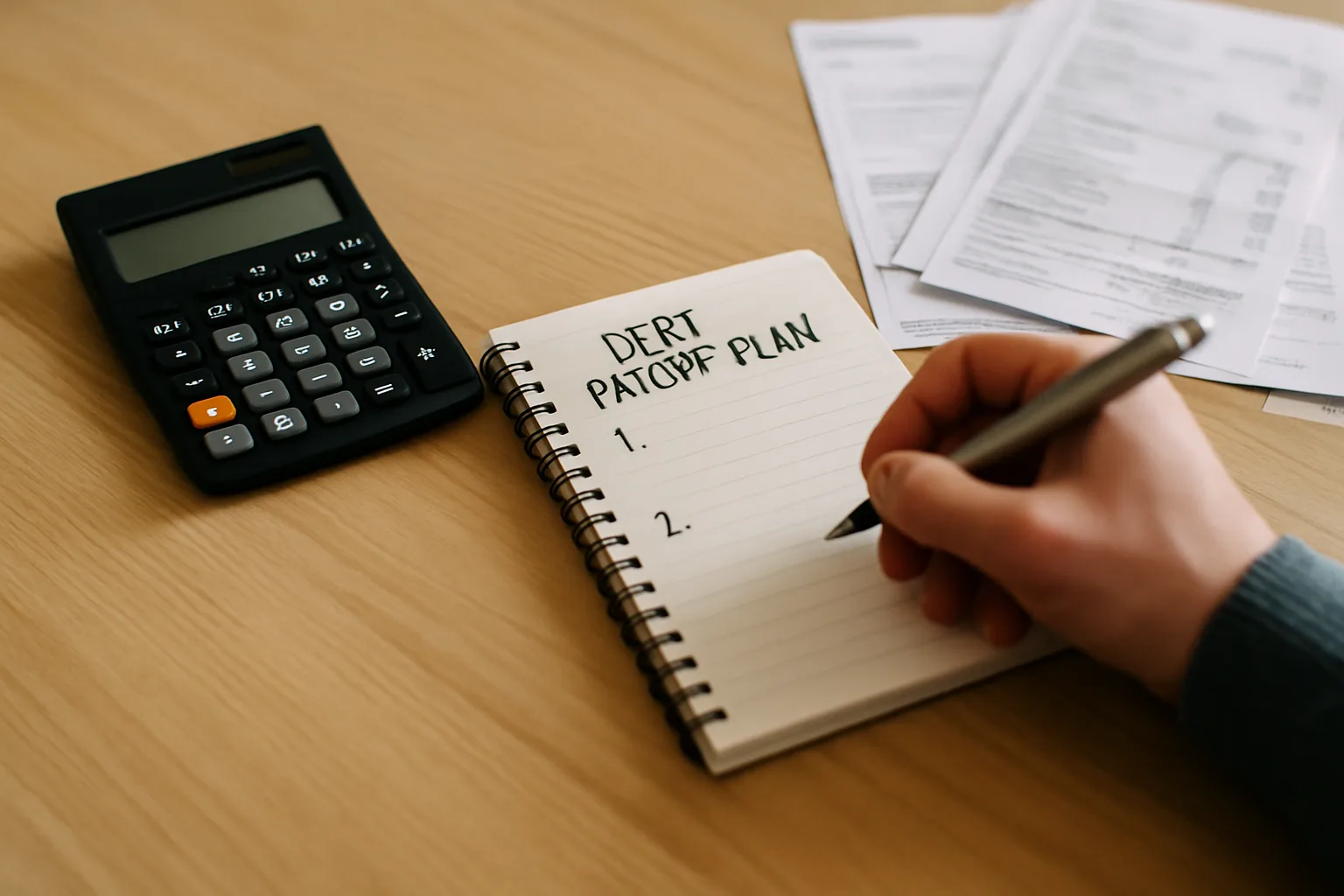
The good news is you don't have to choose one or the other. A balanced approach — starting with a small emergency fund, then tackling debt aggressively — can give you the best of both worlds. This article explains exactly how to do that, step by step.
Remember, this content is for general informational purposes and does not constitute financial advice. Everyone's situation is different, so consider speaking with a certified financial professional for personalized guidance.
Why an Emergency Fund Matters When You Have Debt
Without an emergency fund, an unexpected car repair or medical bill can force you to put the expense on a credit card — adding to the very debt you're trying to eliminate. That's the core reason to save while paying off debt.
Think of it this way: if you put every spare dollar toward debt and have zero savings, a $500 emergency could set you back hundreds more in interest. A small cushion protects the progress you've already made.
Even a modest fund — say $1,000 — can cover most common emergencies, like a minor car repair or a trip to urgent care. It's not about being fully prepared for every disaster; it's about avoiding new debt for life's small curveballs.
The Real Cost of a Financial Setback Without Savings
Imagine you have a $2,000 credit card balance and you're paying $200 per month toward it. You have no savings, and your car needs a $600 repair. You put that $600 on your credit card, and now your balance is $2,600 at 22% APR.
That $600 repair will cost you an extra $132 in interest over the next year if you only make minimum payments. Your debt payoff timeline just stretched out by months.
Now imagine you had a $1,000 emergency fund instead. You pay the $600 repair in cash, your credit card balance stays at $2,000, and you avoid all that extra interest. The small savings cushion saved you money and stress.
This is why a starter fund is not a luxury — it's a strategic tool for debt elimination.
The Risk of Not Having an Emergency Fund

If you skip saving and focus only on debt, you're essentially living without a financial safety net. Here's what can happen:
- You'll likely use credit cards again. When an unexpected expense pops up, you'll have no choice but to charge it, adding to your balance and potentially maxing out cards.
- Your credit score could drop. High credit utilization from new charges can lower your score, undoing progress you've made by paying down debt.
- You may have to borrow at high rates. Payday loans, title loans, or cash advances come with exorbitant interest rates that make your debt problem worse.
- Your motivation can suffer. Watching your debt balance fall, only to see it spike again after an emergency, is discouraging. Many people give up entirely.
That's why most financial experts — including Dave Ramsey and many certified financial planners — recommend a starter emergency fund of $1,000 to $2,000 before you start an aggressive debt payoff plan.
How a Single Emergency Can Derail Your Debt Payoff Plan
Let's look at a concrete example. Sarah has $8,000 in credit card debt and is determined to pay it off in 18 months. She puts every spare dollar toward her cards and has zero savings.
In month four, her refrigerator breaks and costs $700 to replace. She puts it on her credit card, and her balance jumps back up. She feels defeated and stops making extra payments for three months.
By the time she gets back on track, she's lost five months of progress and paid an extra $150 in interest. A $700 emergency cost her over $1,000 in total. A starter fund of $1,000 would have prevented this entire setback.
How Much Should You Save Before Paying Off Debt?
The answer depends on your personal situation, but a good rule of thumb is $1,000–$2,000 if you have stable income and low financial risk. If your income is irregular (you're self-employed or work on commission), aim for one month of essential expenses instead.
Here's a quick guide:
| Situation | Starter Emergency Fund Target |
|---|---|
| Stable job, low expenses, no dependents | $1,000 |
| Irregular income (freelance, commission) | One month of essential expenses |
| Homeowner or have older car | $2,000–$3,000 (to cover higher repair costs) |
| Single parent or sole provider | $2,000–$3,000 |
Once you hit that target, pause additional saving and redirect all extra money to debt repayment. After you're debt-free, you can build a full emergency fund of 3–6 months of expenses.
Why the Amount Matters More Than You Think
The size of your starter fund directly affects your debt payoff speed. If you save too little, you risk having to use credit for emergencies. If you save too much, you delay your debt payoff and pay more interest.
A $1,000 fund is a sweet spot for most people. It covers 70% of common emergencies, according to industry data. For example, a $1,000 fund can handle a flat tire replacement ($150), a dentist visit for a cavity ($200), and a minor plumbing issue ($300) — all without touching your credit cards.
You can replenish the fund later, but you cannot undo the interest charges from a new credit card balance.
How to Build a Starter Emergency Fund Fast
If you're living paycheck to paycheck, saving even $1,000 can feel impossible. But it's doable with a focused effort. Here are practical ways to get there quickly:
- Sell unused items. Look around your home for electronics, furniture, clothing, or collectibles you no longer need. List them on Facebook Marketplace, Craigslist, or eBay.
- Take on a temporary side gig. Driving for Uber, delivering food, pet sitting, or freelance work can bring in cash fast. Even an extra $100 a week adds up.
- Cut non-essential spending temporarily. Cancel streaming subscriptions, eat at home, skip takeout coffee, and pause any non-essential shopping. Every dollar counts.
- Use a windfall. Tax refunds, bonuses, birthday money, or cash gifts can jump-start your fund. Put 100% of any unexpected money toward savings.
- Reduce your largest expenses. Call your insurance provider to shop for lower rates, negotiate your cable or internet bill, or consider a cheaper cell phone plan.
Make building this fund your top priority for 30–60 days. Once you have it, you can shift gears and focus on debt.
A 60-Day Sprint to $1,000: A Realistic Example
Let's say you need to save $1,000 in two months. That's $500 per month or about $125 per week. Here's how you could do it: Sell an old smartphone for $200 on Facebook Marketplace (week one).
Drive for a food delivery app for 10 hours per week at $15 per hour after expenses — that's $150 per week (weeks one through eight). Cancel your gym membership ($40/month) and two streaming services ($25/month total). That saves $65 per month.
By week eight, you've sold the phone ($200), earned $1,200 from delivery driving, and saved $130 from canceled subscriptions. Total: $1,530. You hit your $1,000 goal by week six and can start paying off debt sooner.
How to Pay Off Debt While Still Saving
After you've built your starter emergency fund, you can switch to paying off debt aggressively. But that doesn't mean you stop saving entirely. Here's a balanced approach:
- Pay the minimum on all debts except the one you're targeting (using the debt snowball or avalanche method).
- Put any extra money toward that target debt — but keep a small amount (like $25–$50 per month) going into your emergency fund to keep it growing slowly.
- Replenish the fund if you use it. If you have to dip into savings for an emergency, pause extra debt payments for a month or two to rebuild the cushion.
- Automate both savings and debt payments so you don't have to think about it. Even small automatic transfers add up over time.
This way, you're making progress on debt while your emergency fund stays intact. It's a sustainable system that reduces the risk of falling back into debt.
The Psychology of Small, Consistent Savings
Even a small monthly contribution to your emergency fund — say $25 — builds a psychological buffer. You know the fund is growing, even if slowly. This reduces anxiety about emergencies and helps you stay focused on debt repayment.
For example, if you add $25 per month to a $1,000 fund, after one year you'll have $1,300. That extra $300 could cover a minor medical bill or a car repair without disrupting your debt payoff plan. The habit of saving also prepares you for the next phase: building a full emergency fund after debt freedom.
What If You Have High-Interest Credit Card Debt?
Credit card interest rates often exceed 20% APR, which means every dollar you don't pay off is costing you. In that case, you might wonder if it's better to skip the emergency fund and attack the debt first.
Here's the counterargument: if you have no savings and a $1,000 emergency hits, you'll likely put it on a credit card. If your card has a 22% APR, that $1,000 will cost you $220 in interest over a year if you only make minimum payments. That's worse than pausing debt repayment for a month to save.
So even with high-interest debt, a small emergency fund is still wise. The key is to keep it minimal — $1,000 or less — and then throw everything else at the credit cards.
If you're struggling with credit card debt, there are also options like balance transfers, debt management plans, or even settlement. For more on that, see our guide on how to get out of debt.
When High-Interest Debt Changes the Math
Let's do the math. You have $10,000 in credit card debt at 24% APR. Your minimum payment is $250 per month.
If you save $1,000 first, it takes you two months. During those two months, you pay $500 in minimum payments and accrue about $400 in interest. Total cost: $900.
If you skip the emergency fund and put that $1,000 toward debt instead, your balance drops to $9,000. But then a $1,000 emergency hits. You charge it, and your balance goes back to $10,000.
You've paid $400 in interest for nothing. The emergency fund approach saved you that $400 in wasted interest. The small delay in debt payoff is worth the protection.
How Fast Does Your Credit Score Increase After Paying Debt?
A common question is how quickly you'll see your credit score improve once you start paying down debt. The answer depends on several factors, but you can often see a noticeable change within 30–60 days.
Here's what typically happens:
- Credit utilization drops. This is the biggest factor. If you pay a credit card balance from $5,000 to $2,500, your utilization on that card falls from near 100% to 50%. That alone can boost your score by 20–50 points or more.
- Payment history stays positive. As long as you make on-time payments, that part of your score remains strong. Late payments can hurt for years.
- New credit inquiries fade. If you've recently applied for new credit, those inquiries stop affecting your score after 12 months and fall off after 2 years.
But don't expect an instant jump. Credit scores are calculated using data from your credit reports, which update at different times. It can take one or two billing cycles for the new balance to be reported.
For a detailed look, check out our article on how to pay off debt fast with low income.
Realistic Timeline for Credit Score Improvement
Suppose you have three credit cards with a total balance of $15,000 and a total credit limit of $20,000. Your utilization is 75%. You pay $5,000 toward one card, bringing the total balance to $10,000.
Your utilization drops to 50%. Your credit score might increase by 30–40 points within 30 days of the payment posting. If you pay another $5,000 the next month, utilization drops to 25%, and your score could jump another 20–30 points.
Within three months, you could see a 60–70 point improvement. That's enough to qualify for better interest rates on future loans or balance transfer cards.
How Fast Does Paying Off Debt Increase Credit Score?
Paying off a debt entirely can give your score a bigger boost, especially if it's an old collection account or a high-balance credit card. But the timing varies.
If you pay off a credit card completely, your utilization on that card goes to 0%. That's great for your score, but if you have other cards with balances, the overall utilization still matters. The ideal is to keep total utilization below 30% — and under 10% is even better.
For installment loans like car loans or student loans, paying them off can actually cause a small temporary dip because your credit mix changes. But that's short-lived, and your score usually recovers within a few months.
The bottom line: paying off debt is almost always good for your credit, but the speed of improvement depends on your unique credit profile. Focus on the long-term trend, not month-to-month fluctuations.
Why Paying Off a Loan Can Temporarily Hurt Your Score
Imagine you have a car loan with a $5,000 balance and a credit card with a $2,000 balance. Your credit mix includes both revolving (credit card) and installment (car loan) accounts. When you pay off the car loan, your credit mix narrows to only revolving accounts.
This can cause a 10–15 point drop in your score for one or two months. But your score recovers quickly as you continue making on-time payments on your credit card. The temporary dip is not a reason to avoid paying off debt.
It's just a quirk of the scoring model.
How to Get Out of Credit Card Debt Without Paying (and Why It's Risky)
Some people search for ways to get out of credit card debt without paying the full amount. While there are legal options to reduce what you owe, there's no magic way to make debt disappear without consequences.
Here are a few common approaches:
- Debt settlement. You stop paying your cards and negotiate with creditors to accept a lump sum less than the full balance. This can reduce your debt by 40–60%, but it severely damages your credit and you may owe taxes on the forgiven amount.
- Bankruptcy. Chapter 7 bankruptcy can wipe out most unsecured debts, but it stays on your credit report for 10 years. It's a serious decision that should be a last resort. Learn more about chapter 7 vs chapter 13 bankruptcy.
- Statute of limitations. If you don't pay for several years, the debt may become uncollectible in court. But the creditor can still sue you before that time runs out, and the debt will remain on your credit report for 7 years.
None of these are easy or consequence-free. The most reliable path is still to pay what you owe, but if you're truly overwhelmed, consider talking to a nonprofit credit counselor. They can help you explore options like a debt management plan.
The Hidden Costs of Debt Settlement
Debt settlement sounds appealing, but it has serious drawbacks. First, you must stop making payments to your creditors. This means your credit score will drop by 100 points or more as you miss payments and accounts go to collections.
Second, settlement companies charge fees — typically 15–25% of the amount saved. If you settle a $10,000 debt for $5,000, you save $5,000, but the company charges $750 to $1,250. Third, the IRS considers forgiven debt as taxable income.
You could owe taxes on the $5,000 of forgiven debt. In a 22% tax bracket, that's $1,100. Your net savings shrink significantly.
Debt settlement should be a last resort, not a first choice.
How Should I Pay Off My Credit Card Debt? A Step-by-Step Plan
If you're ready to tackle your credit card debt, here's a clear plan that balances saving and paying down debt:
- Build a $1,000 emergency fund. Do this first, even before making extra debt payments. Sell stuff, work extra hours, cut expenses — do whatever it takes.
- List all your debts from smallest to largest (or highest interest to lowest). Choose either the debt snowball (smallest balance first) or debt avalanche (highest interest first).
- Pay minimums on everything except the first debt on your list. Throw every extra dollar at that one until it's gone.
- Roll that payment to the next debt. Once the first debt is paid off, add its minimum payment to the next debt's payment. This creates a snowball effect.
- Keep your emergency fund intact. If you need to use it, pause extra debt payments and rebuild it before continuing.
- After all debt is gone, build a full emergency fund of 3–6 months of expenses. Then start investing for retirement and other goals.
This plan works because it gives you a safety net while keeping you motivated. You'll see progress quickly, which helps you stay on track.
Choosing Between the Snowball and Avalanche Methods
The debt snowball method focuses on paying off the smallest balance first, regardless of interest rate. For example, you have a $500 medical bill, a $2,000 credit card at 22% APR, and a $5,000 credit card at 18% APR. You pay off the $500 bill first.
This gives you a quick win and builds momentum. The debt avalanche method focuses on the highest interest rate first. You'd pay off the $2,000 card at 22% APR first, saving more in interest.
The snowball is better for motivation; the avalanche is better for math. Choose the one that keeps you committed. Both work if you stick with them.
How to Get Help Paying Off Credit Card Debt
If you're struggling to manage your debt on your own, there are legitimate resources that can help. Here are some options:
- Nonprofit credit counseling agencies. Organizations like the National Foundation for Credit Counseling (NFCC) offer free or low-cost counseling. They can help you create a budget and, if appropriate, enroll in a Debt Management Plan (DMP).
- Debt management plans. A DMP consolidates your credit card payments into one monthly payment, often with reduced interest rates and fees. You pay the agency, and they distribute the money to your creditors. It's not a loan — it's a repayment program.
- Balance transfer cards. If you have good credit, transferring high-interest balances to a 0% APR card can save you money on interest. But you need to pay off the balance before the promotional period ends.
- Debt settlement companies. These for-profit companies negotiate with creditors to reduce your balance. They charge fees (often 15–25% of enrolled debt) and your credit will take a hit. Be cautious and research the company thoroughly.
- Legal options. If your debt is overwhelming and you're considering bankruptcy, consult with a bankruptcy attorney. They can explain the differences between Chapter 7 and Chapter 13 and help you decide if it's right for you.
Always check the credentials of any company you work with. The Consumer Financial Protection Bureau (CFPB) has resources to help you avoid scams. You can visit their website at consumerfinance.gov for more information.
How a Debt Management Plan Works in Practice
Imagine you have three credit cards with balances of $3,000, $5,000, and $7,000, all with interest rates above 20%. You enroll in a DMP through a nonprofit credit counseling agency. The agency negotiates with your creditors to lower the interest rates to, say, 8–10%.
Your monthly payment is consolidated into one payment of $400, which you send to the agency. They distribute the funds to your creditors. You pay off the debt in about 38 months instead of 60 months, saving thousands in interest.
Your credit score may dip slightly during enrollment because some creditors close your accounts, but the long-term benefit of becoming debt-free outweighs the temporary impact.
Common Myths About Saving and Paying Off Debt
Let's clear up a few misconceptions that often confuse people:
- Myth: You should pay off all debt before saving anything. Reality: A small emergency fund prevents you from taking on new debt. It's worth pausing debt repayment for a month or two to build it.
- Myth: You need a full 3–6 month emergency fund before paying extra on debt. Reality: That would take too long and cost too much in interest. A starter fund is enough to protect you during the debt payoff phase.
- Myth: Paying off debt always boosts your credit score immediately. Reality: It usually helps, but the timing varies. Sometimes paying off a loan can cause a small dip due to credit mix changes.
- Myth: Debt settlement is an easy way out. Reality: It damages your credit, you may owe taxes on forgiven debt, and not all creditors will settle. It's a last resort.
Understanding these myths helps you make better decisions and avoid common pitfalls.
Why the "All Debt First" Myth Persists
The idea of paying off all debt before saving sounds logical: debt costs money, so eliminate it first. But this ignores the reality of emergencies. A 2023 survey found that 37% of Americans couldn't cover a $400 emergency with cash.
If you're in that group and you put all your money toward debt, a $400 emergency forces you to borrow. The interest on that new debt often exceeds the interest you saved by paying down your old debt early. The "all debt first" approach works only if you never face an emergency — which is unrealistic.
A starter fund is not a compromise; it's a smarter strategy.
How to Stay Motivated During the Process
Paying off debt while saving can feel like a long journey. Here are tips to keep your momentum:
- Track your progress visually. Use a chart or app to show your debt balance dropping and your savings growing. Seeing the numbers change is motivating.
- Celebrate small wins. When you pay off a credit card or hit a savings milestone, treat yourself to something small (under $20). Acknowledge your hard work.
- Find an accountability partner. Share your goals with a trusted friend or join an online community of people doing the same thing.
- Remind yourself why you're doing this. Write down your reasons — less stress, more freedom, a secure future — and read them when you feel discouraged.
- Be patient with yourself. Financial change takes time. You didn't get into debt overnight, and you won't get out overnight. Keep going.
Remember, you're building habits that will serve you for the rest of your life. Every step forward counts.
Using a Debt Payoff Thermometer for Motivation
A visual tool like a debt payoff thermometer can keep you engaged. Draw a thermometer on a poster board, marking increments from $0 to your total debt amount. Each time you make a payment, color in the corresponding amount.
For example, if you owe $10,000 and pay $500, you color in 5% of the thermometer. Seeing the red line rise over months is powerful. You can do the same for your emergency fund.
Place both thermometers side by side. Watching both move in the right direction reinforces the balanced approach and keeps you from feeling like you're sacrificing one goal for the other.
What to Do After You're Debt-Free
Once you've paid off all your high-interest debt, it's time to build your full emergency fund. Aim for 3–6 months of essential living expenses. This fund will protect you from major life events like job loss, serious illness, or major home repairs.
Here's how to build it:
- Redirect your former debt payments to savings. If you were paying $500 per month toward debt, now put that $500 into your emergency fund. You're already used to living without that money.
- Set a monthly savings target. Calculate your essential expenses (rent, food, utilities, insurance, transportation) and multiply by 3–6. That's your target. Divide by the number of months you want to save to get your monthly goal.
- Keep the fund in a high-yield savings account. You want it accessible but earning interest. Online banks often offer rates 10–20 times higher than traditional banks.
- Don't touch the fund for non-emergencies. A vacation, new TV, or holiday shopping is not an emergency. Define what qualifies as an emergency before you need the money.
After your full emergency fund is complete, you can start investing for retirement, saving for a home, or pursuing other financial goals. The habits you built during debt payoff — discipline, budgeting, and consistency — will serve you well.
From Debt Freedom to Financial Independence: The Next Chapter
Imagine you've paid off $15,000 in credit card debt over 30 months. Your monthly debt payments of $500 are now free. You redirect that $500 to a high-yield savings account earning 4% APY.
In 12 months, you save $6,120, including interest. In 24 months, you have $12,480. If your monthly expenses are $3,000, that's over four months of expenses saved.
You've built a full emergency fund in two years. Now you can start investing $500 per month in a retirement account. Over 30 years at 7% annual return, that $500 per month grows to over $600,000.
The small decision to build a starter fund first set off a chain reaction that leads to long-term wealth.
Key takeaways
- Build a $1,000–$2,000 emergency fund first — it protects you from taking on new debt when unexpected expenses arise.
- Then focus aggressively on paying off high-interest debt, especially credit cards, using either the snowball or avalanche method.
- Your credit score can improve within 30–60 days as you lower your credit utilization by paying down balances.
- Avoid quick-fix schemes like debt settlement or bankruptcy unless you've explored all other options and understand the consequences.
- Seek help if you need it — nonprofit credit counselors, debt management plans, and balance transfers are legitimate tools that can make repayment easier.
- After you're debt-free, build a full emergency fund of 3–6 months of expenses to secure your financial future.
Frequently asked questions
Should I use my emergency fund to pay off debt?
How much should I save before paying off debt if I have a low income?
Will paying off all my credit cards hurt my credit score?
What's the fastest way to pay off credit card debt?
Can I negotiate credit card debt on my own?
This article is for general informational purposes only and does not constitute financial, legal or credit-repair advice. Always consult a qualified financial advisor or credit counselor about your specific circumstances.

Written & reviewed by
Can OTUEditor
Can OTU is the editor of this site, curating and reviewing every guide for accuracy and clarity.
View all guides →