What Does a 750 Credit Score Mean? Is It Good Enough for the Best Rates?

- 750 is in the "good" range (740-799) for FICO scores.
- You'll likely get approved for most loans, but top-tier rates often require 760+.
- Improving your score to 760+ can save you thousands in interest over time.
If you've checked your credit score and seen a 750, you're probably wondering: "Is this good enough?" The short answer is yes — a 750 credit score is considered good and will open doors to many financial products. But if you're aiming for the absolute best interest rates, you might need to push a little higher.
Your credit score is a three-digit number that lenders use to evaluate how likely you are to repay borrowed money. It's based on your credit history, payment habits, and how much debt you carry. A 750 is well above the average U.S. score (around 716), so you're in a solid position.
But let's get into the details so you know exactly what this score means for your wallet.
This article is for informational purposes only and does not constitute financial advice. Everyone's situation is different, so consider consulting a financial professional for personalized guidance.
What Is a 750 Credit Score?
A 750 credit score is a numerical rating that indicates you're a responsible borrower. It falls in the "good" range for FICO scores (which run from 300 to 850). VantageScore, another common scoring model, also considers 750 "good."
Here's how FICO categories break down:
| Score Range | Category |
|---|---|
| 800–850 | Exceptional |
| 740–799 | Very Good |
| 670–739 | Good |
| 580–669 | Fair |
| Below 580 | Poor |
As you can see, 750 sits right in the middle of "Very Good." That means you're doing better than most people, but there's still room to reach the top tier.
To put it in perspective, the average FICO score in the U.S. is around 716 as of 2024. A 750 places you above that average, which is a strong position. However, lenders often reserve their most favorable terms for scores of 760 or higher.
Is a 750 Credit Score Good Enough for the Best Rates?
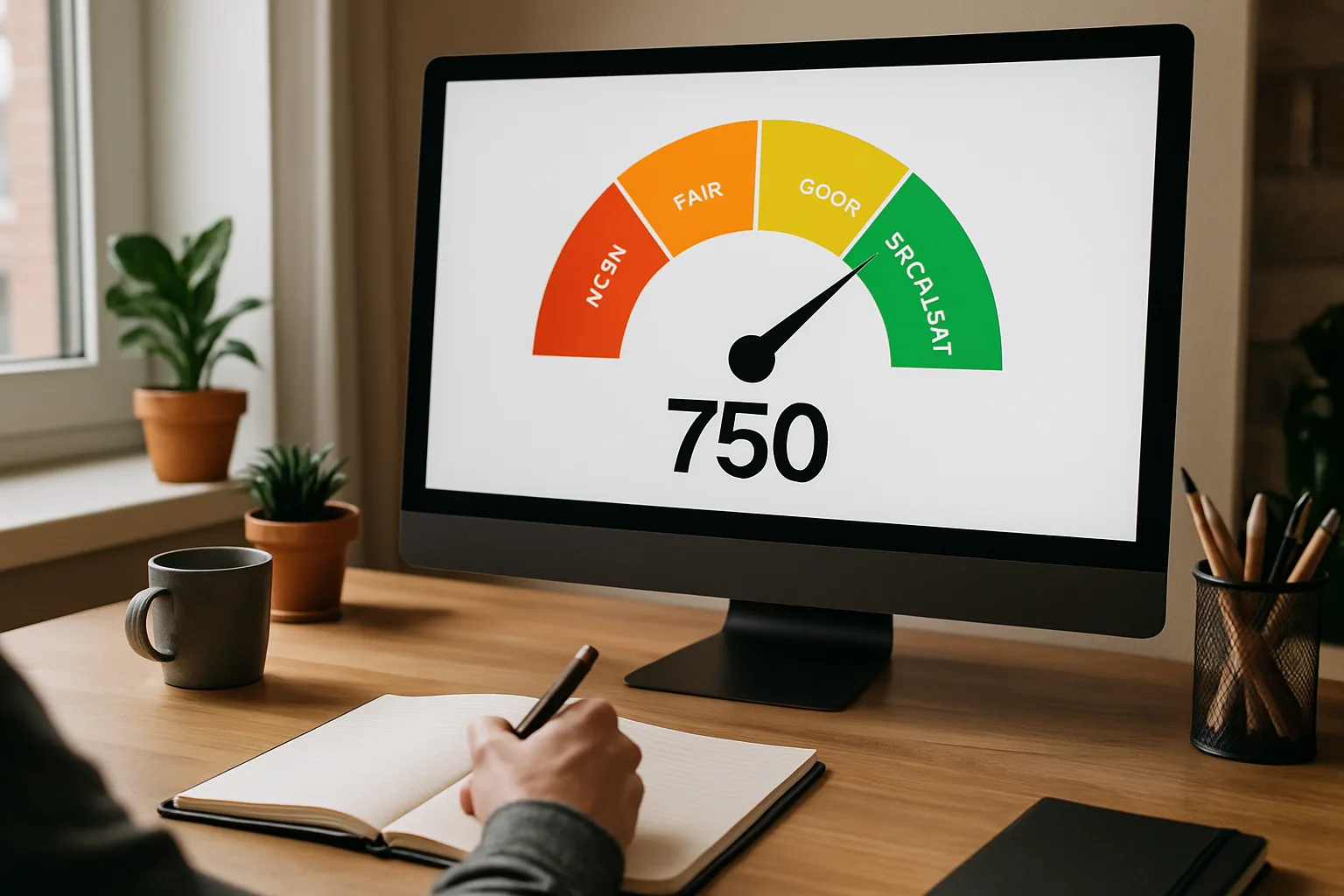
The honest answer: it depends on the lender and the type of loan. For many credit cards and personal loans, a 750 will get you competitive rates. But for mortgages and auto loans, the best rates often require a score of 760 or higher.
Lenders use tiered pricing. Each tier corresponds to a score range, and the higher your tier, the lower your interest rate. For example, a 760 might get you a 6.5% mortgage rate, while a 750 might get you 6.75%.
That 0.25% difference can add up to thousands over 30 years.
So while a 750 is good, it's not the top. If you're shopping for a major loan, it's worth trying to how to raise your credit score fast to 760 or above before applying.
Consider a concrete example: on a $300,000, 30-year fixed-rate mortgage, a 0.25% rate difference means about $50 more per month. Over the full loan term, that's roughly $18,000 in extra interest. That's a significant amount for just a 10-point score gap.
What Factors Make Up Your Credit Score?
To understand how to improve your score, you need to know what goes into it. FICO scores are based on five main factors:
- Payment history (35%): Whether you pay bills on time. Late payments hurt your score.
- Amounts owed (30%): Your credit utilization ratio — how much of your available credit you're using. Lower is better.
- Length of credit history (15%): How long you've had credit accounts. Older accounts help.
- New credit (10%): How many recent inquiries or new accounts you've opened. Too many can be a red flag.
- Credit mix (10%): Having different types of credit (credit cards, installment loans, mortgages) can boost your score.
Knowing these factors is the first step to improving your score. For a deeper dive, check out our guide on what affects your credit score.
Each factor plays a distinct role. Payment history is the most critical because it shows lenders whether you honor your commitments. Amounts owed, especially credit utilization, is the second most important and often the easiest to improve quickly.
How to Improve Your Credit Score from 750 to 760+

If you're aiming for the best rates, you'll want to push your score into the "Exceptional" range (760+). Here are practical steps to get there:
1. Pay Down Credit Card Balances
Your credit utilization ratio is the second most important factor. If you're using more than 30% of your available credit, try to pay it down. Even paying down to 10% can give your score a nice boost.
This is one of the fastest ways to how to increase credit score quickly.
For example, if you have a $10,000 total credit limit and carry a $3,000 balance, your utilization is 30%. Paying that down to $1,000 drops utilization to 10%, which can lift your score by 10-20 points within a billing cycle.
2. Make All Payments on Time
Payment history is the biggest chunk of your score. Set up autopay or reminders to ensure you never miss a due date. One late payment can drop a good score by 50-100 points.
Even a single 30-day late payment can stay on your report for seven years. If you have a perfect payment record, protecting it is essential for maintaining your 750 score.
3. Avoid Opening New Credit Unnecessarily
Each new application triggers a hard inquiry, which can temporarily lower your score. If you don't need new credit, skip the applications. This is key for how to improve credit score fast.
Hard inquiries typically drop your score by 5-10 points each. Multiple inquiries in a short period can add up. However, rate shopping for a mortgage or auto loan within a 14-45 day window is usually treated as a single inquiry.
4. Keep Old Accounts Open
The length of your credit history matters. Closing an old credit card can shorten your average account age and hurt your score. Even if you don't use it, keep it open.
For instance, if you have a credit card you've held for 10 years, closing it could reduce your average account age significantly. This is especially damaging if your other accounts are newer.
5. Dispute Errors on Your Credit Report
Mistakes happen. Check your credit report at AnnualCreditReport.com (free weekly through 2023). If you find errors, dispute them with the credit bureau.
Removing incorrect negative items can give you a quick boost.
Common errors include accounts that don't belong to you, incorrect late payments, or outdated collections. A single error corrected could raise your score by 20-30 points or more.
For more detailed strategies, see our guide on how to boost your credit score fast.
How Long Does It Take to Go from 750 to 760?
The good news: moving from 750 to 760 is often easier than moving from 600 to 700. Because you're already in good shape, small changes can have a noticeable effect.
If you pay down credit card balances and make all payments on time, you could see a 10-20 point increase in one to three months. However, if your score is held back by a late payment or short credit history, it might take longer — six months to a year.
For example, a late payment from two years ago still impacts your score but less so over time. As that negative item ages, your score naturally recovers. Patience and consistent habits are key.
What Loans Can You Get with a 750 Credit Score?
With a 750, you'll qualify for most mainstream loans. Here's what you can expect:
- Mortgages: You'll qualify for conventional loans, FHA loans, and even some jumbo loans. Rates will be competitive but not the lowest.
- Auto loans: You'll get approved with good rates. Dealers will likely offer you promotions.
- Credit cards: You'll qualify for many rewards cards with sign-up bonuses and 0% APR offers.
- Personal loans: Approval is likely, with decent rates.
But remember: lenders also consider your income, debt-to-income ratio, and employment history. A high score doesn't guarantee approval if you have too much debt relative to your income.
For instance, if your debt-to-income ratio exceeds 43%, even a 750 score might not secure a mortgage. Lenders want to see that you can comfortably manage new payments alongside existing obligations.
Does a 750 Credit Score Affect Your Mortgage Rate?
Yes, significantly. Mortgage lenders use risk-based pricing. A 750 might get you a rate that's 0.25% to 0.5% higher than someone with a 780.
On a $300,000 loan, that could mean paying an extra $50–$100 per month — or $18,000–$36,000 over 30 years.
So if you're planning to buy a home, it's worth trying to how to boost your credit score fast before applying. Even a small increase can save you a lot of money.
To illustrate, a 0.5% rate difference on a $300,000 mortgage at 6.5% versus 7.0% means about $100 more per month. Over 30 years, that's roughly $36,000 in extra interest. That's a substantial sum that could go toward other financial goals.
How to Check Your Credit Score for Free
You can check your credit score for free through several sources:
- Many credit card issuers provide free FICO or VantageScore scores on monthly statements.
- Websites like Credit Karma, Credit Sesame, and WalletHub offer free scores.
- You can get free credit reports from AnnualCreditReport.com (but these don't include scores).
It's a good idea to monitor your score regularly so you can track your progress. Checking your own score is a soft inquiry and does not affect your credit.
Set a reminder to review your credit report from each of the three bureaus (Equifax, Experian, TransUnion) once a year. This helps you catch errors early and ensures your score reflects accurate information.
What If Your Score Is Below 750?
If your score is lower than 750, don't worry. Many people start below 700 and work their way up. The same strategies apply: pay bills on time, reduce debt, and avoid unnecessary inquiries.
For a step-by-step plan, see our guide on how to build credit.
Even a score of 680 can be improved to 750 within a year with consistent effort. Focus on the factors you can control, like payment history and credit utilization. Small, steady improvements add up over time.
Common Myths About Credit Scores
Let's clear up a few misconceptions:
- Myth: Checking your own score hurts it. False. Checking your own score is a soft inquiry and doesn't affect it.
- Myth: You need to carry a balance to build credit. False. Paying your balance in full each month builds credit just as well — and saves you interest.
- Myth: Closing a credit card helps your score. False. It can actually hurt by increasing your utilization ratio and shortening your credit history.
Another common myth is that a 750 score is perfect. In reality, there's always room for improvement, especially if you want the best rates. Understanding these myths helps you avoid costly mistakes.
How to Maintain a 750+ Credit Score
Once you reach 750 or higher, you want to stay there. Here's how:
- Set up automatic payments for all bills.
- Keep credit card balances low — ideally under 10% of your limit.
- Only apply for new credit when you really need it.
- Review your credit report annually for errors.
Consistency is key. As long as you keep up good habits, your score will remain strong. Even one slip-up, like a missed payment, can set you back months.
Consider using a budgeting app to track your spending and ensure you never miss a due date. Many apps send reminders and help you manage cash flow, which supports your credit goals.
How to Raise Your Credit Score Fast: Action Plan
If you need a quick boost, here's a focused plan:
- Pay down credit card debt — aim for under 30% utilization, ideally under 10%.
- Ask for a credit limit increase — this can lower your utilization instantly (but don't increase spending).
- Become an authorized user on a family member's old, well-managed account.
- Dispute any errors on your credit report.
These steps can sometimes yield a 20-50 point increase within a few months. For more details, check our guide on how to improve credit score immediately.
For example, becoming an authorized user on a parent's card with a 15-year history and low utilization can add years of positive history to your report. This can boost your score quickly, sometimes within 30 days.
How a 750 Score Compares Across Different Lenders
Not all lenders treat a 750 score the same way. Some banks have stricter cutoffs for their best rates than others. For example, a credit union might offer top-tier pricing at 740, while a large national bank might require 780.
Always shop around with multiple lenders before committing to a loan. Even a small difference in rates can save you hundreds of dollars each year. Use prequalification tools to check your estimated rate without a hard inquiry.
For instance, a local credit union may offer a 6.4% auto loan rate for scores above 740, while a national bank might offer 6.7% for the same score. Comparing offers from three to five lenders can help you find the best deal.
The Impact of a 750 Score on Insurance Premiums
Many auto and home insurance companies use credit-based insurance scores. A 750 score typically qualifies you for lower premiums than someone with a lower score. Insurers argue that responsible credit behavior correlates with fewer claims.
However, not all states allow credit-based insurance scoring. Check your state's regulations and compare quotes from multiple insurers. Improving your score further could reduce your premiums even more over time.
For example, a driver with a 750 score might pay $1,200 per year for auto insurance, while a driver with a 650 score might pay $1,600 for the same coverage. That $400 annual difference adds up over the years.
How a 750 Score Affects Rental Applications
Landlords often check credit scores during tenant screening. A 750 score is generally seen as a strong indicator of reliability. You'll likely pass most background checks without issue.
Some landlords may still require a co-signer if your income is low. But overall, a 750 score gives you a competitive edge in a tight rental market. It can also help you negotiate lower security deposits or better lease terms.
In competitive cities like New York or San Francisco, a 750 score can make your application stand out among dozens of applicants. Landlords may even waive certain requirements, like a higher security deposit, for tenants with strong credit.
How a 750 Score Influences Employment Background Checks
Some employers, especially in finance or government, run credit checks on candidates. A 750 score is unlikely to raise red flags. It shows you manage your finances responsibly.
Employers typically look for patterns like bankruptcy or unpaid collections. A solid score like 750 is generally seen as a positive sign. However, the impact varies by industry and specific job requirements.
For example, a position in banking or accounting may involve handling sensitive financial data. A 750 score demonstrates trustworthiness and reduces concerns about financial stress affecting job performance.
How to Leverage a 750 Score for Better Offers
Even without the absolute best rates, a 750 score gives you leverage. You can negotiate with lenders for lower rates or better terms. Many banks have discretion to offer promotional rates to qualified borrowers.
Always ask for a rate match or a loyalty discount. If you have a long relationship with a bank, mention it. A 750 score combined with a strong application can often secure a better deal than the advertised rate.
For instance, when applying for a personal loan, you might say, "I have a 750 credit score and a long history with your bank. Can you offer a rate lower than the standard rate?" This simple question can save you money.
How a 750 Score Affects Your Ability to Get a Business Loan
If you're an entrepreneur, a 750 personal credit score can help you qualify for small business loans. Many lenders use your personal score when you're starting out, especially if your business lacks a credit history.
With a 750, you may qualify for SBA loans, business lines of credit, or equipment financing. Rates will be competitive, but top-tier business loan rates often require a personal score of 760 or higher.
For example, a business line of credit might offer an APR of 8% for a 750 score versus 7% for a 780 score. On a $50,000 line, that 1% difference saves $500 per year in interest.
How a 750 Score Impacts Your Ability to Refinance
Refinancing a mortgage or auto loan can lower your monthly payments. A 750 score qualifies you for refinancing options, but you may not get the absolute lowest rates. Improving to 760+ can unlock better refinance terms.
For instance, refinancing a $200,000 mortgage from 7% to 6.5% saves about $125 per month. With a 750 score, you might get 6.5%, but a 780 score could get you 6.25%, saving an additional $50 per month.
Always check your score before refinancing. If you're close to 760, consider waiting a few months to improve your score. The savings from a lower rate can outweigh the cost of waiting.
How a 750 Score Affects Your Ability to Get a Student Loan
If you're a student or parent, a 750 score can help you qualify for private student loans. Federal student loans don't require a credit check for most borrowers, but private lenders do.
With a 750, you'll likely get approved for private student loans with competitive rates. However, the best rates often go to cosigners with scores above 760. If you're a student with limited income, a cosigner can help you secure better terms.
For example, a private student loan might offer a 5.5% fixed rate for a 750 score versus 5.0% for a 780 score. On a $30,000 loan over 10 years, that 0.5% difference saves about $800 in total interest.
How a 750 Score Affects Your Ability to Get a Debt Consolidation Loan
Debt consolidation loans can simplify your payments and lower your interest rate. A 750 score qualifies you for these loans with favorable terms. You can use them to pay off high-interest credit card debt.
For instance, if you have $15,000 in credit card debt at 20% APR, a consolidation loan at 10% APR could save you $1,500 per year in interest. With a 750 score, you're likely to get approved for such a loan.
However, the best consolidation rates often require a score of 760 or higher. Improving your score before applying can unlock even lower rates and greater savings.
How a 750 Score Affects Your Ability to Get a Home Equity Loan
Home equity loans and HELOCs allow you to borrow against your home's value. A 750 score typically qualifies you for these products with competitive rates. Lenders see you as a low-risk borrower.
For example, a home equity loan might offer a 7.5% APR for a 750 score versus 7.0% for a 780 score. On a $50,000 loan over 15 years, that 0.5% difference saves about $2,500 in total interest.
Always compare offers from multiple lenders. Some may have more lenient score requirements for home equity products. A 750 score gives you a strong foundation for negotiation.
How a 750 Score Affects Your Ability to Get a Personal Line of Credit
Personal lines of credit work like credit cards but often have lower rates. A 750 score qualifies you for these products with favorable terms. You can use them for emergencies or large purchases.
For instance, a personal line of credit might offer a 9% APR for a 750 score versus 8% for a 780 score. On a $10,000 balance, that 1% difference saves $100 per year in interest.
These lines of credit are unsecured, so your score plays a big role in approval. Maintaining a 750 or higher ensures you have access to affordable credit when you need it.
How a 750 Score Affects Your Ability to Get a Credit Card with 0% APR
Many credit cards offer 0% APR introductory periods for purchases or balance transfers. A 750 score qualifies you for many of these offers. You can use them to finance large purchases or pay down debt interest-free.
For example, a card with a 0% APR for 18 months can help you pay off a $5,000 balance without interest. With a 750 score, you're likely to be approved for such cards. However, the best 0% APR offers often require scores of 760 or higher.
Always read the terms carefully. Some cards charge a balance transfer fee of 3-5% of the amount transferred. Factor that into your savings calculation.
How a 750 Score Affects Your Ability to Get a Mortgage with Low Down Payment
Some mortgage programs allow low down payments, like FHA loans with 3.5% down or conventional loans with 3% down. A 750 score qualifies you for these programs. You can buy a home with a smaller upfront investment.
For instance, an FHA loan requires a minimum score of 580 for 3.5% down. With a 750, you'll easily qualify and may get better terms. However, conventional loans with low down payments often require higher scores for the best rates.
Improving your score to 760+ can unlock even lower down payment options. Some lenders offer 0% down mortgages for borrowers with exceptional credit. A 750 is good, but 760+ opens more doors.
How a 750 Score Affects Your Ability to Get a Car Lease
Car leases are similar to loans but have different terms. A 750 score qualifies you for competitive lease rates. You'll likely get approved with low money down and favorable monthly payments.
For example, a lease on a $35,000 car might require $2,000 down for a 750 score versus $3,000 down for a 650 score. The monthly payment could also be $50 lower. That's $600 saved per year.
However, the best lease deals often go to borrowers with scores of 760 or higher. Improving your score before shopping can help you negotiate better terms. Always compare lease offers from multiple dealers.
How a 750 Score Affects Your Ability to Get a RV or Boat Loan
Recreational vehicle and boat loans are considered specialty financing. A 750 score qualifies you for these loans with competitive rates. Lenders see you as a low-risk borrower for these larger purchases.
For instance, a $50,000 RV loan might offer a 7% APR for a 750 score versus 8% for a 650 score. Over 10 years, that 1% difference saves about $3,000 in total interest. That's significant for a recreational purchase.
Always shop around for the best rates. Some lenders specialize in RV and boat loans and may offer better terms. A 750 score gives you a strong position to negotiate.
Final Thoughts: Is 750 Good Enough?
A 750 credit score is definitely good. You'll qualify for most loans and credit cards with favorable terms. But if you want the absolute best rates — especially on a mortgage — aim for 760 or higher.
The effort you put in now can save you thousands of dollars in interest over time.
Remember, your credit score is just one part of your financial health. Keep building good habits, and you'll be in great shape. Regularly monitor your score, pay bills on time, and keep debt low to maintain your progress.
Key takeaways
- A 750 credit score is considered "very good" and will get you approved for most loans.
- To get the best interest rates, especially on mortgages, aim for 760+.
- Focus on paying down credit card balances and making all payments on time to boost your score.
- Check your credit report regularly for errors and dispute any you find.
- Maintain good habits to keep your score high over the long term.
Frequently asked questions
Can I get a mortgage with a 750 credit score?
How long does it take to increase a credit score from 750 to 800?
What is the difference between a 750 and a 780 credit score?
Will a 750 credit score get me a credit card with good rewards?
How can I improve my credit score from 750 to 760 quickly?
This article is for general informational purposes only and does not constitute financial, legal or credit-repair advice. Always consult a qualified financial advisor or credit counselor about your specific circumstances.

Written & reviewed by
Can OTUEditor
Can OTU is the editor of this site, curating and reviewing every guide for accuracy and clarity.
View all guides →