How to Build Credit to Buy a House: Timeline, Tips, and Target Scores
- Check your credit reports for free at AnnualCreditReport.com
- Pay every bill on time — payment history is 35% of your score
- Keep credit card balances under 30% of your limit (under 10% is better)
If you're dreaming of buying a home but worried your credit isn't good enough, you're not alone. Many first-time buyers start with scores that feel far from the magic number lenders want. The good news is that you can improve your credit faster than you might think — and this guide will show you exactly how.
Building credit for a mortgage isn't about quick fixes or gimmicks. It's about understanding what lenders look for and taking consistent steps to show you're a responsible borrower. Whether you're starting from scratch or recovering from past mistakes, there's a clear path forward.
This article is for informational purposes only and does not constitute financial advice. Every situation is different, so consider consulting a housing counselor or financial professional before making major decisions.
What Credit Score Do You Need to Buy a House?
The short answer: it depends on the loan type. Here are the minimum credit score requirements for common mortgage programs:
| Loan Type | Minimum Credit Score | Down Payment |
|---|---|---|
| Conventional (Fannie Mae/Freddie Mac) | 620 | 3%–5% |
| FHA Loan | 580 (500 with 10% down) | 3.5% (10% if score 500–579) |
| VA Loan | No official minimum (lenders typically want 620+) | 0% |
| USDA Loan | 640 (lender requirement) | 0% |
Keep in mind that these are minimums. A higher score can get you a lower interest rate, which saves thousands over the life of the loan. Aim for 740 or above if you want the best rates.
How Fast Can You Build Credit?
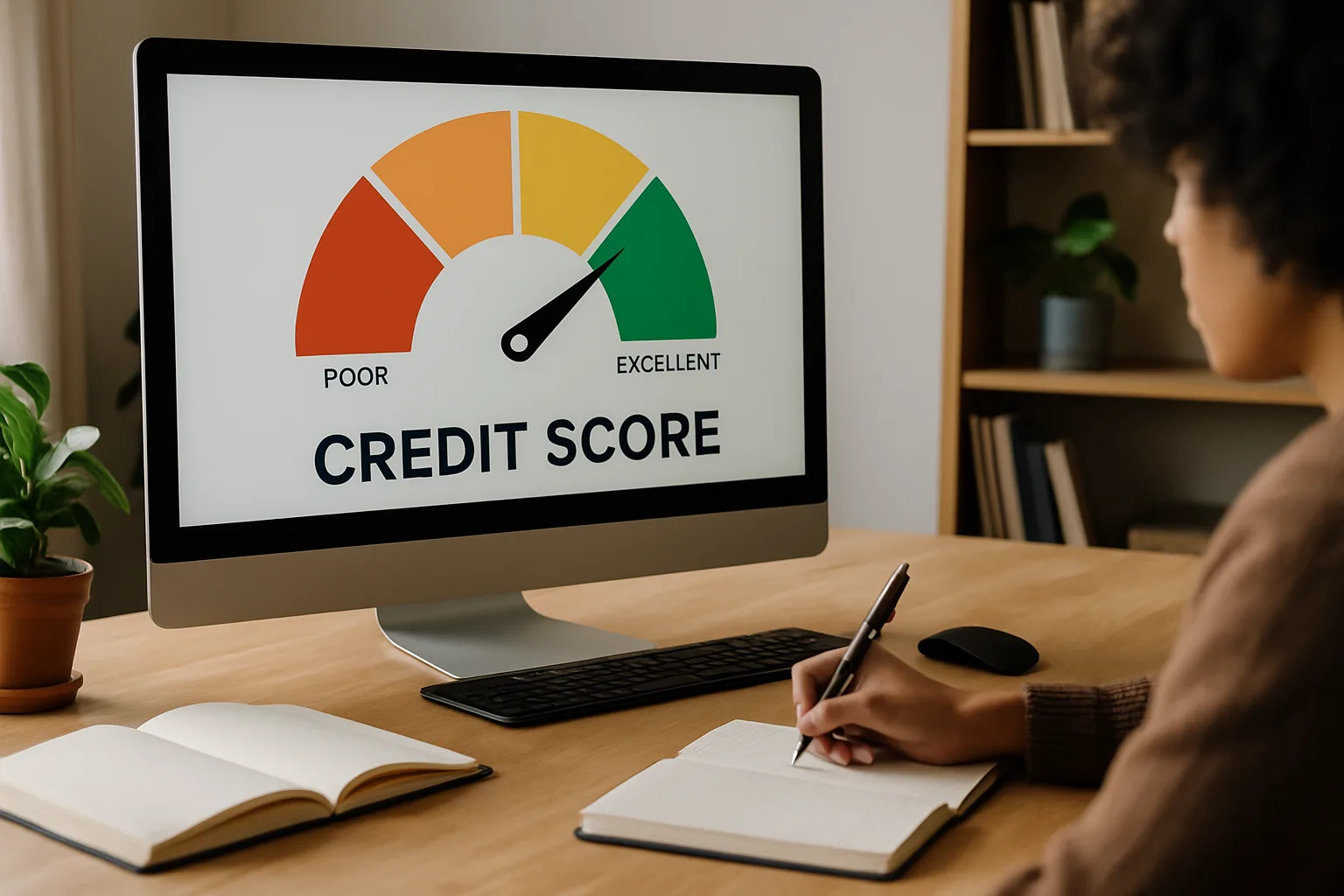
This is one of the most common questions, and the answer depends on where you're starting. If you have no credit history, you can establish a score in about 6 months of responsible credit use. If you're rebuilding from a low score, you might see meaningful improvement in 3 to 6 months — but major jumps often take 12 to 24 months.
Your credit score is calculated from five factors, each with a different weight. The faster you act on the most heavily weighted factors, the quicker you'll see results. Payment history and credit utilization together make up 65% of your score, so focusing there gives you the biggest bang for your buck.
How to Build Your Credit Score: A Step-by-Step Plan
Step 1: Check Your Credit Reports
You can't fix what you don't know. Get your free credit reports from all three bureaus (Equifax, Experian, TransUnion) at AnnualCreditReport.com. Review each report for errors — things like accounts that aren't yours, late payments that were actually on time, or incorrect balances.
If you find errors, dispute them with the credit bureau. Fixing mistakes can give your score a quick boost. The Consumer Financial Protection Bureau (CFPB) has a sample dispute letter on their website to guide you.
Step 2: Know Your Starting Score
Your credit reports don't include your score. You can get a free score from many credit card issuers, or from sites like Credit Karma (VantageScore) or myFICO (FICO Score). Lenders use FICO scores, so that's the one to focus on.
A FICO score of 670 or above is considered "good."
Step 3: Pay Every Bill on Time, Every Time
Payment history is the biggest factor in your credit score — it accounts for 35%. One late payment can drop your score by 50 to 100 points, especially if you have a thin credit file. Set up automatic payments or calendar reminders so you never miss a due date.
If you're already behind, catch up as soon as possible. The longer a payment is late, the more damage it does. Once you're current, stay current.
Step 4: Lower Your Credit Utilization
Credit utilization — how much of your available credit you're using — makes up 30% of your score. The rule of thumb is to keep your utilization below 30% of your total credit limit. For example, if you have a $10,000 total limit, keep your balances under $3,000.
For the best scores, aim for under 10%.
If your balances are high, pay them down as fast as you can. You can also ask for a credit limit increase — just be careful not to spend the extra room. A higher limit with the same balance lowers your utilization automatically.
Step 5: Don't Close Old Credit Cards
The length of your credit history matters — it's 15% of your score. Closing old accounts shortens your average account age and can hurt your score. Keep your oldest cards open, even if you don't use them often.
Use them occasionally for a small purchase and pay it off to keep them active.
Step 6: Limit New Credit Applications
Every time you apply for credit, a hard inquiry appears on your report and can ding your score by a few points. Multiple inquiries in a short period signal risk to lenders. Only apply for new credit when you really need it, and space out applications by at least six months.
If you're rate shopping for a mortgage or auto loan, the scoring models treat multiple inquiries within 14 to 45 days as a single inquiry — so do your shopping in a short window.
Step 7: Build Credit from Scratch (If You Have No Credit)
If you're starting with no credit, you need to establish a credit file. Here are the best ways to how to build credit from scratch:
- Become an authorized user on a family member's credit card. Their positive payment history will show up on your report.
- Get a secured credit card. You put down a deposit (usually $200–$500) that becomes your credit limit. Use it for small purchases and pay it off monthly.
- Take out a credit-builder loan from a credit union or online lender. The money is held in an account while you make payments, building your payment history.
How to Build Your Credit Fast: Strategies That Work

If you need a higher score in a hurry — say, to qualify for a mortgage in the next 6 to 12 months — these strategies can help you how to raise your credit score fast:
- Pay down credit card balances aggressively. This is the single fastest way to improve your score because utilization has a big impact and can change quickly.
- Ask for a credit limit increase. If your income has gone up, call your card issuer and request a higher limit. This lowers your utilization instantly.
- Become an authorized user. If a family member has a card with a long history and low balance, being added can give your score a quick lift.
- Dispute errors on your credit reports. Removing inaccurate negative items can boost your score in weeks.
- Pay off collections. Some newer scoring models ignore paid collections, so settling old debts can help.
But here's the honest truth: there's no magic bullet. You can't erase legitimate late payments or bankruptcies overnight. The best "fast" strategy is to focus on what you can control — utilization and new credit applications — and give yourself at least 6 months before applying for a mortgage.
How Do You Build Your Credit Fast? The Realistic Timeline
Let's be realistic about how fast you can improve your score. Here's a rough timeline based on your starting point:
| Starting Point | Potential Score Gain in 6 Months | What to Focus On |
|---|---|---|
| No credit (0 score) | Establish a score of 680–720 | Secured card, authorized user, on-time payments |
| Fair credit (580–669) | +30 to +60 points | Pay down balances, dispute errors, on-time payments |
| Good credit (670–739) | +20 to +40 points | Lower utilization, avoid new inquiries, keep old accounts open |
| Poor credit (below 580) | +50 to +80 points | Pay off collections, catch up on late payments, secured card |
These are illustrative ranges, not guarantees. Your results depend on your unique credit history. But the key takeaway is that meaningful improvement is possible in 6 to 12 months if you take the right steps.
How Can I Build My Credit Score Fast? Common Mistakes to Avoid
When you're in a hurry, it's easy to fall for quick fixes that backfire. Here's what to avoid:
- Closing old accounts — this shortens your credit history and can lower your score.
- Opening too many new accounts at once — hard inquiries add up and signal risk.
- Paying off a collection and expecting an immediate score jump — older scoring models don't remove the account, just mark it paid. Newer models may ignore paid collections, but not all lenders use them.
- Using a credit repair company that promises to remove accurate negative items — they can't do anything you can't do yourself, and some are scams.
- Maxing out credit cards to earn rewards — high utilization hurts your score, even if you pay in full each month.
What Affects Your Credit Score? The Five Factors
To understand what affects your credit score, you need to know the five components and their weights:
- Payment history (35%) — Do you pay your bills on time?
- Amounts owed / credit utilization (30%) — How much of your available credit are you using?
- Length of credit history (15%) — How long have you had credit accounts?
- New credit (10%) — How many recent inquiries or new accounts do you have?
- Credit mix (10%) — Do you have a mix of credit types (credit cards, installment loans, mortgage)?
Focus on the first two for the fastest results. Payment history and utilization together account for 65% of your score.
How to Build Your Credit Score Fast for a Mortgage: Special Considerations
Mortgage lenders look at your credit score, but they also consider your debt-to-income ratio (DTI), employment history, and down payment. Here's how to position yourself for approval:
- Keep your DTI below 43% — ideally under 36%. That means your total monthly debt payments (including the new mortgage) should be less than 43% of your gross monthly income.
- Save for a down payment — even 3% down can get you a conventional loan. A larger down payment can offset a lower credit score.
- Don't make any major credit changes 6 months before applying — no new cards, no large purchases, no closing old accounts. Lenders want to see stability.
- Get pre-approved early — a pre-approval tells you exactly where you stand and what you need to work on.
How Can I Build My Credit Fast? Tools and Resources
Here are some free and low-cost tools to help you track and improve your credit:
- AnnualCreditReport.com — free weekly credit reports from all three bureaus (through April 2025, but check for extensions).
- Credit Karma — free VantageScore and credit monitoring.
- myFICO.com — free FICO scores from some credit cards; paid plans for detailed monitoring.
- Experian Boost — free tool that adds utility and phone payments to your credit report, potentially boosting your score.
- Consumer Financial Protection Bureau (CFPB) — official government resources on credit building and dispute letters. Visit CFPB credit reports and scores for more information.
How to Build Your Credit Quickly: When to Seek Help
If you're struggling with debt or have serious credit issues like bankruptcy or foreclosure, consider working with a HUD-approved housing counselor. They can help you create a plan to improve your credit and prepare for homeownership. Many offer free or low-cost services.
You can find a counselor through the U.S. Department of Housing and Urban Development (HUD) website. They'll help you understand your options and create a realistic timeline.
Understanding Credit Score Ranges and Mortgage Rates
Your credit score doesn't just determine if you qualify for a mortgage. It also affects the interest rate you'll pay. A difference of 50 points can mean thousands of dollars in extra interest over a 30-year loan.
For example, with a 30-year fixed-rate mortgage of $300,000, a borrower with a 760 score might get a rate of 6.5%. A borrower with a 680 score might get 7.5%. The monthly payment difference could be over $200, and the total interest over the loan term could exceed $70,000.
That's why it's worth waiting a few extra months to improve your score. The savings from a better rate can far outweigh the cost of renting for a short period.
How to Build Credit While Renting
If you're renting while building credit, you have a unique opportunity. Your rent payments can sometimes be reported to credit bureaus, which helps build your payment history. Services like Experian RentBureau or Rental Kharma can report your on-time rent payments.
Talk to your landlord about using a rent-reporting service. Some property management companies already report to the bureaus. If not, you can sign up for a third-party service that does it for a small fee.
This is especially helpful if you have a thin credit file. A year of on-time rent payments can add positive history and boost your score by 20 to 40 points.
How to Rebuild Credit After a Major Setback
If you've had a bankruptcy, foreclosure, or serious delinquency, rebuilding takes time but is possible. A Chapter 7 bankruptcy stays on your report for 10 years, but its impact fades after 2 to 3 years if you rebuild responsibly. A foreclosure stays for 7 years.
Start by getting a secured credit card or a credit-builder loan. Make every payment on time for 12 to 24 months. This shows lenders you're now a responsible borrower.
Also, keep any accounts that survived the bankruptcy open and in good standing. Positive history on those accounts helps offset the negative items. Over time, your score will recover as the negative items age.
The Role of Credit Mix in Mortgage Approval
Credit mix — having different types of credit — makes up 10% of your score. Lenders like to see that you can handle both revolving credit (credit cards) and installment loans (auto loans, student loans). A mix shows you're experienced with different debt structures.
If you only have credit cards, consider adding a small installment loan. A credit-builder loan from a credit union is a safe way to do this. The loan amount is typically $300 to $1,000, and the money is released to you only after you've made all payments.
Don't take on debt you don't need just for credit mix. The impact is small compared to payment history and utilization. Only add a loan if it fits your budget and financial goals.
How to Monitor Your Progress
Tracking your credit score monthly helps you see what's working. Use free tools like Credit Karma or your credit card's score tracker. Check your credit reports every few months to catch errors early.
Set a goal score for your mortgage application. For example, if you need a 620 for a conventional loan, aim for 640 to have a safety margin. If you want the best rates, target 740 or above.
Keep a log of your actions — when you paid down a balance, when you disputed an error, when you became an authorized user. This helps you see which strategies had the biggest impact. Share this log with a housing counselor if you need professional guidance.
How to Build Credit with a Partner or Co-Borrower
If you're applying for a mortgage with a partner, both of your credit scores matter. Lenders typically use the lower middle score of the two borrowers for qualification. If one partner has a significantly lower score, that can hurt your chances or raise your rate.
Work together to improve both scores before applying. Focus on the lower score first, since it has the most impact. Becoming an authorized user on the higher-score partner's card can help the lower-score partner build history quickly.
Consider delaying your application until both scores are strong. A few extra months of credit building can save you thousands in interest. This also strengthens your joint financial profile for the long term.
How to Handle Medical Debt on Your Credit Report
Medical debt is treated differently than other debt in many credit scoring models. Newer FICO and VantageScore models give less weight to medical collections. Some ignore paid medical collections entirely, which can help your score.
If you have medical debt in collections, check if it's been reported correctly. Medical debts under $500 are often excluded from newer scoring models. Paying off medical collections may also improve your score faster than other types of debt.
Dispute any medical debt that's inaccurate or too old. The Fair Credit Reporting Act limits how long negative items can stay on your report. Removing outdated medical collections can give your score a quick boost.
How to Use a Credit Card Responsibly for Mortgage Preparation
Using a credit card wisely is one of the best ways to build credit for a mortgage. The key is to keep your balance low relative to your limit. A good rule is to use no more than 10% of your available credit each month.
Pay your balance in full every month to avoid interest charges. This also shows lenders that you manage credit responsibly. Carrying a balance does not help your score and only costs you money.
Set up automatic payments for at least the minimum due. This ensures you never miss a payment, which is critical for your payment history. Even one missed payment can set back your mortgage timeline by months.
How to Handle Student Loans When Building Credit for a Mortgage
Student loans can impact your credit score and debt-to-income ratio. On-time payments on student loans build positive payment history, which helps your score. Late payments or defaults, however, can severely damage your credit.
If you have federal student loans, consider income-driven repayment plans to lower your monthly payment. This reduces your DTI and makes it easier to qualify for a mortgage. Private student loans may offer deferment or forbearance options, but interest may still accrue.
Include your student loan payment in your budget when planning for a mortgage. Lenders will factor it into your DTI, so a lower payment improves your chances. Paying off student loans entirely before applying can also help, but only if it doesn't drain your down payment savings.
How to Use a Credit Builder Loan Effectively
A credit builder loan is a tool designed specifically to help you build credit. You make fixed monthly payments into a savings account, and the lender reports those payments to the credit bureaus. At the end of the term, you get the money back, minus any fees.
Credit unions often offer these loans with low interest rates and small amounts, such as $300 to $1,000. The payments are typically manageable, making it easy to stay on track. Each on-time payment adds positive history to your credit report.
Use a credit builder loan as part of a broader strategy. Combine it with a secured credit card and on-time rent reporting for maximum impact. Over 12 to 24 months, this can raise your score by 50 to 100 points or more.
How to Prepare Your Credit for a Mortgage Application
Six months before you apply for a mortgage, start preparing your credit profile. Pay down all credit card balances to under 10% of their limits. Avoid opening any new credit accounts, including store cards or auto loans.
Check your credit reports for errors and dispute any you find. Make sure all your personal information is accurate, including your name and address. Lenders verify this information, and discrepancies can delay your application.
Gather documentation of your income and assets. Lenders will ask for pay stubs, tax returns, and bank statements. Having these ready shows you're organized and serious about buying a home.
How to Handle Hard Inquiries During the Mortgage Process
When you apply for a mortgage, the lender will pull your credit, which creates a hard inquiry. This can lower your score by a few points, but the impact is usually temporary. Multiple inquiries for the same type of loan within a short period are treated as one.
To minimize the damage, do all your mortgage rate shopping within 14 to 45 days. This window varies by scoring model, but it's safest to shop within two weeks. Compare offers from multiple lenders to find the best rate without hurting your score.
Avoid applying for any other credit during the mortgage process. New credit cards, auto loans, or personal loans can raise red flags for lenders. Wait until after your mortgage closes to open new accounts.
Key takeaways
- Most mortgages require a credit score of at least 620 (conventional) or 580 (FHA).
- Payment history and credit utilization are the two most important factors — focus on paying on time and keeping balances low.
- You can build credit from scratch in about 6 months with a secured card or authorized user status.
- Meaningful score improvement is possible in 3–12 months, but major jumps take longer.
- Avoid quick fixes like closing old accounts or applying for too much new credit.
- Check your credit reports regularly and dispute any errors.
- This is general information, not financial advice. Consult a professional for your specific situation.
Frequently asked questions
How long does it take to build credit from zero to buy a house?
Can I buy a house with a 580 credit score?
What is the fastest way to raise my credit score by 50 points?
Does paying off collections remove them from my credit report?
How many credit cards should I have to build credit for a mortgage?
This article is for general informational purposes only and does not constitute financial, legal or credit-repair advice. Always consult a qualified financial advisor or credit counselor about your specific circumstances.

Written & reviewed by
Can OTUEditor
Can OTU is the editor of this site, curating and reviewing every guide for accuracy and clarity.
View all guides →