What Credit Score Do You Need for a Car Loan?

This article will walk you through the score ranges lenders use, how your score affects your monthly payment, and practical steps you can take to improve your score — even if you need a car soon. Remember, this is general information, not financial advice. Your situation is unique, so it's smart to check with multiple lenders before making a decision.
Let's start with the basics: lenders group borrowers into tiers based on credit scores. The higher your tier, the lower your interest rate. A difference of 50 points can mean thousands of dollars over the life of a loan.
What Credit Score Do You Need for a Car Loan?
Most lenders use FICO scores, with the typical range being 300 to 850. Here's how they break down:
| Score Range | Tier | Typical APR (new car, illustrative) |
|---|---|---|
| 760+ | Super-prime | 3% – 5% |
| 700–759 | Prime | 4% – 6% |
| 660–699 | Near-prime | 6% – 10% |
| 620–659 | Subprime | 10% – 15% |
| Below 620 | Deep subprime | 15%+ |
These are rough ranges — actual rates depend on the lender, the car, your income, and the loan term. But the pattern is clear: the higher your score, the less you pay in interest.
What the Tiers Mean for Your Approval Odds
Super-prime borrowers often get approved instantly with minimal documentation. Lenders compete for their business by offering the lowest rates. In contrast, deep subprime borrowers face strict scrutiny and higher costs.
For example, a borrower with a 780 score might walk into a dealership and get a 3.5% offer within minutes. A borrower with a 580 score might need to provide pay stubs, bank statements, and proof of residence just to get a 16% offer.
Why Lenders Use Credit Tiers
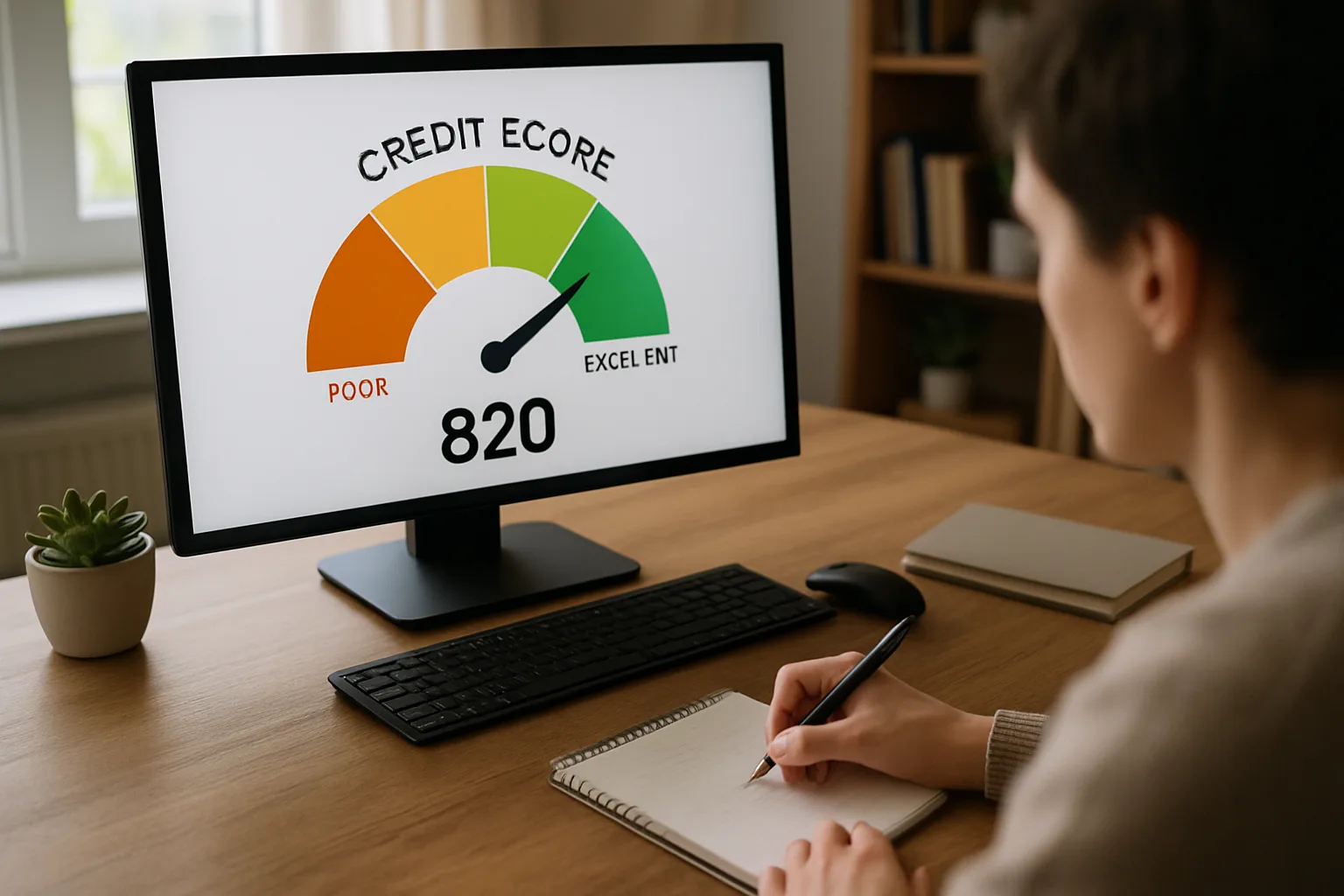
Lenders group scores into tiers to manage risk quickly. A super-prime borrower is very likely to repay on time. A deep subprime borrower has a higher chance of default.
Each tier comes with a different interest rate to compensate the lender for that risk. For example, a lender might offer 4% APR to a 760-score borrower but 16% to a 580-score borrower.
This tier system means even a small score improvement can push you into a lower-risk category. Moving from 650 to 670 could drop your rate from 12% to 8%.
How Lenders Calculate Risk
Lenders use statistical models to predict default rates for each tier. Historical data shows that borrowers with scores below 620 default at much higher rates. That's why they charge higher interest to offset potential losses.
For instance, a lender might expect 1% of super-prime borrowers to default, but 15% of deep subprime borrowers. The higher rate on subprime loans helps the lender stay profitable even with more defaults.
Can You Get a Car Loan with Bad Credit?
Yes, you can. Many lenders specialize in subprime auto loans for people with scores below 620. But there are trade-offs.
You'll likely face a higher interest rate, a larger down payment requirement, and possibly a shorter loan term. Some lenders may also require a co-signer.
If your score is below 600, your best bet is to work on improving it before applying. Even a few months of positive credit behavior can bump your score into a better tier. But if you need a car immediately, be prepared to pay more.
What Subprime Lenders Look For
Subprime lenders focus on more than just your score. They check your income stability and debt-to-income ratio closely. A steady job with two years of history can help offset a low score.
They may also require a larger down payment, often 10% to 20% of the car's price. Some lenders will only finance certain vehicles, like used cars under a specific mileage or age.
Be cautious with subprime loans. High interest rates can lead to negative equity, where you owe more than the car is worth. Always read the loan terms carefully before signing.
Real-World Example of a Subprime Loan
Imagine you have a 580 credit score and need a $20,000 car. A subprime lender approves you at 18% APR for 72 months. Your monthly payment would be about $450, but you'd pay over $12,000 in total interest.
If you waited six months and raised your score to 640, you might qualify for a 12% rate. That same loan would cost about $390 per month and $8,000 in interest. The six-month wait saves you $4,000.
How Your Credit Score Affects Your Monthly Payment
Let's look at a real-world example. Say you're financing $25,000 for a new car over 60 months. Here's how different scores affect your monthly payment and total interest (illustrative):
| Credit Score | APR | Monthly Payment | Total Interest Paid |
|---|---|---|---|
| 760+ | 4% | $460 | $2,624 |
| 660–699 | 8% | $507 | $5,413 |
| 620–659 | 12% | $556 | $8,365 |
| Below 620 | 16% | $608 | $11,474 |
That's a difference of nearly $9,000 in interest between the best and worst credit tiers. So improving your score even a little can save you real money.
How Loan Term Changes the Math
A longer loan term lowers your monthly payment but increases total interest. For a 620-score borrower at 12%, a 72-month loan on $25,000 would cost about $495 per month. But total interest would jump to over $10,600.
Shorter terms like 36 months have higher monthly payments but much less interest. The same borrower at 12% over 36 months would pay about $830 per month. Total interest would be roughly $4,900.
Always compare total interest cost, not just the monthly payment. A lower payment can hide thousands in extra interest charges.
What Factors Determine Your Credit Score?
Your FICO score is based on five main categories:
- Payment history (35%): Paying bills on time is the biggest factor. One late payment can drop your score significantly.
- Credit utilization (30%): How much of your available credit you're using. Aim to keep it below 30% — lower is better.
- Length of credit history (15%): Older accounts help your score.
Keep old cards open even if you don't use them.
- Credit mix (10%): Having different types of credit (credit cards, installment loans) can help.
- New credit (10%): Opening several accounts in a short time can hurt your score.
For a deeper dive, check out our guide on what affects your credit score.
Why Payment History Matters Most
Payment history is the largest chunk of your score. A single 30-day late payment can drop a 700 score by 60 to 80 points. The impact lessens over time but stays on your report for seven years.
Setting up automatic payments for at least the minimum due is a simple way to protect your score. Even one missed payment can cost you a better car loan rate.
Credit Utilization Explained
Credit utilization measures how much of your available credit you're using. If you have a $10,000 total credit limit and owe $3,000, your utilization is 30%. Most experts recommend keeping it below 30% for a good score.
For an excellent score, aim for 10% or lower. Paying down a $5,000 balance to $1,000 could boost your score by 20 to 40 points in a month or two.
How to Raise Your Credit Score Fast Before a Car Loan
If you're planning to buy a car in the next few months, you can take steps to how to raise your credit score fast. Here are the most effective strategies:
Pay Down Credit Card Balances
Credit utilization is the second biggest factor. If you're using more than 30% of your credit limit, paying down balances can boost your score quickly. For example, if you have a $5,000 limit and owe $2,500, that's 50% utilization.
Paying it down to $1,500 (30%) could improve your score in a month or two.
Dispute Errors on Your Credit Reports
Check your credit reports for free at AnnualCreditReport.com. If you find incorrect late payments, accounts that aren't yours, or other errors, dispute them. Removing a mistake can raise your score fast.
The Consumer Financial Protection Bureau (CFPB) has a guide on how to dispute credit report errors.
Become an Authorized User
If a family member or friend has a credit card with a long history of on-time payments, ask them to add you as an authorized user. The account's positive history will appear on your credit report, potentially boosting your score. Make sure the card issuer reports authorized users to the credit bureaus.
Pay Bills on Time, Every Time
Payment history is the most important factor. Set up automatic payments or reminders. Even one late payment can stay on your report for seven years.
Don't Open New Accounts Right Before Applying
Each credit application triggers a hard inquiry, which can temporarily lower your score by a few points. Avoid opening new credit cards or loans in the months before you apply for a car loan.
How to Increase Credit Score Quickly When You Have No Credit
If you're starting from scratch, how to build credit is a different challenge. You need to establish a credit history. Here are options:
- Secured credit card: You put down a deposit (e.g., $200) that becomes your credit limit. Use it for small purchases and pay in full each month. After 6–12 months, you may qualify for an unsecured card.
- Credit-builder loan: Some credit unions and online lenders offer small loans where the money is held in a savings account until you pay it off. Payments are reported to credit bureaus.
- Co-signer: If someone with good credit co-signs your car loan, their history helps you get approved. But they're on the hook if you miss payments.
How Long Does It Take to Build Credit from Scratch?
With a secured card, you can generate a FICO score in about six months. The first score is often in the 600–700 range if you pay on time and keep utilization low. After one year, you may have a score in the mid-600s to low-700s.
A credit-builder loan works similarly. Monthly payments reported to the bureaus build a positive payment history. After the loan term ends, you get the saved money back plus a credit score.
How to Improve Credit Score Fast: What Actually Works
Many people want to know how to improve credit score fast — and the truth is, there are limits. You can't jump from 550 to 750 overnight. But you can see meaningful improvement in 30–90 days by focusing on the factors you can control.
The fastest gains usually come from lowering credit utilization. If you pay down a high balance, the credit bureaus typically update your score within one billing cycle. Disputing errors can also yield quick results if the bureau removes a negative item.
But beware of companies that promise to "fix" your credit quickly for a fee. Many are scams. Legitimate credit repair takes time and effort.
What a 30-Day Improvement Looks Like
Suppose your score is 620 with 80% credit utilization. Paying down to 30% could raise your score to 660 or 670 in one month. That moves you from subprime to near-prime, potentially lowering your car loan rate by 2% to 4%.
Disputing a single late payment error might add another 20 to 40 points. Combined, these steps could push you from 620 to 700 in 60 days. That's a huge difference in loan terms.
How to Boost Credit Score Fast: Strategies That Work
If you need to how to boost credit score fast for an upcoming car purchase, here's a priority list:
- Pay down credit card balances to under 30% utilization. This is the single most impactful step.
- Check your credit reports for errors. Free at AnnualCreditReport.com. Dispute any mistakes.
- Ask for a credit limit increase. If you have a card with a good payment history, requesting a higher limit can lower your utilization instantly (as long as you don't spend more).
- Become an authorized user on a well-managed account.
- Pay all bills on time. Set up auto-pay for at least the minimum.
Why a Credit Limit Increase Helps
If you have a $2,000 limit and owe $1,000, your utilization is 50%. Asking for an increase to $4,000 drops utilization to 25% without paying anything. That can boost your score by 10 to 30 points within a month.
Not all issuers report limit increases quickly. Call your card company to ask when they update the bureaus. Some do it within days, others at the end of the billing cycle.
How to Improve Credit Score Immediately: Myth vs. Reality
Let's be honest: there's no way to how to improve credit score immediately in a single day. But there are a few things that can give you a small, same-day boost:
- Pay down a credit card balance online. If the card issuer reports to the bureaus quickly, your utilization may update within days.
- Dispute an error online. If the bureau accepts your dispute, they may update your report within 24 hours.
- Ask for a credit limit increase. Some issuers approve instantly, which can lower your utilization ratio.
But these are minor tweaks. For a significant jump, you need consistent good behavior over several months.
What Not to Expect from Quick Fixes
No legitimate service can remove accurate negative information from your credit report. If a company guarantees a 100-point jump in 30 days, it's likely a scam. Only time and positive habits build lasting credit improvement.
Credit repair companies can dispute errors on your behalf, but you can do the same for free. Avoid paying upfront fees for services that promise instant results.
How to Build Your Credit Score from Scratch
If you have no credit history, you need to how to build your credit score before you can qualify for a car loan on your own. Start with a secured credit card or a credit-builder loan. Use the card for small purchases and pay the full balance each month.
After 6–12 months, you'll have a credit score, and you can apply for a car loan — possibly with a co-signer to get a better rate.
Alternative Paths for No-Credit Borrowers
Some lenders offer "first-time buyer" programs with lower credit requirements. These often require a larger down payment, like 20% to 30% of the car's price. The interest rate may be higher, but it's a way to get started.
Credit unions are often more flexible with no-credit borrowers. They may consider your banking history and income instead of just your score. Joining a local credit union before you apply can help.
How to Boost Your Credit Score Fast: Common Mistakes to Avoid
When trying to how to boost your credit score fast, people sometimes make things worse. Avoid these pitfalls:
- Closing old credit cards. This shortens your credit history and increases utilization. Keep them open.
- Applying for too many loans at once. Each hard inquiry dings your score. Instead, do your rate shopping within a 14–45 day window so multiple inquiries count as one.
- Paying off a collection account without negotiating. Paying a collection doesn't remove it from your report. Sometimes it's better to negotiate a "pay for delete" agreement in writing.
- Using a credit repair company that promises miracles. You can do most of the same things yourself for free.
Why Rate Shopping Matters
When you apply for a car loan, each lender pulls your credit. Multiple hard inquiries in a short time can drop your score by 5 to 10 points each. But FICO treats multiple auto loan inquiries within 14 to 45 days as a single inquiry.
This means you can shop around without hurting your score. Get pre-approved by three to five lenders within a two-week window. Compare the offers and pick the best rate.
How to Raise Credit Score Fast: The 30-Day Plan
Here's a practical plan to how to raise credit score fast in 30 days:
- Day 1: Pull your credit reports from all three bureaus at AnnualCreditReport.com. Look for errors.
- Day 2–3: Dispute any errors online. Also, pay down credit card balances to below 30% utilization.
- Day 4–7: Request a credit limit increase on your oldest card. If you have a trusted family member, ask to be added as an authorized user.
- Day 8–30: Pay all bills on time. Set up auto-pay if needed. Avoid new credit applications.
This won't work miracles, but it can give you a solid boost in a month.
Tracking Your Progress
Many credit card issuers now offer free credit score updates. Check your score weekly to see how your actions affect it. A 20-point increase in 30 days is realistic with the steps above.
If your score doesn't move, revisit your credit reports. There may be errors you missed or other factors like high utilization on a single card. Keep adjusting until you see improvement.
What to Do If You Need a Car Loan Right Now
If you can't wait to improve your score, here are your options:
- Shop around: Get pre-approved by multiple lenders — banks, credit unions, online lenders, and dealership financing. Compare rates and terms.
- Consider a co-signer: A co-signer with good credit can help you get a lower rate.
- Make a larger down payment: Putting down 20% or more reduces the lender's risk and may improve your rate.
- Choose a cheaper car: A smaller loan amount means lower payments and less risk for the lender.
- Consider a shorter loan term: 36–48 months instead of 60–72 months can lower the interest rate.
How to Negotiate with a Low Score
Even with a low score, you can negotiate. Bring a pre-approval from a credit union to the dealership. This shows you have options and can pressure them to match or beat the rate.
Focus on the total price of the car, not just the monthly payment. A dealer might offer a low monthly payment by extending the loan term, but you'll pay more in interest. Always ask for the APR and total loan cost.
How Lenders Decide Beyond Your Credit Score
Your credit score isn't the only factor. Lenders also look at:
- Debt-to-income ratio (DTI): Your monthly debt payments divided by your gross monthly income. Most lenders want DTI under 45–50%.
- Employment history: Stable income over the past two years is ideal.
- Down payment: A larger down payment reduces the loan amount and shows commitment.
- Vehicle type and age: New cars and certain models have better financing options.
So even if your score is lower, a strong income and a solid down payment can help you get approved.
How DTI Affects Your Loan
Suppose you earn $4,000 per month and have $1,200 in existing debt payments. Your DTI is 30%. Adding a $500 car payment brings it to 42.5%, which most lenders accept.
But if your DTI is already 45%, a new car loan may be denied.
Lowering your DTI before applying can help. Pay off small debts or increase your income. Even a part-time job for a few months can improve your ratio.
How Your Credit Score Impacts Insurance Rates
Many people don't realize that your credit score also affects your car insurance premiums. Insurers in most states use credit-based insurance scores to set rates. A lower score can mean higher monthly insurance costs.
For example, a driver with a 760 credit score might pay $1,200 per year for full coverage. A driver with a 620 score could pay $1,800 or more for the same policy. That's an extra $50 per month on top of your car loan payment.
Improving your credit score can save you money on both your loan and your insurance. It's one more reason to focus on building good credit before buying a car.
How to Choose the Right Lender for Your Credit Tier
Different lenders specialize in different credit tiers. Knowing where to apply can save you time and prevent unnecessary hard inquiries. Here's a breakdown of lender types:
- Banks and credit unions: Best for super-prime and prime borrowers (660+). They often offer the lowest rates but have strict requirements.
- Online lenders: Good for near-prime and subprime borrowers (620–699). They may be more flexible with credit history.
- Dealership financing: Convenient but often higher rates. Dealers may mark up the rate for profit, so compare with outside offers.
- Buy-here, pay-here lots: For deep subprime borrowers (below 620). These dealers finance in-house but charge very high rates, often 20% or more.
Always get pre-approved before visiting a dealership. This gives you leverage to negotiate and prevents you from accepting a bad deal out of desperation.
How to Compare Loan Offers
When comparing offers, look at the APR, loan term, and total cost. Don't just focus on the monthly payment. A lower monthly payment with a longer term can cost you thousands more in interest.
Use an online auto loan calculator to compare scenarios. For example, a 5% APR for 48 months on $20,000 costs about $460 per month and $2,100 in total interest. A 10% APR for 72 months costs about $370 per month but $6,600 in total interest.
Key takeaways
- There's no single credit score needed for a car loan, but 660+ gets you better rates.
- Your credit score directly impacts your monthly payment — a higher score saves thousands.
- You can improve your score in a few months by paying down balances, fixing errors, and paying on time.
- If you need a car now, shop around, consider a co-signer, and make a larger down payment.
- Check your credit reports for free and dispute any errors — it's one of the fastest ways to boost your score.
Frequently asked questions
What is the minimum credit score for a car loan?
Can I get a car loan with a 500 credit score?
How long does it take to improve credit score for a car loan?
Does checking my credit score hurt it?
Should I use a credit repair company to improve my score for a car loan?
This article is for general informational purposes only and does not constitute financial, legal or credit-repair advice. Always consult a qualified financial advisor or credit counselor about your specific circumstances.

Written & reviewed by
Can OTUEditor
Can OTU is the editor of this site, curating and reviewing every guide for accuracy and clarity.
View all guides →