How to Rebuild Your Credit Score After Bankruptcy
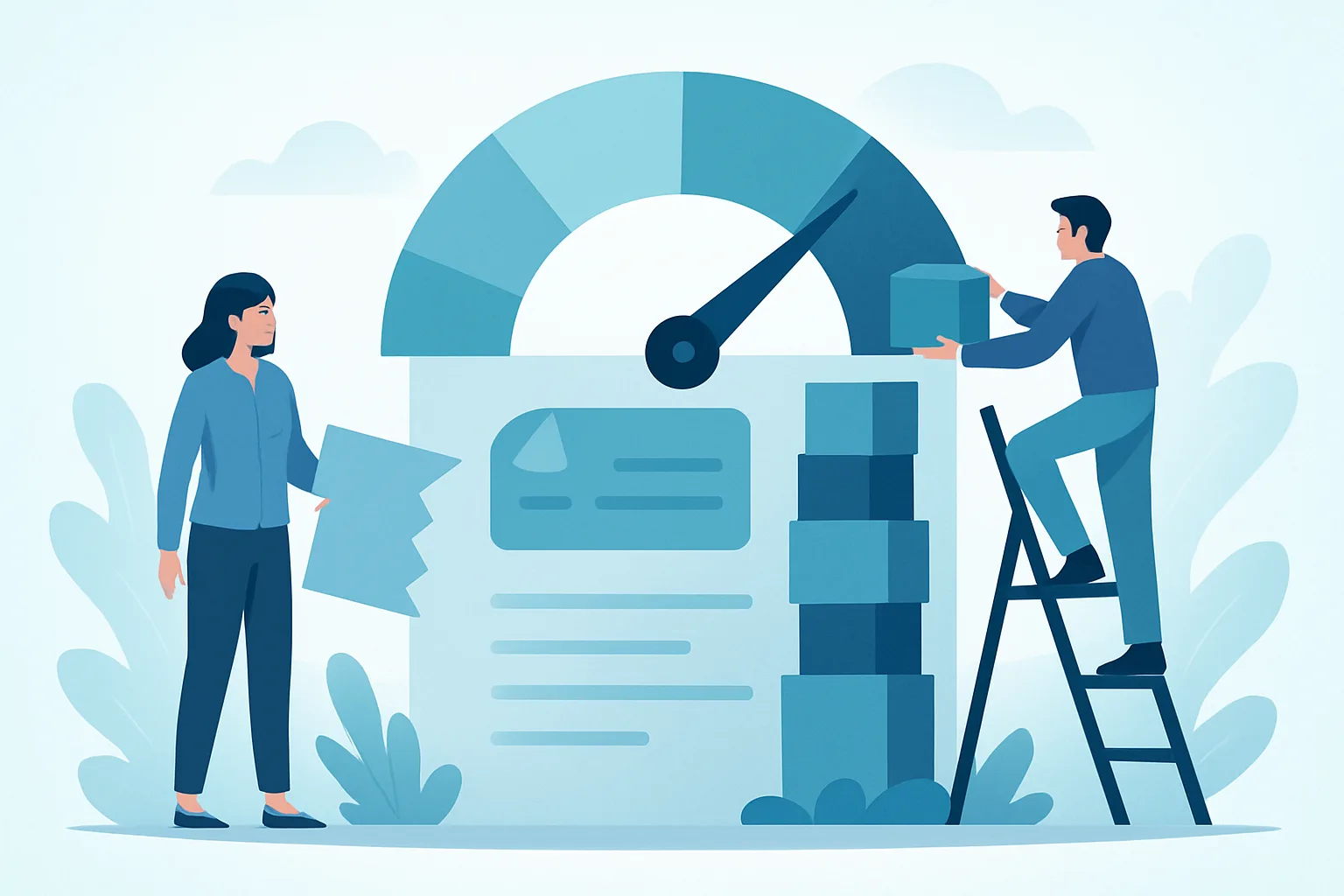
- Start with a secured card or credit-builder loan to establish new positive payment history.
- Pay all bills on time and keep credit utilization low (under 30%).
- Monitor your credit reports for errors and track your progress regularly.
Filing for bankruptcy can feel like a financial reset button—but it also brings a major hit to your credit score. However, bankruptcy is not the end of your credit journey. With the right strategies, you can begin rebuilding your credit score after bankruptcy and work toward a healthier financial future. This article provides a clear, step-by-step roadmap to help you recover your credit standing.
Bankruptcy stays on your credit report for up to 10 years for Chapter 7 and 7 years for Chapter 13, but its impact on your score diminishes over time. The key is to start building positive credit history immediately after your bankruptcy is discharged. By taking deliberate actions, you can see meaningful improvement within 12 to 24 months.
Remember, this content is for informational purposes only and does not constitute financial advice. Always consider consulting a credit counselor or financial professional for personalized guidance.
Understanding Your Credit Score After Bankruptcy
Your credit score is a three-digit number that lenders use to assess your creditworthiness. After bankruptcy, your score typically drops significantly—often into the 500s or low 600s. This happens because bankruptcy indicates to lenders that you were unable to repay debts as agreed. However, the scoring models (FICO and VantageScore) are designed to weigh recent behavior more heavily over time. So, while the bankruptcy itself remains on your report, its negative effect lessens as you add positive information.
It's important to understand what affects your credit score. The five main factors are payment history (35%), amounts owed (30%), length of credit history (15%), new credit (10%), and credit mix (10%). After bankruptcy, your payment history and amounts owed are damaged, but you can start improving them immediately. For example, if you had a score of 700 before bankruptcy, it might drop to 520 after a Chapter 7 filing. But if you begin making on-time payments on a secured card and a credit-builder loan, your score could rise to 580 within six months and to 630 within a year. This is because scoring models prioritize recent behavior, so each new positive payment reduces the relative weight of the bankruptcy over time.
Your credit report will show the bankruptcy as a public record. For Chapter 7, it stays for 10 years from the filing date; for Chapter 13, it stays for 7 years from the filing date. However, many lenders become willing to extend credit within a year or two after discharge, especially if you demonstrate responsible behavior. For instance, some credit unions offer "second chance" credit cards to individuals who have completed bankruptcy, often with lower credit limits but favorable terms. The key is to understand that the bankruptcy's sting fades as you build a new, positive credit narrative.
Step 1: Review Your Credit Reports
The first step in rebuilding is to know exactly where you stand. Obtain free copies of your credit reports from AnnualCreditReport.com (the only federally authorized source). You can get one free report from each of the three major bureaus—Equifax, Experian, and TransUnion—every 12 months. Review each report carefully for errors, such as accounts that should have been discharged but still show a balance, or incorrect personal information. For example, you might find a credit card account that was included in your bankruptcy but is still listed as "open" with a past-due balance. This error can artificially lower your score because it suggests you still owe money on that account. Similarly, you might spot a misspelled name or an old address that doesn't belong to you, which could indicate a data entry mistake or even identity theft.
Dispute any inaccuracies with the credit bureau. Errors can drag your score down, so fixing them gives you a clean slate. Also, ensure that all accounts included in the bankruptcy are marked as "included in bankruptcy" or "discharged." This helps lenders see that those debts are no longer owed. The dispute process is straightforward: you can file online through each bureau's website, by mail, or by phone. The bureau must investigate your claim within 30 days, and if the information is found to be inaccurate, they must correct it. For instance, if you dispute a discharged account that still shows a balance, the bureau will contact the creditor, who must verify the debt. If the creditor cannot provide proof, the account is removed or updated, which can boost your score by 10 to 30 points. Make it a habit to check your reports every few months, especially in the first year after bankruptcy, to catch any lingering errors.
Step 2: Create a Post-Bankruptcy Budget
Rebuilding credit requires financial stability. Before you apply for new credit, make sure your monthly income covers your essential expenses and leaves room for savings. Bankruptcy often results from overwhelming debt, so creating a realistic budget prevents future problems. Track your spending, cut unnecessary costs, and build an emergency fund of at least $500 to $1,000. This fund will help you avoid relying on credit for unexpected expenses. For example, if your car needs a $600 repair, having that emergency fund means you can pay cash instead of charging it to a credit card and risking high utilization. A well-structured budget also helps you avoid late fees, which can damage your credit further. Consider using the 50/30/20 rule: allocate 50% of your income to needs (rent, utilities, groceries), 30% to wants (entertainment, dining out), and 20% to savings and debt repayment. Adjust these percentages based on your situation, but prioritize saving at least a small amount each month.
A solid budget also demonstrates to lenders that you can manage your finances. When you eventually apply for credit, lenders may look at your debt-to-income ratio. Keeping it low shows you have capacity to handle new payments. For instance, if your monthly income is $4,000 and your total monthly debt payments (including your new credit card minimum) are $800, your debt-to-income ratio is 20%, which is considered healthy. Lenders prefer ratios under 36%. By sticking to your budget, you not only improve your financial health but also position yourself as a low-risk borrower when you apply for a car loan or mortgage in the future. Use budgeting apps like Mint or YNAB to track your progress and set alerts for bill due dates.
Step 3: Get a Secured Credit Card
One of the most effective tools for rebuilding your credit score after bankruptcy is a secured credit card. Unlike a traditional credit card, a secured card requires a cash deposit that serves as your credit limit (usually $200 to $2,000). This deposit minimizes risk for the issuer, making approval easier even with a low credit score. For example, if you deposit $300, your credit limit is $300. The issuer holds this deposit as collateral, so if you fail to pay, they can use the deposit to cover the balance. This structure makes secured cards accessible even to those with scores in the 500s.
Use the card for small, regular purchases—like gas or groceries—and pay the balance in full each month. This builds positive payment history, which is the most important factor in your credit score. After 6 to 12 months of responsible use, many issuers will automatically convert your card to an unsecured card and return your deposit. For instance, if you use a secured card for a $30 weekly gas purchase and pay it off immediately, you'll generate a string of on-time payments. After eight months, the issuer might review your account and upgrade it to an unsecured card with a higher limit, say $1,000, and refund your deposit. This not only boosts your credit score but also gives you access to more credit without tying up your cash.
When choosing a secured card, look for one that reports to all three credit bureaus and has low fees. Avoid cards with high annual fees or application fees that eat into your deposit. Some popular options include the Discover it® Secured Card and the Capital One Platinum Secured Card, but always read the terms carefully. For example, the Discover it® Secured Card offers cash back rewards and automatically reviews your account for an upgrade after seven months. The Capital One Platinum Secured Card has a lower minimum deposit of $49, $99, or $200, depending on your creditworthiness. Compare fees: some cards charge an annual fee of $25 to $50, while others have no annual fee. Choose one that fits your budget and offers a clear path to unsecured status.
For more strategies on improving your score quickly, check out our guide on how to raise your credit score fast.
Step 4: Consider a Credit-Builder Loan
Another option is a credit-builder loan, offered by credit unions and some online lenders. Unlike a traditional loan, the lender holds the loan amount in a savings account while you make monthly payments. Once you've paid off the loan, you get the money back. The payments are reported to the credit bureaus, building positive payment history. For example, a $1,000 loan with a 12-month term might have a small interest charge, but you'll receive the $1,000 at the end. This is a great way to establish a record of on-time payments. The loan amount typically ranges from $300 to $3,000, with terms from 6 to 24 months. The interest rate is usually low, often between 5% and 15%, because the lender's risk is minimal—they already have your deposit.
Credit-builder loans are low-risk for lenders, so approval is easier. They also help you save money while building credit. For instance, if you take out a $500 credit-builder loan with a 12-month term and a 10% interest rate, your monthly payment would be about $44. After 12 months, you'll have paid $528 total, but you'll receive $500 back, meaning the cost of building credit is just $28 in interest. This is a small price to pay for a boost in your credit score. Many credit unions offer these loans to members, and some online lenders like Self (formerly Self Lender) specialize in them. To maximize the benefit, set up automatic payments from your checking account to ensure you never miss a due date. Over the loan term, you'll build a history of on-time payments, which can improve your score by 20 to 50 points, depending on your starting point.
If you have no credit at all, you can also learn how to build credit from the ground up, which uses similar principles.
Step 5: Become an Authorized User
Ask a trusted family member or friend with good credit to add you as an authorized user on their credit card account. As an authorized user, you receive a card in your name, but the primary cardholder remains responsible for payments. The account's positive history—including on-time payments and low utilization—can appear on your credit report, boosting your score. For example, if your parent has a credit card with a $10,000 limit and a balance of $1,000 (10% utilization), and they've made on-time payments for five years, that entire history can be added to your credit report. This can instantly improve your credit age and payment history, potentially raising your score by 30 to 80 points.
However, this only works if the primary cardholder uses the card responsibly. If they miss payments or carry high balances, it could hurt your score. Choose someone with a long history of on-time payments and low credit utilization. You don't even need to use the card; just being added can help. For instance, you could ask a sibling who has a card they've used responsibly for three years. Make sure the issuer reports authorized user activity to the credit bureaus—most major issuers like Chase, American Express, and Bank of America do. Also, confirm that the primary cardholder is comfortable with the arrangement, as they remain legally responsible for the debt. Some people worry about the risk, but you can mitigate this by agreeing to pay for any charges you make, though it's not required for the credit-building benefit.
Step 6: Use a Store Card or Gas Card
Store credit cards and gas cards often have more lenient approval requirements than major bank cards. They typically have low credit limits (e.g., $300 to $500) and high interest rates, but they can be a stepping stone. Use them sparingly and pay off the balance each month to avoid interest charges. For example, a store card from a retailer like Target or Walmart might approve you with a score of 580, while a gas card from Shell or Exxon might require a score of 600. These cards are designed for loyal customers, so issuers are more willing to take a chance on borrowers with damaged credit.
Be cautious: some store cards charge high annual fees or have limited usefulness. Only apply for cards that report to all three credit bureaus. Also, avoid applying for too many cards at once, as each application triggers a hard inquiry that can temporarily lower your score. For instance, if you apply for three store cards in one month, you'll have three hard inquiries, which could drop your score by 5 to 15 points each. Instead, space out applications by at least six months. Use the card for a single small purchase each month, like a $20 grocery run at a store you frequent, and pay it off immediately. This builds a positive payment history without risking high utilization. After six months of responsible use, you might qualify for an unsecured card with a higher limit.
Step 7: Make All Payments on Time
Payment history accounts for 35% of your FICO score, making it the single most important factor. After bankruptcy, every on-time payment you make is a positive step. Set up automatic payments or reminders for all your bills—rent, utilities, phone, insurance, and any new credit accounts. Even one late payment can set you back, so prioritize timeliness. For example, if you have a secured card with a $200 limit and you miss a payment by 30 days, your score could drop by 50 to 100 points, wiping out months of progress. Conversely, a string of on-time payments over six months can boost your score by 60 to 100 points.
If you're worried about forgetting, consider using a budgeting app or calendar alerts. The goal is to establish a consistent track record of on-time payments over many months. Lenders want to see that you've changed your habits. For instance, set up automatic payments for your credit card and credit-builder loan from your checking account. Also, pay your rent on time—while rent payments aren't always reported to credit bureaus, some services like Experian RentBureau allow you to report them for a fee. Similarly, utility payments can be reported through programs like UltraFICO or Experian Boost, which add positive payment history to your credit file. Every on-time payment counts, so make it a non-negotiable part of your routine.
Step 8: Keep Credit Utilization Low
Credit utilization—the percentage of your available credit you're using—is the second most important factor. Aim to keep your utilization below 30% on each card and overall. For example, if you have a secured card with a $500 limit, don't carry a balance above $150. Better yet, pay off your balance in full every month. This shows lenders you can manage credit without relying on it heavily. Utilization is calculated both per card and across all cards, so keeping it low on each account is crucial. For instance, if you have two cards—one with a $300 limit and one with a $200 limit—and you carry a $100 balance on each, your per-card utilization is 33% and 50%, respectively, and your overall utilization is 40% ($200 out of $500). This could lower your score by 10 to 20 points compared to keeping each below 30%.
If you have multiple cards, the total utilization matters too. Keeping overall utilization low can give your score a boost. As your credit limits increase over time, resist the urge to spend more. For example, if your secured card is upgraded to an unsecured card with a $1,000 limit, continue using it for only small purchases like $50 in groceries each month. This keeps your utilization at 5%, which is excellent for your score. You can also request a credit limit increase after six to twelve months of responsible use, which automatically lowers your utilization if you don't increase your spending. For instance, if your limit goes from $500 to $1,000 and you keep your balance at $100, your utilization drops from 20% to 10%, potentially boosting your score by 10 to 15 points.
Step 9: Avoid Co-Signing and High-Risk Credit
After bankruptcy, you might be tempted by offers from subprime lenders offering credit with no credit check or high fees. Avoid payday loans, rent-to-own agreements, and title loans. These products often come with triple-digit interest rates and can trap you in a cycle of debt. Similarly, co-signing for someone else's loan is risky because you become responsible if they default, which could damage your rebuilding efforts. For example, a payday loan might charge 400% APR, meaning a $500 loan could cost $1,000 in fees over a year. If you miss a payment, the lender could report it to the credit bureaus, adding a negative mark to your already fragile credit file. Title loans are even worse—they use your car as collateral, and if you default, you could lose your vehicle.
Stick to mainstream, reputable credit products that report to the credit bureaus. If you're unsure about a lender, check with the Consumer Financial Protection Bureau (CFPB) or your state's attorney general for complaints. For instance, before applying for a credit card, search for the issuer's name on the CFPB's complaint database. If you see a pattern of consumer complaints about hidden fees or unfair practices, avoid that lender. Also, be wary of "credit repair" companies that promise to remove bankruptcy from your report—this is illegal, and you can do it yourself for free by disputing errors. Remember, rebuilding credit is a marathon, not a sprint, and high-risk products only set you back.
Step 10: Monitor Your Credit Regularly
Keep track of your progress by monitoring your credit score and reports. Many credit card issuers now offer free credit scores to cardholders, and websites like Credit Karma provide free VantageScores. However, remember that VantageScores may differ from FICO scores, which lenders often use. For a more accurate picture, you can purchase your FICO score from myFICO.com or use a free trial. For example, if your VantageScore shows 620 but your FICO score is 600, you might be disappointed when a lender uses the lower score. To avoid surprises, check both scores periodically. Set a reminder to check your scores every month, and track changes over time. Seeing your score rise from 550 to 600 in six months can be motivating and help you stay disciplined.
Check your credit reports at least annually for errors. If you see any accounts that don't belong to you or incorrect bankruptcies, dispute them immediately. Regular monitoring also helps you detect identity theft early. For instance, if you notice a new credit card account you didn't open, it could be a sign of fraud. File a dispute with the credit bureau and place a fraud alert on your credit file. The CFPB provides resources on credit reports and scores. Visit their website at consumerfinance.gov for official guidance. You can also sign up for credit monitoring services like IdentityForce or Credit Sesame, which alert you to changes in your credit report, such as new inquiries or accounts. Some services offer free basic monitoring, while premium versions cost $10 to $30 per month. Choose one that fits your budget and needs.
Step 11: Rebuild Your Credit Mix Over Time
Credit mix—having different types of credit (revolving, installment)—accounts for 10% of your score. After bankruptcy, you may have only a secured card. As your score improves, consider adding an installment loan, such as a small personal loan from a credit union or a car loan (if you need a car). However, only take on new credit when necessary. Don't open accounts just to improve your mix, as too many new accounts can hurt your score. For example, if you have a secured card and a credit-builder loan, you already have a mix of revolving and installment credit. Adding a car loan would improve your mix further, but only if you genuinely need a vehicle. If you don't need a car, don't take out a loan just for the credit mix benefit—the hard inquiry and new account could temporarily lower your score.
A good strategy is to start with one secured card, then after a year, add a credit-builder loan. After another year, you might qualify for an unsecured card. Gradually, your credit mix will improve naturally. For instance, after 18 months of rebuilding, you might have a secured card, a credit-builder loan, and a store card. That's a healthy mix of three accounts. As your score reaches the mid-600s, you could apply for a small personal loan from a credit union, which might offer rates as low as 8% to 12%. Use the loan for a specific purpose, like consolidating a small debt or making a home improvement, and pay it off on time. This adds an installment account to your credit file, which can boost your score by 10 to 20 points over time.
Step 12: Be Patient and Consistent
Rebuilding your credit score after bankruptcy takes time. You won't see a 700+ score overnight. Typically, you can expect to reach a "fair" score (580–669) within 12 to 18 months, and a "good" score (670–739) within 2 to 4 years if you consistently follow good habits. The bankruptcy will remain on your report for up to 10 years, but its impact diminishes as you add years of positive history. For example, after two years of on-time payments and low utilization, your score might be 650, and the bankruptcy's effect on your score might be only 50 points, down from an initial 150-point hit. After five years, the impact could be as low as 20 points, and you might qualify for a mortgage with a decent rate.
Stay disciplined: pay bills on time, keep balances low, and avoid unnecessary credit applications. Over time, lenders will see you as a lower risk, and you'll qualify for better rates and products. For instance, after three years of rebuilding, you might be approved for a rewards credit card with a $5,000 limit and a 0% introductory APR. This is a far cry from the secured card you started with. Celebrate small milestones, like reaching a 600 score or getting your first unsecured card, but don't get complacent. Continue to monitor your credit and adjust your strategy as needed. Remember, the bankruptcy is a chapter in your financial story, not the whole book. With patience and consistency, you can write a new, positive narrative.
The Role of Credit Counseling in Rebuilding
Credit counseling can be a valuable resource during your rebuilding journey. Nonprofit credit counseling agencies offer free or low-cost services to help you create a budget, understand your credit report, and develop a plan for rebuilding. For example, the National Foundation for Credit Counseling (NFCC) has certified counselors who can review your financial situation and suggest strategies tailored to your needs. They might recommend a debt management plan (DMP) if you have remaining debts, which consolidates payments into one monthly amount, often with reduced interest rates. However, after bankruptcy, you likely have few debts left, so counseling focuses on prevention and education.
Counseling can also help you avoid common pitfalls. For instance, a counselor might advise you to avoid store cards with high fees or to prioritize building an emergency fund before applying for new credit. They can also help you understand the nuances of credit scoring, such as how closing an old account affects your utilization. Some agencies offer workshops on budgeting and credit building, which can provide ongoing support. To find a reputable counselor, check the NFCC website or the U.S. Department of Justice's list of approved credit counseling agencies. Avoid for-profit companies that charge high fees for "credit repair" or "debt settlement," as these are often scams. A legitimate counselor will never promise to remove accurate negative information from your credit report.
How Bankruptcy Affects Your Ability to Get a Mortgage
If your long-term goal includes buying a home, understanding how bankruptcy affects mortgage eligibility is crucial. After a Chapter 7 bankruptcy, you typically need to wait at least two years from the discharge date to qualify for an FHA loan, and four years for a conventional loan. For Chapter 13, you may qualify for an FHA loan after one year of on-time payments in your repayment plan, and for a conventional loan after two years from the discharge date. However, these are minimum waiting periods—lenders also look at your credit score, debt-to-income ratio, and down payment. For example, if you file for Chapter 7 and your credit score is 580 after two years, you might qualify for an FHA loan with a 3.5% down payment. But if your score is only 550, you'll need to wait longer or improve your score further.
During the waiting period, focus on building a strong credit profile. Make all payments on time, keep utilization low, and avoid new credit inquiries. Also, save for a down payment—FHA loans require at least 3.5% down, while conventional loans may require 5% to 20%. For instance, if you want to buy a $200,000 home, you'll need at least $7,000 for an FHA loan. Use the time after bankruptcy to build your savings and credit simultaneously. Some lenders offer "bankruptcy-friendly" mortgage programs, but they often come with higher interest rates. As your credit improves, you can refinance to a better rate. Consult a mortgage broker who specializes in post-bankruptcy lending to explore your options.
Common Mistakes to Avoid
Many people make errors that slow their progress. Avoid these pitfalls:
- Applying for too much credit too soon: Each application causes a hard inquiry, which can temporarily lower your score. Space out applications by at least six months. For example, if you apply for a secured card in January, wait until July to apply for a credit-builder loan. This gives your score time to recover from the inquiry and allows you to build positive history before adding new accounts.
- Closing old accounts: Even if a card has a high interest rate, keeping it open (with a zero balance) helps your credit utilization and length of history. Close only if it has an annual fee you can't avoid. For instance, if you have a secured card with a $29 annual fee, it's worth keeping for the first year or two because the benefit of a longer credit history outweighs the cost. If the fee is $100, consider closing it after you've established other accounts.
- Using credit repair companies that promise quick fixes: No one can legally remove accurate negative information from your credit report. Beware of scams. For example, a company might charge you $500 to "remove" your bankruptcy, but all they do is dispute it, which you can do for free. If the bankruptcy is accurate, it will remain. Save your money and focus on building positive history.
- Ignoring your budget: Rebuilding credit won't matter if you fall back into debt. Stick to your budget and save for emergencies. For instance, if you don't track your spending, you might overspend on a credit card and carry a balance, leading to high utilization and interest charges. Use a budgeting app to stay on track and review your spending weekly.
- Neglecting to monitor your credit: Without regular checks, you might miss errors or identity theft. Set a monthly reminder to check your credit score and a quarterly reminder to review your full credit report. Early detection of issues can save you months of rebuilding effort.
When to Seek Professional Help
If you're struggling to manage your finances after bankruptcy, consider working with a nonprofit credit counselor. The National Foundation for Credit Counseling (NFCC) offers free or low-cost counseling. A counselor can help you create a budget, review your credit report, and suggest strategies. Avoid for-profit companies that charge high fees for debt settlement or credit repair—many are scams. For example, a legitimate counselor might charge $20 for a one-hour session, while a scam company might charge $500 upfront for a "guaranteed" credit repair. Always check the counselor's credentials with the NFCC or the U.S. Department of Justice.
You can also consult a bankruptcy attorney if you have questions about your discharge or reaffirmation agreements. Some attorneys offer free initial consultations. For instance, if you're unsure whether a creditor is correctly reporting a discharged account, an attorney can review your case and advise on next steps. Additionally, if you're considering a major financial decision like buying a home, a financial planner can help you create a long-term plan that includes credit rebuilding and savings. Remember, professional help is an investment in your financial future, but only if you choose reputable, fee-transparent providers.
Key takeaways
- Rebuilding your credit after bankruptcy is a gradual process that requires patience and consistent good habits.
- Start with a secured credit card or credit-builder loan to establish positive payment history.
- Pay all bills on time and keep credit utilization below 30%.
- Monitor your credit reports regularly and dispute any errors.
- Avoid high-risk credit products and be wary of quick-fix scams.
- With discipline, you can achieve a fair or good credit score within 1–3 years.
Frequently asked questions
How long does bankruptcy stay on my credit report?
Can I get a credit card immediately after bankruptcy?
Will my credit score go up after bankruptcy?
Can I buy a house after bankruptcy?
What is the fastest way to rebuild credit after bankruptcy?
This article is for general informational purposes only and does not constitute financial, legal or credit-repair advice. Always consult a qualified financial advisor or credit counselor about your specific circumstances.

Written & reviewed by
Can OTUEditor
Can OTU is the editor of this site, curating and reviewing every guide for accuracy and clarity.
View all guides →