Average Credit Score for People in Their 40s and 50s: Is Yours on Track?

- Average FICO score for 40s: 697; for 50s: 712
- Improving your score is possible with consistent on-time payments and lower credit use
- Significant improvement can take 3–12 months, but some changes show up in 30 days
If you're in your 40s or 50s and wondering how your credit score stacks up, you're not alone. Credit scores tend to peak in middle age — but that doesn't mean everyone's is where they want it to be. Life happens: maybe you had a medical bill go to collections, or you carried credit card debt through a rough patch.
The good news is that your score is not a life sentence. With the right moves, you can improve it.
This article covers the average credit scores for people in their 40s and 50s, what affects those numbers, and — most importantly — how long it takes to improve your credit score. We'll look at realistic timelines, including how to improve credit score fast and how to raise credit score in 30 days. The information here is general, not financial advice, so consider consulting a professional for your specific situation.
Let's start with the numbers, because that's what you came for.
What Is the Average Credit Score for People in Their 40s and 50s?
According to data from FICO and Experian, average credit scores rise with age. For people in their 40s, the average FICO score is about 697. For those in their 50s, it's around 712.
That puts both groups in the "good" range (670–739), but there's a wide spread.
Here's a breakdown by age group:
| Age Group | Average FICO Score | Score Range |
|---|---|---|
| 40–49 | 697 | Good |
| 50–59 | 712 | Good |
| 60+ | 745 | Very Good |
These are averages, meaning many people score lower — and many score higher. If you're below 670, you're not alone, and you can improve.
Why Averages Can Be Misleading
An average of 697 hides a lot of variation. For instance, someone with a 750 score and someone with a 620 score average out to 685. You might be closer to one extreme than the other.
The real question is not whether you're average, but whether your score is helping or hurting your financial goals.
Consider a 45-year-old who has a mortgage, two car loans, and three credit cards. If they've made all payments on time for years, their score might be 760. Another 45-year-old who went through a divorce and missed several credit card payments could be at 620.
Both are in their 40s, but their scores tell very different stories.
Your score reflects your personal financial history, not just your age. So don't compare yourself too harshly to the average. Focus on your own progress.
What Affects Your Credit Score in Your 40s and 50s?
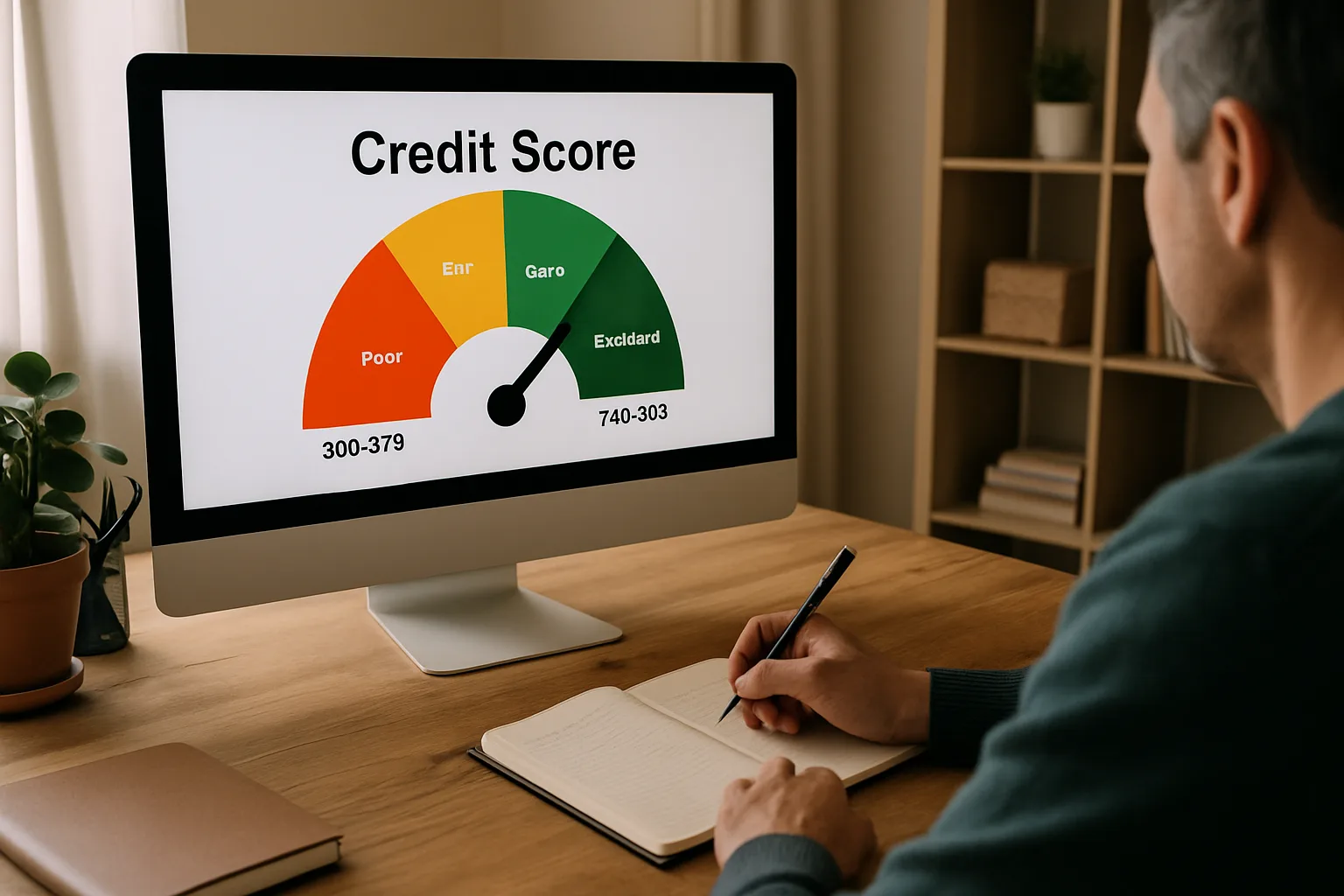
Your credit score is a snapshot of your financial habits. The main factors are the same at any age, but some become more common in middle age. If you haven't already, read our guide on what affects your credit score for a full breakdown.
Here are the big ones:
- Payment history (35%): Late payments hurt the most. Missing a payment by 30 days can drop your score by 60–110 points.
- Credit utilization (30%): How much of your available credit you're using. Above 30% is a red flag; above 50% hurts a lot.
- Length of credit history (15%): Older accounts help. Closing old cards can shorten your history and lower your score.
- Credit mix (10%): Having both installment loans (mortgage, car) and revolving credit (cards) is good.
- New credit (10%): Too many hard inquiries in a short time can drop your score.
In your 40s and 50s, you might have a mortgage, car loans, and several credit cards. If you've managed them well, your score should be solid. But if you've had a divorce, job loss, or medical debt, your score may have taken a hit.
How Medical Debt Specifically Affects Scores in Middle Age
Medical debt is one of the most common credit issues for people in their 40s and 50s. A single hospital stay can lead to thousands of dollars in bills that end up in collections. Unlike credit card debt, medical debt often comes without warning.
If a medical bill goes to collections, it can drop your score by 50–100 points, even if you eventually pay it.
There is some good news: newer credit scoring models like FICO 9 and VantageScore 4.0 give less weight to paid medical collections. But many lenders still use older models. So a medical collection can still hurt your ability to get a mortgage or auto loan.
If you have medical debt, consider negotiating with the provider before it goes to collections. Many hospitals offer payment plans or financial assistance.
For a deeper look at how different debts impact your score, check out our article on how to build credit from scratch.
How Long Does It Take to Improve Credit Score?
This is the question everyone wants answered. The honest answer: it depends on where you're starting and what's dragging your score down. But here's a realistic timeline:
- 30 days: You can see a small bump (10–30 points) by paying down credit card balances to below 30% utilization and correcting any errors on your credit report.
- 3–6 months: Consistent on-time payments and lower utilization can raise your score by 50–100 points.
- 12 months: With steady habits, you can move from fair to good or good to very good.
- 2+ years: Major negatives like collections or late payments will have less impact as they age, but they stay on your report for 7 years.
So how long does it take to raise credit score significantly? For most people, 6–12 months of focused effort yields noticeable results. But there are ways to speed things up.
Why Timelines Vary So Much
Your starting point matters enormously. If your score is 650 because of high credit card utilization, paying down $5,000 in debt could boost your score 40 points in a month. But if your score is 550 because of multiple late payments and a collection, you'll need more time.
Each late payment takes about 6 months of on-time payments to stop hurting your score. Collections take even longer.
Another factor is how many negative items you have. One late payment is easier to recover from than three. A single collection is better than five.
The more negatives you have, the longer the recovery. That's why it's important to focus on preventing new negatives while you work on the old ones.
Finally, your credit mix and history length also affect speed. Someone with a 15-year credit history and a mix of loans will recover faster than someone with only two credit cards and a 5-year history. The scoring models reward stability and experience.
How to Improve Credit Score Fast: 5 Proven Strategies

If you want to know how to improve credit score fast, these are the most effective moves you can make. None are magic, but they work.
1. Pay Down Credit Card Balances
Your credit utilization ratio is the second most important factor. If you're using 80% of your limit, even one payment can make a difference. Aim to get below 30% — ideally below 10%.
Paying $2,000 on a $5,000 card could boost your score 20–40 points in a month.
2. Become an Authorized User
If someone you trust (spouse, parent) has a card with a long history and low balance, ask to be added as an authorized user. Their positive history gets added to your credit report. This can raise your score quickly, sometimes in 30 days.
3. Dispute Errors on Your Credit Report
One in five credit reports has an error. If you find a late payment that wasn't late or a collection that isn't yours, dispute it with the credit bureau. If it's removed, your score can jump.
You can get free reports at annualcreditreport.com.
4. Pay Your Bills on Time — Every Time
This is obvious but critical. Set up autopay or calendar reminders. Even one late payment can undo months of progress.
If you've missed payments, get current and stay current.
5. Keep Old Accounts Open
Closing a credit card shortens your credit history and increases your utilization. Unless there's a high annual fee, keep it open and use it occasionally. For more on building a solid foundation, see our article on how to build credit.
How to Prioritize These Strategies
Not all strategies work equally fast. If you have high utilization, paying down debt should be your first priority. It's the quickest way to see a score jump.
If you have errors on your report, disputing them is also fast and free. Becoming an authorized user can help, but it depends on someone else's credit habits.
If you have late payments, there's no quick fix. You simply need time and consistent on-time payments. That's why it's smart to combine strategies: pay down debt now, dispute errors immediately, and set up autopay to prevent future problems.
Over 3–6 months, these actions compound.
For example, imagine you have a 650 score with $8,000 in credit card debt on a $10,000 limit. That's 80% utilization. If you pay $4,000 toward that debt, your utilization drops to 40%.
That alone could raise your score 30 points. If you also dispute a mistaken late payment from last year and get it removed, you could gain another 20 points. In 30 days, you could go from 650 to 700.
How Can I Raise My Credit Score in 30 Days?
This is a common question — how can I raise my credit score in 30 days? The answer is yes, but only by a modest amount. You can't fix years of late payments in a month.
But you can make changes that show up quickly:
- Pay down credit cards: Lower utilization is reported to the bureaus every 30 days. Paying a big chunk right before your statement date can lower the balance reported.
- Become an authorized user: If the card's history is positive, it can appear on your report within a billing cycle.
- Dispute errors: If the bureau removes a negative item, it happens fast.
- Ask for a credit limit increase: A higher limit lowers your utilization — but only if you don't increase spending.
In 30 days, you might gain 20–50 points. That's not a huge jump, but it's a start. For a full guide, check out how to raise your credit score fast.
Realistic Expectations for a 30-Day Plan
Let's say you have a 660 score and you want to get to 700 in 30 days. Is that possible? It depends on your specific situation.
If your main issue is high utilization, yes — paying down debt could get you there. But if you have a recent late payment or a collection, 40 points in 30 days is unlikely.
Here's a concrete example: A 48-year-old woman has a 650 score. She has $6,000 in credit card debt on a $10,000 limit (60% utilization) and one late payment from 18 months ago. She pays $3,000 toward the card, bringing utilization to 30%.
She also requests a credit limit increase from the same issuer, raising her limit to $12,000. Now her utilization is 25% ($3,000 on $12,000). She also becomes an authorized user on her husband's card, which has a $15,000 limit and a 10-year history.
In 30 days, her score could rise to 690–700.
But if her score is 650 because of a recent collection, no amount of utilization reduction will fix that in 30 days. She would need to wait for the collection to age or negotiate a pay-for-delete agreement, which is not guaranteed. The key is to know what's dragging your score down and target that specifically.
How Long Does It Take to Boost Credit Score After a Late Payment?
A single late payment can drop your score 60–110 points. The good news: the impact fades over time. Here's the timeline:
- After 30 days: The late payment is reported. Score drops.
- After 6 months: The impact lessens, but it's still there.
- After 12 months: The effect is smaller, but the late payment stays on your report for 7 years.
- After 2 years: The score impact is minimal if you've been on time since.
So how long does it take for credit score to increase after a late payment? You'll see gradual improvement each month you pay on time. Full recovery can take 6–12 months.
What If You Have Multiple Late Payments?
Multiple late payments compound the damage. Two late payments can drop your score 120–200 points, depending on how recent they are. Recovery takes longer because each late payment needs time to age.
If you have three late payments in the last year, you might need 12–18 months of on-time payments to see significant improvement.
But there's a strategy: focus on getting current first. If you're behind on payments, bring all accounts current as soon as possible. Then set up autopay to prevent future lapses.
Once you have 6 months of on-time payments, you can start applying for new credit cautiously. Over time, the new positive history will outweigh the old negatives.
For example, a 52-year-old man missed two mortgage payments during a job loss. His score dropped from 740 to 620. He got current on the mortgage and started paying all bills on time.
After 6 months, his score rose to 660. After 12 months, it reached 700. After 18 months, it was back to 730.
The key was patience and consistency.
How to Quickly Improve Credit Score: The Role of Secured Cards and Loans
If you have thin credit or damaged credit, a secured credit card or credit-builder loan can help you how to quickly improve credit score. Here's how they work:
- Secured card: You deposit $200–$500, and that's your credit limit. Use it for small purchases and pay it off each month. After 6–12 months, you may qualify for an unsecured card.
- Credit-builder loan: You make payments into a savings account, and the lender reports those payments to the bureaus. At the end, you get the money back.
Both methods add positive payment history, which is the biggest factor in your score. You can see improvement in 3–6 months.
How Much Can a Secured Card Help?
A secured card can add 20–50 points to your score within 3 months if you use it responsibly. The key is to keep your utilization low — under 30% of the card's limit. If you deposit $300 and use $100 each month, paying it off in full, you build a positive payment history.
After 6 months, you'll have a solid track record.
Credit-builder loans work similarly. You might take out a $1,000 loan with a 12-month term. You make $85 monthly payments, and the lender reports each payment to the credit bureaus.
After 12 months, you get the $1,000 back, minus any fees. Your score can rise 30–60 points over that period.
For someone in their 40s or 50s with no recent credit activity, these tools can rebuild a credit profile quickly. They're especially useful if you've been using only debit cards or cash for years. Check out our guide on how to build credit for more details.
What If Your Score Is Below Average? Steps to Take
If your score is below 670, don't panic. Here's a step-by-step plan:
- Get your credit reports from annualcreditreport.com. Check for errors.
- Dispute any inaccuracies — this is free and can help fast.
- Pay down credit cards to below 30% utilization.
- Set up autopay for at least the minimum payment on all accounts.
- Avoid applying for new credit unless necessary — each hard inquiry costs a few points.
- Consider a secured card if you have no positive revolving credit.
Following this plan, you can expect to see your score rise within 3–6 months. For more detail, read our guide on how to raise your credit score fast.
What to Do If You Have Collections
Collections are one of the biggest obstacles to a good score. If you have a collection, you have a few options. First, verify the debt is yours.
If it's not, dispute it with the credit bureau. If it is yours, you can try to negotiate a pay-for-delete agreement. This means you pay the collection agency in exchange for them removing the account from your credit report.
Not all agencies agree, but it's worth asking.
Another option is to wait. Collections stay on your report for 7 years from the date of the original debt. But their impact lessens over time.
After 2 years, a collection might only cost you 20–30 points instead of 100. After 4 years, it's even less. If you can't pay, focus on building positive history elsewhere.
For example, a 55-year-old woman had a medical collection from 3 years ago. Her score was 620. She couldn't pay the full amount, so she focused on paying down her credit cards and making on-time payments.
After 12 months, her score rose to 680. The collection was still there, but its impact had faded. She also disputed a small error on her report and gained another 15 points.
By being patient and strategic, she moved from poor to good credit.
How Long Does It Take to Raise Credit Score from Fair to Good?
Moving from fair (580–669) to good (670–739) is a common goal. How long it takes depends on what's holding you back. If it's high utilization, you can see improvement in 1–3 months by paying down debt.
If it's a late payment or collection, it may take 6–12 months of on-time payments to offset the damage. On average, expect 6–9 months of consistent effort.
Examples of Fair-to-Good Progress
Consider a 49-year-old man with a 640 score. He has $10,000 in credit card debt on a $15,000 limit (67% utilization) and one late payment from 8 months ago. He pays $5,000 toward the card, bringing utilization to 33%.
He also sets up autopay for all bills. After 3 months, his score rises to 670. After 6 months, it's 690.
The late payment still hurts, but the lower utilization and on-time payments are helping.
Another example: a 53-year-old woman with a 600 score. She has two collections from 2 years ago and high credit card use. She can't pay the collections, so she focuses on paying down her cards.
She reduces utilization from 80% to 40% over 4 months. Her score rises to 640. She then becomes an authorized user on her daughter's card, which has a 10-year history and low balance.
After 2 more months, her score hits 670. The collections are still there, but their impact is lessening.
The key is to be consistent. Even small improvements add up over time. If you can raise your score 10 points per month, you'll go from fair to good in 6–9 months.
How Long Does It Take to Raise Credit Score from Good to Very Good?
Going from good (670–739) to very good (740–799) is harder because you're already doing a lot right. The main levers: keep utilization below 10%, maintain a long credit history, and avoid new credit inquiries. This can take 1–2 years of steady habits.
But it's worth it — very good scores get the best interest rates.
Why the Last Jump Is the Hardest
Once you're in the good range, the low-hanging fruit is gone. You can't get a quick 40-point boost from paying down debt because your utilization is already low. Instead, you need to optimize every factor.
That means keeping utilization under 10%, having at least 2–3 credit cards with long histories, and avoiding any new credit applications.
For example, a 47-year-old woman has a 720 score. She has a mortgage, a car loan, and three credit cards. Her utilization is 15%, and she has no late payments.
To reach 760, she needs to lower utilization to 8% and wait for her oldest account to age another 2 years. She also avoids applying for any new credit. After 18 months, her score reaches 750.
After 2 years, it hits 770.
Another example: a 56-year-old man with a 730 score. He has a 20-year mortgage and two credit cards with low balances. His utilization is 5%.
He has no late payments in 10 years. His score is already high, but he wants to reach 800. He needs to wait for his credit history to grow and avoid any new inquiries.
After 3 years of steady habits, his score reaches 790. The last 10 points come from time and patience.
If you're in the good range, don't get discouraged by slow progress. You're already in a strong position. Focus on maintaining your habits and avoiding mistakes.
Common Mistakes That Slow Down Your Progress
Even with good intentions, people make mistakes that delay improvement. Avoid these:
- Closing old credit cards — it shortens your history and raises utilization.
- Paying off collections without negotiating — paying a collection doesn't remove it from your report; it just shows as paid. Sometimes settling for less is better.
- Applying for too many cards at once — each application triggers a hard inquiry.
- Ignoring your credit report — errors can drag your score down without you knowing.
If you avoid these, your path to a higher score will be smoother.
How to Avoid These Mistakes
Closing old cards is tempting if you want to simplify your finances. But think twice before closing a card you've had for 15 years. That card is helping your credit history length.
Instead, use it once every few months for a small purchase and pay it off immediately. That keeps the account active without costing you anything.
When it comes to collections, never pay without a plan. If you pay a collection, the account is marked as "paid" but stays on your report. That still hurts your score.
Instead, try to negotiate a pay-for-delete agreement. If the agency agrees, you pay and they remove the account. If they won't agree, consider waiting until the collection is older and its impact is smaller.
Finally, check your credit report at least once a year. Errors are common and can cost you 20–50 points. A simple dispute can fix them.
For more tips, read our guide on how to raise your credit score fast.
How Your Credit Score Affects Your Financial Life
Your credit score isn't just a number — it affects how much you pay for loans, insurance, and even housing. Here's a quick look at the impact:
| Score Range | Rating | Typical Mortgage Rate (30-yr fixed, illustrative) |
|---|---|---|
| 760–850 | Excellent | 6.5% |
| 700–759 | Good | 6.8% |
| 680–699 | Fair | 7.1% |
| 660–679 | Poor | 7.5% |
| Below 660 | Very Poor | 8.0%+ |
A difference of 0.5% on a $300,000 mortgage costs you about $30,000 extra over 30 years. So improving your score can save you real money.
Beyond Mortgages: Auto Loans and Insurance
Your credit score also affects auto loan rates. A 720 score might get you a 6% rate on a car loan, while a 660 score might get you 9%. On a $30,000 car loan over 5 years, that's an extra $2,500 in interest.
Insurance companies also use credit-based scores in many states. A lower score can raise your car insurance premium by 20–50%.
Even landlords check credit scores. A score below 620 might mean you need a larger security deposit or a co-signer. In competitive rental markets, a good score can help you get the apartment you want.
So improving your score isn't just about saving money — it's about opening doors.
For example, a 50-year-old man with a 680 score applied for a $25,000 car loan. He was offered a 7.5% rate. He spent 6 months improving his score to 720 by paying down debt and disputing an error.
He then refinanced the car loan at 6.0%, saving $1,200 over the loan term. That's a tangible benefit from a modest score improvement.
When to Seek Professional Help
If your debt feels overwhelming or you have multiple collections, consider credit counseling or a reputable credit repair company. Nonprofit credit counselors can help you create a debt management plan. Be wary of companies that promise to remove accurate negative items — that's not possible.
The Consumer Financial Protection Bureau (CFPB) has resources to help you find legitimate help. Check out their guide on credit repair for more information.
Remember, this article provides general information, not professional advice. For your specific situation, consult a financial advisor or credit counselor.
Signs You Need Professional Help
If you have more than three collections, you might benefit from professional guidance. A credit counselor can help you prioritize which debts to pay first and negotiate with creditors. They can also help you create a budget that allows you to pay down debt while covering living expenses.
Another sign is if you're considering bankruptcy. Bankruptcy can stay on your credit report for 10 years, but it can also give you a fresh start. A credit counselor can help you understand whether bankruptcy is right for you or if a debt management plan is a better option.
Don't make this decision alone.
Finally, if you've tried to improve your score for 6 months with no progress, it's time to get a second opinion. A professional can review your credit report and identify issues you might have missed. Sometimes a small error or a misunderstanding of how scoring works is holding you back.
A fresh set of eyes can make all the difference.
Key Takeaways
- The average credit score for people in their 40s is 697; for their 50s, it's 712.
- Improving your score is possible at any age. Focus on payment history and credit utilization.
- You can see small improvements in 30 days, but significant changes take 3–12 months.
- Strategies like paying down debt, disputing errors, and becoming an authorized user can speed up the process.
- Your credit score affects the interest rates you get, so improving it can save you thousands.
Frequently asked questions
What is the average credit score for a 45-year-old?
Can I raise my credit score 50 points in 30 days?
How long does it take to improve credit score from 600 to 700?
What hurts a credit score the most?
Should I close old credit cards to improve my score?
This article is for general informational purposes only and does not constitute financial, legal or credit-repair advice. Always consult a qualified financial advisor or credit counselor about your specific circumstances.

Written & reviewed by
Can OTUEditor
Can OTU is the editor of this site, curating and reviewing every guide for accuracy and clarity.
View all guides →