What Is a Collection Account and How Does It Affect Your Credit?
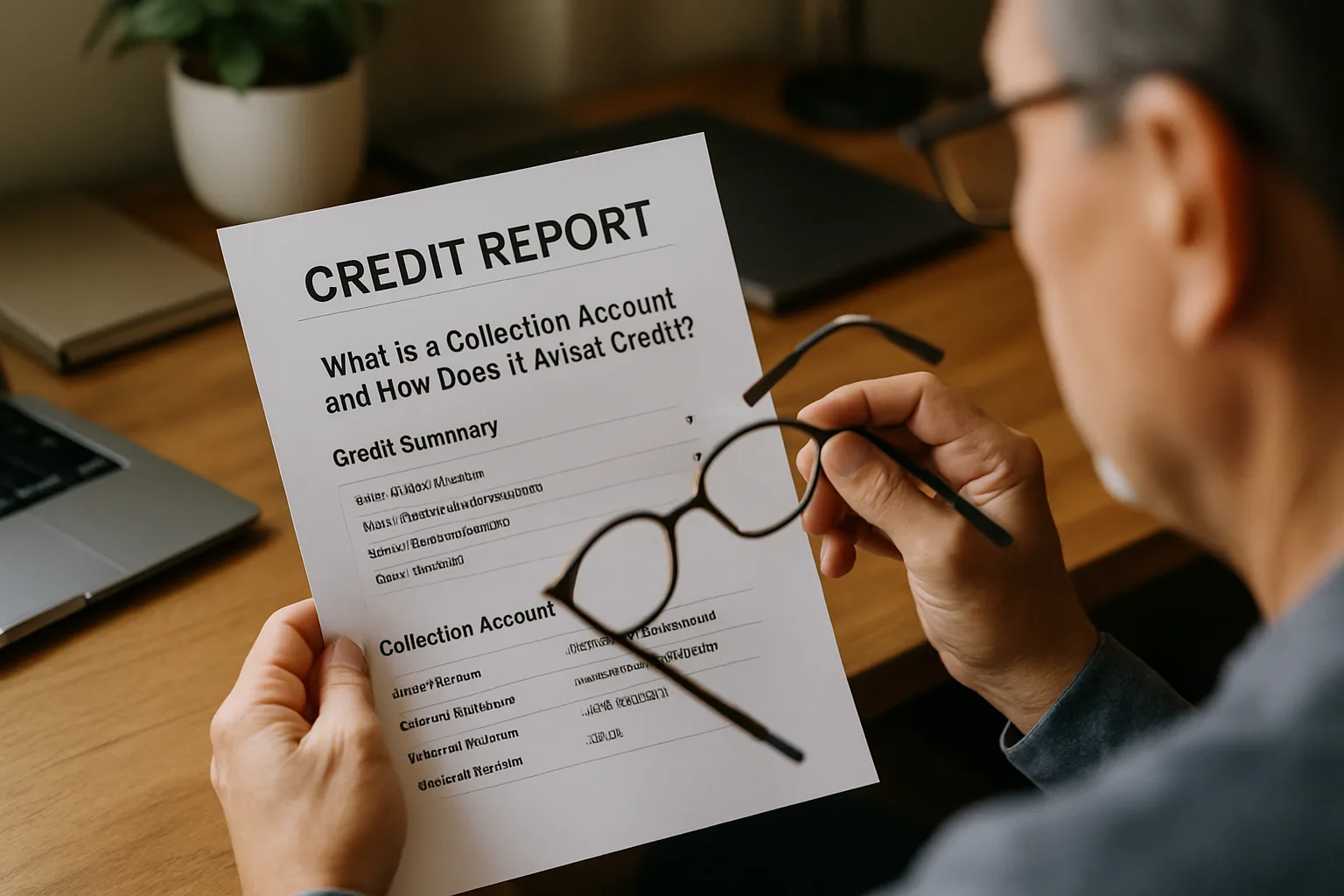
If you've ever missed enough payments on a credit card, medical bill, or loan, you might have received calls from a collection agency. That's because the original creditor gave up on getting paid and sold your debt to a collector. Now that collection account shows up on your credit report, and it can feel like a dark cloud hanging over your financial life.
But here's the thing: you're not alone. Millions of Americans have collection accounts on their credit reports. The good news is that you have options.
You can dispute errors, negotiate removal, or simply wait it out. This article walks you through exactly what a collection account is, how it affects your credit, and the practical steps you can take to deal with it.
Remember, this is general information, not professional financial advice. Everyone's situation is different, so consider talking to a credit counselor or attorney if you need personalized help.
What Is a Collection Account?
A collection account is a debt that the original creditor has given up on collecting and has either sold or assigned to a collection agency. This usually happens after you've missed payments for several months — typically 120 to 180 days past due.
Once the debt is in collections, the collection agency becomes the new owner (or the manager) of that debt. They will try to get you to pay, often by phone, mail, or even legal action. And they report the account to the credit bureaus — Equifax, Experian, and TransUnion — which is when it shows up on your credit report.
Collection accounts can come from any type of debt: credit cards, medical bills, student loans, auto loans, utilities, phone bills, or even unpaid rent. Even small amounts, like a $50 library fine, can end up in collections if left unpaid long enough.
How Collection Accounts Differ from Charge-Offs
A charge-off happens when the original creditor writes off your debt as a loss after about six months of non-payment. That does not mean you no longer owe the money. The creditor may still sell the charged-off debt to a collection agency.
A collection account is the result of that sale or assignment. You might see both a charge-off and a collection account on your credit report for the same debt. This double reporting can further damage your score, but you can dispute duplicates.
Types of Collection Agencies: First-Party vs. Third-Party
First-party collection agencies are often in-house departments of the original creditor. They try to collect before the debt is sold. Third-party agencies buy the debt from the original creditor for pennies on the dollar.
Third-party agencies have more aggressive tactics because they profit directly from what they recover. They also have more flexibility to negotiate settlements or pay-for-delete agreements. Understanding which type you're dealing with helps you choose the right strategy.
How Does a Collection Account Affect Your Credit Score?

A collection account is one of the most damaging items that can appear on your credit report. It signals to lenders that you failed to pay a debt as agreed, and they see you as a higher risk.
Your credit score can drop by 100 points or more — sometimes much more if you had a high score before. The exact impact depends on your overall credit profile. For someone with a thin credit history, a single collection can be devastating.
For someone with a long, positive history, the hit might be smaller but still significant.
And it's not just the score drop. A collection account can make it harder to get approved for a mortgage, car loan, or even a rental apartment. Landlords, employers, and insurance companies often check credit reports too.
The account stays on your report for seven years from the date the debt first became delinquent (the original missed payment that led to collections). Even if you pay it off, the account remains for the full seven years — though a paid collection looks better to some lenders than an unpaid one.
How Credit Scoring Models Treat Collections
FICO and VantageScore treat collections differently. FICO 8 ignores collections with an original balance under $100. VantageScore 3.0 ignores paid collections entirely.
Newer models like FICO 9 and VantageScore 4.0 give less weight to medical collections. This means your score impact may vary depending on which scoring model a lender uses. Knowing this can help you prioritize which collections to address first.
Illustrative Example: Score Drop from a Collection
Imagine you have a 720 credit score with a mix of credit cards and an auto loan. You miss several payments on a $2,000 credit card, and the debt goes to collections. Your score could drop to 580 or lower.
Now a mortgage lender sees a 580 score and may deny your application or offer a much higher interest rate. Over a 30-year loan, that could cost you tens of thousands of dollars in extra interest. This is why removing a collection account is so important.
How to Remove Collections from Credit Report: What Actually Works?
If you're asking "how to remove collections from credit report," you're not alone. It's one of the most common credit repair questions. The truth is, there's no magic wand, but there are legitimate strategies that can work.
Here are the most effective methods, from easiest to hardest:
- Dispute inaccuracies. If the collection account has any errors — wrong amount, wrong date, not your debt — you can dispute it with the credit bureaus. If the collection agency can't verify the debt within 30 days, it must be removed. Learn how to dispute errors on your credit report.
- Negotiate a pay-for-delete. This is where you offer to pay the debt in full (or a settlement) in exchange for the collection agency deleting the account from your credit report. Not all agencies agree, but it's worth asking.
- Request goodwill deletion. If you've already paid the collection, you can write a goodwill letter asking the collection agency to remove it as a courtesy. This rarely works, but it's free to try.
- Wait it out. If the debt is old and close to the seven-year mark, it might be better to just let it fall off naturally. The credit bureaus automatically remove accounts after seven years.
For a step-by-step guide, check out our detailed post on how to remove collections from credit report.
Why Pay-for-Delete Is Not Always Guaranteed
Collection agencies are not required by law to agree to pay-for-delete. Some major agencies like Portfolio Recovery Associates have policies against it. Others may agree if you offer a lump-sum payment that is less than the full balance.
Always get the agreement in writing before you send any money. A verbal promise means nothing if the agency later refuses to delete the account. If they won't put it in writing, consider other options.
How to Delete Collection Accounts from Credit Report: Step-by-Step

Many people search for "how to delete collection accounts from credit report" hoping for a quick fix. While you can't just delete a legitimate debt, you can remove it if the collection agency violates your rights or reports inaccurate information.
Step 1: Get Your Credit Reports
You're entitled to one free credit report per year from each of the three bureaus at AnnualCreditReport.com. Pull all three — the collection might not appear on all of them. Also, check for any errors in the account details.
Step 2: Identify the Collection Agency
Note the name, address, and phone number of the collection agency. Also note the account number, the original creditor, and the amount owed. This information will be on your credit report.
Step 3: Send a Debt Validation Letter
Under the Fair Debt Collection Practices Act (FDCPA), you have the right to request that the collection agency prove you owe the debt. Send a certified letter within 30 days of first contact asking for validation. If they can't provide it, they must stop collection and can't report the account.
Step 4: Dispute with the Credit Bureaus
If the collection agency doesn't respond or the information is wrong, file a dispute with each credit bureau that lists the account. You can do this online or by mail. The bureau will investigate and remove the account if the agency can't verify it.
Step 5: Negotiate Removal
If the debt is valid, you can try to negotiate a pay-for-delete agreement. Get any agreement in writing before you pay. If they refuse, you might still choose to pay to avoid a lawsuit, but the account will stay on your report as "paid collection."
Illustrative Example: Successful Debt Validation
Suppose a collection agency claims you owe $1,500 for an old medical bill. You send a debt validation letter within 30 days. The agency cannot provide proof that you ever received the service or that the debt is yours.
Under the FDCPA, they must stop collection and cannot report the account. You then dispute with the credit bureaus, and the account is removed. This happens more often than you might think, especially with old or resold debts.
How to Remove Paid Collections from Credit Report
Even after you pay a collection, the account stays on your credit report for seven years. But a paid collection is generally less damaging than an unpaid one. Some lenders might still approve you if you've paid it off.
To remove a paid collection, your best bet is to ask the collection agency to delete it. This is called a "goodwill deletion." Write a polite letter explaining that you've paid the debt and ask them to remove the account as a courtesy. They have no obligation to do so, but some might agree, especially if the amount was small.
Another option is to dispute the account again after paying. If the collection agency doesn't respond to the dispute, the bureau might remove it. But this is a long shot.
When a Paid Collection Still Hurts Your Score
Even a paid collection can lower your score because it shows a history of delinquency. Some lenders view a paid collection as less risky than an unpaid one, but it is still a negative mark. If you can get it removed entirely, your score will recover faster.
For example, a paid collection might reduce your score by 50 points instead of 100 points. Removing it could bring your score back to where it was before the debt went to collections. This is why negotiating removal is worth the effort.
How to Get Rid of Collections on Credit Report Without Paying
If you can't afford to pay the collection, you might wonder "how to get rid of collections on credit report" without paying. There are a few possibilities:
- Dispute errors. If the account has mistakes, you can get it removed without paying a cent.
- Debt validation. If the collection agency can't prove the debt, they must remove it.
- Statute of limitations. If the debt is too old to sue you, the collection agency might stop reporting it, but they're not required to. You can ask them to remove it since they can't take legal action.
- Bankruptcy. Filing for bankruptcy can discharge many debts, and the collection accounts will be included. But bankruptcy has its own severe credit impact.
Be careful: ignoring a collection won't make it go away. The account will still be on your credit report, and the collection agency can still sue you.
Understanding the Statute of Limitations
The statute of limitations is the time limit for a creditor to sue you for a debt. It varies by state and type of debt, typically ranging from 3 to 10 years. Once it expires, the debt becomes "time-barred."
However, the collection account can still appear on your credit report for the full seven years from the original delinquency. Even if they can't sue, they can still report the debt. You can use the expired statute as leverage to negotiate removal, but it is not automatic.
How to Remove Debt Collection from Credit Report: Legal Options
If a collection agency violates the FDCPA or the Fair Credit Reporting Act (FCRA), you can sue them. Common violations include calling too often, threatening you, or reporting false information.
If you win, the court can order the collection agency to remove the account from your credit report and pay you damages. This is a more advanced option, and you may want to consult a consumer protection attorney.
You can also file a complaint with the Consumer Financial Protection Bureau (CFPB) or your state attorney general's office. They may investigate and help resolve the issue.
Common FDCPA Violations to Watch For
Collection agencies cannot call you before 8 a.m. or after 9 p.m. They cannot use profane language or threaten violence. They cannot misrepresent the amount you owe or claim to be attorneys if they are not.
If you experience any of these, document everything — dates, times, and content of calls. Send a cease-and-desist letter if you want them to stop calling. A violation can be grounds for a lawsuit and potential removal of the account.
How to Delete Collections on Credit Report: Common Myths
There's a lot of misinformation out there about deleting collections. Let's clear up a few myths:
- Myth: Paying a collection instantly removes it. False. Paying only updates the status to "paid." The account stays for seven years.
- Myth: You can dispute a legitimate debt and it will be removed. Not true. If the debt is valid and verified, it stays.
- Myth: Credit repair companies can delete any collection. They can't do anything you can't do yourself. Be wary of companies that promise to remove accurate information.
- Myth: The seven-year clock starts when you pay. No, it starts from the original delinquency date.
Why You Should Avoid Credit Repair Scams
Some companies charge hundreds of dollars to "fix" your credit but do nothing you cannot do for free. They may tell you to dispute everything, hoping some errors stick. This can backfire if the bureaus flag you as a serial disputer.
Always research a company before paying. Check with the Better Business Bureau and read reviews. Remember, you have the same legal rights to dispute and negotiate as any credit repair company.
How to Clear Collections from Credit Report: Practical Tips
If you're looking for "how to clear collections from credit report," here are some practical steps to take right now:
- Stop the bleeding. Focus on paying your current bills on time. New positive payment history will help your score recover over time.
- Check your credit report. Know exactly what's on it. You can get free reports at AnnualCreditReport.com. Learn how to read your credit report so you understand what you're looking at.
- Dispute any errors. Even small mistakes can be grounds for removal.
- Consider a secured credit card. Building new credit with a secured card can offset some of the damage from collections.
- Be patient. Time heals most credit damage. As the collection ages, its impact lessens.
How to Prioritize Multiple Collections
If you have several collection accounts, focus on the most recent ones first. Recent collections have a greater impact on your score than older ones. Also, target accounts with smaller balances, as they are easier to negotiate or pay off.
Check which collections are from medical debts, as newer scoring models treat them more leniently. You might also prioritize collections that are preventing you from getting a mortgage or car loan. A targeted approach is more effective than trying to fix everything at once.
Will a Collection Account Ever Fall Off My Credit Report?
Yes. Under the Fair Credit Reporting Act, collection accounts must be removed from your credit report seven years after the original delinquency date. That's the date you first missed the payment that led to the collection, not the date the account was turned over to collections.
After seven years, the credit bureaus automatically delete the account. You don't have to do anything. But if it stays longer, you can dispute it as obsolete.
What If the Collection Reappears After Removal?
Sometimes a collection account is removed but then reappears if the debt is sold to a new agency. This is illegal if the account is past the seven-year mark. You can dispute it again and file a complaint with the CFPB.
If the account is still within seven years, a new agency can report it, but the original delinquency date remains the same. The seven-year clock does not reset when the debt is sold. Keep records of your original delinquency date to protect yourself.
Should You Pay a Collection Account?
Paying a collection account is a personal decision. Here are some factors to consider:
- If you need a mortgage or car loan soon: Many lenders require all collections to be paid before closing. Paying might be necessary.
- If the debt is small: Paying a small collection can prevent a lawsuit and stop collection calls.
- If the debt is old: If it's close to the seven-year mark, you might want to wait it out rather than pay.
- If you can negotiate a pay-for-delete: That's the best outcome — you pay, and the account is removed.
Before paying, get any agreement in writing. And never give a collection agency access to your bank account or credit card without a written agreement.
Illustrative Example: Paying vs. Waiting
Suppose you have a $500 collection that is five years old. You plan to apply for a mortgage in two years. If you pay it now, the account remains for two more years but shows as paid.
If you wait, it falls off in two years anyway.
In this case, waiting might be better because the account will be gone before you apply. But if the lender requires all collections to be paid, you may have no choice. Always check with your lender before making a decision.
How to Rebuild Credit After a Collection Account
Even if you can't remove the collection, you can rebuild your credit. Here's how:
- Pay all your other bills on time. Payment history is the biggest factor in your credit score.
- Keep credit card balances low. High utilization hurts your score.
- Get a secured credit card. Use it for small purchases and pay it off each month.
- Become an authorized user. Ask a family member with good credit to add you to their card.
- Monitor your credit. Use free services like Credit Karma to track your progress.
With consistent effort, you can see improvement in 6 to 12 months.
How Long Does It Take to Recover from a Collection?
Recovery time depends on your overall credit profile and how many negative items you have. For a single collection, your score might recover significantly within 12 to 24 months of positive payment history. The impact lessens as the collection ages.
If you also have late payments or other negatives, recovery may take longer. Focus on building a strong payment history and keeping your credit utilization low. Over time, the collection becomes a smaller part of your credit picture.
Key takeaways
- A collection account is a debt turned over to a collector after you fell behind on payments. It stays on your credit report for seven years and can drop your score significantly.
- You can try to remove it by disputing errors, negotiating a pay-for-delete, or requesting goodwill deletion. For detailed steps, see our guide on how to remove collections from credit report.
- Paying a collection doesn't remove it, but it may help with loan approvals. Always get agreements in writing.
- If a collection agency violates your rights, you can sue or file a complaint with the CFPB.
- Time is on your side: the account will fall off after seven years, and you can rebuild your credit with positive habits.
Frequently asked questions
How long does a collection account stay on your credit report?
Can I remove a collection account by paying it?
What is a pay-for-delete agreement?
Will a collection account prevent me from getting a mortgage?
Can I dispute a collection account if it's mine?
This article is for general informational purposes only and does not constitute financial, legal or credit-repair advice. Always consult a qualified financial advisor or credit counselor about your specific circumstances.

Written & reviewed by
Can OTUEditor
Can OTU is the editor of this site, curating and reviewing every guide for accuracy and clarity.
View all guides →