Statute of Limitations on Debt: When Creditors Can No Longer Sue
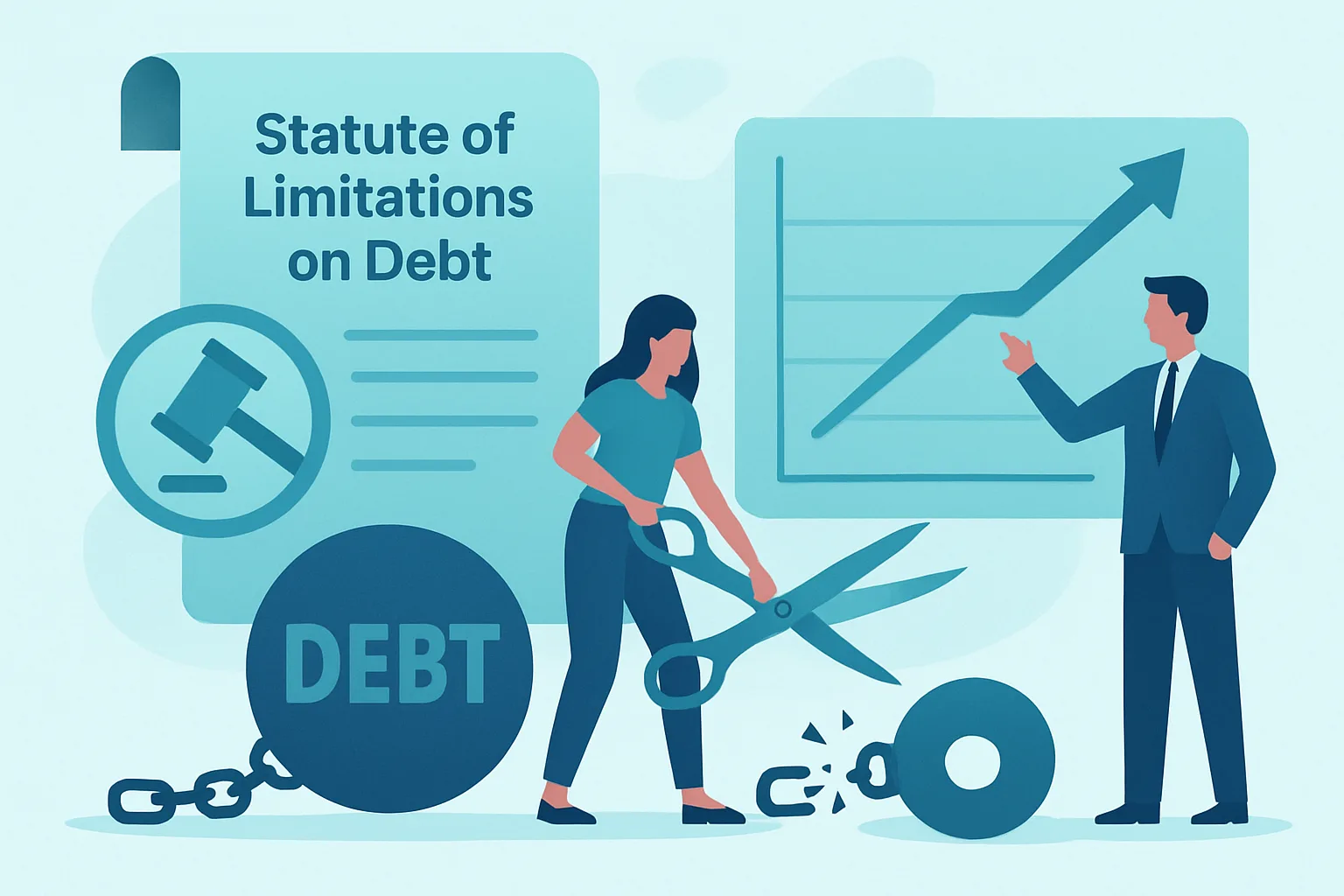
- Statutes vary by state and debt type (written contract, oral, promissory note, etc.)
- The clock usually starts from your last payment or written promise to pay
- Making a payment or even acknowledging the debt can restart the clock in some states
If you're struggling with old debt, you may have heard the term "statute of limitations on debt" and wondered what it means for you. This legal time limit is one of the most important protections for consumers, because once it passes, a creditor cannot take you to court to force you to pay. But the rules are complicated, and mistakes can cost you.
In this article, we'll explain exactly how the statute of limitations works, how to find your state's limits, and what to do if you're contacted about a time-barred debt. We'll also cover how to negotiate credit card debt with creditors, even when the statute has expired. Remember, this is general information, not legal or financial advice.
For your specific situation, consult a qualified attorney.
Many people assume that after a certain number of years, debt simply disappears. That's not quite true. While the statute of limitations can protect you from a lawsuit, the debt itself doesn't vanish.
It can still appear on your credit report, and collectors may still call you. Understanding the difference between the statute of limitations and the credit reporting time limit is key to making smart decisions about old debt.
Whether you're dealing with credit card debt, medical bills, personal loans, or old collection accounts, knowing the statute of limitations on debt gives you power. You can decide whether to pay, negotiate, or simply wait it out. Let's dive into the details.
What Is the Statute of Limitations on Debt?
The statute of limitations on debt is a law that sets a maximum time period after an event (like a missed payment) within which a creditor or debt collector can file a lawsuit against you to collect the debt. Once that time expires, the debt is considered "time-barred." That means if they sue you, you can raise the statute of limitations as a defense, and the court will dismiss the case.
It's important to understand that the statute of limitations does not erase the debt. You still owe it in a moral sense, and creditors can still ask you to pay. But they cannot use the court system to force you.
Each state sets its own statute of limitations for different types of debt. For example, the limit for credit card debt (usually considered a written contract) might be 4 years in one state and 6 in another. Oral agreements have shorter limits, while promissory notes may have longer ones.
Why States Set Different Time Limits
States have different legal traditions and policy goals. Some states want to give creditors more time to collect, while others favor consumer protection. This is why you cannot rely on a single number for all debts.
For instance, written contracts often have longer statutes because they involve signed documents. Oral contracts are harder to prove, so states give less time. Promissory notes are similar to written contracts but may have separate rules.
If you have a debt from a credit card, it is typically treated as a written contract or an open-ended account. Check your state's classification to know the exact limit.
Why Does the Statute of Limitations Matter?
If you're sued for a debt that is within the statute of limitations, you could face a judgment against you. That judgment can lead to wage garnishment, bank account levies, or liens on your property. But if the statute has expired, you have a powerful defense.
You can file a motion to dismiss the lawsuit based on the expired statute, and the court will likely rule in your favor.
This is why it's critical to know the statute of limitations for your debt. If a collector threatens to sue you on an old debt, check the date of your last payment. If it's past the limit, you can tell them the debt is time-barred and they cannot sue you.
However, be careful: collectors may still try to sue, hoping you won't show up to court. If you ignore a summons, they can get a default judgment even on a time-barred debt. Always respond to a lawsuit.
Real-World Example of a Time-Barred Defense
Imagine you live in California, where the statute for written contracts is 4 years. You last made a payment on a credit card in June 2019. In July 2024, a collector sues you.
Because the statute expired in June 2023, you can raise the defense. The court will dismiss the case.
But if you ignore the summons and do not show up, the court may enter a default judgment against you. That judgment is valid even though the debt is time-barred. You would then face wage garnishment.
Always respond to any lawsuit.
How Long Is the Statute of Limitations on Debt?
The time period varies widely by state and by the type of debt. Below is a general table for common types of debt. But you must verify your state's specific laws, as they can change.
| Type of Debt | Typical Range | Common Examples |
|---|---|---|
| Written contracts | 3–10 years | Credit cards, personal loans, auto loans |
| Oral contracts | 2–6 years | Verbal promises to pay |
| Promissory notes | 3–10 years | Signed loan documents |
| Open-ended accounts | 3–6 years | Credit cards (in some states) |
| Medical debt | 3–6 years | Hospital bills, doctor visits |
| State tax debt | Varies | Usually longer, sometimes no limit |
| Federal student loans | No statute | Can be collected at any time |
To find your state's exact limits, check your state's laws or consult an attorney. The Consumer Financial Protection Bureau (CFPB) also provides resources. You can visit the CFPB's page on statute of limitations for more information.
Why Federal Student Loans Have No Statute
Federal student loans are backed by the government. The government can use powerful collection tools like wage garnishment and tax refund offsets without suing you. Because of this, there is no time limit for them to sue.
Private student loans, however, are different. They are subject to state statutes of limitations. If you have private student loans, check your state's rules for written contracts or promissory notes.
When Does the Clock Start Ticking?
The statute of limitations clock usually starts on the date of your last activity on the account. This is often called the "last payment date" or "last charge date." For credit cards, it's typically the date you last made a payment or used the card. For loans, it's the date you defaulted (missed a payment and never caught up).
However, some states use the date of first missed payment, while others use the date of last payment. It's important to know your state's rule. Also, if you move to a different state, the statute of the state where you currently live may apply, but it can be complicated.
Generally, the statute of the state where the contract was signed or where you live when the lawsuit is filed may govern.
Example of Clock Start for a Credit Card
Suppose you had a credit card with a balance of $5,000. You made your last payment on March 15, 2020. You never used the card again.
In most states, the clock starts on March 15, 2020. If your state has a 4-year statute, the deadline to sue you is March 15, 2024.
But if your state uses the date of first missed payment, and you missed your April 2020 payment, the clock might start on April 1, 2020. Always check your state's specific rule.
What Can Restart the Statute of Limitations?
This is a critical trap for many consumers. In some states, certain actions can "revive" the statute of limitations, meaning the clock resets and you get a new time period. Common actions that may restart the clock include:
- Making a payment on the debt
- Signing a written promise to pay
- Making a partial payment
- Even acknowledging the debt in writing (in some states)
For example, if you have a credit card debt that is 3 years old in a state with a 4-year statute, and you make a small payment, the clock may restart from that payment date. That means the creditor now has another 4 years to sue you. So be very careful before making any payment on an old debt without understanding the consequences.
Also, if you enter into a payment plan or settlement agreement, that could be considered a new contract, resetting the statute. Always consult an attorney before making any payment on a time-barred debt.
Why Acknowledging the Debt Can Be Dangerous
In some states, simply writing a letter that says "I know I owe this debt" can restart the statute. This is because it is seen as a new promise to pay. Even a text message or email could count.
To be safe, never admit to owing an old debt in writing. If a collector asks you to confirm the debt, do not respond without legal advice. Verbal acknowledgments are usually not enough, but written ones can be.
How to Find Out If Your Debt Is Time-Barred
To determine if a debt is past the statute of limitations, you need to know three things:
- The type of debt (credit card, medical, etc.)
- The state's statute of limitations for that type
- The date of your last payment or activity
Check your credit reports to find the date of first delinquency or last payment. You can get free weekly credit reports from AnnualCreditReport.com. If you see errors, learn how to dispute errors on your credit report.
Also, learn how to read your credit report to understand the information.
Once you have the date, add the statute of limitations years. If the current date is past that, the debt is likely time-barred. But be aware: collectors may still try to collect.
If they sue, you must raise the defense. Do not ignore a summons.
Using Your Credit Report to Find the Date
Your credit report shows the "date of first delinquency" for each account. This is the month you first missed a payment. For most debts, this is the starting point for the statute of limitations.
If you cannot find your last payment date, look at your bank statements. If you paid online, check your email receipts. Keep all records of payments to protect yourself.
Can a Creditor Still Sue After the Statute Expires?
Technically, yes. A creditor or debt collector can still file a lawsuit even after the statute of limitations has expired. However, if you respond and assert the statute as a defense, the court should dismiss the case.
The problem is that many people don't respond to lawsuits, and the court enters a default judgment against them. That judgment is valid even if the debt is time-barred, because the court didn't know the statute had expired.
So if you are sued, you must respond. File an answer with the court and include the affirmative defense of the expired statute of limitations. It's best to hire a lawyer or use a legal aid service.
If you can't afford one, some courts have self-help centers.
Also, be aware that collectors may try to trick you into making a payment or acknowledging the debt to restart the statute. Don't fall for it. If you're unsure, get legal advice.
What Happens If You Get a Default Judgment
A default judgment means the court ruled against you because you did not respond. Once that happens, the creditor can garnish your wages, freeze your bank account, or put a lien on your home. These actions are legal even if the debt was time-barred.
To avoid this, always respond to a lawsuit within the time given. If you missed the deadline, you may be able to file a motion to vacate the judgment, but it is harder. Act quickly.
What About Credit Reporting? The 7-Year Rule
The statute of limitations on debt is separate from the credit reporting time limit. Under the Fair Credit Reporting Act (FCRA), most negative information can stay on your credit report for 7 years from the date of first delinquency. This includes late payments, collections, and charge-offs.
After 7 years, the item must be removed.
So even if the statute of limitations is only 4 years, the debt can still appear on your credit report for 7 years. That means your credit score can be affected long after the lawsuit threat is gone. If you have old collections on your report, you might want to learn how to remove collections from credit report.
Note: Some debts, like unpaid taxes or child support, can stay on your report longer. Also, if you file for bankruptcy, that stays for 10 years.
Example of the 7-Year Rule vs. Statute
Imagine you live in a state with a 3-year statute for credit card debt. You defaulted in June 2020. The statute expires in June 2023.
But the debt can appear on your credit report until June 2027. So from 2023 to 2027, the debt is time-barred but still hurts your credit.
If you want to improve your credit sooner, you might negotiate a pay-for-delete agreement. But be careful: paying could restart the statute. Consult an attorney first.
Should You Pay a Time-Barred Debt?
This is a personal decision. There are pros and cons to paying an old debt that is past the statute of limitations.
Pros of paying:
- Moral satisfaction of clearing the debt
- Collectors will stop calling
- May improve your credit if the collection is removed (but not guaranteed)
Cons of paying:
- You could restart the statute of limitations, making you vulnerable to a lawsuit
- You might pay a debt you legally don't have to
- The collection may still appear on your credit report as "paid collection" which still hurts your score
If you decide to pay, consider negotiating a settlement for less than the full amount. And get any agreement in writing before you pay. But again, consult an attorney first.
When Paying Might Make Sense
Some people choose to pay for moral reasons. They feel obligated to honor their debts. Others pay because they want to buy a home or car and the old debt is blocking their loan approval.
If you pay, make sure the collector agrees to delete the account from your credit report. Get this in writing. Otherwise, you may pay and still have a negative mark.
How to Negotiate Credit Card Debt with Creditors
If you have credit card debt that is still within the statute of limitations, you may want to negotiate a settlement to avoid a lawsuit. Here are steps to how to negotiate credit card debt with creditors:
- Know your numbers: Understand how much you owe, the interest rate, and the statute of limitations. This gives you leverage.
- Save up a lump sum: Creditors are more likely to settle if you can pay a lump sum, often 40-60% of the balance.
- Contact the creditor or collector: Call and explain your financial hardship. Offer a lump sum or payment plan. Be polite but firm.
- Get everything in writing: Before you pay, get a written agreement that the debt will be considered settled in full and that they will not sell the remaining balance to another collector.
- Consider hiring a professional: A debt settlement company or attorney can negotiate on your behalf, but beware of fees and scams.
Remember, if the debt is already time-barred, you have less incentive to pay. But if you want to clear it for moral reasons, you can still negotiate. Just be aware that making a payment could restart the statute.
Example of a Successful Settlement
Suppose you owe $10,000 on a credit card. The statute is 4 years, and it has been 2 years since your last payment. You save $5,000.
You call the creditor and offer $4,000 as a lump sum settlement. They agree. You get a written letter stating the debt is settled for $4,000.
You pay, and the account is closed.
This avoids a lawsuit and saves you $6,000. But make sure the agreement says they will not sell the remaining balance. Otherwise, another collector might come after you for the difference.
What Happens If You Ignore a Debt Collector?
If you ignore a debt collector, they may escalate their efforts. They can call more frequently, send letters, and eventually sue you. If they sue and you don't respond, you lose by default.
That judgment can lead to wage garnishment, bank levy, or property lien.
Even if the debt is time-barred, you must respond to a lawsuit. So never ignore a summons. If you receive a collection letter, you can send a debt validation letter within 30 days to request proof of the debt.
If they can't validate, they must stop collection.
If the debt is past the statute, you can also send a letter telling them not to contact you again (under the FDCPA). But if they sue, you still need to respond.
How to Send a Cease-and-Desist Letter
Under the Fair Debt Collection Practices Act, you can send a letter telling a collector to stop contacting you. Once they receive it, they can only contact you to confirm they will stop or to tell you they are suing.
Send the letter by certified mail with return receipt. Keep a copy for your records. This stops the phone calls but does not erase the debt.
If they sue, you still must respond.
State-by-State Statute of Limitations Overview
Because the statute of limitations varies so much, here is a general overview for common debt types. But you must verify your state's laws. This is not a complete list.
| State | Written Contracts | Oral Contracts | Promissory Notes |
|---|---|---|---|
| California | 4 years | 2 years | 4 years |
| Texas | 4 years | 2 years | 4 years |
| New York | 6 years | 6 years | 6 years |
| Florida | 5 years | 4 years | 5 years |
| Illinois | 10 years | 5 years | 10 years |
| Ohio | 6 years | 6 years | 6 years |
| Georgia | 6 years | 4 years | 6 years |
| Pennsylvania | 4 years | 4 years | 4 years |
For a complete list, check your state's statutes or consult a lawyer.
Why Illinois Has a 10-Year Statute
Illinois gives creditors 10 years to sue on written contracts. This is one of the longest in the country. If you live in Illinois, you must be extra careful about old debts.
A debt from 2014 might still be collectible in court.
Check your state's laws regularly, as legislatures can change them. Some states have recently shortened their statutes to protect consumers more.
How to Protect Yourself from Old Debt Lawsuits
Here are practical steps to protect yourself:
- Keep records of your payments and account activity. If you have proof of last payment, you can calculate the statute.
- Don't make payments on old debts without legal advice.
- Don't acknowledge the debt in writing without understanding the consequences.
- If you're sued, respond immediately. Hire an attorney or use legal aid.
- Check your credit reports regularly for errors and old debts.
- If a collector contacts you about a time-barred debt, you can send a cease-and-desist letter.
Also, be aware of "zombie debt" — old debt that has been sold to multiple collectors. They may try to collect even after the statute has expired. Know your rights.
How to Keep Records of Old Debts
Create a folder for each debt. Include bank statements showing payments, letters from collectors, and your credit reports. If you ever need to prove the date of last payment, you will have the evidence.
If you paid by check, keep a copy. If you paid online, save the confirmation emails. This documentation can be your best defense in court.
When to Consult a Lawyer
If you're facing a lawsuit over an old debt, you should consult a consumer protection attorney. Many offer free initial consultations. If you can't afford one, look for legal aid in your area.
Lawyers can help you assert the statute of limitations defense and may even sue the collector for violations of the FDCPA or FCRA.
Also, if you're considering bankruptcy, an attorney can advise you on how that affects your debts and the statute of limitations.
What to Ask a Lawyer During a Consultation
Ask about the statute of limitations for your specific debt. Ask if any actions you took might have restarted the clock. Ask about the cost of representation and whether they can sue the collector for harassment.
Most consumer attorneys work on contingency or flat fees. You may not need to pay upfront. Take advantage of free consultations to understand your options.
Common Myths About the Statute of Limitations on Debt
Many consumers believe that once a debt is past the statute of limitations, it is completely erased. That is false. The debt still exists, and collectors can still contact you.
Another myth is that moving to a different state resets the clock automatically. In reality, the applicable statute depends on the contract and your current residence, but it rarely restarts the clock.
Some people think that acknowledging the debt over the phone can restart the statute. In most states, only a written acknowledgment or payment can restart it. Verbal statements are usually not enough, but check your state's laws.
Debunking the "7-Year Myth"
Some people confuse the 7-year credit reporting rule with the statute of limitations. They think after 7 years, the debt is gone. But the statute may expire much sooner, or it may still be active.
Always separate these two concepts.
For example, a debt with a 10-year statute can still be sued on even after 7 years. Do not assume it is safe just because it is old. Check your state's limits.
How Debt Collectors Use the Statute of Limitations Against You
Debt collectors often buy old debts for pennies on the dollar. They know that many consumers are unaware of the statute of limitations. They may sue hoping you won't show up.
Collectors may also pressure you into making a small payment to restart the clock. They might say, "Just pay $5 to show good faith." That small payment could restart the entire statute.
Some collectors even file lawsuits after the statute has expired, counting on default judgments. They rely on the fact that many people ignore court papers. Always respond to a summons, even if you think the debt is old.
Recognizing Collector Tactics
Collectors may use aggressive language, threats, or false claims. They might say they have a court order when they don't. They might claim the statute is longer than it really is.
If a collector threatens to sue, ask for the debt validation letter. If they cannot prove the debt, they must stop. If they sue, respond immediately.
Do not let fear drive you into a bad decision.
What to Do If You Are Sued for an Old Debt
If you receive a summons and complaint, do not ignore it. Read the documents carefully. Note the date you must respond by, usually 20-30 days.
Gather any evidence of the debt's age, such as bank statements showing your last payment. If the debt is time-barred, prepare to assert that defense in your answer.
File your answer with the court and send a copy to the plaintiff's attorney. If you are unsure how to do this, seek legal help. Many courts have self-help centers or free legal clinics.
How to Write an Answer to a Lawsuit
Your answer should admit or deny each allegation in the complaint. You should also list affirmative defenses, including the expired statute of limitations. Use the exact language from your state's law.
For example: "Defendant asserts the affirmative defense that the plaintiff's claim is barred by the applicable statute of limitations." File this with the court clerk and serve the plaintiff's attorney.
The Difference Between Statute of Limitations and Credit Reporting Time
As mentioned, the statute of limitations is about lawsuits. The credit reporting time limit is about how long negative information can stay on your credit report. These are separate concepts.
A debt can be time-barred (no lawsuit possible) but still appear on your credit report for up to 7 years. For example, a 5-year-old credit card debt in a state with a 4-year statute is time-barred, but it can still show on your report for 2 more years.
Understanding this difference helps you decide whether to pay or wait. If the debt is about to fall off your credit report anyway, you might choose not to pay. But if you want to improve your credit sooner, you might negotiate a pay-for-delete agreement.
Why You Should Check Both Timelines
Always check both the statute of limitations and the credit reporting time. If the debt is past the statute but still on your report, you can dispute it with the credit bureaus. If the collector cannot verify it, they must remove it.
If the debt is past the 7-year reporting limit, you can dispute it as obsolete. The bureaus must remove it. This can boost your credit score without paying anything.
How to Handle Zombie Debt
Zombie debt is old debt that has been sold and resold to multiple collectors. Often, the original creditor has written it off, but collectors still try to collect. This debt is often past the statute of limitations.
When a collector contacts you about zombie debt, ask for validation. They must provide proof that you owe the debt and that they have the right to collect. If they cannot, they must stop.
If the debt is time-barred, you can send a cease-and-desist letter. This stops all communication. But if they sue, you still must respond.
Example of a Zombie Debt Scenario
You had a medical bill from 2015. The original hospital wrote it off. A collector bought it in 2018 and tried to collect.
You ignored them. In 2024, another collector buys the same debt and calls you. The statute in your state is 4 years, so it expired in 2019.
You send a cease-and-desist letter. They stop calling.
But if they sue, you must respond with the statute defense. Do not assume they will not sue. Always be prepared.
Key Takeaways
- The statute of limitations on debt limits how long creditors can sue you. It varies by state and debt type, typically 3–10 years.
- The clock usually starts from your last payment or activity. Making a payment or acknowledging the debt can restart it.
- Even after the statute expires, the debt can still appear on your credit report for up to 7 years.
- If you are sued, you must respond and raise the statute as a defense. Ignoring a lawsuit can lead to a default judgment.
- Before paying an old debt, understand the risks. Consider negotiating a settlement if you choose to pay.
- Learn how to negotiate credit card debt with creditors to potentially reduce what you owe.
- Check your credit reports regularly and dispute any errors. Learn how to dispute errors on your credit report and how to read your credit report.
- If you have old collections, learn how to remove collections from credit report.
- This information is general and not legal advice. Consult an attorney for your specific situation.
Frequently asked questions
What is the statute of limitations on debt?
Does the statute of limitations apply to all debts?
Can a debt collector still call me after the statute of limitations expires?
What happens if I make a payment on a time-barred debt?
How can I find out the statute of limitations for my debt?
This article is for general informational purposes only and does not constitute financial, legal or credit-repair advice. Always consult a qualified financial advisor or credit counselor about your specific circumstances.

Written & reviewed by
Can OTUEditor
Can OTU is the editor of this site, curating and reviewing every guide for accuracy and clarity.
View all guides →