How to Remove Paid Collections from Your Credit Report
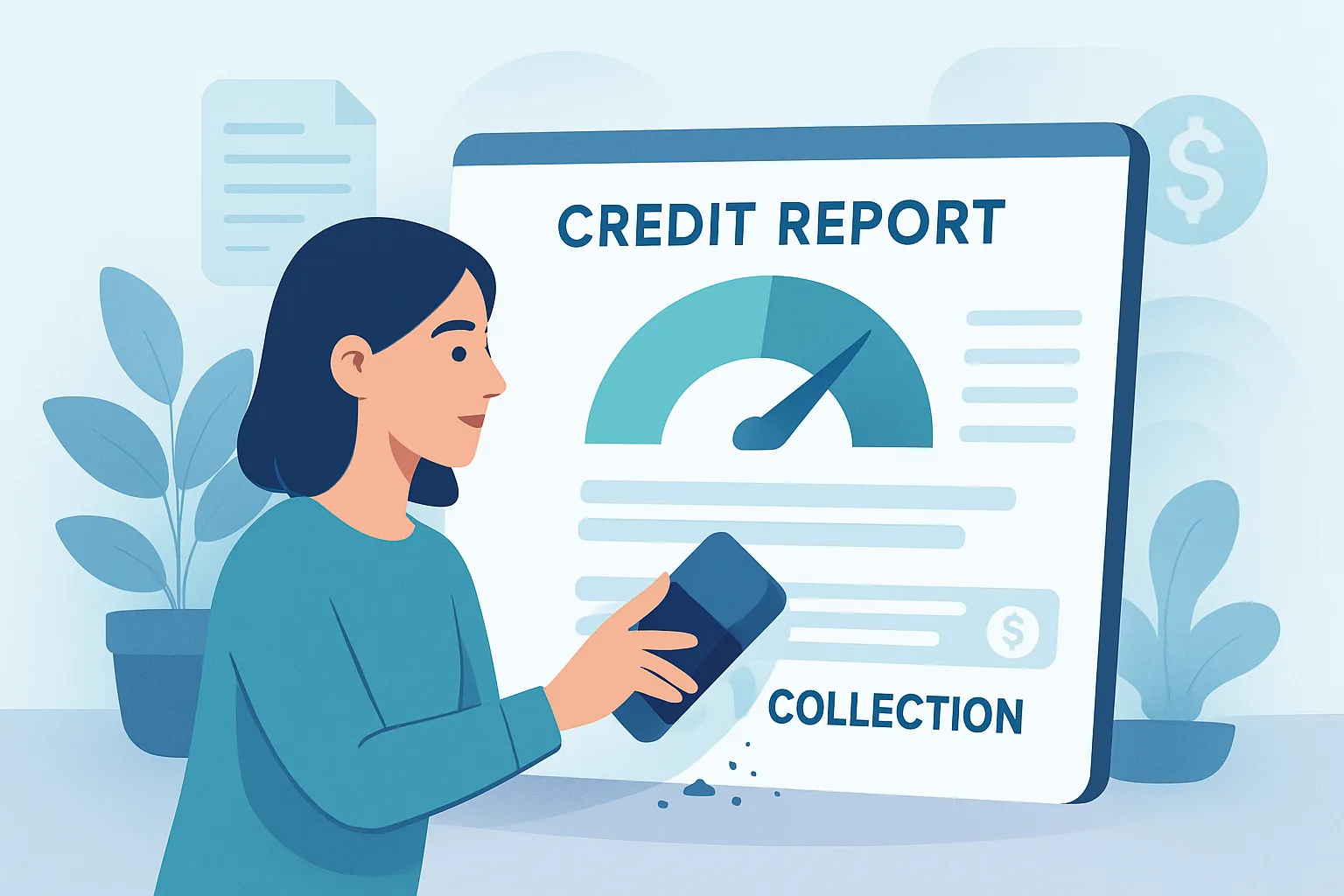
- Check your credit report for errors—dispute any inaccurate information with the credit bureaus.
- Consider a pay-for-delete arrangement before paying the debt (though not all agencies agree).
- If the debt is accurate and paid, send a goodwill letter asking the creditor to remove the account as a courtesy.
If you've ever had a debt go to collections, you know the sting of seeing that negative mark on your credit report. Even after you pay it off, the collection account can linger for up to seven years from the first missed payment, dragging down your credit score. The good news is that you may be able to remove a paid collection from your credit report earlier—and it's worth trying.
This article explains exactly how to remove paid collections from your credit report using proven strategies, from disputing errors to writing goodwill letters. Remember, this is general information, not financial advice. Your results may vary based on your specific situation and the collection agency's policies.
Many people believe that paying a collection automatically removes it from their credit report. That's not true. Paying a collection updates the status to "paid" but the account remains visible.
However, there are legitimate ways to request removal. The Fair Credit Reporting Act (FCRA) gives you the right to dispute inaccurate information. And some collection agencies will agree to delete the account in exchange for payment—if you negotiate before you pay.
Let's walk through each method step by step.
What Does It Mean When a Collection Is Paid?
A paid collection is an account that was sent to a collection agency, and you have since paid the amount owed (or settled for less). The collection agency reports the account to the credit bureaus as "paid" or "settled." While this is better than an unpaid collection, it still hurts your credit because it shows a history of missed payments and a default.
Under the FCRA, a collection account—whether paid or unpaid—can remain on your credit report for seven years from the date of the first missed payment that led to the collection. This is true even if you pay the debt in full. The seven-year clock starts from the original delinquency, not the date you paid.
Because a paid collection still damages your credit, many consumers want to know how to remove it before the seven years are up. The strategies below can help, but they require persistence and attention to detail.
How Do I Remove Paid Collections from My Credit Report?
There are three main ways to remove a paid collection from your credit report:
- Dispute inaccuracies – If any detail about the collection is wrong (wrong amount, wrong date, wrong name), you can dispute it with the credit bureaus. If the collection agency cannot verify the information, the account must be removed.
- Negotiate a pay-for-delete – Before you pay a collection, you can ask the collection agency to delete the account from your credit report in exchange for payment. This is a written agreement you make beforehand.
- Send a goodwill letter – After you've paid, you can write to the original creditor or collection agency and politely ask them to remove the account as a gesture of goodwill. This works best if you have a good payment history otherwise.
Let's explore each method in detail.
Method 1: Dispute Inaccuracies on Your Credit Report
The FCRA requires credit bureaus to investigate any dispute you file about information on your credit report. If the collection agency cannot verify the debt within 30 days (or 45 days if you provide additional documentation), the bureaus must remove the account.
To dispute, you need to check your credit report first. You can get a free copy from each of the three major credit bureaus—Equifax, Experian, and TransUnion—once a year at AnnualCreditReport.com. Review each report carefully for errors.
Common inaccuracies include:
- Wrong account number or amount
- Incorrect date of first delinquency
- Account that doesn't belong to you (identity theft)
- Collection that is older than seven years
- Duplicate collection entries
If you find an error, file a dispute online, by mail, or by phone with the credit bureau that shows the error. You can also file a dispute directly with the collection agency. The Consumer Financial Protection Bureau (CFPB) provides sample dispute letters and guidance on their website.
For a step-by-step guide, see our article on how to dispute errors on your credit report.
If the collection agency cannot verify the debt, the account will be removed. This is the most straightforward way to remove a paid collection, but it only works if the information is actually inaccurate.
How to Identify Inaccuracies in Collection Accounts
When you review your credit report, focus on the collection section. Look for the original creditor name, the collection agency name, and the date of first delinquency. For example, if a credit card debt was charged off in January 2020 but the report shows a first delinquency date of March 2021, that is an error.
This mistake could make the debt appear newer than it actually is, which hurts your score more.
Another common error is a duplicate collection entry. Sometimes the same debt is reported by both the original creditor and the collection agency. If this happens, you can dispute the duplicate as inaccurate because it overstates your debt.
The credit bureaus must investigate and remove the extra entry if it cannot be verified.
Small errors like a misspelled name or wrong account number can also trigger a removal. Collection agencies often rely on automated systems to verify debts, and even a minor mismatch can cause verification to fail. For instance, if your name is "John Smith" but the report lists "Jon Smith," you can dispute that inaccuracy.
Method 2: Negotiate a Pay-for-Delete Agreement
Pay-for-delete is an agreement where the collection agency promises to remove the collection account from your credit report in exchange for payment. This is not guaranteed—many collection agencies have policies against it, and the credit bureaus discourage the practice. However, some smaller agencies may agree.
To pursue pay-for-delete, you must negotiate before you pay. Once you pay, you lose leverage. Here’s how to do it:
- Contact the collection agency and ask to speak with a manager or someone authorized to make credit reporting decisions.
- Explain that you want to pay the debt but only if they agree in writing to delete the account from your credit report.
- Get the agreement in writing—either a letter or an email—before you send any money.
- Once you have the written agreement, pay the agreed amount (full or settlement).
- After payment, check your credit report to confirm the deletion. If they don't delete, you can use the written agreement to dispute with the credit bureaus.
Be aware that the credit bureaus have policies that discourage pay-for-delete, and some collection agencies will not agree. But it's worth asking, especially if the debt is older or the amount is small.
Tips for Successful Pay-for-Delete Negotiations
When you call the collection agency, be polite but firm. Explain that you are willing to pay the debt but only if they remove the account from your credit report. For example, you might say, "I can pay the full $500 today if you agree in writing to delete this account from my credit report." This puts the ball in their court.
If the agency says no, ask to speak with a supervisor. Sometimes lower-level employees are not authorized to make such agreements, but a manager might be. You can also try offering a settlement amount instead of the full balance.
For instance, if you owe $1,000, offer to pay $600 in exchange for deletion. The agency may prefer a partial payment over nothing.
Always get the agreement in writing before sending any money. Without written proof, the agency could take your payment and still report the account. After you pay, wait 30 to 60 days and then check your credit report.
If the account is still there, file a dispute with the credit bureau and include the written agreement as evidence.
Method 3: Send a Goodwill Letter
If the collection is already paid and accurate, you can try a goodwill letter. This is a polite request to the original creditor or collection agency asking them to remove the account as a courtesy. It works best if you have a history of on-time payments before the default and can show that the collection was an isolated incident.
In your goodwill letter, include:
- Your name and account number
- An explanation of the circumstances that led to the default (job loss, medical emergency, etc.)
- Proof that you have paid the debt
- A request for removal as a gesture of goodwill
- Your commitment to responsible credit use going forward
Send the letter to the original creditor's executive office or customer relations department. Be patient—it may take several attempts. Some companies have a goodwill policy, while others never remove accurate information.
But many consumers have succeeded with this method, so it's worth a try.
How to Write an Effective Goodwill Letter
Your goodwill letter should be short and heartfelt. Start by explaining the situation that led to the missed payments. For example, "I lost my job in 2020 and fell behind on my credit card payments.
I have since found new employment and paid the debt in full." This shows that the default was not due to irresponsibility.
Then, ask for removal as a gesture of goodwill. You might say, "I respectfully request that you remove this collection account from my credit report as a courtesy. I have been a loyal customer for years and plan to continue doing business with you." This appeals to the creditor's sense of customer loyalty.
Send the letter via certified mail so you have proof of delivery. If you don't hear back in 30 days, send a follow-up letter. Some consumers send multiple letters to different departments, such as the CEO's office or the customer relations team.
Persistence can pay off, especially if the creditor has a goodwill removal policy.
How to Remove Collections from Credit Report: Step-by-Step
If you're wondering how to get collections removed from your credit report, follow this step-by-step process:
- Get your credit reports from AnnualCreditReport.com. Review all three reports for the collection account and any errors.
- Identify the type of collection – Is it a medical debt, credit card, utility, etc.? Some types have different rules (e.g., medical collections under $500 may not appear on some credit scores).
- Check the statute of limitations – If the debt is very old, you may not owe it legally. But the credit reporting period is separate.
- Dispute any errors – Use the dispute process for any inaccuracies.
- Negotiate pay-for-delete – If the debt is unpaid, try to negotiate removal before paying.
- Pay the debt – If you choose to pay, get a receipt and keep records.
- Send a goodwill letter – After payment, ask for removal as a courtesy.
- Monitor your credit – Check your reports after 30-60 days to see if the account was removed or updated.
For more detailed guidance, read our full guide on how to remove collections from credit report.
How Can I Remove Collections from My Credit Report If They Are Accurate?
If the collection is accurate and paid, your options are limited to goodwill letters or hoping the agency deletes it voluntarily. Some collection agencies automatically delete paid collections after a certain period as a policy, but most do not.
Another possibility: if the collection agency is not the original creditor, you can try contacting the original creditor and asking them to recall the debt from the collection agency. If they do, the collection account may be removed. This is rare but possible if you have a good relationship with the original creditor.
You can also wait for the seven-year period to expire. After seven years from the first missed payment, the collection must be removed automatically. If it remains after that, you can dispute it as obsolete.
How Do I Remove Collections from My Credit Report After Paying?
After paying a collection, you can still try to remove it. The most effective post-payment method is the goodwill letter (described above). You can also dispute the account if you find any inaccuracy—even a small one like a wrong date.
Some consumers have success by disputing the collection as "not mine" if they believe it's a mistake. But if it's truly your debt, lying on a dispute is not recommended and could be considered fraud.
If the collection agency verifies the debt and the information is accurate, the account will remain. At that point, your best bet is to focus on building positive credit history to offset the impact.
How to Remove Collections Off Your Credit Report: What Doesn't Work
There are many myths about removing collections. Here's what does not work:
- Paying the debt alone – Payment updates the status but does not remove the account.
- Disputing a valid debt as "not mine" – If the debt is yours and accurate, the dispute will fail.
- Using a credit repair company – Many charge fees for services you can do yourself, and some use questionable tactics.
- Waiting for the collection to fall off – It will after seven years, but that's a long time.
- Closing the account – Closing an account doesn't remove the collection.
Stick to legitimate methods: dispute errors, negotiate pay-for-delete, and send goodwill letters.
How to Remove Credit Collections from Credit Report: The Role of Credit Bureaus
The three major credit bureaus—Equifax, Experian, and TransUnion—are responsible for maintaining your credit report. When you dispute a collection, they must investigate. If the collection agency doesn't respond within 30 days, the bureau must remove the item.
You can also contact the bureaus directly to request a reinvestigation if you have new information. For example, if you have proof that the debt was paid but the report shows it as unpaid, you can provide that documentation.
Remember that each bureau operates independently. A collection may appear on one report but not another. You need to check all three and dispute separately if needed.
How to Read Your Credit Report to Find Collections
To effectively remove collections, you need to know how to identify them on your credit report. Collections appear in the "Accounts" or "Collections" section. Look for:
- Original creditor name (the company you owed)
- Collection agency name
- Account number
- Date of first delinquency
- Balance (original and current)
- Status (paid, unpaid, settled)
If you're unsure how to interpret your report, our guide on how to read your credit report can help you understand each section.
How Long Do Paid Collections Stay on Your Credit Report?
Paid collections stay on your credit report for seven years from the date of the first missed payment that led to the collection. This is the same as unpaid collections. The payment date does not restart the clock.
After seven years, the collection must be removed automatically. If it remains, you can file a dispute with the credit bureau citing the age of the debt.
Can You Remove a Paid Collection Immediately?
In most cases, you cannot remove a paid collection immediately unless the collection agency agrees to delete it. The dispute process can take 30-45 days. Goodwill letters may take weeks or months.
Pay-for-delete, if successful, can result in removal within 30-60 days after payment.
There is no instant fix. Be patient and persistent. If one method fails, try another.
What If the Collection Agency Refuses to Delete?
If the collection agency refuses to delete after a goodwill request or pay-for-delete negotiation, you have a few options:
- Wait it out – The account will fall off after seven years.
- Focus on positive credit – Add new accounts, pay on time, and keep credit utilization low to improve your score despite the collection.
- Hire a consumer attorney – If the collection agency violated the FCRA or FDCPA, you may have legal recourse. Consult with a lawyer if you believe your rights were violated.
Remember that a paid collection is less damaging than an unpaid one. Over time, its impact on your credit score diminishes, especially if you build good credit habits.
The Impact of Paid Collections on Your Credit Score
A paid collection still hurts your credit score because it indicates a past default. However, the impact lessens over time. For example, a collection from two years ago affects your score less than one from six months ago.
Credit scoring models like FICO and VantageScore treat paid collections differently. FICO 9 ignores paid collections entirely, while older versions like FICO 8 still penalize them. If your lender uses a newer scoring model, the paid collection may have little to no effect.
To minimize the damage, focus on building positive credit history. Pay all your bills on time, keep credit card balances low, and avoid new collections. Over time, the collection will become less relevant to your overall credit profile.
How to Prevent Collections from Appearing on Your Credit Report
The best way to handle collections is to avoid them altogether. If you have a debt that is about to go to collections, contact the creditor immediately. Many creditors offer hardship programs that can help you avoid a collection account.
For example, if you cannot pay a medical bill, ask the hospital about financial assistance or payment plans. Some hospitals write off debts for low-income patients. Similarly, credit card companies may offer temporary payment deferrals during financial hardship.
If you do receive a collection notice, act quickly. The sooner you address the debt, the more options you have. Negotiating before the account is reported is much easier than trying to remove it afterward.
Understanding the Difference Between Original Creditors and Collection Agencies
When a debt goes unpaid, the original creditor (like a credit card company or hospital) may sell the debt to a collection agency. The collection agency then becomes the owner of the debt and can report it to the credit bureaus. Understanding this distinction is crucial because it affects your removal strategies.
For example, if the original creditor still owns the debt but hired a collection agency to collect, you can negotiate directly with the original creditor. They may recall the debt from the agency if you pay them directly. This is called a "repossession" or "recall," and it can lead to removal of the collection account.
However, if the debt was sold to a collection agency, the original creditor no longer has control. In that case, you must work with the collection agency. Always verify who owns the debt before negotiating.
How to Verify the Legitimacy of a Collection Account
Before you attempt to remove a collection, you should verify that the debt is actually yours and accurate. Collection agencies sometimes make mistakes or pursue debts that are not yours. You have the right to request validation of the debt under the Fair Debt Collection Practices Act (FDCPA).
Send a debt validation letter to the collection agency within 30 days of their first contact. Ask them to provide proof that you owe the debt, including the original creditor's name, the amount, and the date of first delinquency. If they cannot provide this, they must stop collection efforts and may have to remove the account from your credit report.
For example, if a collection agency contacts you about a medical bill you don't recognize, request validation immediately. You might discover that the debt belongs to someone with a similar name or that the amount is inflated. This can be a powerful tool for removal.
Using Credit Monitoring Services to Track Collections
After you take steps to remove a paid collection, you should monitor your credit reports regularly. Credit monitoring services can alert you to changes, such as when a collection is removed or updated. Many services offer free trials or low-cost subscriptions.
For instance, you can sign up for a free account with Credit Karma or Credit Sesame to track your TransUnion and Equifax reports. These services send notifications when new accounts appear or when disputes are resolved. This helps you confirm that your efforts are working.
Monitoring also helps you catch new collection accounts quickly. If a new collection appears, you can address it before it damages your score further. Check your reports at least once every three months to stay on top of your credit health.
Key Takeaways
- Paying a collection does not automatically remove it from your credit report; it updates the status to paid.
- You can remove a paid collection by disputing inaccuracies, negotiating a pay-for-delete before payment, or sending a goodwill letter after payment.
- Check your credit reports from all three bureaus regularly for errors.
- Be persistent and polite—success is not guaranteed, but many consumers have successfully removed collections using these methods.
- If all else fails, focus on building positive credit history to offset the collection's impact.
Frequently asked questions
Can I remove a paid collection from my credit report myself?
How long does it take to remove a paid collection from my credit report?
Will paying a collection improve my credit score?
What is a pay-for-delete agreement and does it really work?
Can I dispute a paid collection if it's accurate?
This article is for general informational purposes only and does not constitute financial, legal or credit-repair advice. Always consult a qualified financial advisor or credit counselor about your specific circumstances.

Written & reviewed by
Can OTUEditor
Can OTU is the editor of this site, curating and reviewing every guide for accuracy and clarity.
View all guides →